

 Back
Back
As the White House and viral influencers push misleading info about solar, New York says the facts show the clean energy source and agriculture can thrive together.
In rural areas across the U.S., solar power opponents keep leaning on the argument that utility-scale arrays are gobbling up valuable farmland. But plenty of evidence proves that’s just not true, and now, New York is tackling the misinformation head-on.
After the Trump administration accused the state of fast-tracking solar farms on prime farmland, New York leaders fired back last week, saying that renewables “empower our farmers to keep their land in use and in their family, while avoiding the threat of permanent conversion or abandonment.” That’s because farmers can lease a plot to solar developers and return it to agricultural use at the end of the array’s life, as the state officials explained in their 11-page letter.
“A recent study by Cornell found that the overwhelming majority of farmers who received solar lease payments used that income to continue or even expand farming on their land, not to exit farming or scale back operations,” the leaders wrote. “Discouraging or inhibiting property owners’ ability to independently make choices about what they can and cannot do with their land can cause financial harm and undermine fundamental property rights.”
The New York State Energy Research and Development Authority has more proof that solar and farming can work hand in hand, and outlined all that in a major guidebook it released last year. Sheep and cattle are munching below panels on several New York farms, the guidebook notes, and the state has zoning rules and protections in place to preserve undeveloped land.
New York’s pushback squares with the findings of a recent report from the Solar Energy Industries Association. That study shows solar farms currently take up a mere 0.13% of New York’s roughly 13,000 square miles of federally designated prime farmland, a stat that resonates across the country. Solar covers just 0.07% of all U.S. farmland, according to SEIA. That’s three times less than golf courses and six times less than suburban development.
And yet solar panels, not cul-de-sacs, are the focus of a particularly potent campaign from upstate New York influencer Alexandra Fasulo. Fasulo has amassed more than a million followers across TikTok and other social platforms, where she’s constantly posting videos that inflate solar’s threats to agricultural and undeveloped land. Similar sentiments are being spread on social media by John Rich. He’s one half of the “Save a Horse, Ride a Cowboy” guys, and was recently hired by the White House to advocate for landowners on a national scale.
These and other anti-solar advocates often ignore the good that the clean energy source can do for farmers nationwide. In California’s Central Valley, for example, years of drought have led hundreds of thousands of acres of agricultural land to go fallow. Economics and water availability have driven farmers to stop growing there, but they can still make money and hold on to their land by leasing their plots to solar developers.
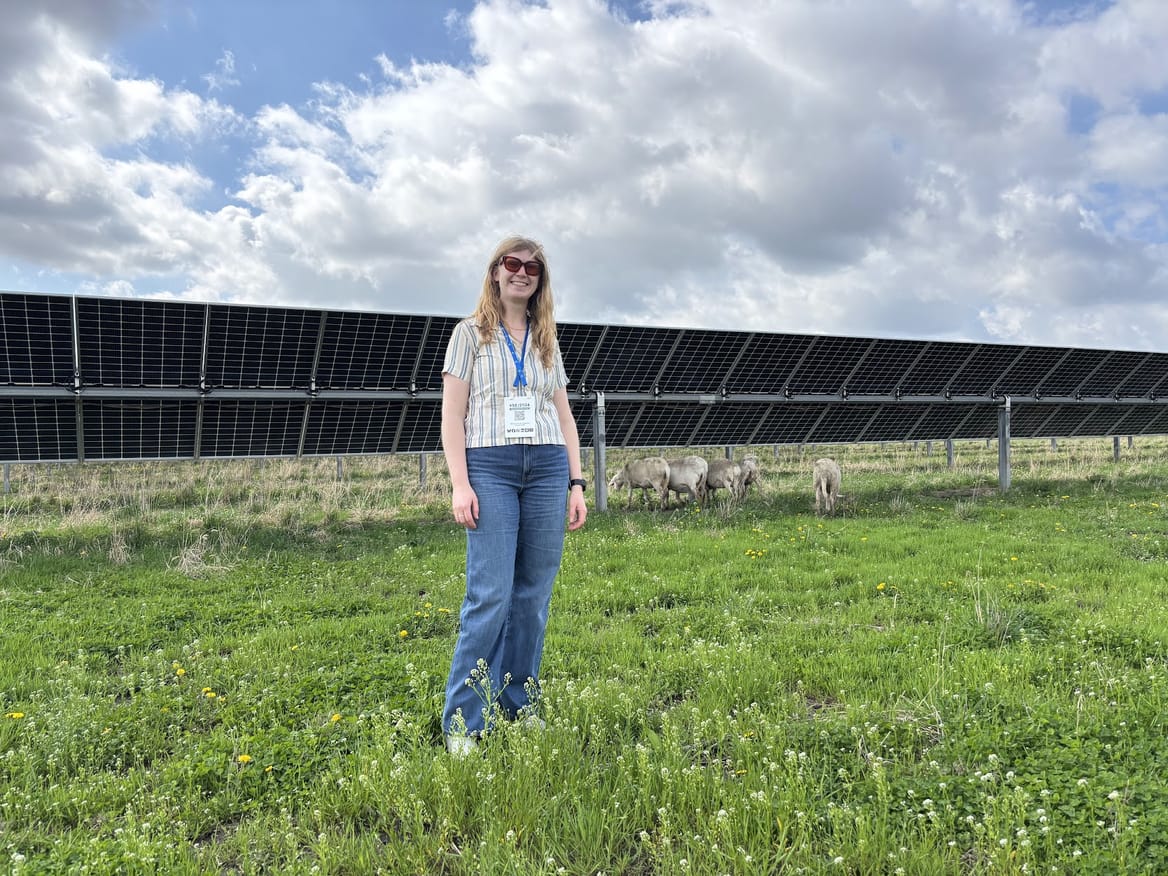
Plus, as New York’s guidebook points out, farming is still happening alongside solar installations. I recently visited an Illinois solar farm where sheep were grazing underneath and around panels — an arrangement that the sheep’s owners love because they don’t have to maintain expansive pastures back at home. Meanwhile, researchers have found that tomatoes, saffron, and other crops can thrive below panels, and so can native plants.
That’s not to mention the climate benefits of ditching planet-warming fossil fuels, which are driving droughts, floods, and other weather disasters that are legitimately threatening farms in the U.S. and beyond.
Trump’s coal crusade has real-world consequences
The Trump administration keeps checking items off the coal industry’s wish list — with dire consequences for Americans’ health and wallets.
Over the past year and a half, the federal government has used its emergency powers to keep coal plants from shutting down and pledged $850 million to prop up existing coal facilities or build new ones, Jeff St. John reports. It’s also weakened regulations meant to protect air and water quality, and paved the way for more coal mining in the U.S.
Americans are already suffering the fallout, as Kari Lydersen reports from Indiana. The Department of Energy has forced two aging coal plants there to stay open — a move that is costing plant owners millions of dollars that could soon be passed on to utility customers. Meanwhile, the rollback of federal regulations around coal ash means the toxic byproduct of coal burning will continue to threaten water supplies in the state and beyond.
More data highlights gas stoves’ dangers
Federal funding clawbacks stopped a group of scientists from fully studying gas stoves’ impacts on people with asthma, but they still produced some pretty profound results.
Back in late 2024, researchers from Case Western Reserve University received $18 million from the U.S. EPA to replace gas stoves with electric models in 1,200 Ohio homes whose residents have asthma. Although the grant was canceled a few months into the Trump administration, some people still got their electric stoves — and their asthma symptoms significantly improved.
Gas stoves are risky even for those without asthma. Mixed in with the methane the stoves burn is the cancer-causing carcinogen benzene, along with other toxic pollutants. Those dangers even prompted Colorado to require that gas stoves come with a health warning label — until a federal judge blocked enforcement of the rule shortly after it was implemented.
Big money for fusion: Commonwealth Fusion Systems raises another $1 billion from investors, bringing its total funds raised to $4 billion as it seeks to commercialize nuclear fusion technology. (Canary Media)
Courtroom confessions: The Trump administration admits in court documents that it canceled $7.6 billion in clean energy for 16 states solely because those states voted for Democrat Kamala Harris in the 2024 presidential election. (Associated Press)
A road map for cleaner factories: It can be hard for factories to justify swapping fossil fuels for more expensive electric power, but a new report suggests that colocating renewable energy generation and reforming electricity rates can help make the case. (Canary Media)
EVs come back around: Global EV sales remained slow in the first three months of the year but rose 35% in the second quarter even amid lackluster growth in China and the U.S., the world’s two biggest EV markets. (International Energy Agency)
Inverters diverted: The Trump administration’s ban on new models of foreign-made inverters, which are critical for connecting renewable power to the grid, won’t impact projects now, but could delay development in the future. (Canary Media)
Electric or bust: California will soon offer hefty rebates to first-time EV buyers, betting on the fact that most drivers who make the switch from gasoline cars don’t turn back. (Canary Media)
Batteries have your back: Small, portable plug-in batteries can help people power critical appliances and devices during outages — and they’re cheaper and more flexible than whole-home systems. (Canary Media)
Restart reservations: A wave of setbacks continues to delay the reopening of Michigan’s Palisades nuclear plant, and suggests similar challenges may befall companies looking to restart other dormant facilities. (New York Times)
No major economy had previously received over half its electricity from solar across an entire month. Thank the mild, sunny spring weather, and batteries.
While the Trump administration is busy pointing out that the sun doesn’t shine at night, solar is breaking records around the world, including in sunny California.
Solar panels produced 51% of California’s electricity in May, the first time the clean energy source surpassed the halfway mark for an entire month. The data counts both large-scale installations and the state’s bounty of rooftop arrays.
This isn’t just a milestone moment for California; it’s a milestone for the entire world. Think tank Ember says the state is the globe’s first major economy to cross the 50% threshold. (Hungary, at 47% in June 2025, is knocking at the door, though it has a far smaller GDP.)
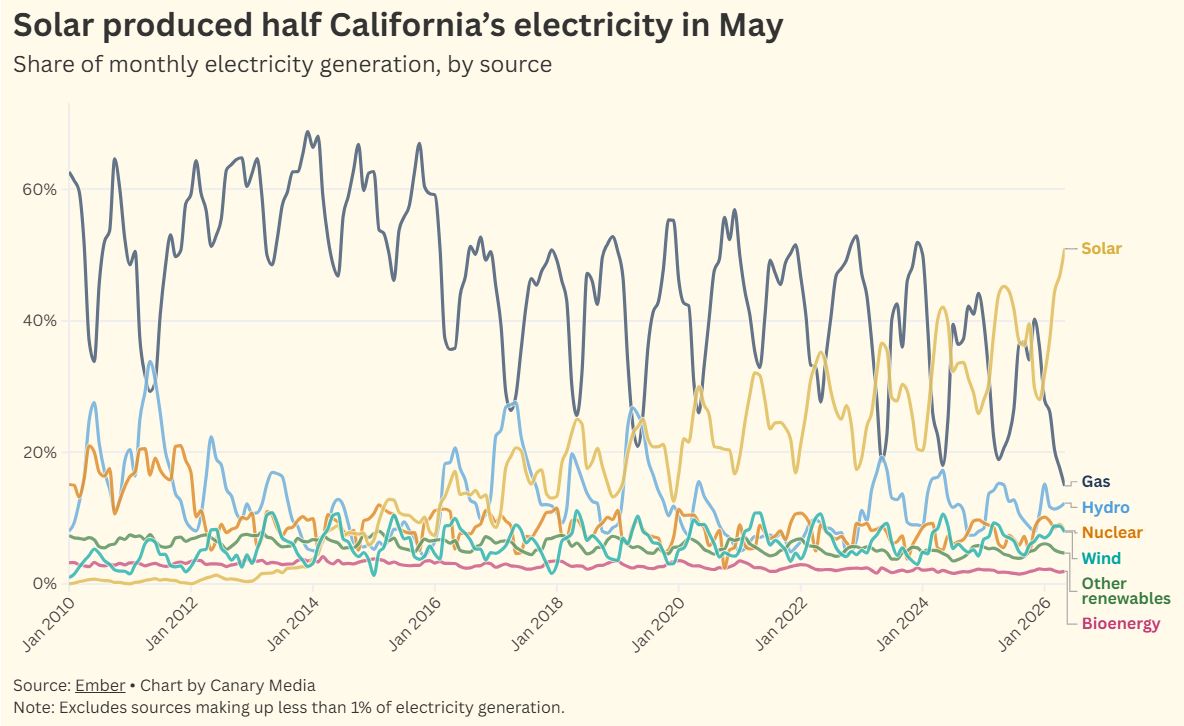
Solar’s rise has helped California cut polluting energy sources out of its power mix. Natural gas is the only fossil fuel that California power plants burn at appreciable levels, and solar is steadily squeezing it out of the system. Case in point: Solar outproduced gas not only during its record month of May but throughout every month in 2026 leading up to it, too.
Solar could not have reached these heights alone. It needed batteries to get here — and California has that crucial energy storage in spades. The California Independent System Operator, which manages most of the state’s grid, now boasts 16 gigawatts of batteries that can shift abundant midday solar production to later in the evening. It’s not uncommon for batteries to meet over one-quarter of the state’s electricity demand for a portion of the night.
All this solar and storage would have been hard to imagine a decade ago. Back then, in its best month — also sunny, mild May — solar accounted for just 17% of electricity. That number is well above the current national average for solar, but a far cry from 51%. CAISO’s battery fleet, meanwhile, was a measly 61 megawatts. So, storage has grown by, uh … 26,129% over the last decade, a number so cartoonishly large that I’m almost hesitant to print it.
Expect California to see more months break the 50% threshold soon. And in the coming years, expect more states and countries to cross the halfway mark, too.
No major economy had previously received over half its electricity from solar across an entire month. Thank the mild, sunny spring weather, and batteries.
While the Trump administration is busy pointing out that the sun doesn’t shine at night, solar is breaking records around the world, including in sunny California.
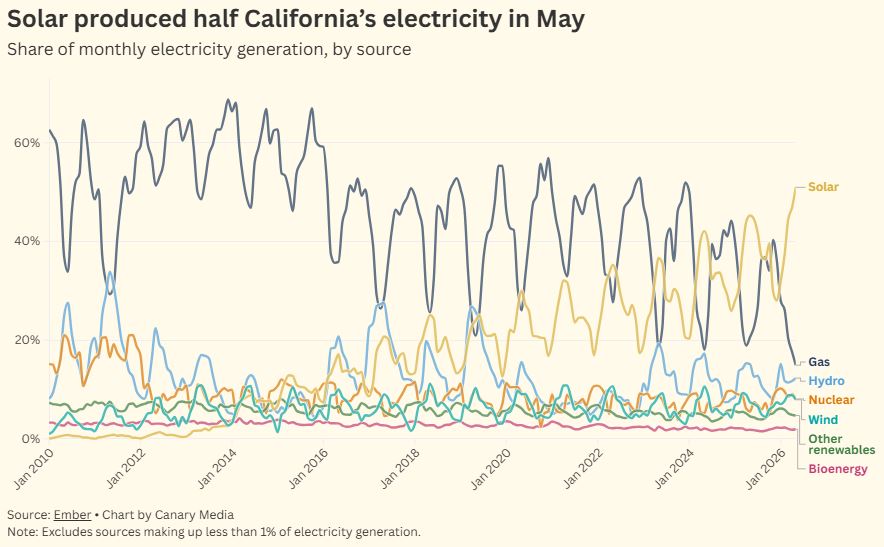
Solar panels produced 51% of California’s electricity in May, the first time the clean energy source surpassed the halfway mark for an entire month. The data counts both large-scale installations and the state’s bounty of rooftop arrays.
This isn’t just a milestone moment for California; it’s a milestone for the entire world. Think tank Ember says the state is the globe’s first major economy to cross the 50% threshold. (Hungary, at 47% in June 2025, is knocking at the door, though it has a far smaller GDP.)
Solar’s rise has helped California cut polluting energy sources out of its power mix. Natural gas is the only fossil fuel that California power plants burn at appreciable levels, and solar is steadily squeezing it out of the system. Case in point: Solar outproduced gas not only during its record month of May but throughout every month in 2026 leading up to it, too.
Solar could not have reached these heights alone. It needed batteries to get here — and California has that crucial energy storage in spades. The California Independent System Operator, which manages most of the state’s grid, now boasts 16 gigawatts of batteries that can shift abundant midday solar production to later in the evening. It’s not uncommon for batteries to meet over one-quarter of the state’s electricity demand for a portion of the night.
All this solar and storage would have been hard to imagine a decade ago. Back then, in its best month — also sunny, mild May — solar accounted for just 17% of electricity. That number is well above the current national average for solar, but a far cry from 51%. CAISO’s battery fleet, meanwhile, was a measly 61 megawatts. So, storage has grown by, uh … 26,129% over the last decade, a number so cartoonishly large that I’m almost hesitant to print it.
Expect California to see more months break the 50% threshold soon. And in the coming years, expect more states and countries to cross the halfway mark, too.
Panamint Capital broke ground on a $1.7 billion solar and storage project at the Calvert coal mine. The mine and an adjacent coal plant will stay online.
Construction is underway on a $1.7 billion solar and battery storage project in Texas that will turn existing coal mining land into a hub of clean energy generation.
Panamint Capital announced last week that it broke ground on the 1.2-gigawatt Big Rooter Power solar farm in Bremond, about halfway between Dallas and Houston. The project will use some of the land and assets from the adjacent Twin Oaks coal-fired power plant and Calvert surface coal mine, both of which will continue operating.
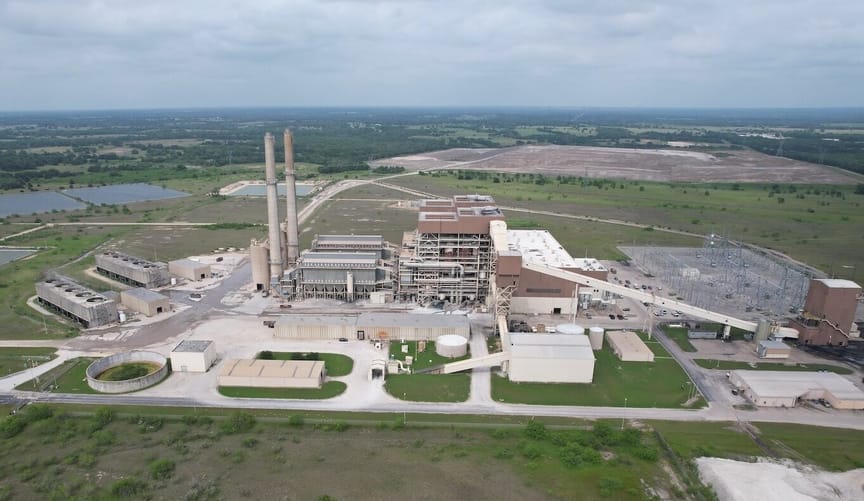
Panamint’s clean energy project will be among the largest in the nation — and, the developer claims, the biggest solar array ever built at a brownfield site in North America.
“We believe deploying new capacity at existing energy sites is the clearest way to benefit communities, ratepayers, and the environment alike,” said Apolka Totth, CEO of Panamint, a Nevada-based investment firm.
The giant installation will further boost Texas’ thriving solar sector, which this year is expected to generate more electricity than coal in the Lone Star State. The renewable resource is helping meet the state’s energy demand from data centers, manufacturing facilities, and rising air-conditioning use amid more frequent and extreme hot weather.
Panamint, which is backed by the private equity firm KKR, launched in 2019 with the goals of squeezing more life out of existing fossil-fuel infrastructure while building lower-emission facilities on the same sites. In 2023, Panamint acquired the 310-MW Twin Oaks coal plant and Calvert mine “with the express intention of leveraging the site’s existing characteristics to massively and rapidly expand generating capability at the lowest possible cost,” Totth said by email.
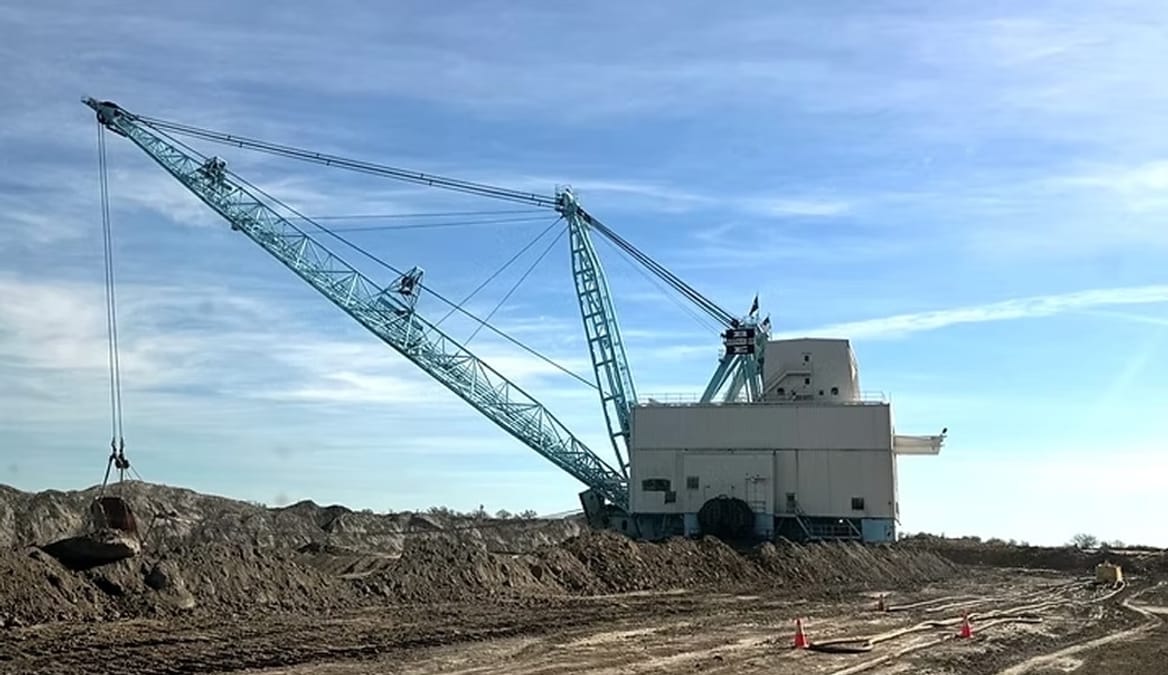
Work has started on the first phase of the solar farm, a 491-MW section that is set to go online in August 2028. Construction will begin in December on the remaining 658 MW, which could start producing power in August 2029.
The 10,000-acre Big Rooter site will also include 1.6 gigawatt-hours of battery storage and 20 miles of new extra-high-voltage transmission lines. The investment firm says it also has the infrastructure and natural gas access needed to build at least 800 MW of gas-fired generation, either for the grid or customers like data center developers.
“Big Rooter is a landmark project that reflects the scale of investment being made in America’s energy future,” George Hershman, CEO of Solv Energy, said in a news release. The contractor is building the site’s solar array, substation, and transmission infrastructure.
Big Rooter’s pairing with active coal operations makes it unique within the nation’s small but growing coal-to-solar subsector, which has mainly focused on putting panels on former mine lands and retired industrial sites.
The largest of these projects is the 186-MW Tilden Solar Project in southern Illinois, followed by the 111-MW Martin County Solar Project in eastern Kentucky, which both went online last year atop abandoned coal mines.
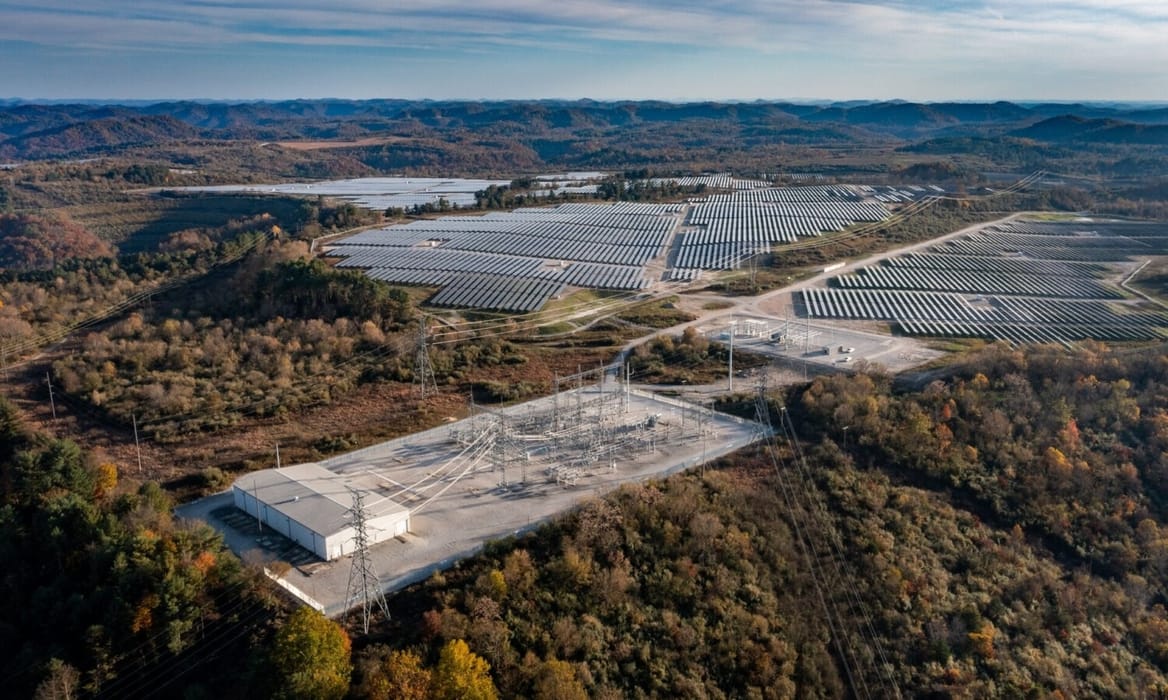
In Louisiana, the 240-MW Dolet Hills Solar Project is now being built on a former coal mine property. And the developer BrightNight is advancing the Starfire installation on remediated mine land in Kentucky.
In 2023, when BrightNight announced the Appalachian project, electric truck startup Rivian signed on as the anchor customer, with a 100-MW power purchase agreement. Starfire was initially envisioned as a roughly 800-MW project, but is now on track for 410 MW, with construction slated for late 2027 and planned operations in 2030.
“Earlier descriptions of a larger project reflected a broader long-term vision for the site, but as development has progressed, BrightNight has focused on the configuration that best aligns with current interconnection, permitting, site, and customer considerations,” a BrightNight spokesperson said by email. “We remain very enthusiastic about Starfire and its importance as a major redevelopment project on former coal mining land in Eastern Kentucky.”
Repurposing old mining sites for solar power has an obvious appeal. As opposition breaks out in rural areas over using prime farmland for solar — concerns stoked by Trump administration officials, including U.S. Agriculture Secretary Brooke Rollins — brownfield projects allow developers to sidestep those conversations and put sullied land to use. Doing so has typically proved more complicated and expensive than placing solar panels on flat or uncontaminated fields.
The 2021 bipartisan infrastructure law and 2022’s Inflation Reduction Act provided incentives to make it easier to finance clean energy installations on mine lands, while a $500 million Department of Energy program allocated funding for projects on current or former mines.
But last year, the Trump administration and Congress added more hurdles by phasing out tax credits for solar and wind energy, effectively ending the tax bonus for brownfield developments. And the administration scrapped at least one DOE mine-land award, for Mineral Basin Solar Power, as part of its sweeping cancellation of $7.6 billion in clean energy grants in the 16 states that voted for Democrat Kamala Harris in the 2024 presidential election.
“The federal policy landscape for developing clean energy on mines has changed, but the opportunity hasn’t,” said Jessica Wilkinson, the North America renewable energy team lead for The Nature Conservancy, a global nonprofit.
“In many parts of the country, wind and solar are the cheapest forms of energy and are succeeding on economics alone,” she added. “And if building on mine lands, brownfields, and landfills has fewer community conflicts, they may be seen as very enticing.”
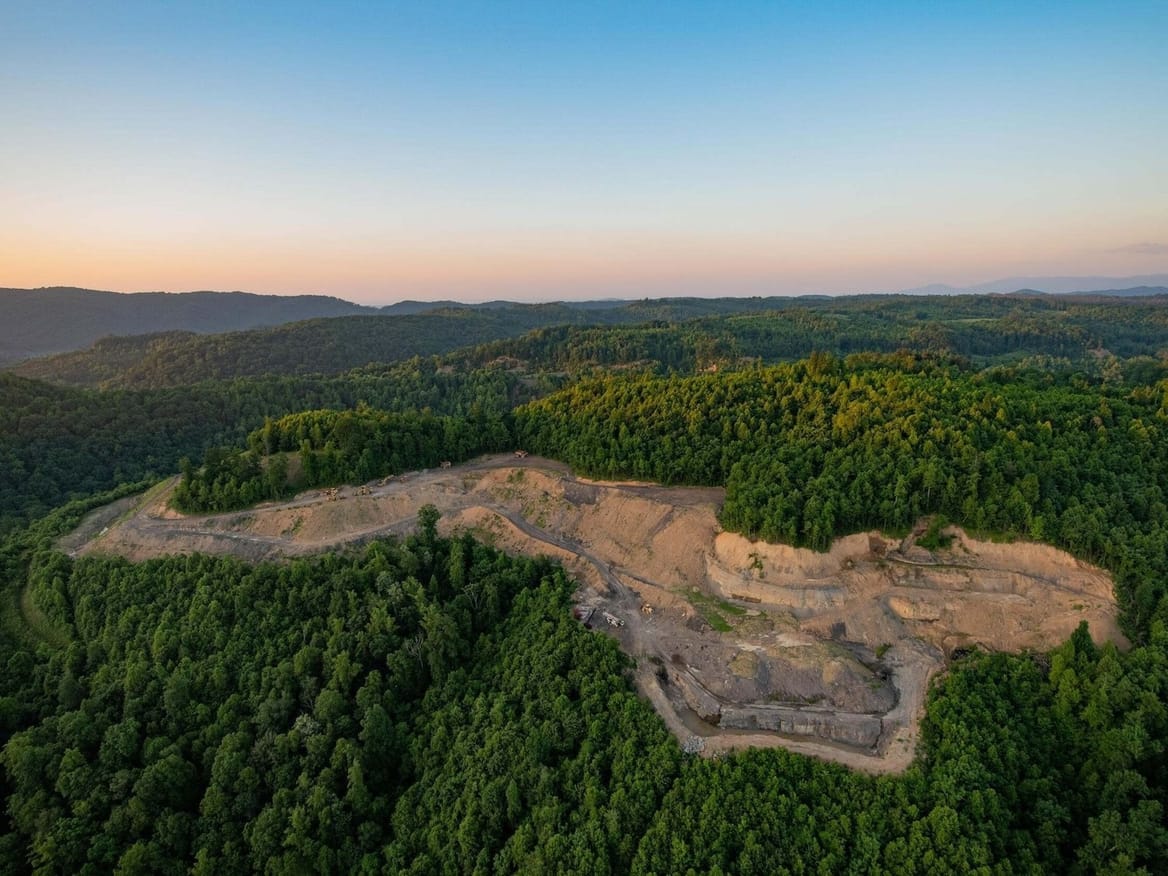
The nonprofit and its partners plan to develop 25 solar and battery storage projects on former mine lands that The Nature Conservancy manages in the Cumberland Forest, which spans parts of Kentucky, Tennessee, and Virginia. The first project, the 10-MW Wildcats Solar in Virginia, is expected to break ground this fall and could start delivering power to the grid next year.
Wilkinson noted that despite the federal pullback, states have continued to show support for what her group calls “mining the sun” projects. For example, Ohio and Colorado passed laws to incentivize renewable energy development on former industrial sites. And a handful of federal programs continue providing financial support for cleaning up coal mining areas — a crucial step for enabling future solar development.
“Communities still want to see these lands become economic engines again,” Wilkinson said.
Panamint, for its part, said it was able to secure clean energy incentives for Big Rooter Power before Trump signed the One Big Beautiful Bill Act on July 4, 2025, repealing large swaths of the Inflation Reduction Act.
“We ordered long-lead time equipment such as transformers and circuit breakers well before last summer’s OBBBA, so we were largely insulated from those impacts,” Totth said.
She noted that Panamint is partnering with U.S. firms First Solar and Nextpower (formerly Nextracker) to procure domestically made solar modules and racks. Big Rooter is also located in an “energy community” — the Department of Energy’s term for brownfield sites and areas affected by coal plant and mine closures. For those reasons, the company says it will receive a federal investment tax credit worth 50% of total project costs.
Yet as Panamint begins installing millions of solar panels in Texas, it has no plans to wind down production at the neighboring Twin Oaks coal plant.
“Twin Oaks is an economically competitive unit that provides low-cost reliability to Texas ratepayers, and we see no reason for an early retirement,” Totth said. She added that the company is also investigating both expanding the Calvert mine area and building a terminal facility to rail in coal for continued operations.
As Totth sees it, the new solar array will produce enough carbon-free power to “negate” the coal plant’s emissions profile on an annual basis.
It’s an example of the all-of-the-above approach to energy in Texas. Despite the massive amounts of solar, storage, and wind the state has built, it continues to cling to fossil fuels.
Despite Trump’s attacks, renewables are set for big growth over the next few years, a new Rhodium Group study says. Whether it lasts depends on some key variables.
So, how’s that clean energy transition going?
It’s the essential inquiry that drives anyone reporting on climate solutions, and it got considerably more difficult to answer after President Donald Trump returned to the White House. He’s done everything in his power (and some things that legally aren’t) to undercut the propulsive growth of renewables, which had accelerated under his predecessor. But real-world clean energy construction has kept rolling right along, policy setbacks be damned: The U.S. built 50 gigawatts of new wind, solar, and battery capacity in 2025, more than any year prior.
That achievement raises the possibility that the sheer strength of clean power technologies will carry the U.S. forward in its transition away from fossil fuels, despite the Trumpian interventions.
Now, we have a new glimpse into where this mess of positive and negative signals could be heading over the long term. The energy analysts at the Rhodium Group just released their annual “Taking Stock” report, which charts the likely trajectory of the nation’s greenhouse gas emissions on the basis of factors including clean energy buildout, AI demand surge, America’s rise as a global oil and gas exporter, and the repercussions of the ongoing war with Iran.
The good news, for those in the clean energy camp, is that solar, wind, and battery construction is still on track to bust records through the end of the decade. The bad news: After 2030, all bets are off; the spectrum of plausible outcomes runs from clean energy maintaining record installations to new construction nearly drying up in the face of competition from natural gas plants.
Rhodium models a vast range of inputs governing the power sector and the broader U.S. economy, and assembles three distinct future scenarios. The high-emissions scenario reflects a world with higher prices for clean power and electric vehicles, and lower prices for oil and gas, for instance. The low-emissions scenario inputs more aggressive cost declines for low-carbon technologies, and higher fossil fuel prices. The middle option more or less splits the difference.
“Our goal with the scenarios is to form a reasonable bound around where emissions are headed,” said lead author Hannah Kolus, a senior analyst at Rhodium. “But we take no position on where within the range we might be falling.”
By 2030, Rhodium expects total carbon emissions to fall by 26% to 29% below the 2005 baseline; by 2040, the range swells from a 27% reduction (essentially flat emissions through the 2030s) to a 41% reduction.
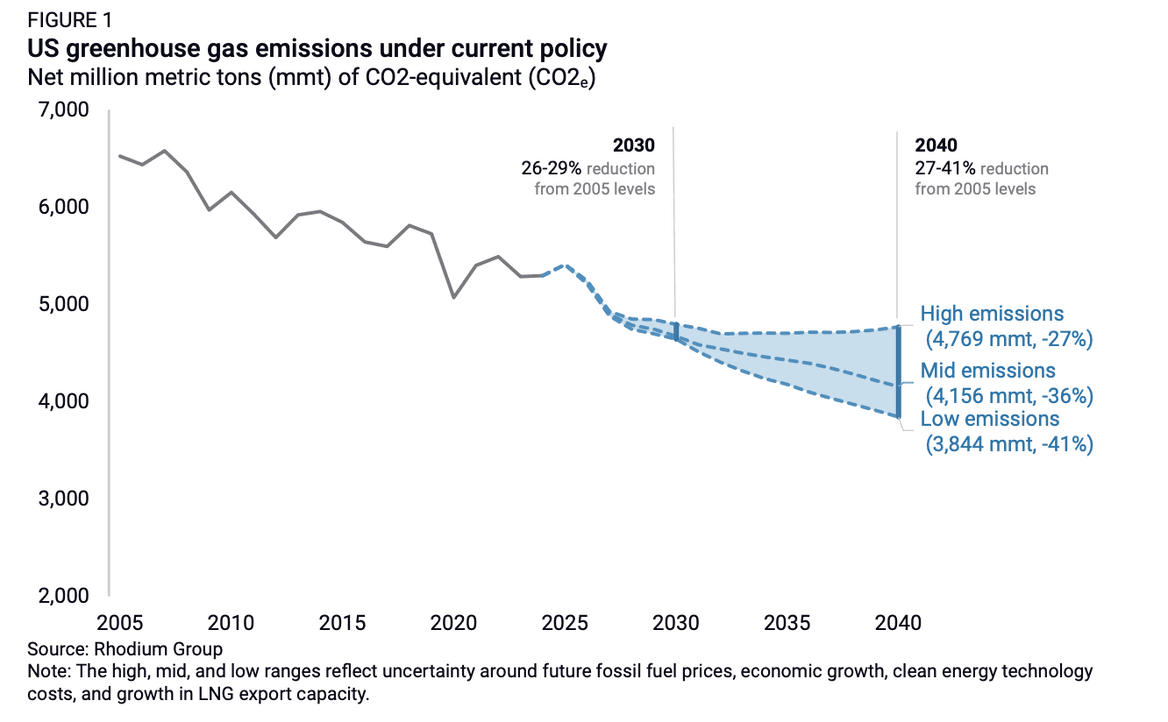
In Rhodium’s 2023 report, which incorporated the effects of President Joe Biden’s recently passed Inflation Reduction Act, analysts predicted emissions would fall by 29% to 42% by 2030. The country could still hit the low end of those expectations even after Trump dismantled many of the policies that made those predictions possible. That’s something of a win, but it’s tempered by the impossibility of hitting Biden’s Paris Agreement pledge of 50% reductions by 2030.
The certainty of renewables growth through the 2020s derives from a tax policy quirk that benefits solar and wind developers.
Although Trump snatched away the solar and wind industry’s beloved tax credits, projects that officially commenced construction by July 4 can still avail themselves of “safe-harbored” tax credits if they wrap up over the next four years. Rhodium expects developers will complete around 50 GW of solar, storage, and wind annually during this time. That outlook holds steady even in the more conservative scenarios, although it’s worth noting the firm’s model might not capture the extent to which the Trump administration’s permitting blockades may thwart development.
Past the bonanza of the late 2020s, those supporting tax credits disappear for wind and solar, and the predictions diverge wildly. The 2030s will come down to a battle for power sector supremacy between renewables-plus-storage and natural gas.
“When you have tax credits, you push up on what’s possible,” Kolus said. “Without them, you let energy markets take over, and then it becomes really a matter of what does clean technology cost and what are natural gas prices — those are the two things that are really driving the divergence in outcomes after 2030.”
In Rhodium’s low-emissions scenario, the low-carbon sources continue to romp, reaching 53 GW of annual installations through 2040 while holding new gas plants to just 5 GW annually. In the high-emissions scenario, the inverted price dynamics elevate gas to 16 GW of annual deployments and suppress clean energy construction to just 3 GW per year. In the middle scenario, renewables fall to an average of 16 GW annually in the first half of the 2030s, then rebound to 45 GW for the second half; annual gas additions meanwhile sit at about 9 GW over the course of the decade.
That high-emissions case would be devastating to the clean energy industry: The plummet from 50 GW of annual construction to 3 GW would decimate the pace of industrial activity, slashing construction jobs, infusions to local tax bases across the country, and new clean power for the states and customers that want it.
Rhodium’s findings square with what I’ve heard while interviewing clean energy professionals: There’s a ton of building to do in the next four years, but anything beyond that is too far off to predict. The energy landscape post-2030 will hinge on who’s in the White House. If that person restores supportive policies, the outlook will shift radically once again.
In the meantime, there are a few reasons to be optimistic that clean energy will avoid the worst-case scenario.
First and foremost, solar, wind, and batteries have a yearslong track record of beating the expert predictions of how cheap they’ll get. Given a range of cost projections, this history would suggest you bet on the low end. That alone could stave off the more dour scenarios described in the report.
Then there’s the changing nature of the U.S. fossil fuel industry. The country has been shipping more and more of its natural gas overseas via liquefied natural gas terminals. So much new export capacity has been approved and entered construction that LNG exports will rise dramatically in any of Rhodium’s scenarios. So far, this growth has had a muted effect on domestic gas prices, because producers have extracted more each year in lockstep with new export demand. But if the industry hit a bust cycle and couldn’t keep pace, basic economics suggests the domestic price would surge as U.S. consumers compete with foreign buyers willing to pay far more. That could weaken the case for gas generation in the 2030s.
Another source of hope for the clean energy contingent is that the modeling may underestimate how fast battery storage will reshape the power sector.
Rhodium notes that storage meaningfully takes off only in its low-emissions case, when lots of new renewables are getting built. But Kolus acknowledged that the analysis focuses on picking the lowest-cost option for new power capacity, whereas developers may build batteries for other reasons. For example, a firm could opt for batteries because they are less polluting than gas combustion turbines, or because they can be built more quickly. Batteries have already appeared in many deals specifically serving demand for data centers, to help tech giants with their climate goals and bring AI computing online faster.
When batteries do arrive in large numbers, they reliably take market share from gas plants. Gas generation in California is plummeting now, because stored solar power is a much cheaper source of nighttime electricity than burning fossil fuels. The broader cleanup of the U.S. power sector, then, will hinge on how quickly other states go the way of California in making batteries a prime source for on-demand energy.
Many manufacturers burn fossil fuels to make snacks, materials, and chemicals. High electricity costs are complicating their efforts to switch to cleaner technologies.
American households are all too familiar with the pain of high electric bills, which are climbing nationwide. The same problem is quietly hindering the country’s factories from cleaning up their operations, too.
Hundreds of thousands of U.S. manufacturing facilities burn fossil fuels to produce the heat they need to make packaged foods, bottled drinks, construction materials, and likely everything in your bathroom cabinet. It’s why the industrial sector accounts for nearly one-third of the country’s carbon dioxide emissions from energy use.
Cleaner technologies like industrial heat pumps, electric boilers, and heat-storing batteries are already commercially available. Yet even companies that are committed to decarbonizing can find it hard to justify making the switch. The underlying problem is that in virtually every state, electricity costs more than natural gas for industrial users.
“We have to have solutions that are at the very least competitive with the existing cost of fuel,” said Neil Brown, a chemical engineer at Tennessee-based Eastman Chemical, which has over a dozen manufacturing sites in the U.S. and more abroad. “In some places where Eastman operates, in parts of the Southeast and Texas, it is very difficult to compete with the low cost of natural gas.”
Brown was speaking on a webinar last month held by the Renewable Thermal Collaborative and Industrial Heat Pump Alliance. The groups looked at electrifying low- to medium-temperature processes, and estimated it would add roughly 250 terawatt-hours to the industrial sector’s annual electricity demand by 2035 — or nearly 25% more power than manufacturers currently use.
On the plus side, deploying clean industrial technologies could generate around $471 billion in total economic output over the next decade, even when accounting for the lost jobs and diminished business activities of gas utilities and equipment makers, according to the groups’ June report.
But reaping those benefits will first require finding ways to drive down the cost of electricity for manufacturers. A growing number of climate and energy experts are studying that challenge and proposing solutions for policymakers and utilities to consider.
One of those strategies could be to build renewable energy projects directly beside factories.
Researchers at the University of California, Berkeley, recently modeled what would happen if factories themselves installed off-grid solar or wind projects on-site and used the clean electricity to power thermal storage systems and heat pumps. The team looked at nearly 3,600 locations across the country, evaluating land availability, solar-power potential, and local natural gas prices for each site.
Renewable-powered heat systems could economically supply up to one-third of the studied industrial heat demand by 2035, they said in an analysis announced last week.
The researchers found that such an approach would make it more cost-effective to run heat pumps than gas boilers for industrial processes below 200 degrees Celsius (392 degrees Fahrenheit) — a broad category that includes beer making, paper production, and textile manufacturing. Meanwhile, thermal batteries would offer “competitive or lower costs” for scorching-hot operations like glass melting and steel manufacturing.
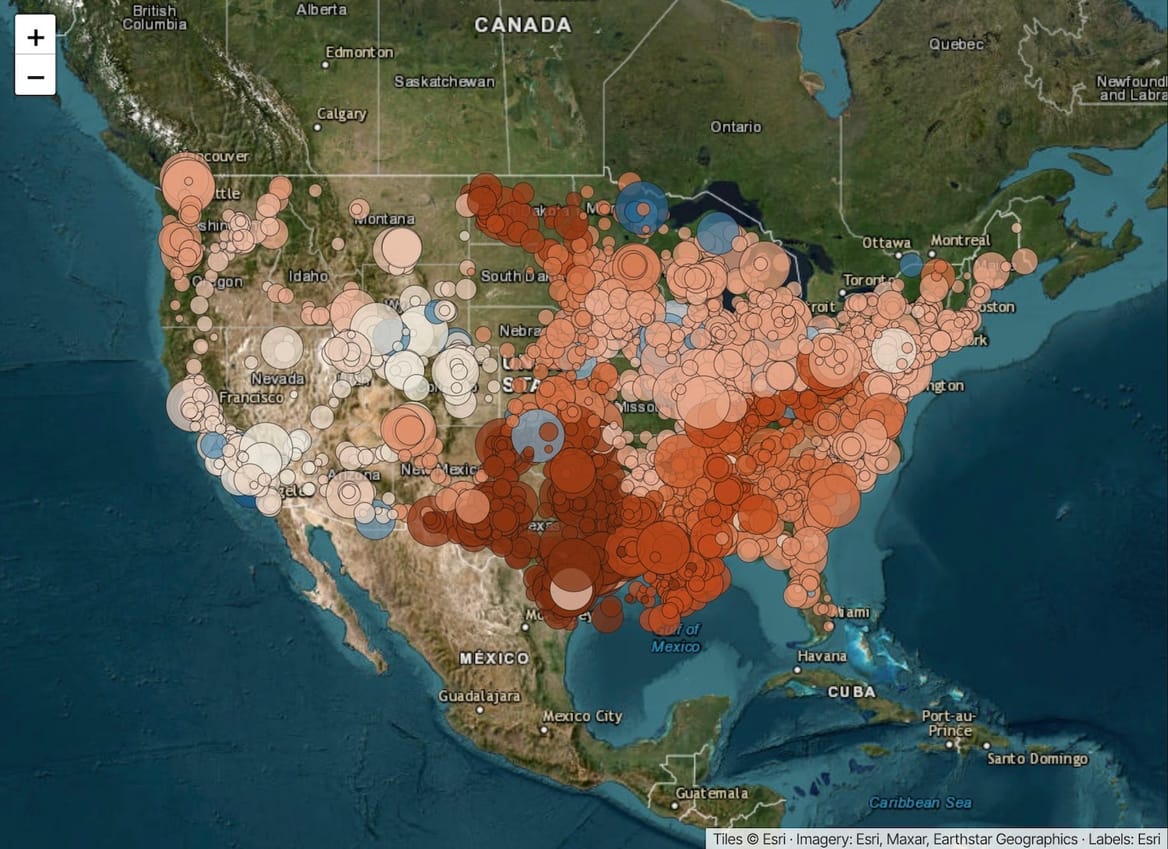
“In states where you have very good solar quality and natural gas prices are high, like in California, it makes economic sense for the industry to do this, because they will save some money on their heating costs,” said Amol Phadke, a co-author of the report and an adjunct associate professor at UC Berkeley’s Goldman School of Public Policy.
However, even states without California’s abundant sunshine can still produce low-cost solar power, thanks to declining solar-panel prices. The vast majority of sites in the study have sufficient buildable land to install solar projects.
Phadke added that building off-grid systems would give factories faster access to renewables, since grid-tied wind and solar farms have to wait in long interconnection queues, which can delay projects for years. Ditching the utility would also let manufacturers avoid paying steep grid-delivery charges and other expenses — and sidestep competition with data center operators for power from an increasingly strained grid.
The new site-level data “is really helpful for project developers and technology developers to know how to prioritize their efforts, in terms of where to go and pitch industries on,” said José Domínguez, the study’s lead author and a research affiliate at the Goldman School.
The fact remains, though, that many factories will continue to rely on the electric grid in the near term. To get these facilities to consider transitioning to cleaner heat, the cost of electricity needs to come down.
The concept of electricity rate reform is gaining traction among decarbonization advocates, state policymakers, and manufacturers like Eastman as a tool for narrowing the gap between electricity and natural gas prices.
In California, Senate Bill 943 would authorize the state’s Public Utilities Commission to fix utility rates and fees to make it more affordable for large industrial and commercial customers to switch from fossil fuels to electric heat. The bill passed the Senate in May and is now headed to the state Assembly’s Appropriations Committee.
In the Upper Midwest, the utility Otter Tail Power recently developed a novel electricity tariff that is designed to boost the bottom line of thermal energy systems and to ensure they benefit everyone on the grid. The first project to take advantage of this new rate is Antora Energy’s 5-gigawatt-hour battery in South Dakota, which turns cheap wind energy into clean industrial steam for Poet’s nearby ethanol-production plant.
“Reforming electric rates is a good way to improve the economics of electrification while taking advantage of our clean electricity generation,” said Lauren Kubiak, a senior scientist for the Natural Resources Defense Council who works on California climate and energy policy.
Kubiak led a new study analyzing how this strategy could improve the costs of operating industrial heat pumps in two major manufacturing states: California and Michigan. While heat pumps are significantly more energy-efficient than gas-fueled boilers, they’re typically not cost-effective to operate in either state, given current electricity prices.
The study examined what would happen if companies paid only “marginal” electricity costs, which reflect the actual cost of generating and transporting an additional unit of electricity. Today, ratepayers also pay “non-marginal” costs that help cover things like grid maintenance and infrastructure upgrades, net-metering programs for rooftop solar, and, in California, wildfire-prevention efforts.
“In California, [marginal-cost] rates enabled heat pumps to become pretty cost-competitive with gas boilers,” Kubiak said. That’s particularly true for major subsectors that require low-temperature heating.
For Michigan manufacturers, the impact is more muted, since the state’s electricity rates are lower than California’s and don’t include as many non-marginal costs. However, charging factories marginal rates would still reduce the size of the electricity-gas cost gap, enough that layering on other industrial policies — such as a tax credit that rewards low-carbon heat production — could bridge that divide almost entirely.
In the report, Kubiak and her co-authors suggest that utilities could offer marginal cost rates only to new heat pumps that displace fossil fuel–generated heat. These rates could also be set to encourage manufacturers to use electricity during times when solar projects are producing excess electricity, or when overall grid demand is low. That should help avoid saddling other ratepayers with the non-marginal costs that these new heat pumps won’t be paying.
“Electric rate reform is a tool in our toolbox that hasn’t been used to its fullest extent just yet,” Kubiak said.
Trump’s Department of Energy bashes solar panels for not producing 24/7, but the renewable energy source just got Texas through a heat wave.
Yesterday, the Department of Energy took to social media to try and make a scandal out of a well-known fact: Solar panels do not generate power at night.
It’s an old and lazy swipe that critics of renewable energy love to take, even though the people who operate our power grids know that this is the case and plan around the advantages and constraints it presents. That this argument is coming from the cabinet agency overseeing America’s energy system is unnerving but at this point unsurprising. It’s not the first time Energy Secretary Chris Wright has twisted basic facts about renewables.
During the early-July heat wave, “99% of solar power” in the mid-Atlantic “failed after sunset,” according to the graphic Wright’s Energy Department shared on X.
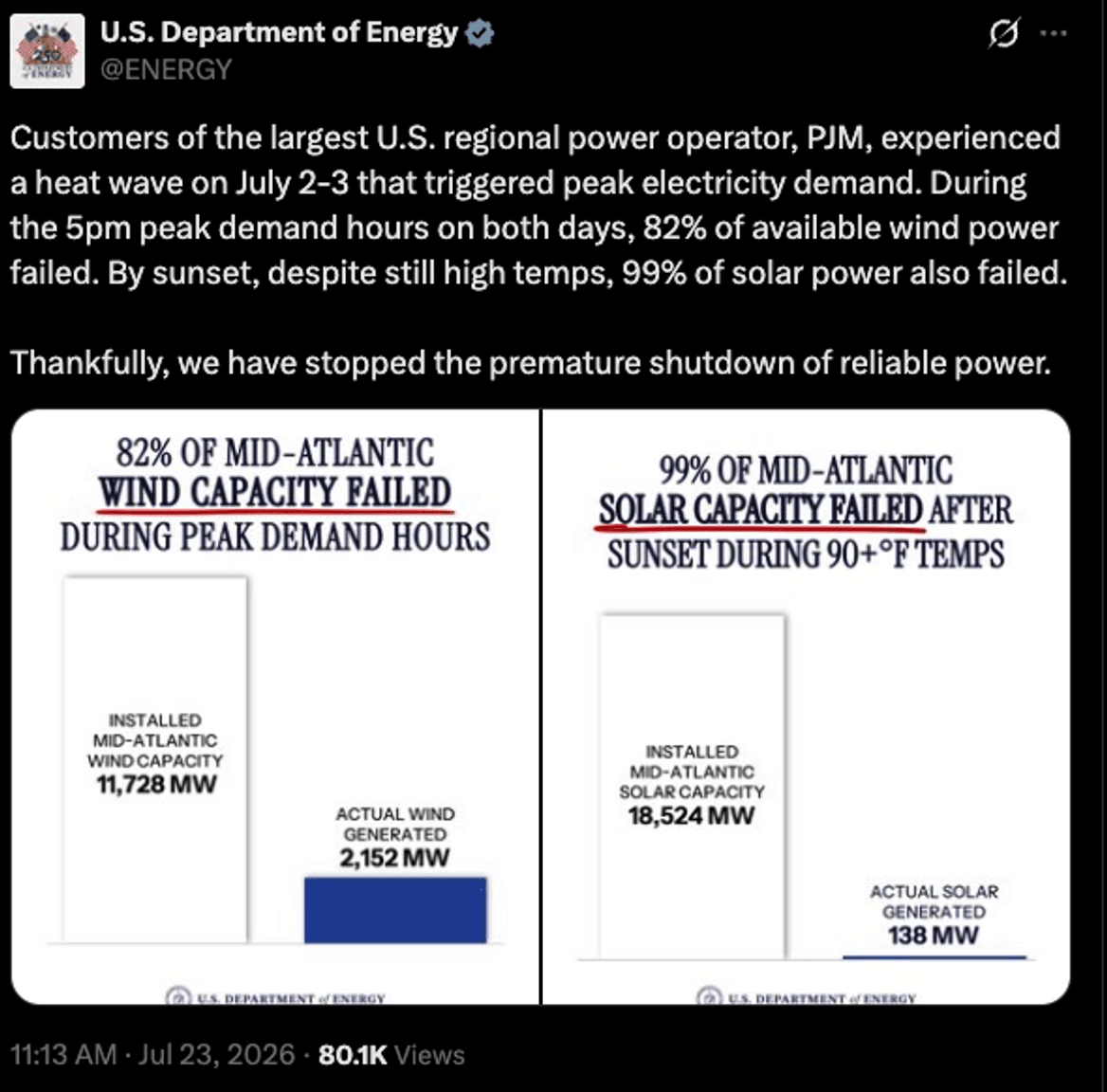
Putting aside the misleading and deceptively provocative language (“failed”? really?), the post completely ignores, you know, the rest of the day. When the sun is shining.
As Wright and others at the DOE well know, solar may not work at night — but it excels in the day. And that matters a lot.
I’ll use one very recent example to make the case. Texas experienced a heat wave this week, and its residents did what you’d expect to get through it: They cranked up their air conditioners. AC is a lifesaver but also an electricity guzzler, and so all that cooling pushed the Texas grid to new highs. On Tuesday the state’s main power grid broke its all-time electricity-demand record. That superlative didn’t stand for long: On Wednesday it set a new record with over 91 gigawatts of peak demand.
Despite this unprecedented strain on the grid, the lights stayed on and the ACs kept humming along. Solar, which Texas has built tons of in recent years, played a major role in that outcome.
On Tuesday, for nearly five hours, solar provided more electricity than natural gas did. On Wednesday, from just before 9 a.m. until just before 5 p.m. — the duration of a full workday — solar provided more than one-third of all electricity in Texas. At times each day, it topped 40% of electricity supply. Solar also helped charge up enough batteries that the Lone Star State set a new record for battery output Wednesday evening when the sun set and demand remained high.
Pretending that solar does nothing to stabilize the grid during periods of extreme stress is disingenuous at best, but it also discounts another key fact. In moments like this past week in Texas, solar can — and did — keep energy prices from spiking.
Perhaps the administration put out this post to troll people like myself. If so, then congrats — consider me trolled and triggered.
I wish we could just categorize it as inane and laugh it off. But it’s coming from a once-authoritative source and cloaked in a faux-authoritative tone and premised on figures that are technically accurate, if completely misleading. And stuff that sounds reasonable and comes from ostensibly trustworthy sources has a way of spreading around online.
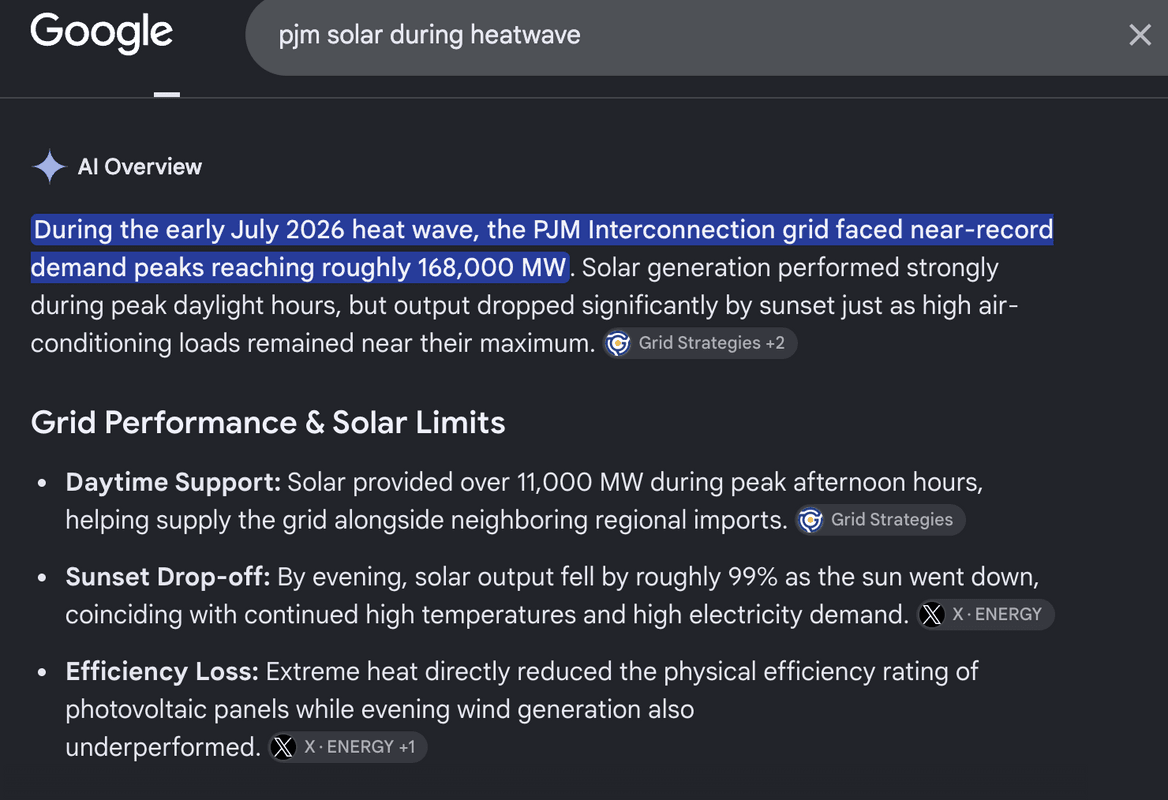
Already, Google’s AI overview is promoting this DOE post as a reputable source and pointing out that solar “output dropped significantly by sunset” during the July heat wave in the mid-Atlantic.
And, of course, the DOE’s message is part of a much more serious and directly damaging trend: The Trump administration’s war on solar and other forms of renewable energy.
Trump has ripped away tax credits for both large-scale solar projects and rooftop installations, crushed a program meant to help low-income Americans afford photovoltaic panels of their own, slow-rolled permitting for projects, and froze a longstanding federal effort to help farmers put solar on their land. I could, unfortunately, keep the examples coming.
But the administration can’t change the fact that solar is the cheapest, cleanest, and easiest form of energy to build — or that we are in the midst of an unprecedented boom in electricity use. People’s utility bills are soaring because supply is lagging behind demand.
It’s undeniable that solar is valuable to our energy system, even if it can’t anchor a grid on its own. Yes, of course, its value is mostly during the daylight hours, though batteries are making it possible to shift more and more of that power to evenings. And in any case, we do not live on a cold, shadowy planet condemned to long, dark days. In New York, where I am writing this, we’ll have 14 hours and 34 minutes of daylight today. If only we had even more solar panels installed here to soak it all up.
It was the EU’s top power source in early summer, generating a record 25% of electricity. The clean energy boom is likely to accelerate further from here.
Europe has had a sunny start to its summer.
Across both May and June, solar was the European Union’s top source of electricity — and provided a record-high 25% of the region’s power last month, per new data from think tank Ember. Several countries, including Spain and Germany, received more than one-third of their electricity from solar in June; in Hungary, it supplied nearly 50%.
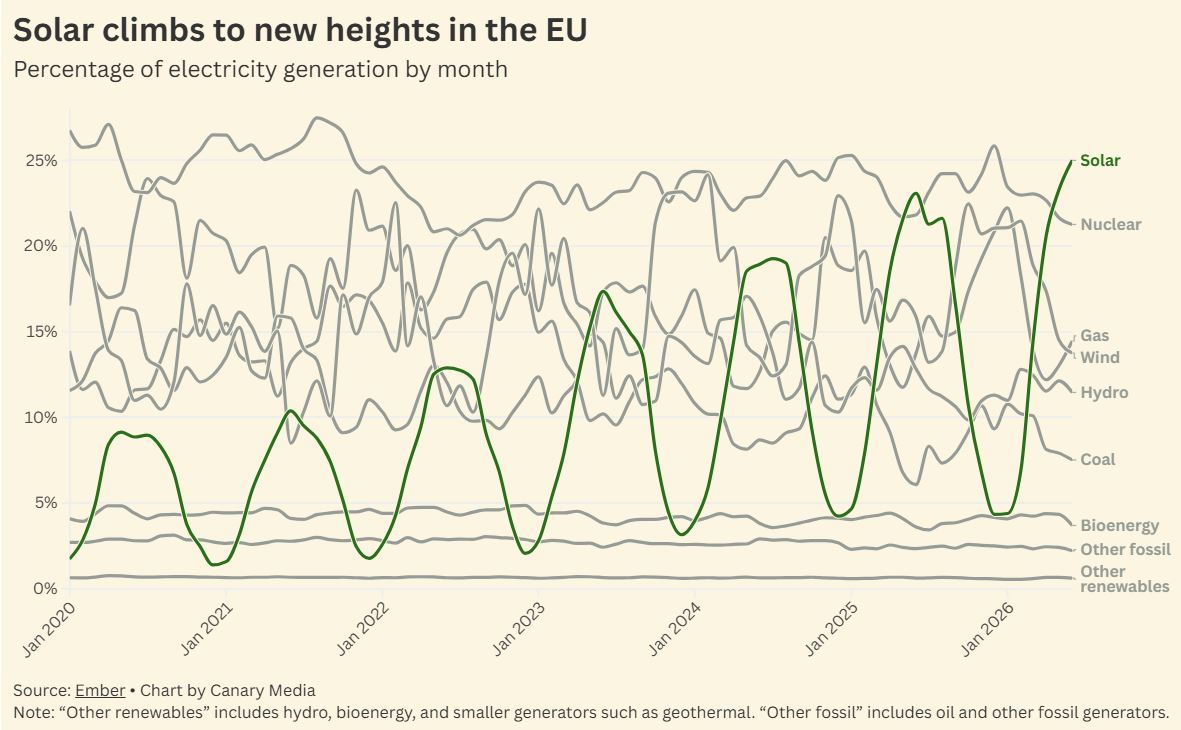
The data highlights Europe’s rapid solar adoption. Five years ago, solar delivered around 10% of the EU’s electricity even in the sunniest months. But Russia’s invasion of Ukraine in 2022 destabilized the region’s gas-dependent electricity system and spurred member states to build out clean energy faster than they had planned to.
More solar has meant less coal and natural gas on the EU grid, which has helped slash planet-warming pollution. Carbon dioxide emissions from the EU electricity sector declined by nearly one-fifth between 2020 and 2025.
Many analysts — including those at Ember — expect the war in Iran and the resulting spike in fossil fuel prices to once again accelerate the EU’s investment in renewables. Shortly after the U.S. and Israel initially attacked Iran, EU energy chief Dan Jørgensen urged the bloc to double down on clean energy. Last week, he unveiled a new Electrification Action Plan that would see the EU double its current rate of electrification.
Jørgensen paired his announcement with a simple statement: “The age of fossil fuels is coming to an end.”
An Asheville, North Carolina, group has embraced solar to secure backup power and lower bills. Its efforts go beyond the standard rooftop array.
ASHEVILLE, N.C. — Nearly two years after Hurricane Helene wreaked havoc on western North Carolina’s largest city, many Asheville residents are still rebuilding — and determined to be better prepared for the next weather disaster.
In Emma, a diverse, mostly immigrant neighborhood just northwest of downtown, solar energy is playing a key role in that work, offering not only a backstop for the next grid outage but also lower utility bills year-round.

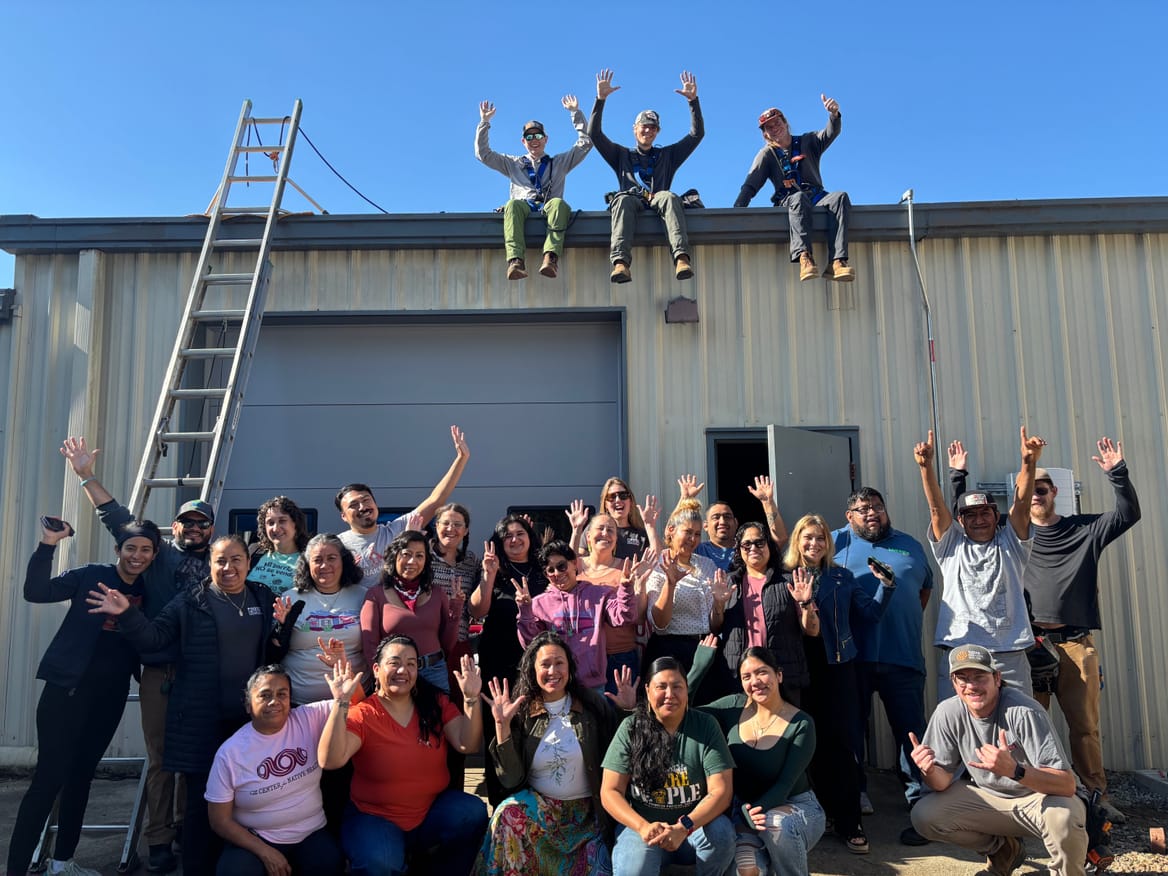
Earlier this month, residents, clean energy workers, and organizers gathered to celebrate the latest addition to Emma’s growing solar capacity: a 46-kilowatt array on the rooftop of the community and cultural center owned by La Esperanza (“the hope” in Spanish), a neighborhood real estate co-op formed in 2019.
La Esperanza is one of many organizations and co-ops within Poder Emma, an alliance that has worked to fight displacement and ensure affordable housing in this low-income community for nearly two decades. The 100-plus panels atop the center — a gathering place for celebrations, workshops, and other functions — will lower electricity bills for Poder (meaning “power”), reducing the amount of energy it draws from the grid.
The project was made possible by a host of partners that contributed time, money, and expertise. Most came together in the immediate aftermath of Helene, when mobile solar-powered charging stations proved vital for Emma’s recovery.
“Suddenly, there was an interest in solar where there hadn’t been before,” said Ingrid Johnson, a project manager at Poder. “The reality is that solar can be for communities that are often left out.”
The panels were donated by the Footprint Project, a New Orleans–based sustainable disaster-relief nonprofit that arrived in the area right after the storm and never left. Sugar Hollow Solar, whose offices are just a few doors down from the sprawling, 20,000-square-foot Poder complex, installed the system. Invest Appalachia, a regional fund for economic development, chipped in with a bridge loan to tide Poder over until the panels pay for themselves and federal rebates are processed.
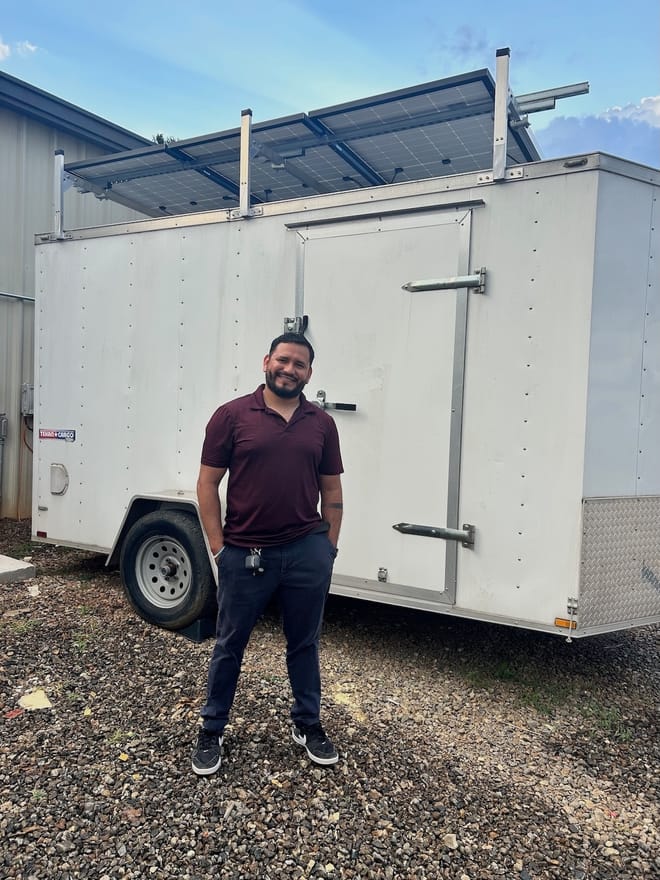
Yet even with that assistance, a typical battery backup system to power essential functions during a grid outage proved too costly. So the partners got creative: They instead have a trailer outfitted with 900 watts of solar panels and a smaller battery to help do the job.
The box on wheels, another Footprint donation, is able to plug into the community center and function as a mini generator for crucial services, including the internet, refrigeration, and the pump for a drinking-water well the collective drilled on-site the winter after Helene destroyed an Asheville water main. The damage left most of the city without clean tap water for nearly two months.
“The climate is going to get more extreme as years go by, unfortunately,” said Kelvin Bonilla, who joined Poder’s staff in early 2025. “So, being able to power the pump from the solar trailer adds that extra layer of resiliency.”
But the solar trailer is more than just an emergency generator. Most of the time, it serves as a mobile outlet and tool-charging station for Poder’s home repair crew, which was formed to address the destruction from Helene and will soon tackle energy-efficiency improvements, too. The team needs its own power source for drills, saws, and other equipment to avoid overwhelming the fuse boxes of the homes they are fixing.
“When we plug into their outlets, we have situations where we trip breakers because it’s such a big load,” said Bonilla, who manages the home repair initiative. “Having the trailer allows us to be more independent and more resilient.”
The solar trailer helps create a sort of microgrid, a self-contained system that can operate when the larger grid goes down. Sustainable microgrids are typically outfitted with a large, stationary battery, but the trailer offers a cheaper, portable option. The approach could inform other resiliency efforts prompted by the storm, staffers at the Footprint Project say, including a $5 million state grant program for 24 microgrids in western North Carolina.
Poder and Sugar Hollow are also experimenting with using solar to help individual households weather the next storm. Mobile homes make up the vast bulk of housing stock in the area, and thanks largely to Poder co-ops, a small number of families own rather than rent theirs. Still, solar has long been out of reach because of poor structural stability in manufactured homes. The solution: Attach a custom-made porch to the home and install panels on its roof.
Sugar Hollow and Poder tested the concept early this year, installing 15 panels on a porch built for a manufactured home in Emma, backed up by a Tesla Powerwall 3 battery. The system benefits the household at no cost, thanks to contributions from Footprint and an initiative Sugar Hollow launched in 2025 to help Helene-impacted groups access renewable energy.

“This was a really great pilot project to understand how we can make solar available for mobile homes,” said Clary Franko, chief operating officer at Sugar Hollow. “The structure is multipurpose — it’s for solar, but also a gathering place for the community.” With additional funding, she hopes to add these solar porches for more households.
Organizers stress that Poder’s members, not its leadership, devised the front-porch model. The same holds true for virtually all the collective’s endeavors — solar and otherwise. That, Bonilla said, is a huge source of pride.
“Typically, a nonprofit is a group of people that sees a problem and goes into a community and says, ‘We’re going to solve all your problems,’” he said. But at Poder, “we listen to the community first before we do anything.”
The state was No. 3 in solar installations last year — but with more solar has come more local opposition. Experts say genuine community engagement is needed.
When the largest solar farm in Indiana came online in early 2025, nearby residents in rural Jasper County were not exactly excited.
“It will mess up their fields,” said long-time resident Gena Carlson, referring to solar panels on farmers’ land. Carlson’s concerns, which were echoed by other locals, highlight the growing on-the-ground opposition to Indiana’s remarkable boom in solar construction.
Last year, Indiana ranked third among states for the most new solar projects brought online. Only Texas and California — the nation’s clean energy leaders — built more. It’s a new position for Indiana, which ranked 15th for solar additions in 2023 and 10th in 2024. The Solar Energy Industries Association expects Indiana to maintain its momentum, projecting it will have the fourth-highest solar growth over the next five years.
“That’s a pretty notable fact since we don’t have the incentives and policy support for solar that a lot of other solar leaders do,” said Ben Inskeep, program director at the Citizens Action Coalition, the state’s primary consumer watchdog group.
The growth is due in part to the state’s data center boom, with solar developers taking advantage of Indiana’s level land, robust transmission networks, and relatively sunny weather to build clean power that meets tech companies’ sustainability goals. The utility NIPSCO, owner of the Jasper County solar farm, adopted ambitious clean energy goals in 2018 and brought more than a gigawatt of solar online in Indiana last year.
But as solar capacity has increased, so too has local opposition — and clean energy advocates say developers and officials must find common ground with communities in order to keep the solar buildout going.
Like Carlson and her neighbors in Jasper County, residents across the state are protesting that solar will eat up farmland, affect property values, or change the bucolic character of counties in America’s heartland. These claims are not unique to the Hoosier State — similar pushback is spreading around the country as solar grows, even if the tech uses only a sliver of farmland nationwide.
A recent study by researchers at Loyola University Chicago found that local opposition has been a prime reason why county officials in Indiana have denied approvals for solar projects, regardless of the economic benefits and other positives involved.
“There was not nearly as much opposition three to four years ago,” said Brian Flory, associate director of the Indiana program for the national advocacy organization Solar United Neighbors. “The opposition was less intense, we had less misinformation, and there were fewer examples of opposition pushing back against projects and deployable ordinances.”
Thomas Brelage remembers visiting his grandparents near the Clifty Creek coal plant in Jefferson County, Indiana, while he was growing up and seeing “the backdrop of the coal spires right there in town.”
At first he thought little of it, but later he became interested in the clean energy transition, securing an internship with a Chicago-based solar developer and earning his master’s degree at Loyola’s School of Environmental Sustainability.
When he visited his grandparents in 2024, he saw signs saying “Yes Solar” and “No Solar” in nearby fields.
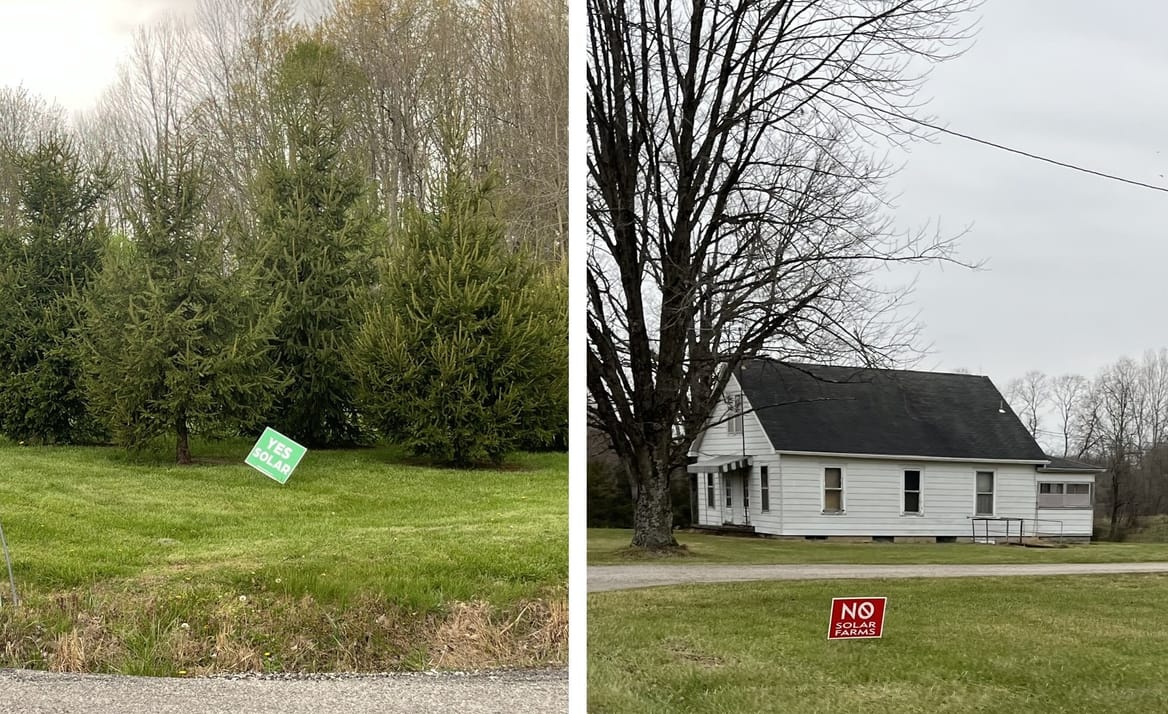
The brewing controversy over solar intrigued him, so he focused on the topic for his master’s thesis, which then became a study, published in May. It involved a survey of 22 local officials, many from counties that had been home to coal plants or mines.
“For a lot of these communities, the coal plant was one of the highest-paying jobs historically, one that anyone could take part in,” said Brelage. “As that industry started shutting down, it left a big hole.”
Some of the officials told Brelage they do not see solar as capable of filling the economic and employment gaps left by the closure of coal facilities. Others mentioned that colleagues lost reelection bids in part because of their support for solar.
Convincing residents that solar provides real financial benefits for communities is key to growing its acceptance, Brelage concluded.
A solar farm itself is never going to create the same type or volume of jobs as a coal plant. But the sector can contribute to the tax base — and it can create jobs in other ways.
The main mechanism is by luring in other businesses that want cheap, clean power, noted Michael J. Hicks, professor of economics and director of the Center for Business and Economic Research at Ball State University. He is lead author of a policy brief on the impact of renewable restrictions in Indiana, released in April by Ball State and Purdue University, and funded by the U.S. Department of Energy.
Such businesses could include factories that need a lot of electricity. Or they could include data centers, which don’t usually create a large number of jobs but can also pump up a county’s tax base.
“If I’m going to open a factory, I’m going to be very cautious about where I open it,” said Hicks, who was previously on the faculty at the Air Force Institute of Technology. “I want to open it in a place where I can hook up to the grid close to a wind or solar plant.” He pointed out that data center developers and their customers often have ambitious net-zero goals, which may drive them to locate facilities where clean energy is abundant.
But increasingly, concerns about farmland and rural character — rather than jobs or tax revenue — are animating local opposition.
Last summer, for example, officials in Vanderburgh County voted 4-3 against a zoning change needed for the 600-acre Bluegrass Creek solar farm proposed by Orion Renewables. The company had pursued the project for at least five years, held multiple community meetings last year, and donated to local programs.
In the end, it still faced strong local opposition that led to its defeat.
“Why does this project need to go here, on farm ground?” asked a resident during a community meeting held by the company. Others raised concerns about property values, water runoff, eventual decommissioning of the solar farm, and the possibility of tornadoes destroying panels and creating debris.
While solar farms may change rural landscapes, advocates and industry groups point out that solar occupies a tiny portion of the state’s agricultural land. In Indiana, farms take up two-thirds of all land — and solar only a 10th of a percent. Golf courses occupy nearly three times as much space in the state.
The fact that local attitudes and regulations vary widely between Indiana counties makes it that much harder for developers to plan.
“I often call it a 92-county game of Whac-a-Mole when it comes to solar siting,” said Flory. “We’re a local-rule state — that means by and large you have 92 distinct and discrete frameworks when it comes to how these types of projects are processed.”
In some cases, county ordinances make it too difficult for solar developers to site projects, Flory noted. Other times, officials vote to deny needed zoning changes or other siting approvals even when proposals comply with local regulations.
Last year, Indiana legislators considered a Republican-backed bill that would have given the state more power over siting decisions, but it died amid opposition from local officials and critics of renewables.
“The challenge is balancing statewide and regional energy goals with local autonomy,” said Gilbert Michaud, assistant professor of environmental policy at Loyola and Brelage’s advisor and coauthor on his study. Michaud has studied opinions toward solar across the Midwest and in Europe.
“Especially in the American context, you’re giving that autonomy down to the smaller layer of government, but they have limited staff capacity and are under political pressure,” he said. “If you do it through the state agency, you might lose that local voice, even if state staff are better equipped.”
A 2022 state law created voluntary siting standards for solar that counties can incorporate into ordinances to become “solar-ready” and streamline the process for considering new projects.
Many counties have some of those standards on their books, which include rules about things like glare minimization and repairing drainage affected by solar panel installation, but few counties have adopted a comprehensive set of standards, advocates say.
Overall, though, United Solar Neighbors found that more Indiana counties discourage solar development than encourage it. The group conducted an analysis and found that 11 counties have outright moratoriums on solar (though a few were scheduled to expire this year), 20 have ordinances that are restrictive, and only 24 are considered favorable to solar.
Those restrictions have taken their toll. Indiana counties with restrictions on utility-scale solar forfeited more than 8,500 potential jobs and $83 million in manufacturing investment between 2001 and 2021, according to Hicks’ brief.
Brelage said county officials told him that the way solar developers interacted with residents and local leaders had a big influence on attitudes toward solar. He noted one official applauding a developer “going above and beyond, showing up at county fairs, county hearings, trying their best to be involved, to not just be this developer you hear from once in a while.”
If developers want permission to build solar, they “need to be intentional with what they’re doing, not just throwing money around,” he concluded. “It’s important to be focused on the educational aspect, so that when it is time for your county hearing, it isn’t the first time you’ve stepped foot in the county.”


.svg)
