

 Back
Back
The geothermal startup will supply 400 MW from its Cape Station project to a Google data center in Utah. An initial phase of the project will come online this fall.
Fervo Energy inked a landmark deal to supply Google with nearly 400 megawatts of clean electricity from the startup’s geothermal project in southwest Utah.
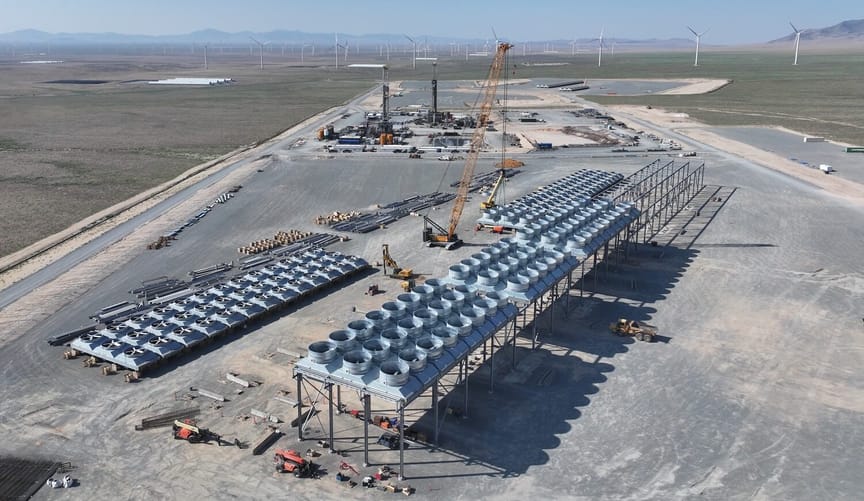
The agreement is the largest of its kind for a next-generation geothermal system — an emerging technology that involves drilling deep into hot, dry rock to use underground heat for producing power. Fervo is investing over $2 billion to build what could become the biggest such system in the world when it is completed in 2028.
Securing customer contracts is an essential step for a novel project like Fervo’s Cape Station. Without a clear buyer, it can be difficult to attract financing for first-of-a-kind facilities, even if they promise transformative benefits for the power sector. Fervo, which went public in May, saw its shares jump 15% on Tuesday morning following news of the Google power deal.
Houston-based Fervo is now developing the first, 100-MW phase of Cape Station and expects to start generating test power from a 33-MW unit in the fourth quarter of this year. The deal with Google supports the buildout of the second, 400-MW phase, which is slated to be up and running in about two years.
Google said it intends to buy the geothermal power for a potential data center in Utah.
“As demand for reliable electricity grows, customers like Google need energy resources that can be deployed at scale, operate around the clock, and deliver where power is needed,” Tim Latimer, Fervo’s CEO and co-founder, said in a Tuesday news release.
The companies did not disclose PPA terms. Phase 1 of Fervo’s Cape Station is set to deliver power at $7,000 per kilowatt, while Phase 2 should come in at $5,500 per kW, Sarah Jewett, Fervo’s chief operating officer, previously told Canary Media.
Geothermal energy generates just 0.4% of total U.S. electricity today. Conventional geothermal relies on natural features like hot springs, limiting where such facilities can go. Fervo is part of a rapidly growing effort to deploy innovative tools and techniques — often derived from oil and gas drilling — to access the earth’s heat in more diverse places.
The startup has been working with Google in this pursuit for years.
In 2021, the two companies signed an agreement to develop a next-generation geothermal project. Two years later, Fervo turned on its 3.5-MW commercial pilot plant in Nevada. The first-of-a-kind facility is still the largest operating “enhanced geothermal system” in the country — though another firm, Sage Geosystems, recently began producing power from its 3-MW, next-gen pilot project in Texas.
Before Tuesday, Fervo and Google had previously signed a 115-MW power purchase agreement with the Las Vegas–based utility NV Energy to develop more geothermal for the tech giant’s data centers in Nevada.
Google said it hasn’t determined where it will build the Utah data center that will run on Cape Station’s power.
“Even though right now we don’t have clarity yet on how this will service a data center … we know that it will be a foundational building block of power generation for a data center presence in Utah,” Lucia Tian, Google’s director of advanced energy technologies, told The Wall Street Journal on Tuesday.
Under the new deal, Google has the option to expand its Cape Station agreement by around 600 MW by June 2030. The tech company and Fervo also have a deal in place allowing Google the right of first refusal to purchase up to 3 GW of electricity from certain new geothermal power plants the startup develops.
For next-gen geothermal to scale, drilling costs must drop. Startup Hephae says its novel tech can make that happen — and developers like Fervo are giving it a try.
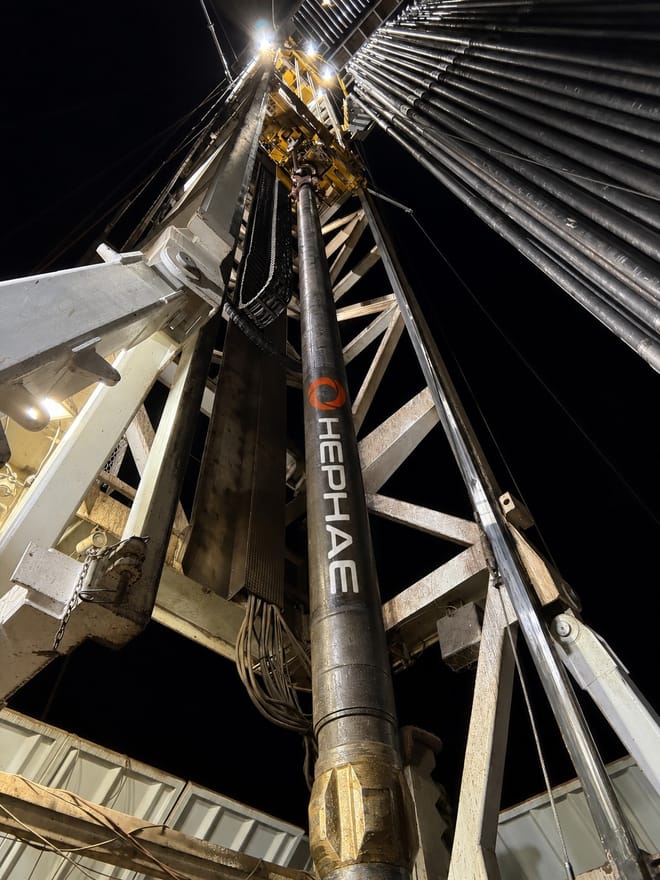
Thousands of feet beneath the desert valley of southwest Utah, a slender tool tucked inside a drill pipe is barreling through hot granite. The rod-shaped device, built by the startup Hephae Energy Technology, is a tracker of sorts, wirelessly sending data to help operators above steer the drill below and to measure rock conditions.
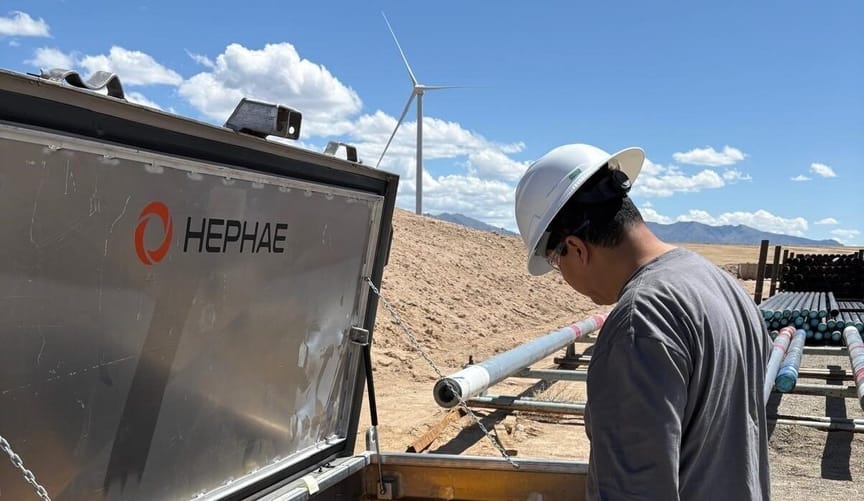
The work is underway at Fervo Energy’s Cape Station, the largest project in the nation using nascent techniques to tap earth’s heat for clean energy. The 500-megawatt endeavor could usher in an era of next-generation geothermal development — but only if the industry can bring down drilling costs.
That’s where tools like Hephae’s can help.
Oil and gas firms have long used similar “measurement-while-drilling systems” to bore holes underground. But off-the-shelf parts aren’t designed to withstand the higher rock temperatures that geothermal companies aim to reach, which makes the equipment less efficient and costlier to operate.
Hephae’s founders, veterans of the fossil fuel industry, saw an opportunity to create a more advanced version for the burgeoning next-gen geothermal market. “We realized that companies like Fervo need the same exact tools that we’ve been working on for the last 45 years,” Steve Krase, Hephae’s CEO, recently recalled.
“They just need to work a hell of a lot hotter,” he added.
Hephae deployed its high-temperature device for the first time commercially at Cape Station earlier this year and has since used it there it additional times, Krase said. His firm will soon ship another of its high-tech rods to the startup Mazama Energy, which has started drilling its commercial pilot facility near the Newberry Volcano in central Oregon.
These and other next-generation geothermal projects are poised to become a significant source of on-demand electricity in the western U.S. over the coming decades. Unlike traditional geothermal plants, the newer systems don’t rely on finding natural hot-water pockets to generate heat; they can go wherever rocks are sufficiently scalding.
Yet the fledgling sector will struggle to scale unless companies dramatically reduce the time and money it takes to drill new wells — each of which can require millions of dollars, and together represent as much as half the expense of building new geothermal plants.
“Any way that you can get geothermal to be [cost] competitive with other sources of energy, like nuclear, solar, and wind, … will be pretty crucial,” said Zainab Gilani, an energy and power research associate at Cleantech Group, a consulting firm.
Houston-based Hephae is among a growing number of drilling-focused firms working to reach that goal. The company — whose name evokes the ancient Greek god of fire, Hephaestus — raised nearly $18 million in venture capital funding in July to build more tools to rent to geothermal developers.
All told, seven startups have secured $393 million in total venture investment since 2021 to develop cutting-edge drilling systems and components for geothermal power, according to Cleantech Group. That includes Quaise Energy’s recent $134 million fundraise to advance its rock-melting technology and build its first geothermal plant, also near Oregon’s Newberry Volcano.
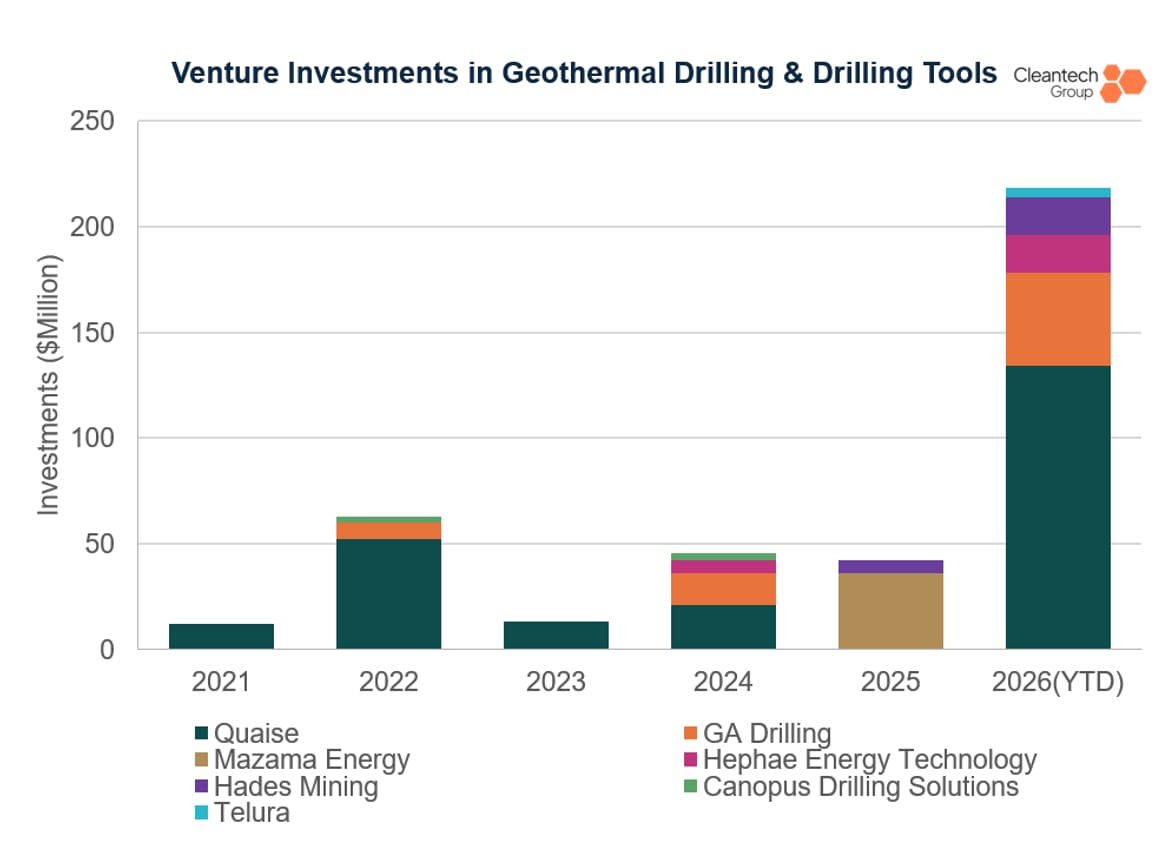
Geothermal firms “are basically trying to get underground as cheaply as possible,” said Stephanie Díaz, a senior associate for technology and innovation at BloombergNEF. She said the pursuit is a “rising tide that lifts all boats,” given how innovation spreads.
Investors are backing firms along the supply chain as a way to get exposure to the geothermal market, but without taking on the risk of building a first-of-a-kind project. “Instead of having to figure out an entire power plant, you just need to figure out one component that is essential to creating the power plant,” Díaz said.
Krase and his co-founder, John Clegg, launched Hephae in 2020 to adapt their oil and gas expertise for geothermal wells.
Their measurement-while-drilling system fits into a thick steel tube that connects to the rock-cutting drill bit. Sensors and rounded circuit boards — stacked like chips in a Pringles can — gather subsurface data and transmit it through a sequence of pressure pulses, enabling engineers to steer the drill through the challenging environment.
Conventional versions of the tool are built to operate at relatively lower temperatures — around 175 degrees Celsius (347 degrees Fahrenheit) — where oil and gas reserves are typically found. But for geothermal firms, the higher the rock temperature, the more energy they can wring out of the system, making each well more cost-effective and productive.
Right now, that means geothermal developers must occasionally pause for extended periods to cool the drilling fluid inside the wells to avoid overheating the electronics. This “nonproductive time” can cost operators roughly $500,000 to $1 million per well, since they’re still paying to rent a drilling rig they’re not using, according to Krase.
Hephae says its unique design can withstand temperatures up to 210℃, reducing work delays by directing heat away from the sensors and circuits as they operate. Before shipping the tool to Cape Station, the company put the technology through its paces at an Oklahoma test facility and in Texas at a high-temperature gas well — another possible market for Hephae.
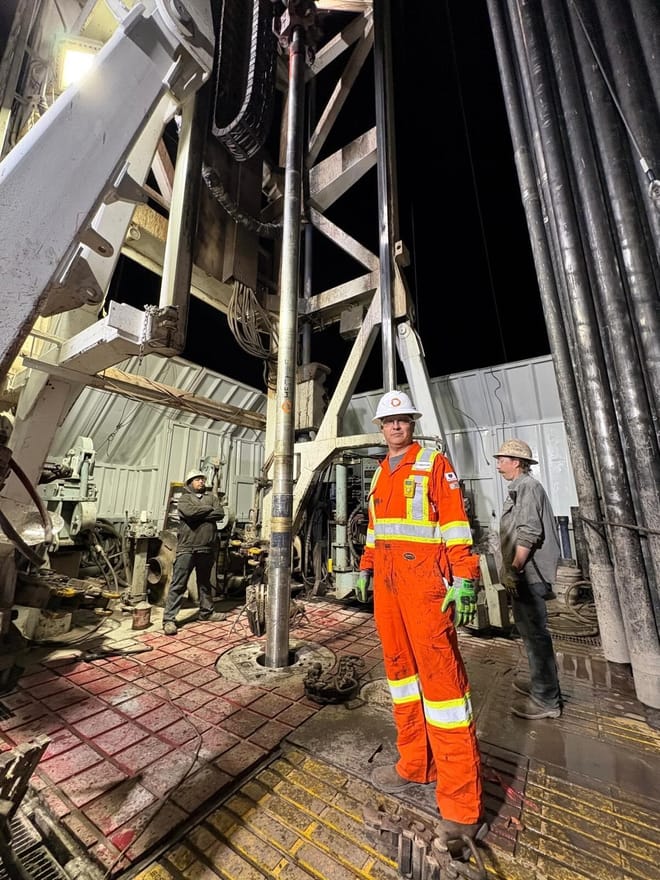
“Fervo has been really supportive, because they know their success depends on being able to get to the good rock,” Krase said.
Fervo, for its part, has already made significant strides in recent years to reduce drilling times and access deeper resources in Utah. In May, the startup became the first next-gen geothermal firm to go public, and Cape Station is expected to be the largest project of its kind in the world when it comes fully online by 2028.
The company declined to comment for this story, but it shared an earlier statement from Elliot Howard, Fervo’s director of drilling and completions.
“Fervo is encouraged by the early progress of our collaboration with Hephae, whose novel high-temperature innovations have the potential to contribute positively to [enhanced-geothermal-system] economics, unlock higher-energy geothermal resources, and further cement the competitiveness of next-generation geothermal power,” Howard said in a July press release announcing Hephae’s fundraise.
With its new funding, Hephae plans to triple the number of tools in its arsenal, from six to 18 by the second quarter of next year. That total could reach 40 tools by the end of 2027 as Fervo, Mazama, and future partners advance their geothermal projects.
Hephae is also investing in R&D to design systems for temperatures above 300℃, which it hopes to launch by 2030.
Gilani of Cleantech Group said that Hephae’s partnerships with Fervo and Mazama make it well positioned to grow with the wider next-gen geothermal industry. If Hephae can play a part in bringing the projects online, “that will both help Hephae to scale and will also help the industry overall,” she said.
It’s only the third such project to hook up to the U.S. grid. It comes as surging electricity demand drives interest in the source of around-the-clock clean power.
Sage Geosystems has hit a big milestone out on a rugged tract near San Antonio: The startup is producing power from its first next-generation geothermal plant. The system is just the third of its kind to come online in the U.S. as the sector races to commercialize the source of on-demand clean electricity.
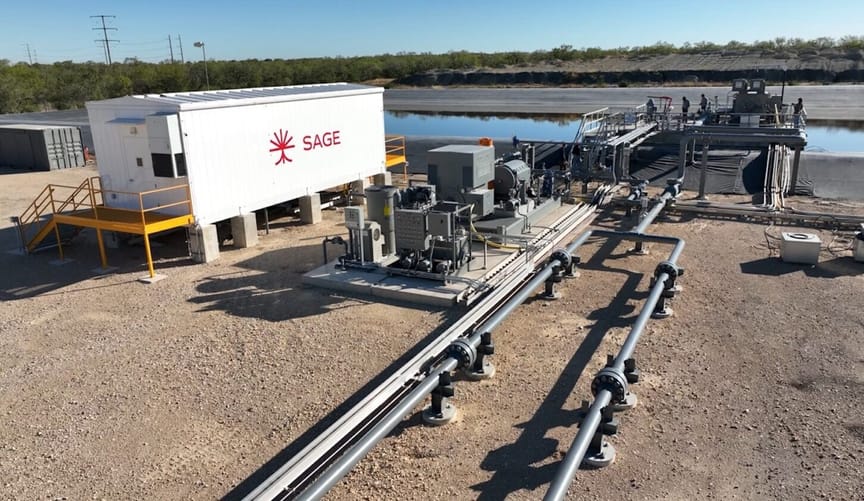
The novel geothermal facility in Texas has been running since April, Sage exclusively shared with Canary Media. The Houston-based firm said the 3-megawatt pilot plant has performed reliably and as predicted after more than 120 days of grid-connected operations.
Cindy Taff, Sage’s CEO, said the results will “directly inform and de-risk” an upcoming collaboration in Nevada with Ormat Technologies, a conventional geothermal leader that is increasingly dipping its toes into next-generation technology. The Nevada project is a necessary precursor to Sage’s deal with Meta to develop 150 MW of geothermal power.
Sage’s enhanced geothermal system is a type of nascent tech that involves drilling deep into hot rocks and fracturing them to create water pockets, then using the heat to generate power. It’s distinct from the decades-old traditional geothermal plants that rely on what Taff called “very unicorn geology” — the few places in the world where a combination of water, heat, and permeable rocks are easily accessible.
For all the buzz around the technology, just two other enhanced systems have connected to the U.S. grid so far.
In 2013, Reno-based Ormat completed a 1.7-MW demonstration project at its conventional Desert Peak facility in western Nevada, before returning its focus to old-school geothermal for a time. That demo is no longer producing power, Ormat confirmed.
A decade later, Fervo Energy began operating a 3.5-MW geothermal plant in northern Nevada in partnership with Google. Building off that project, Fervo is now constructing a 500-MW facility in Utah, which is set to come partially online in October.
Sage likewise expects its early success in Texas to fuel its commercial-scale ambitions.
The startup has been developing the pilot since 2024, when it reached a deal with San Miguel Electric Cooperative to use land near a coal-fired power plant in the town of Christine. Sage built its own substation there and intermittently sells power to the Texas grid.
Taff said that one of the most promising outcomes has been the relatively limited water loss from the underground system. Sage’s approach involves creating a network of fractures, into which it pumps and stores large volumes of water. As hot water pushes up against the rocks around it, mechanical pressure builds, which is released when the crew opens a valve at the top. This is different from other enhanced projects, which use fractures to flow water between two wells without pressure.
In both cases, water can migrate into surrounding rock formations as it moves through the fractures. The more water a project loses along the way, the less efficient it becomes at producing energy.
Sage lost less than 10% of the water that it cycled through the Texas system on multiple occasions, which Taff said bodes well not just for the company but also for the larger universe of enhanced geothermal, if it adopts similar methods.
“The net power output that you can produce from these technologies is going to go up, she said, noting that curbing water loss will enable enhanced systems to scale commercially at a competitive cost.
Initially, Sage planned to use similar geothermal techniques to develop a long-duration energy storage system near the coal plant. But in recent years, Texas has built one of the largest grid-battery fleets in the world, making the timing less ripe for rolling out a novel storage technology. So Sage is now primarily focused on meeting the nation’s growing demand for around-the-clock clean electricity.
To that end, Taff said Sage expects to begin drilling its first well at one of Ormat’s conventional geothermal plants in Nevada later this year. Sage will provide the hot water it produces to Ormat to generate electricity at the existing facility — allowing Sage to demonstrate its technology without going through the costly, lengthy steps of connecting to the grid or building a power plant.
Sage hasn’t yet specified how large this system will be, but does expect to start producing electricity in 2027 and reach full-scale production in 2028. Once that happens, Sage will begin working with Meta to start developing 150 MW of next-gen geothermal power somewhere east of the Rocky Mountains. All told, Sage has lined up about a gigawatt’s worth of projects on paper.
The Texas pilot enables Sage to “actually model and predict how the [reservoir] behavior is going to be going forward,” she said. “And that sets us up very nicely for scaling and building commercial facilities with our approach.”
An update was made on Aug. 19, 2026, to confirm that Ormat’s Desert Peak project is no longer generating power.
Next-generation geothermal projects are underway in the U.S. West, but states will need more targeted policies for the industry to scale, a new report argues.
Next-generation geothermal energy has massive potential in the western United States, but it won’t be realized unless developers can overcome the big economic barriers these novel systems face.
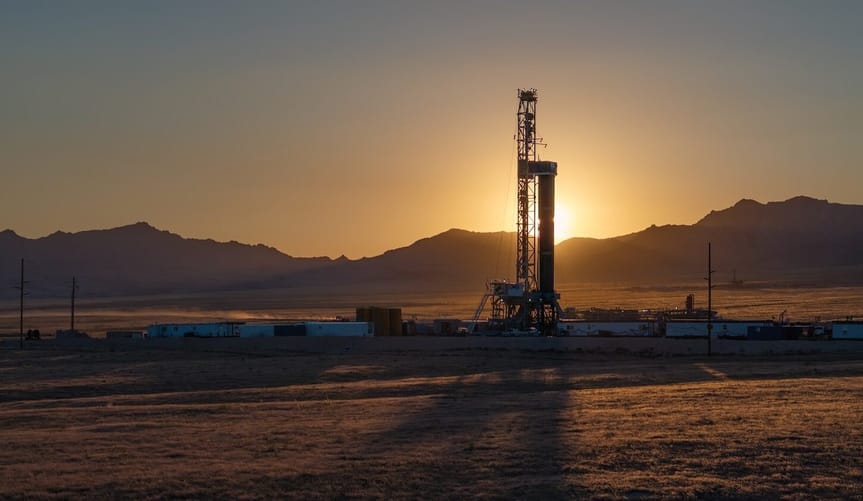
Unlike traditional geothermal plants, next-gen projects use innovative underground techniques to produce power wherever rocks are sufficiently hot, making it possible to harness heat in more locations. The energy source could provide hundreds of gigawatts of clean electricity around the clock, up from just 4 GW nationwide today.
Amid ballooning energy demand from data centers and electrification, western states are increasing their support for the industry, using tools like direct investment and permitting reform. These state-level efforts are supporting a wave of pilot projects and first-of-a-kind systems across the region, where heat is accessible at relatively shallow depths.
Still, states will need to adopt more sweeping and coordinated policies to help companies secure the kind of large-scale financing necessary to scale up next-gen geothermal, said Ann Garth, policy manager for superhot rock geothermal at the nonprofit Clean Air Task Force.
Garth is the lead author of a new report, shared first with Canary Media, that describes how states can “de-risk” geothermal for infrastructure investors, who typically pick up where venture-capital funds and federal research programs leave off.
Geothermal’s high upfront drilling costs, the slow trickle of investment returns, and the uncertainty around project development — like how long permitting will take or how profitable the resource will be — are major stumbling blocks for project financiers. Whereas some investors can stomach any two of the factors, “the three in combination will make financing very difficult,” Garth said.
Many western states have made some policy changes to address these challenges, though none have put all the pieces together yet. In its new report, Clean Air Task Force outlines what the states should focus on and highlights which steps they’re already taking.
Perhaps the most meaningful move that states can make is to create demand for utility-scale geothermal.
Take California, as an example. In 2021, the California Public Utilities Commission adopted a procurement order calling on utilities to add at least 1 GW of “clean firm resources,” such as geothermal, to meet the state’s long-term climate goals and grid reliability requirements. The mandate is largely responsible for the rise in power purchase agreements for next-generation projects — including Fervo Energy’s Cape Station in Utah. Southern California Edison has agreed to buy 320 megawatts of power from the 500-MW project, which is set to come partially online this fall.
“That has been an incredibly important driver of the growth in the geothermal industry,” Garth said. “Seeing those PPAs come in has given a lot of confidence [to investors].”
California itself has installed almost 2.9 gigawatts of conventional geothermal capacity, making it the nation’s leader. Colorado, by contrast, is working to land its first geothermal power plants of any kind.
In June, Colorado’s legislature passed a bipartisan bill that requires investor-owned utilities to solicit proposals for the development of large geothermal projects greater than 25 MW, as well as smaller systems. The state also awarded $494,000 to Fervo to evaluate the potential for developing geothermal power projects in two regions of the state.
New Mexico, meanwhile, is backing the commercial deployment of a novel geothermal system through its $75 billion sovereign wealth fund that draws on oil and gas royalties. Through the fund’s venture-capital investments, the state is supporting the startup XGS Energy as it develops a 150-MW closed-loop system in New Mexico along with Meta.
However, before developers get to the point of proposing projects, they need to scour geologic data to understand what rock formations are like, and how hot they are at certain depths. Many states already have this information from earlier oil and gas development, but the files aren’t easy to access.
Some states are working to make geological records more readily available. North Dakota has scanned and digitized the bulk of its historic data, which it provides to academics for free and to companies for a fee. Earlier this year, Arizona invested $1 million in the state’s geological survey to integrate historic subsurface data with new information, gathered using airborne and laser-based imaging, to bring geothermal development to Arizona.
Washington state, which also doesn’t produce geothermal power, passed a bipartisan law in 2024 that directs the state’s geological survey to compile a public database of subsurface information. It also creates grant programs for companies to do deep exploratory drilling in areas with high geothermal potential.
State permitting agencies, meanwhile, are still wrapping their heads around next-gen geothermal.
As a result, permitting can be a slow and unpredictable process — and a source of anxiety for investors. “The longer you have to wait before you can actually start generating revenue, the more expensive it gets,” Garth said.
Nevada devised a solution to this problem in 2008 to support its conventional geothermal sector. The state’s environmental protection and minerals divisions entered a cooperative agreement to clarify which agency has jurisdiction over certain aspects of drilling and operating geothermal wells, avoiding confusion and delays. Nevada has installed 892 MW of conventional geothermal capacity, making it second to California, and Fervo is developing a 115-MW “enhanced geothermal system” with Google in the state.
Texas, which is home to several test projects but no commercial geothermal, resolved a bureaucratic conundrum that had slowed next-gen development. In 2023, lawmakers passed a law to clarify who owned the geothermal resources on a given property: the surface landowner, not the owner of subsurface oil, gas, and minerals.
Another major barrier to scaling next-generation geothermal is access to transmission lines. This plagues every energy source in the U.S., and it can’t necessarily be tackled by individual states.
Connecting rural geothermal plants over long distances to pockets of demand requires coordinated, long-term efforts within regions, and that work has hardly begun in the West, according to Clean Air Task Force.
The group also recommends creating innovation test beds as a way for states to reduce project risks in specific areas. For example, the federally funded Utah Forge is an underground field laboratory in Beaver County, Utah, that has developed and refined enhanced geothermal using oil and gas techniques. Fervo said it built Cape Station next door so the company could collaborate with researchers who have extensively explored the area’s geology.
So far, states have adopted “an interesting hodgepodge of efforts” to attract geothermal investment, Dan West, senior Western regional policy manager at Clean Air Task Force, said by phone.
But “no state has checked all the boxes and pulled all the policy levers yet,” he said.
Startup Zanskar has created one of the most productive geothermal wells in the U.S. by squeezing more life out of a power plant that had been in decline for years.
Geothermal company Zanskar bought a New Mexico power plant in 2024 that appeared from the outside to be failing. The shallow wells had been rapidly losing heat, and the plant was having trouble generating power as a result.
Now, after drilling a new well and operating the power plant for a full year, Zanskar says that it has made a complete turnaround. The Lightning Dock site, according to figures from the company shared exclusively with WIRED, has become one of the most productive pumped geothermal wells in the U.S., providing enough heat to run the power plant with no issues.
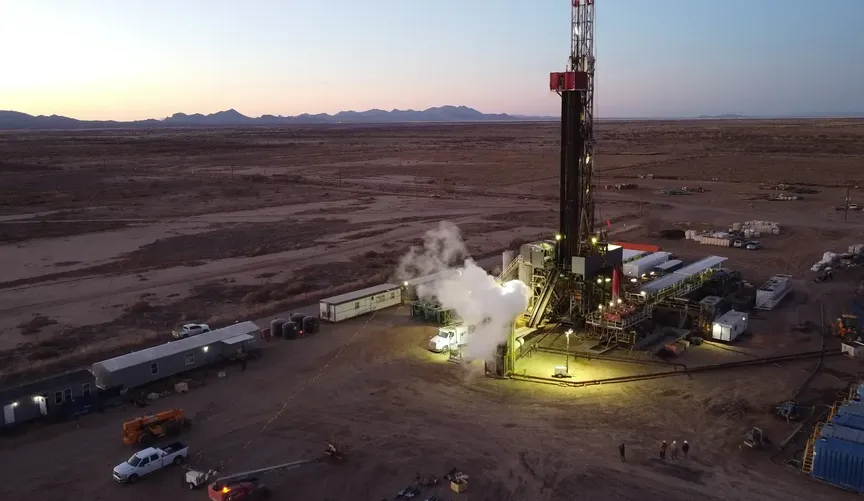
The productivity over the past year at the Lightning Dock site “fundamentally changes how people think about these types of systems that we really thought we understood in the past,” says Zanskar co-founder Joel Edwards.
It’s the latest bit of good news for the long-neglected geothermal industry, which is experiencing an investment renaissance. Innovative drilling technology and artificial intelligence — along with a little bit of luck — played roles in the milestone. And while not all traditional wells may have the same set of circumstances as Zanskar had at Lightning Dock, the company says that its success is a wake-up call that old well sites are still worth further exploration.
Traditional geothermal energy relies on tapping hot water within the earth to generate electricity by pumping it to the surface and spinning turbines. In theory, it’s an excellent way of generating renewable baseload power: People have been harnessing steam from hot springs for thousands of years. But geographic constraints — power plants need to be situated on geothermal reserves, which are overwhelmingly in the western U.S. — as well as the difficulty and expense traditionally involved in finding new wells mean geothermal energy constitutes less than 1 percent of the electricity mix in the U.S.
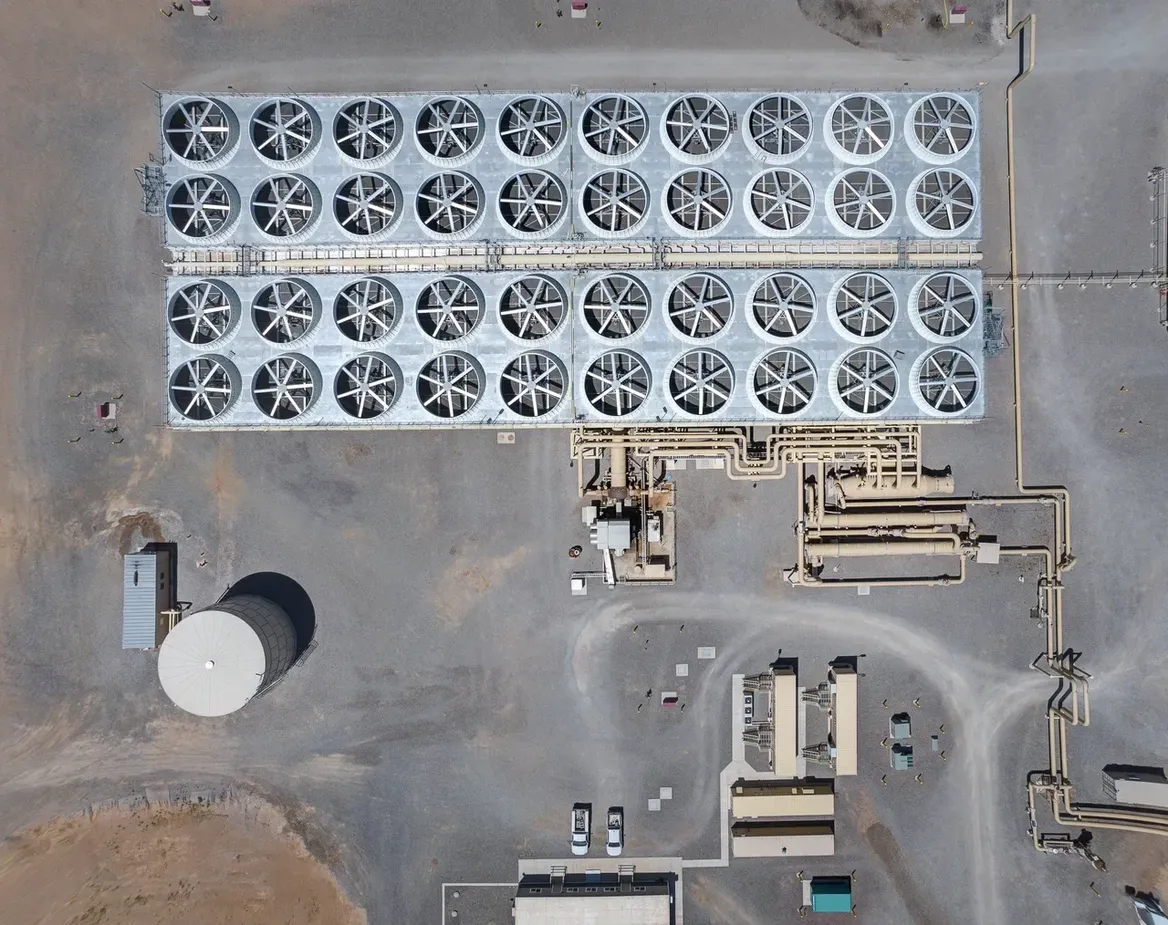
Another challenge for the industry is that most wells gradually see declines in productivity. But Lightning Dock’s decline had been particularly steep, losing between five and 10 times as much heat each year as average wells, Zanskar says. When the company bought the site, temperatures in the original wells, which were less than 2,500 feet deep, had cooled some 50 degrees Fahrenheit (10 degrees Celsius) to about 250°F by 2024. The on-site 15-megawatt power plant, which supplies electricity to New Mexico’s largest utility, was designed to operate at temperatures above 300°F.
While conventional geothermal wells usually go down 3,000 to 5,000 feet, drilling deeper wells can tap into hotter reserves of water to use for power. But tighter rock formations deep underground make drilling more challenging — and costly. Whether or not to drill deeper is “basically a question of economics,” says Roland Horne, a senior fellow at the Precourt Institute for Energy at Stanford University. The cost, Horne says, is not linear: “If you drill twice as deep, it costs four times as much.”
To help make better bets on drilling, Zanskar uses artificial intelligence to identify what are known as hidden systems — that is, sites with ample geothermal potential but little to no signs of their viability on the surface. The company used the technology last year to make a discovery in Nevada, and it says that same modeling also helped pinpoint where to most productively drill at the Lightning Dock site. It combined those models with drill bit technology refined by the oil and gas industry, which helped it drill deeper holes 35% faster at what Zanskar says is a “competitive cost.” (The company didn’t provide specifics.) The new 8,000-foot well has been operating for a full year, with heat levels above where they were before the decline.
“We knew that if we were going to buy this field, we were committed to drilling deeper and going after it,” says Edwards. Edwards says that the new well is so productive that it has, on occasion, supplied “too much heat” to the existing power plant, suggesting that it could power a larger facility.
“We expect, if you look at peers of this well, it has the attributes to be productive for decades,” Edwards says.
Horne points out that by buying a developed site with an existing power plant, Zanskar offset a big cost sink compared to starting from scratch. Another company had also already drilled a deep exploratory well at Lightning Dock in 2022, which, Horne says, gave Zanskar valuable geologic information to help with its modeling. (Ben Brenner, Zanskar’s director of federal affairs, tells WIRED in an email that data from the other well was incorporated into its modeling, but the company “never saw that particular well’s data as somehow definitive or essential.”)
“They haven’t discovered anything revolutionary,” Horne says of the techniques used at the Lightning Dock site. Still, he says that the statistics provided by Zanskar “hold up” to make it one of the wells with the highest flow rates — a measure of productivity — in the U.S. While at least one other facility in Nevada has wells with higher flow rates than Lightning Dock, Brenner says that those wells are “much colder” than Lightning Dock’s, which will make them less productive over the long run.
“It’s a really good well,” Horne says.
This has been a big year for the geothermal industry, particularly for companies that are using new technologies to tap the earth’s heat. Enhanced geothermal company Fervo Energy went public in May, raising $2.2 billion, although there has been a pullback in stock prices since its debut. Venture capital investors — who typically have veered away from geothermal — have also been putting money into the industry, says Stephanie Díaz, a senior associate at BloombergNEF. Venture capital and private equity investment in geothermal startups has hit $432 million through the first six months of this year, meaning that “2026 is shaping up to be the best-funded year for geothermal startups since BNEF began tracking in 2022,” Díaz says. That total includes Zanskar, which raised $115 million in a funding round in January, one of the largest raises in the sector this year.
Unlike what Zanskar is doing, enhanced geothermal uses a technique similar to fracking and requires hot rocks rather than hot water, opening up the possibility of drilling wells in areas that have been off limits. Because of this, companies like Fervo have been the focus of much of the recent investment and attention in the industry, Díaz says.
But Díaz says data-driven approaches like Zanskar’s can help de-risk traditional geothermal development. Lightning Dock, Díaz says, is also a good example of finding “adjacent areas to work that have worked historically.”
Decades-old Ormat is seizing geothermal’s superhot moment by branching into next-generation technology and expanding its traditional plants.
Over two decades ago, Ormat Technologies began a big experiment on a swath of rugged land near the Hot Springs Mountains in western Nevada.
The geothermal company was already producing electricity there, using the heat found naturally in hot water and steam trapped beneath the earth’s surface. But in 2002, Ormat and its research partners decided to deploy an emerging approach to boost output at the Desert Peak power plant. They’d drill deep into hot, dry rocks and pump them full of liquids, creating geothermal resources where nature hadn’t provided.
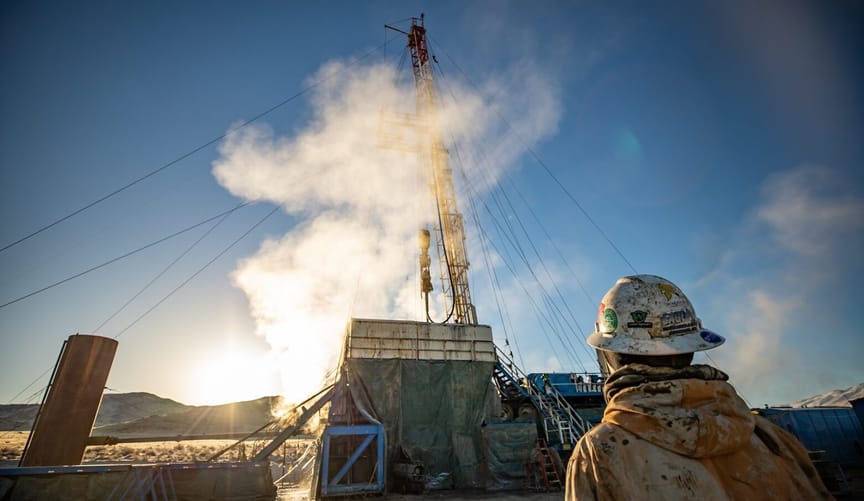
In 2013, the 1.7-megawatt demonstration project connected to the grid, becoming the nation’s first “enhanced geothermal system” to hit that milestone. At the time, though, the industry still lacked the technology innovations and favorable economics needed to support a full-throttle scale-up of enhanced systems, which the U.S. has studied for over 50 years.
Today, that calculus is shifting.
The idea that companies can harvest energy without tapping hot springs or geysers is driving a surge of interest — and billions of dollars of investment — in America’s once-stagnant geothermal industry.
Startups are racing to build next-generation facilities that can supply clean, around-the-clock power to data centers and states with decarbonization mandates. Technology breakthroughs are making it cheaper and faster to develop new wells. Policymakers of all political stripes are working to uphold federal geothermal tax credits and to ease permitting and regulatory challenges that can slow down projects.
And Ormat itself is getting back into the enhanced geothermal game, having focused mainly on its conventional projects in the intervening years.
Ormat, whose headquarters is in Reno, Nevada, is a leading developer and operator of geothermal power plants. The 61-year-old firm owns dozens of clean energy projects globally, including over 1 gigawatt of geothermal capacity, mainly in the western United States. Those facilities all tap into hydrothermal resources, the naturally occurring reservoirs that are typically found near the boundaries of major tectonic plates.
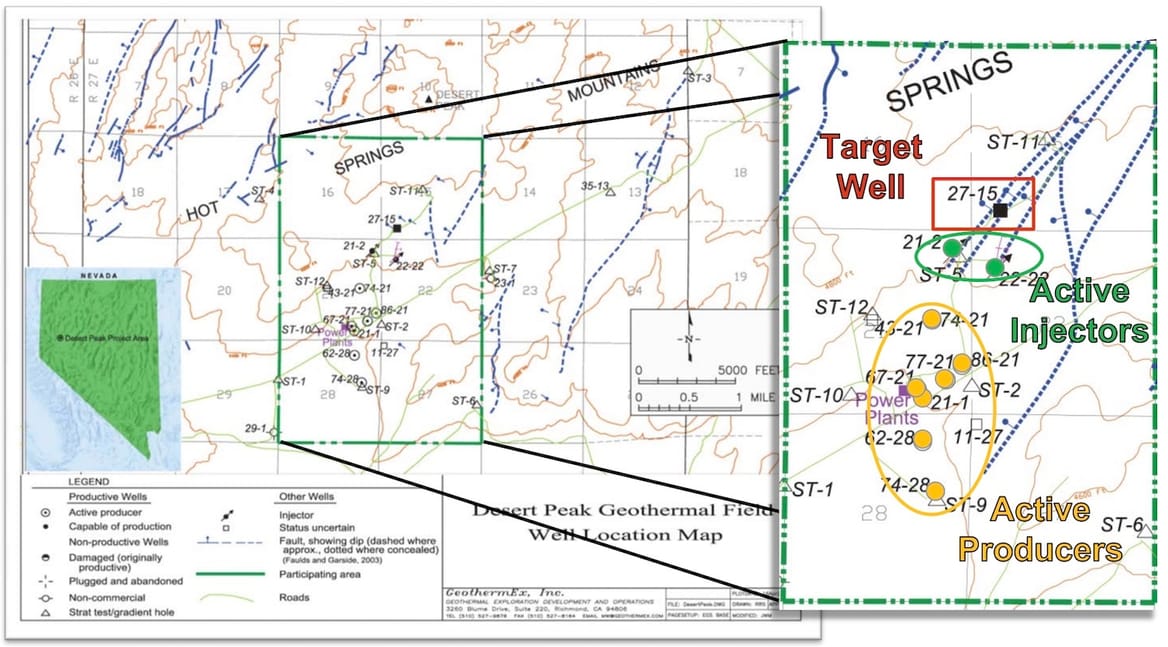
It’s now planning to build a new enhanced pilot project at Desert Peak, together with the oilfield services giant SLB, as the companies work to commercialize the approach.
“We’re going back to where we started the journey, and it feels a bit like closing the loop,” said Daniel Moelk, Ormat’s executive vice president for subsurface, wells, and next-generation geothermal. The companies are gathering new geophysical data at the site to determine where to drill wells, he added, though he couldn’t say when the project might be completed.
Ormat is separately developing an enhanced pilot system with the Houston-based company Sage Geosystems, which will deploy its next-generation technology at one of Ormat’s existing sites in Nevada or Utah. Ormat invested $25 million in Sage in January as part of the startup’s $97 million Series B funding round.
“Opportunities are expanding with new emerging technologies, and we want to be part of it,” Moelk said.
That’s also true for Ormat’s manufacturing operation in Yavne, Israel, where the company was founded. In June, Ormat unveiled designs for power plant equipment that can operate in the higher-temperature and higher-capacity conditions that next-generation systems are expected to achieve. The 100-megawatt power-generation unit is meant to make any developer’s geothermal projects cheaper and more efficient overall by unlocking economies of scale, Ormat said.
Still, the new design reflects the world that the geothermal industry is building toward, not where it stands today.
The United States has just about 4 gigawatts of geothermal power capacity divided among 99 plants, over half of which are in California. Together, they supply a mere 0.4% of the nation’s total electricity generation. But the U.S. Department of Energy predicts geothermal could provide 90 gigawatts of always-on, carbon-free power to America’s grid by 2050 if the industry can significantly accelerate its ongoing cost reductions and enable large-scale enhanced systems to catch on.
Ormat and a growing crop of newcomers are being propelled toward that reality by the soaring energy demand from data centers. In California, Oregon, Washington, and other states, clean-power needs are rising as well, as buildings, factories, and vehicles transition away from fossil fuels and toward electrified solutions.
“There’s growth across the industry driven by the fact that power prices are higher than they’ve ever been,” said Michael O’Connor, director of the Mountain West Geothermal Consortium, a new initiative to accelerate geothermal deployment in the Mountain States.
He noted that, in some markets, developers and utilities are striking long-term agreements for “firm,” or on-demand, power that are two to three times higher than they were in 2021, incentivizing more geothermal companies to pursue new projects.
The recent momentum is also thanks to the geothermal drilling advances that have emerged in the years since Ormat launched its first Desert Peak pilot.
Fervo Energy, for example, uses horizontal drilling techniques and fiber-optic sensing tools from the oil and gas industry to fracture hard, impermeable rocks and create artificial reservoirs. In 2023, the Houston-based startup turned on a first-of-a-kind enhanced geothermal system in Nevada. The 3.5-MW project sends electricity to the grid to help satisfy some of Google’s power appetite in the state.
Simultaneously, Fervo has been developing its 500-MW Cape Station project in Utah, which is set to become the world’s largest enhanced geothermal system when fully completed, potentially by 2028. While developing the project, the company said it reduced drilling times by about 75% and slashed per-foot drilling costs by about 70% between 2022 and 2025, marking a significant achievement for the nascent industry.
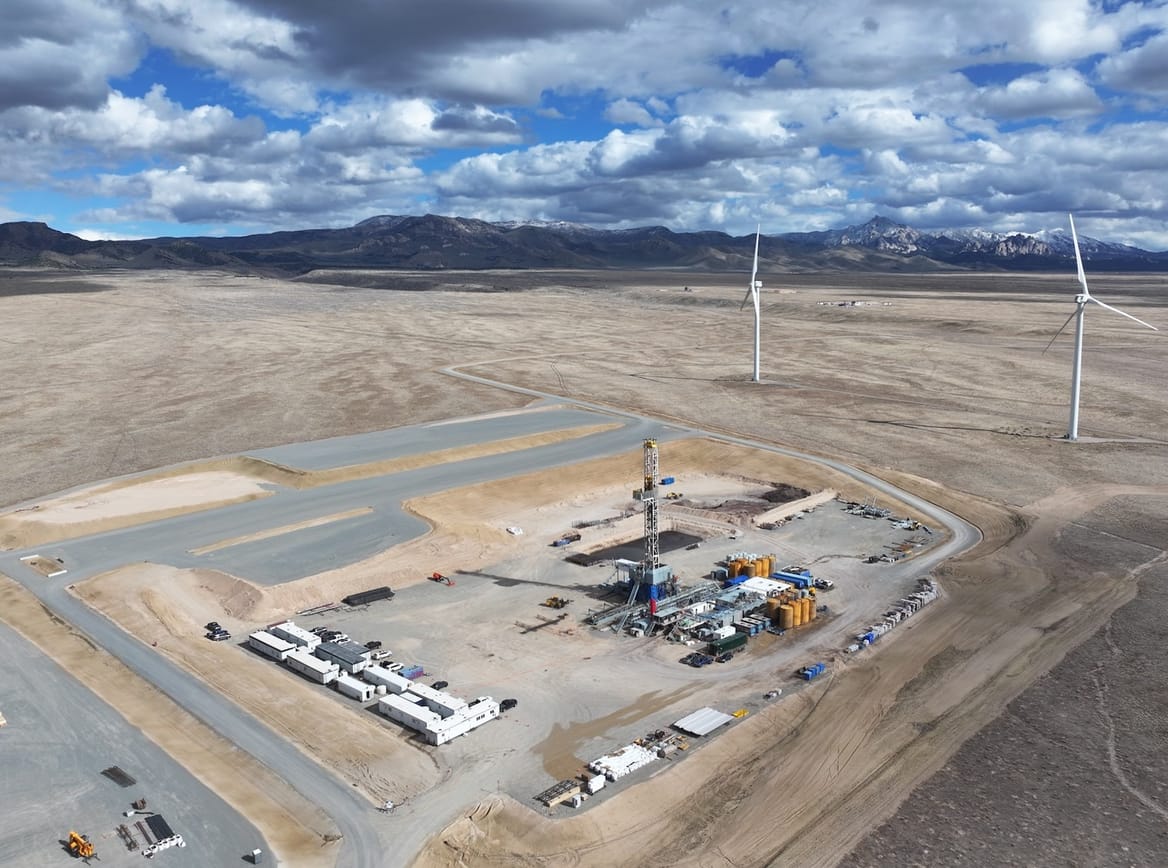
To fund its scale-up, the nine-year-old company in May became the first next-generation geothermal firm to go public, netting about $1.9 billion. (Ormat, which hit almost $1 billion in revenue in 2025, joined the stock exchange back in 2004.)
The startup Quaise Energy recently credited Fervo’s IPO with giving it a fundraising boost. Quaise raised $134 million this month to advance its first superhot geothermal project near an Oregon volcano. The company XGS Energy, which is pursuing a novel closed-loop technology, has been hiring veteran finance executives as it evaluates going public itself.
“Fervo definitely led the way, in terms of showing a path to the public equity markets for pre-revenue development companies like us,” said Richard Chong, who joined XGS in May as the company’s chief financial officer. Chong previously worked at Calpine, where he helped secure over $2 billion in financing to expand The Geysers, a decades-old geothermal development in Sonoma County, California.
The enthusiasm for cutting-edge technologies is spilling over into the conventional geothermal market, which has grown at a tortoise-like pace in recent years.
Hydrothermal resources are generally easier and less expensive to tap, since they don’t require fracking deep underground. But scientists and companies have explored only a tiny fraction of America’s subsurface geothermal resources. For any developer, it can cost tens of millions of dollars just to do the preliminary drilling to locate those resources — and to confirm that they’re good enough to produce electricity for decades. Such an undertaking was harder to justify in the years when U.S. electricity demand was essentially flat.
Now, “the market conditions around electricity demand have driven a lot of developers to rethink their portfolios and their assumptions on if they should develop,” O’Connor said.
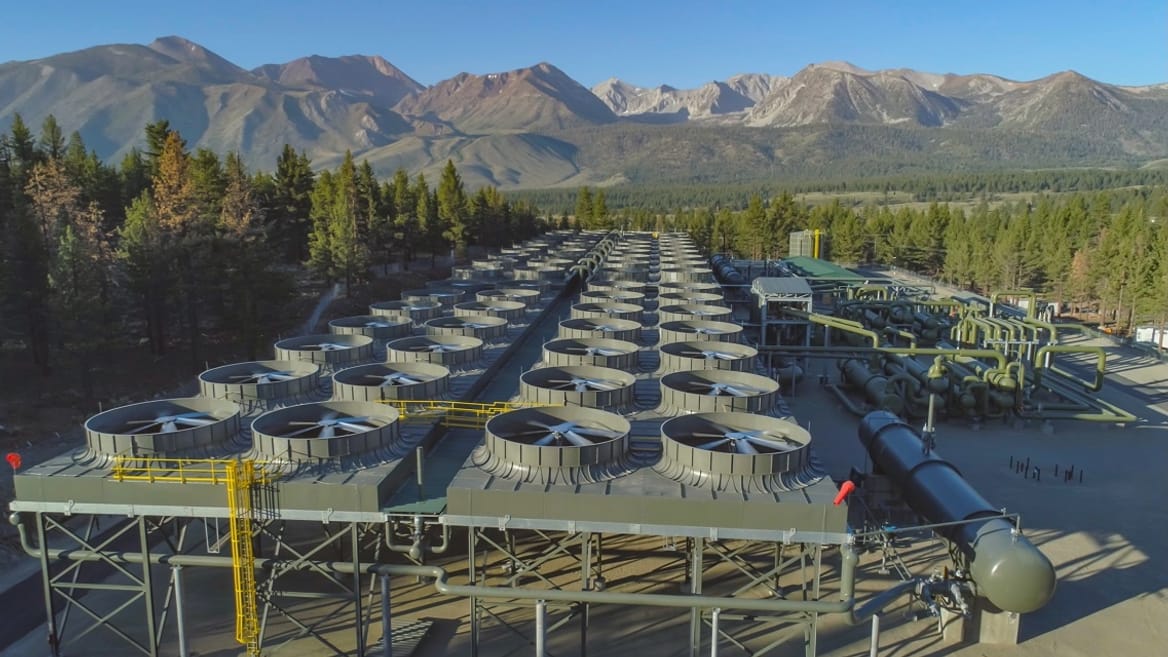
In June, Ormat received expedited approval for environmental permits from the Bureau of Land Management to begin developing the new 60-MW Pearl Geothermal Development Project on public lands in Esmeralda County, Nevada. The approval stems from the Trump administration’s 2025 emergency permitting procedures to accelerate energy development on federally managed lands — on which over 90% of identified U.S. geothermal resources are located.
The bureau has also awarded permits for Ormat’s other initiatives in Nevada, including the 30-MW Crescent Valley plant and the earlier-stage Diamond Flat and Pinto project sites, where the company will study and test for geothermal resources. All told, Ormat holds leases to some 400,000 acres across six states.
“Ormat has gone from a company that was focused on operating the assets it currently has to thinking about expanding, and they are not alone,” O’Connor said.
The startup Zanskar raised $40 million in April to build its first conventional geothermal plant. The company combines artificial intelligence with boots-on-the-ground surveying to identify hidden natural resources in the U.S. West. Last year, Zanskar said it had identified the first “blind” geothermal system — meaning it doesn’t have vents, geysers, or other visible features, or any historical records — for commercial use in more than 30 years.
“They’re taking advantage of the higher demand for the lower-hanging fruit,” O’Connor said of Zanskar’s conventional geothermal play. The startup and other firms “are either acting on leases that people have held for a while and not had motivation to use, or exploring for the first time.”
Ormat, for its part, will continue to rely on its “robust hydrothermal business” while also piloting the next-generation technologies that could enable geothermal to leave behind its niche position in the global energy market, Ormat’s Moelk said.
“Right now, we have what the world needs: renewable, local, baseload energy,” he said. “After 20 years in geothermal, I’ve never seen such a big opportunity.”
The startup closed the first tranche of Series B funding as it pushes to build a novel geothermal plant in Oregon and advance its rock-melting drilling tech.
Startup Quaise Energy has raised $134 million to advance its first superhot geothermal power plant in central Oregon.
On Tuesday, the Houston-based company announced the first tranche of its Series B financing round, which brings the firm’s total funding to $230 million. Quaise is developing a 50-megawatt plant near the Newberry Volcano that will use novel rock-melting technology to tap into significantly hotter geothermal resources than conventional plants can.
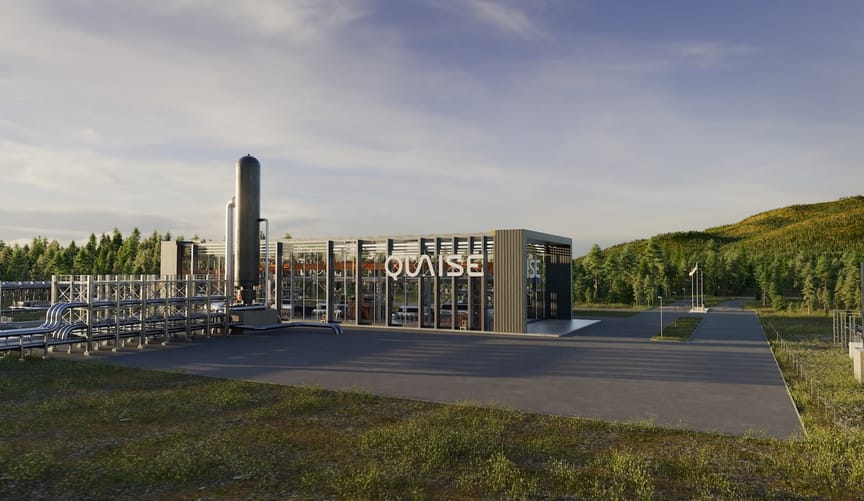
The fundraise comes as Quaise prepares to start drilling its first test well later this month for the Oregon plant, called Project Obsidian, which is slated to come online by 2030.
“Our ambition is to power civilization with Earth’s most compelling energy source,” Carlos Araque, CEO and president of Quaise, said in a statement. “This round takes us from field-proven technology to first commercial revenues.”
The Series B was led by Prelude Ventures, which backs early-stage climatetech firms, and included strategic investments from two major Japanese energy players: the power generation company JERA and the petroleum refiner Idemitsu Kosan. Japan is increasingly investing in cutting-edge geothermal projects to help meet the land-constrained nation’s need for clean, around-the-clock power — and to harness the potential of its 111 active volcanoes.
In the United States, the geothermal industry is experiencing a renaissance as new technologies make the energy resource viable in a wider range of geographies. Soaring power demand from data centers is fueling much of that interest, as are state renewable-energy targets and the electrification of vehicles and buildings.
In May, the startup Fervo Energy became the first next-generation geothermal firm to go public, netting about $1.9 billion. The company focuses on enhanced geothermal systems, an emerging approach that involves fracturing rocks and pumping them full of water to create artificial reservoirs. Fervo is developing a large-scale enhanced geothermal plant in Utah that is set to start sending power to the grid later this year.
At Quaise’s Project Obsidian site, the company will initially use standard drilling tools to build an enhanced system. But as early as next year, Quaise aims to deploy its millimeter-wave drilling techniques to access even hotter and deeper geothermal resources.
The technology uses high-frequency beams to melt and vaporize rocks at depths and temperatures that are too difficult or costly for conventional tools to access. Quaise aims to tap rocks at 300 to 500 degrees Celsius (572 to 932 degrees Fahrenheit) to heat fluids that drive steam turbines on the surface. The hotter the fluid, the more efficient and powerful the system, which means projects can derive more energy from a smaller number of wells.
Quaise isn’t alone in chasing the promise of superhot geothermal. The startup Mazama Energy is developing its own pilot project at the Newberry Volcano, where it says it can reach temperatures of over 330°C. And major research projects are moving forward in Iceland, Japan, and New Zealand.
As Quaise develops its Oregon plant, the company is continuously demonstrating its unique approach at its field site in central Texas. Quaise said it drilled through more than 100 meters (330 feet) of granite there last year and is now approaching 1 kilometer of depth, which would represent a milestone for its drilling technology.
Meanwhile, Quaise is looking to secure another $100 million in grants and debt for Project Obsidian, on top of the Series B funding. The firm has already inked a power-purchase agreement for the initial 50 MW with an undisclosed customer, and it’s working to sign deals for an additional 200 MW in future capacity.
“We have backed Quaise since the beginning because we believed accessing superhot rock would unlock geothermal energy at a scale the world has never seen,” Mark Cupta, managing director at Prelude Ventures, said in a press release. “What the team has achieved in the field and what they are now building at Project Obsidian validates that conviction.”
The startup’s first-of-a-kind geothermal project hit key milestones in Germany — but also technical hurdles. Now it’s looking for partners to help finish the job.
The startup Eavor Technologies hit a crucial milestone late last year when its flagship geothermal project — a novel closed-loop system — started sending electricity to Germany’s grid. The company had completed the first of four planned loops, and it expected to start construction on its second loop earlier this spring.
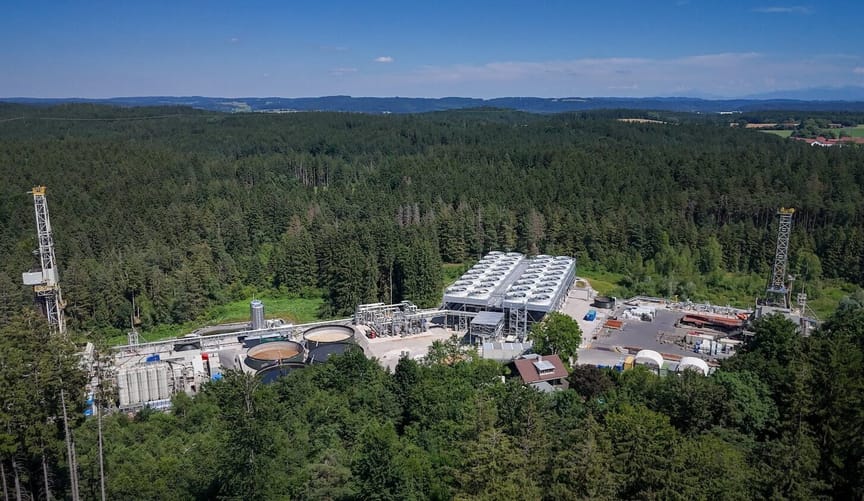
Now, Eavor says it’s revising that timeline. The Canadian startup encountered major engineering challenges when drilling its initial wells deep underground near Geretsried, Germany. While Eavor was able to fix those issues, it’s seeking new project partners and investors to help it complete the next-generation geothermal system.
“We’re looking to make Loop 2 happen as soon as practical and in the best form that we can,” Matt Toews, Eavor’s co-founder and chief technology and operating officer, told Canary Media. “Exactly how that shakes out, I can’t say yet until it’s done.”
Still, “The overall grand plan stays the same,” he added. “It’s really about proving the technology, … coming down the learning curve, and going deeper and hotter” to unleash geothermal energy.
Eavor began drilling in Geretsried, which is south of Munich, in July 2023 after winning a grant for 91.6 million euros from the European Union’s Innovation Fund. At full scale, the project is intended to supply 8.2 megawatts of electricity to the grid or 64 MW of district heating to nearby towns.
Demand for the renewable resource is rising globally as countries look to boost supplies of clean, domestic energy, both to meet their soaring electricity needs and to reduce reliance on volatile fossil fuels. Traditionally, geothermal power plants have been confined to places with natural reservoirs of steam and hot water, like near Iceland’s volcanos or California’s thermal springs.
Eavor is one of dozens of companies trying to break those constraints by developing technologies that can access earth’s heat potentially anywhere — though the industry is just starting to deploy those solutions in the real world.
It’s not uncommon to see delays or evolving plans when rolling out new energy technologies.
Emily Pope, a geologist and senior fellow at the Center for Climate and Energy Solutions, said she wasn’t remotely surprised to hear that a first-of-a-kind project like Eavor’s encountered technical hurdles. Pope previously worked on the Iceland Deep Drilling Project, an ongoing research initiative to tap into superhot reservoirs, which hit significant snags after its first well unwittingly struck magma and then the second one collapsed.
“The setbacks [for Eavor] were real, but also understandable and predictable, and something that we see in every industry that is trying to grow,” she said, adding that geothermal developers in general “are going to have to learn by doing.”
Eavor’s approach is akin to building a massive radiator several miles beneath the earth’s surface. Each loop involves drilling two vertical wells and pairs of horizontal, or lateral, wells that stretch out like the tines of a fork. The wells are later connected underground and sealed off. As water circulates within the system, it collects heat from the rocks and brings it to the surface.
The basic concept is tried and true; this is essentially how shallow geothermal networks heat and cool homes and buildings. But Eavor’s system requires drilling far deeper, and in much trickier conditions, in order to provide utility-scale electricity and heating.
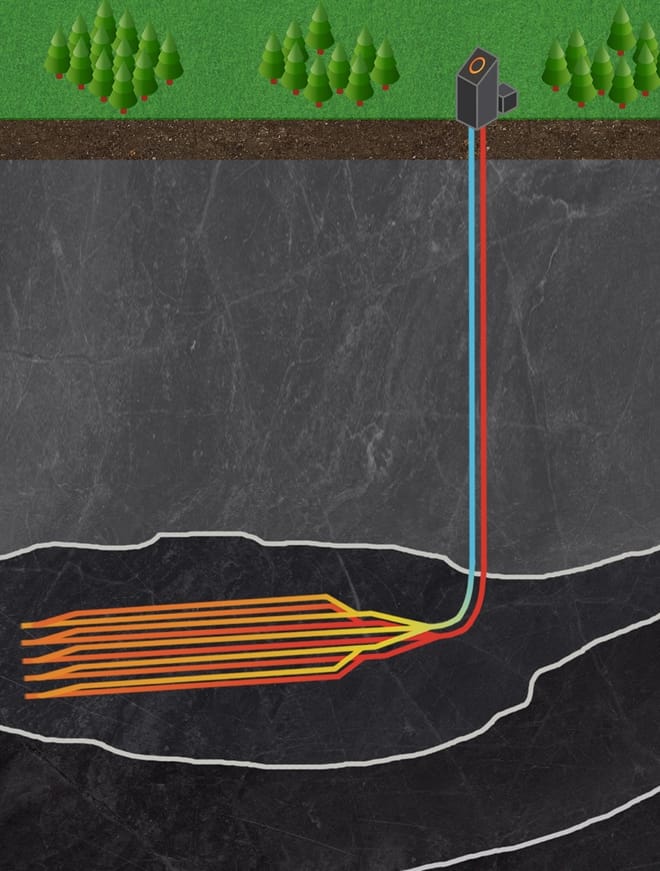
In the United States, another next-generation technology — an enhanced geothermal system, or EGS — has been gaining the most traction among developers. The startup Fervo Energy is building what will become the world’s largest EGS project in Utah, using fracking and horizontal drilling techniques to create artificial reservoirs. The first phase of this 500-megawatt project is set to start producing power this fall.
As a technology, enhanced systems are considered more advanced and relatively less costly than closed-loop systems for power generation. The loops are generally less efficient at extracting heat from the earth, since their fluids don’t directly touch rocks, and they can be lengthier and more complex to drill. But EGS has its own trade-offs: The approach carries the risk of inducing earthquakes and straining local water supplies, though experts say both issues can be mitigated.
“Closed-loop just leapfrogs over those challenges” because of its contained design, Pope said, adding that the systems could be a better fit for harnessing heat in dense urban areas and in water-scarce regions. In the U.S., the companies XGS Energy, GreenFire Energy, and Vero Geothermal are also pursuing closed-loop projects in places like California and New Mexico.
“There’s a demand for it, and there’s just a lot of good reasons to try to do it,” Pope said.
Last fall, Eavor released results from two years of activity in Geretsried, which showed how the company reduced drilling times and improved performance despite encountering challenges. In late May, Toews penned a technical update describing in greater detail the key problems Eavor faced in drilling its first loop.
After its first boreholes became unstable, leading to the risk of stuck pipes, Eavor changed the type of drilling-fluid system it used. Broken equipment and slow drilling speeds initially plagued the project, owing in part to the hard rock types and the length of the lateral wells. By tweaking its techniques and adapting equipment, Eavor said it cut its average drilling time by over 70% from the first four lateral well pairs to the last.
The company also developed an “active magnetic ranging” system to give it more precision when drilling long wellbores and getting its lateral well pairs to intersect underground. “If you look at the wells, the first ones are kind of like wet noodles, and the last ones are gun-barrel straight,” Toews said in an interview.
But one challenge proved harder to address.
Eavor began by using two drilling rigs in parallel to form the “motherbores” from which the lateral wells extend out. The company found that poor cement casing on the motherbores allowed fluid and mud to flow freely between the two rigs, which are supposed to be completely sealed off. So the team switched to using one rig at a time — a temporary fix that doubled the time and cost for Eavor’s first loop.
The startup initially planned to drill 12 pairs of lateral wells for that first loop. But it stopped short at six so that it could try again with proper cementing design on the second loop. This could mean bringing on project partners with more experience drilling multilateral wells. Pope noted that well leakage is a common engineering problem in the oil and gas industry — one that drilling teams can generally account for and address.
Today, the system is producing as much power as Eavor expected for a loop of that size: about half a megawatt. For Eavor, that’s proof the technology works as promised, though the firm hasn’t said when it expects to reach full capacity for electricity and district heating.
“Despite all the challenges we had, and by us solving them, it has served its purpose,” Toews said of the flagship project. “We’ve proven that we can extract heat with our system, we know what it costs, … and we know exactly how to build and operate these loops at commercial scale.”
Pope said she hoped that Eavor and other companies will continue to be transparent about their experiences, to help other developers avoid similar pitfalls and to manage public expectations.
“I think it’s really important for the industry broadly to understand where companies are in their technological development, so we can have honest conversations about how close we are to achieving a commercial-scale product,” she said.
A worker shortage threatens to hold up America’s buildout of geothermal networks. These groups have a plan to address the problem, starting in Massachusetts.
Geothermal networks are taking off across the U.S., with roughly 30 such projects in various stages in Massachusetts, Colorado, and elsewhere.
These systems — which use electric heat pumps and thermal energy from underground to warm and cool buildings — are key to weaning communities off polluting fossil-fueled appliances and reining in home utility bills, supporters say.
But the buildout faces a major roadblock: There just aren’t enough qualified workers to drill the thousands of boreholes needed for the anticipated networks. The United States now has about 19,500 professional drillers working outside the oil and gas industry, according to the federal Bureau of Labor Statistics. This workforce would need to triple in size to meet the U.S. Department of Energy’s target, announced in 2022 under the Biden administration, of installing 17,500 geothermal networks by 2050, said Brock Yordy, president and co-founder of the Geothermal Drillers Association.
“This work is absolutely essential in New England and anywhere there are legacy heating systems that are fossil-fueled,” said Lawrence McKenna, chair of the Department of Environment, Society, and Sustainability at Framingham State University in Massachusetts. “But we don’t have the personnel to man the equipment.”
An initiative led by the nonprofit Home Energy Efficiency Team, or HEET, and the Geothermal Drillers Association aims to turn this obstacle into an opportunity. As many states attempt to reduce their carbon emissions, the natural gas industry is likely to slow down, leaving many experienced workers unemployed. At the same time, young people are entering a job market that, well, “sucks,” said McKenna. The anticipated growth of geothermal networks could create jobs that repurpose gas workers’ existing skills, pay well, and lead to career paths that can’t be undone by AI.
The vision is to create a nationwide network of Geothermal Drilling Centers of Excellence that will conduct training and research to develop the geothermal drilling workforce. Each center would offer programming tailored to meet the location’s specific needs.
“It’s a huge advantage to have something like this exist regionally, so you can pace the workforce development with the market development in a more cost-effective, reasonable way,” said Zeyneb Magavi, HEET’s executive director.
The first center is set to launch later this year in Framingham, Massachusetts, home of the country’s first utility-owned, neighborhood-scale thermal network. The training will build on the Geothermal Drillers Association’s existing two-week pre-apprenticeship program, which provides the groundwork for understanding the field, including the basics of geothermal science, the fundamentals of drilling boreholes, the differences between various drilling disciplines, and workplace safety and protocols.
This training provides a valuable on-ramp into the industry, but so far has been missing a major component: real-world drilling practice. Buying a drill rig was not in the budget, and leasing one proved difficult. After two days of safety training, students visit jobsites and observe work, but are not allowed to operate the drilling equipment.
“Right now, we can do the classroom work, and we go into the field and visit projects,” Yordy said. “But you can’t get the practical piece.”
The Framingham Center of Excellence will solve that problem. In April, the Massachusetts Clean Energy Center, an economic development agency, awarded the program $1.2 million in grants that will allow the initiative to buy a drilling rig and mobile classroom. This equipment will allow students to do hands-on drilling.
At the same time, Framingham State plans to launch a more intensive offering: a yearlong, six-course certificate program in geothermal science and engineering. Currently, the only comparable training operates out of a college in Canada, Magavi said. The Massachusetts program will delve into all the trigonometry and thermodynamics needed to understand how the systems work, and include several lab classes. The program will work with the Geothermal Drillers Association to give students access to hands-on training.
“They’re out doing the very work they’re going to do when they finish, with real equipment and real professionals in the field,” McKenna said.
Organizers are still figuring out exactly what the first Center for Excellence will look like. They’re reviewing possible sites for training and drilling practice within Framingham and nailing down the specifics of the partnership with Framingham State.
“This Center of Excellence is very much being collaboratively bootstrapped into existence, moving from our collective imaginations into reality,” Magavi said.
If the vision is realized, the benefits will reach beyond just the individuals entering new careers and the residents getting cleaner, more affordable heating and cooling, supporters say. A thriving geothermal workforce can lead to more widespread economic development.
“It’s not just about the jobs,” Magavi said. “Building the energy infrastructure of the future is an extraordinary development action.”
Corrections were made on June 11, 2026. The story misstated the access that students in pre-apprenticeship training have to jobsites and the topics to be covered in the Framingham State University certificate program.
The package of geothermal permitting reforms comes as Republicans and Democrats alike look to boost clean, 24/7 power supplies. Now it heads to the Senate.
The U.S. House just approved a bipartisan package of bills to accelerate geothermal energy as the nation clamors for more around-the-clock clean electricity.
The Geothermal Energy Advancement Act, or H.R. 5631, passed with broad support on Tuesday. The legislation — led by U.S. Reps. Jeff Hurd (R-Colo.) and Susie Lee (D-Nev.) — includes the text of six bills that tackle some of the key permitting and regulatory challenges that companies face when building and scaling geothermal systems.
The measures “seem like low-hanging fruit, but they can actually make a tangible difference as we try and develop projects,” Ben Brenner, who leads federal policy and outreach for the geothermal startup Zanskar, told Canary Media. “It’s a huge milestone for these bills to pass the House.”
Also on Tuesday, the House separately passed another geothermal bill — sponsored by Rep. Russ Fulcher (R-Idaho) — that aims to increase the frequency and consistency of geothermal lease sales on federal land.
America has been converting earth’s heat into electricity for nearly 70 years, beginning with The Geysers power plant in Northern California. Yet the carbon-free energy source still accounts for only 0.4% of the nation’s annual electricity generation, largely owing to geographical constraints.
A new generation of technologies has made it possible to extract heat from places without simmering hot springs and natural reservoirs. The startup Fervo Energy, which just went public, uses drilling techniques from the oil and gas industry to produce clean power from hot dry rocks. Zanskar combines artificial intelligence with boots-on-the-ground surveying to identify conventional but hidden heat resources in the U.S. West.
But so far, the federal government hasn’t adapted to meet the rising demand from developers for permits, land leases, and legal certainty, experts say. Over 90% of identified U.S. geothermal resources are beneath public lands, making the Department of the Interior a crucial player in the emerging industry’s growth.
“As technologies evolve, so must the regulatory landscape,” Terra Rogers, senior director of the Clean Air Task Force’s superhot rock geothermal program, said in a statement. She applauded Congress for taking practical steps toward “unlocking next-generation geothermal.”
Now, the geothermal bills head to the Senate, though it’s unclear when or how the chamber will act, E&E reported. However, Brenner said he sees “a real pathway toward Senate passage, whether as standalone legislation or as part of a broader permitting package.”
Originally, Hurd introduced H.R. 5631 to improve Interior’s own expertise on geothermal issues, including by creating the role of “ombudsman” — a point person within the Bureau of Land Management who can clear up confusion and resolve disagreements among field offices about geothermal permitting decisions.
The amended bill that passed this week also folds in five other measures:
Rep. Alexandria Ocasio-Cortez (D-N.Y.), who sponsored H.R. 398, said that speeding up geothermal deployment could help alleviate the nation’s skyrocketing electric bills. “At a time of extreme political polarization, this package shows that Congress can still come together on commonsense solutions to better the lives of the American people,” she said in a press release.
The measures will also likely benefit the developers of power-hungry data centers, such as Google and Meta, which are investing in geothermal projects to support their growing operations in Nevada and New Mexico, respectively. Both firms are members of the Corporate Energy Buyers Association, a trade group that advocates for a carbon-free energy system.
“There are few energy technologies that draw this level of bipartisan support, but geothermal energy is a reliable domestic resource with enormous potential to fuel our nation’s electricity needs,” Rich Powell, CEO of the association, said in a statement.
Geothermal’s ability to churn out power 24/7 appeals to both Republicans and Democrats grappling with energy-supply crunches in their states, though wind and solar paired with batteries can also deliver firm power in certain ideal locations. Late last month, a bipartisan group of governors from Arizona, Colorado, New Mexico, and Utah launched a coalition to ease financial and logistical hurdles that stand in the way of building potentially hundreds of gigawatts of geothermal capacity in the Mountain West.
Geothermal’s strong overlap with the oil and gas industry — in terms of tools, workforce, and investors — is another key reason why the Trump administration has shown support for the renewable energy source, even as it works to block wind and solar development.
Beyond the House bills, Brenner noted that other, bolder policy measures are needed to dramatically increase the scale and pace of next-generation geothermal deployment in the U.S. That could include increasing federal funding for research and exploration — efforts that are largely backed by equity and venture capital today — as well as for demonstration projects that help de-risk geothermal development in new areas.
“This is an incredibly positive step, but it is not the full picture,” he said of the legislation. “There’s a lot more work that has to happen.”
An update was made on June 3, 2026, to include Rep. Russ Fulcher’s legislation.


.svg)
