

 Back
Back
Despite Trump’s attacks, renewables are set for big growth over the next few years, a new Rhodium Group study says. Whether it lasts depends on some key variables.
So, how’s that clean energy transition going?
It’s the essential inquiry that drives anyone reporting on climate solutions, and it got considerably more difficult to answer after President Donald Trump returned to the White House. He’s done everything in his power (and some things that legally aren’t) to undercut the propulsive growth of renewables, which had accelerated under his predecessor. But real-world clean energy construction has kept rolling right along, policy setbacks be damned: The U.S. built 50 gigawatts of new wind, solar, and battery capacity in 2025, more than any year prior.
That achievement raises the possibility that the sheer strength of clean power technologies will carry the U.S. forward in its transition away from fossil fuels, despite the Trumpian interventions.
Now, we have a new glimpse into where this mess of positive and negative signals could be heading over the long term. The energy analysts at the Rhodium Group just released their annual “Taking Stock” report, which charts the likely trajectory of the nation’s greenhouse gas emissions on the basis of factors including clean energy buildout, AI demand surge, America’s rise as a global oil and gas exporter, and the repercussions of the ongoing war with Iran.
The good news, for those in the clean energy camp, is that solar, wind, and battery construction is still on track to bust records through the end of the decade. The bad news: After 2030, all bets are off; the spectrum of plausible outcomes runs from clean energy maintaining record installations to new construction nearly drying up in the face of competition from natural gas plants.
Rhodium models a vast range of inputs governing the power sector and the broader U.S. economy, and assembles three distinct future scenarios. The high-emissions scenario reflects a world with higher prices for clean power and electric vehicles, and lower prices for oil and gas, for instance. The low-emissions scenario inputs more aggressive cost declines for low-carbon technologies, and higher fossil fuel prices. The middle option more or less splits the difference.
“Our goal with the scenarios is to form a reasonable bound around where emissions are headed,” said lead author Hannah Kolus, a senior analyst at Rhodium. “But we take no position on where within the range we might be falling.”
By 2030, Rhodium expects total carbon emissions to fall by 26% to 29% below the 2005 baseline; by 2040, the range swells from a 27% reduction (essentially flat emissions through the 2030s) to a 41% reduction.
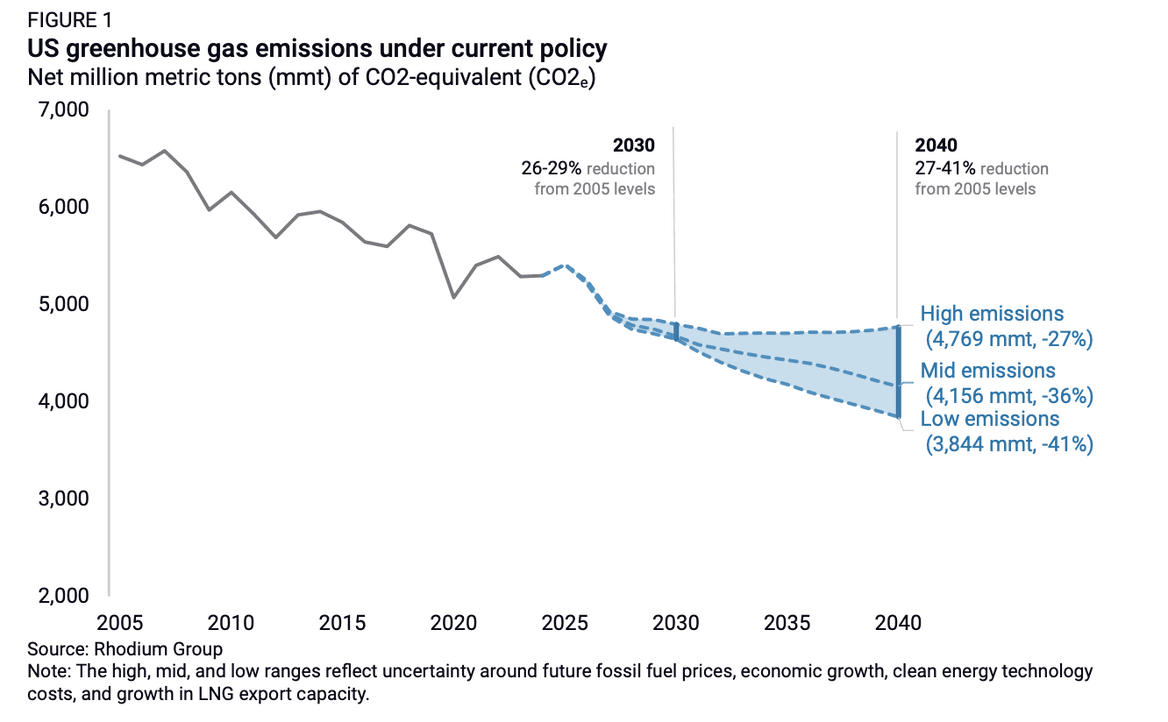
In Rhodium’s 2023 report, which incorporated the effects of President Joe Biden’s recently passed Inflation Reduction Act, analysts predicted emissions would fall by 29% to 42% by 2030. The country could still hit the low end of those expectations even after Trump dismantled many of the policies that made those predictions possible. That’s something of a win, but it’s tempered by the impossibility of hitting Biden’s Paris Agreement pledge of 50% reductions by 2030.
The certainty of renewables growth through the 2020s derives from a tax policy quirk that benefits solar and wind developers.
Although Trump snatched away the solar and wind industry’s beloved tax credits, projects that officially commenced construction by July 4 can still avail themselves of “safe-harbored” tax credits if they wrap up over the next four years. Rhodium expects developers will complete around 50 GW of solar, storage, and wind annually during this time. That outlook holds steady even in the more conservative scenarios, although it’s worth noting the firm’s model might not capture the extent to which the Trump administration’s permitting blockades may thwart development.
Past the bonanza of the late 2020s, those supporting tax credits disappear for wind and solar, and the predictions diverge wildly. The 2030s will come down to a battle for power sector supremacy between renewables-plus-storage and natural gas.
“When you have tax credits, you push up on what’s possible,” Kolus said. “Without them, you let energy markets take over, and then it becomes really a matter of what does clean technology cost and what are natural gas prices — those are the two things that are really driving the divergence in outcomes after 2030.”
In Rhodium’s low-emissions scenario, the low-carbon sources continue to romp, reaching 53 GW of annual installations through 2040 while holding new gas plants to just 5 GW annually. In the high-emissions scenario, the inverted price dynamics elevate gas to 16 GW of annual deployments and suppress clean energy construction to just 3 GW per year. In the middle scenario, renewables fall to an average of 16 GW annually in the first half of the 2030s, then rebound to 45 GW for the second half; annual gas additions meanwhile sit at about 9 GW over the course of the decade.
That high-emissions case would be devastating to the clean energy industry: The plummet from 50 GW of annual construction to 3 GW would decimate the pace of industrial activity, slashing construction jobs, infusions to local tax bases across the country, and new clean power for the states and customers that want it.
Rhodium’s findings square with what I’ve heard while interviewing clean energy professionals: There’s a ton of building to do in the next four years, but anything beyond that is too far off to predict. The energy landscape post-2030 will hinge on who’s in the White House. If that person restores supportive policies, the outlook will shift radically once again.
In the meantime, there are a few reasons to be optimistic that clean energy will avoid the worst-case scenario.
First and foremost, solar, wind, and batteries have a yearslong track record of beating the expert predictions of how cheap they’ll get. Given a range of cost projections, this history would suggest you bet on the low end. That alone could stave off the more dour scenarios described in the report.
Then there’s the changing nature of the U.S. fossil fuel industry. The country has been shipping more and more of its natural gas overseas via liquefied natural gas terminals. So much new export capacity has been approved and entered construction that LNG exports will rise dramatically in any of Rhodium’s scenarios. So far, this growth has had a muted effect on domestic gas prices, because producers have extracted more each year in lockstep with new export demand. But if the industry hit a bust cycle and couldn’t keep pace, basic economics suggests the domestic price would surge as U.S. consumers compete with foreign buyers willing to pay far more. That could weaken the case for gas generation in the 2030s.
Another source of hope for the clean energy contingent is that the modeling may underestimate how fast battery storage will reshape the power sector.
Rhodium notes that storage meaningfully takes off only in its low-emissions case, when lots of new renewables are getting built. But Kolus acknowledged that the analysis focuses on picking the lowest-cost option for new power capacity, whereas developers may build batteries for other reasons. For example, a firm could opt for batteries because they are less polluting than gas combustion turbines, or because they can be built more quickly. Batteries have already appeared in many deals specifically serving demand for data centers, to help tech giants with their climate goals and bring AI computing online faster.
When batteries do arrive in large numbers, they reliably take market share from gas plants. Gas generation in California is plummeting now, because stored solar power is a much cheaper source of nighttime electricity than burning fossil fuels. The broader cleanup of the U.S. power sector, then, will hinge on how quickly other states go the way of California in making batteries a prime source for on-demand energy.
Power stations that recharge from the sun, a car, or a home outlet can keep appliances going in an outage. Some can even help lower electric bills.
When the power goes out, a home battery can keep you going.
Energy storage, often paired with rooftop solar, has taken off in the U.S. in recent years as households look for ways to lower their utility bills and stay comfy during grid blackouts. But professionally installed partial- and whole-home battery systems aren’t right for everyone: They’re not only hardwired into a home — a change renters don’t usually have the authority to make — but also pricey. You should expect to pay at least $15,000 for one of these setups.
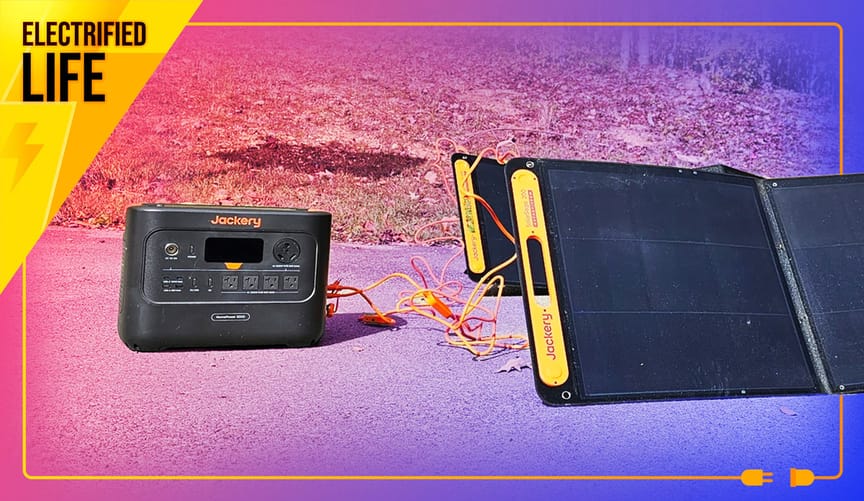
Luckily, there’s another option: portable batteries that can recharge from a standard home or car outlet or from portable solar panels. Although typically much less powerful than their whole-home counterparts, such DIY systems are far cheaper — and don’t require an electrician to set up. The rapid proliferation of the tech, known as portable power stations or solar generators, is democratizing clean, gas-free backup power more than ever.
These plug-and-play batteries, which range from the size of a toaster to a carry-on suitcase, have ports where you can plug in a few devices and appliances. They retail for several hundred to a few thousand dollars, depending on their storage capacity, and are widely available online and at big-box stores like Best Buy, Costco, and Home Depot. Some products, via their apps, can even shave your electric bill by automatically banking grid electricity during off-peak hours when it’s cheap, so you can pull the stored power during high-demand periods when it’s more expensive.
The market for portable batteries “has seen so much growth,” said Brian Essenmacher, North America head of business development for EcoFlow, which has manufactured this type of equipment since 2017. “They’re clean, they’re safe, there’s no maintenance, and they’re emissions-free. They can really be used by anyone to power the critical devices in the home.”
Portable power stations are mid-sized in the backup-battery bestiary. With a storage capacity of about 500 watt-hours to 4,000 watt-hours, these products are larger than power banks (roughly 7.5 Wh to 75 Wh), which can recharge a phone or a laptop, but typically more diminutive than batteries paired with home solar, like the 13,500-Wh Tesla Powerwall 3. Blurring the lines, though, some power stations can be expanded with additional battery packs to grow into 60,000 Wh or larger behemoths.
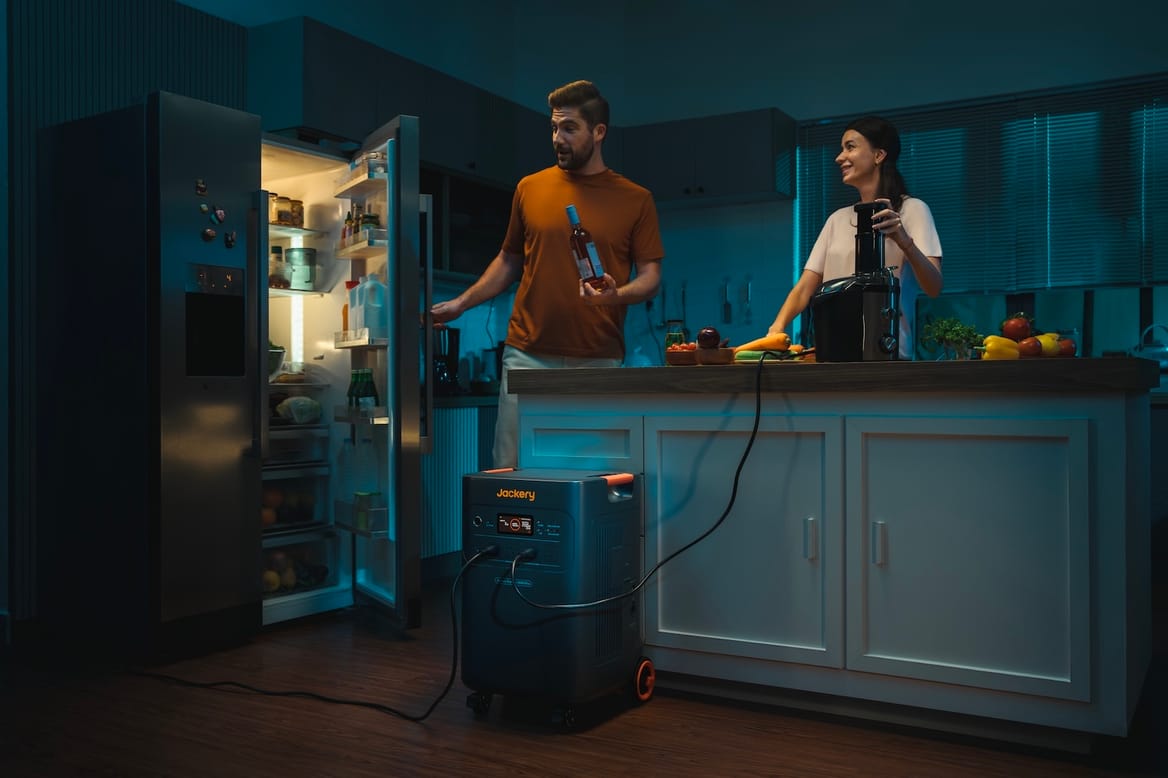
The portable tech can power a wide array of devices you might need during an outage. At home, that includes phones, computers, refrigerators, window air conditioners, “micro” heat pumps, TVs, fish-tank aerators, CPAP machines, baby monitors, Wi-Fi routers, sump pumps, and power tools. With some creativity, it can even be used to top off an EV.
The tech also enables outdoor activities, like filming, DJing, movie-projecting, camera-charging, water-boiling, and grilling. In recent years, the systems have pulled off a quiet revolution among the van-life and RV communities, who are increasingly picking batteries over polluting gas generators.
Ellen Vig, a semiretired registered nurse whose home base is in Billerica, Massachusetts, loves to boondock her minivan-turned-camper at the beach. And she’s never without her portable power station to keep her in comfort while she’s off-grid.
“It’s so nice to have a refrigerator and be able to use fans and charge your phone,” said Vig, who goes by “Electric Ellen, The Power Lady!” on YouTube and travels to RV and van-life meetups around the country answering people’s questions about portable backup power. “I’m a glamper, not a camper.”
For short-term use, Wirecutter recommends the Jackery Explorer 300 (293 Wh) at $279; for maximum battery life, the EcoFlow Delta 2 Max (2,048 Wh) at $949; and for a system that could be expanded to whole-home backup, the EcoFlow Delta Pro Ultra (6,000 Wh) at $3,999.
These products can be a surprisingly good value on a per-energy-unit basis. A $15,000 Tesla Powerwall 3 is $1,111 per kWh. The EcoFlow Delta 2 Max is $463 per kWh — less than half the Tesla tech.
Which portable power station is right for you? The first step is figuring out what you want to back up and thus how many watt-hours you need. List the devices you plan to power and a few of their attributes: their average and maximum power draws (in watts, and often listed in a label on the product itself or searchable online) and how long you plan to run them on backup power (in hours). Vig put together a handy template worksheet to crunch your total demand. Just copy it to edit.
I tried it — and was flabbergasted at my home’s energy decadence. Backing up just the essentials — window heat pump, fridge, laptop, and Wi-Fi router — for a day would take a whopping 14,000 Wh. A system that big would bust my budget, so I’m thinking something smaller will have to do.
Here are some key features besides size to look for in portable batteries:
Some other things to consider include how many outlets (AC, DC, and USB) the system has, the maximum watts each outlet can handle, how loud its internal fans get, how weatherproof the system is, how fast it charges, and if the company uses proprietary cables for connecting to solar.
The backup tech is rapidly improving. “Power stations are getting lighter, smaller, and more powerful, and they’re charging faster,” Vig said. A 1,024-Wh system would have taken her six or seven hours to recharge in the past, she noted. Now, she has one that charges up in roughly an hour.
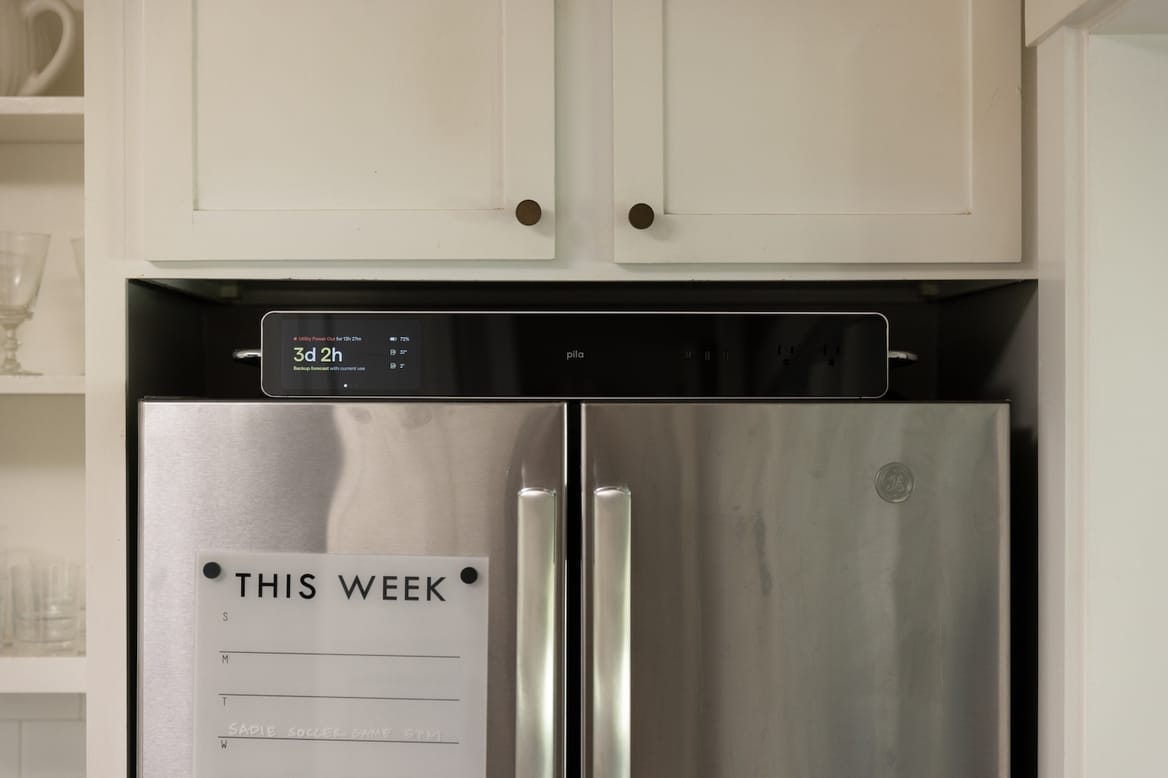
Companies are also rolling out sleek new form factors. In the last few months, Bluetti, Jackery, and Pila Energy began shipping briefcase-size systems that can sit on top of a fridge to conveniently provide the appliance with backup power.
More innovation is on the horizon to get daily use out of portable power stations. Most products available in the U.S. can’t deliver electricity into a building’s outlet; they can only draw power from it. But, as with plug-in solar, plug-in batteries that can push electricity into your home are already available in Europe and are starting to pop up here.
These devices can power appliances plugged into the wall, providing a seamless way to share stored energy across different rooms while taking advantage of favorable electricity rates. It’s important to note that this functionality won’t work during a blackout, though, to prevent any risk of shocking lineworkers; instead you’d need to manually plug appliances into the battery’s AC outlets to keep them going.
Eight states have now passed plug-in solar laws, which allow power to flow into a home outlet, opening the door to plug-in batteries, said Rachel Stotts, senior public relations manager at Jackery. Competitor EcoFlow has begun to sell its plug-in Stream Ultra power station in the U.S., but has so far limited shipping to Utah and Maryland, two of the first states to legalize balcony solar. As of Monday, the product was sold out.
Jackery, which sells these two-way batteries in Europe, plans to bring them to the U.S. market once it decides how to accommodate different state regulations, Stotts said.
The company doesn’t have a release date, she noted. But “we’re hurrying.”
The aim? To expand access to electric vehicles among lower-income residents of Massachusetts, which has big EV dreams as it tries to decarbonize.
Residents in four lower-income Massachusetts neighborhoods now have access to a new, low-cost option for running errands or getting to appointments: a shared, solar-powered electric vehicle.
The innovative pilot program, CommunityEV Carshare, launched Monday and offers eligible drivers discounted prices on hourly EV rentals at locations in Boston, Chelsea, Framingham, and Quincy.
Transportation is responsible for 38% of Massachusetts’ greenhouse gas emissions. Replacing gasoline-burning vehicles with electric options is therefore a major part of the state’s strategy for meeting its goal of net-zero emissions by 2050. And progress is being made: The EV market share has grown steadily in recent years, and as of 2025, roughly 3% of the state’s 5.6 million cars were electric or plug-in hybrids.
EV adoption, however, has largely come from higher-income households, said Lizzi Weyant, executive director of the Metropolitan Area Planning Council, a regional planning organization that is spearheading the pilot.
“It’s really about increasing access,” Weyant said. “If we are going to make EVs a more first-choice vehicle, we need to make them more accessible to lower-income residents.”
The idea for CommunityEV Carshare was first hatched by two of Weyant’s employees. At the same time that they were brainstorming the possibilities, the Massachusetts Clean Energy Center opened up a grant opportunity for projects that aimed to expand access to clean transportation options for historically underserved communities. The EV carshare plan received an award of $1 million to get off the ground.
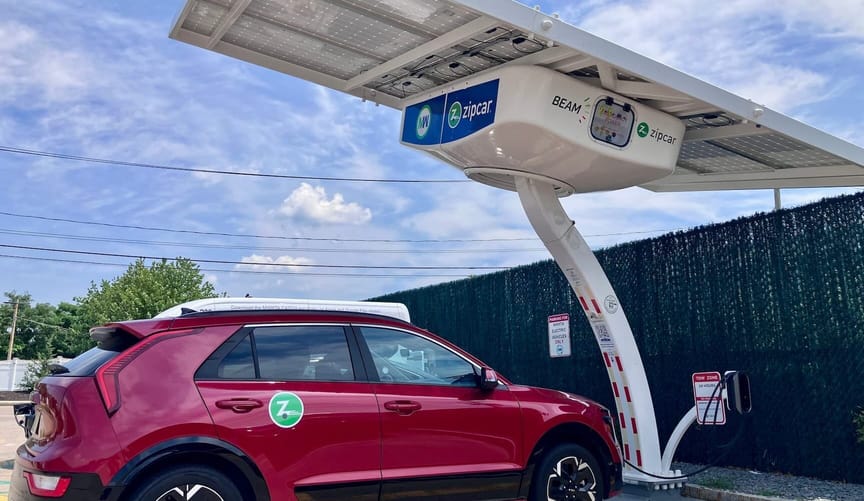
The result is a network of four cars — three Hyundai Konas and a Kia Niro — provided through Zipcar, the formerly Boston-based company that pioneered the carsharing concept. The vehicles are located in public housing developments in Boston and Chelsea, and sites in downtown Framingham and Quincy.
Each vehicle is paired with a solar-powered charger from EV infrastructure company Beam Global. The portable charging stations include a solar canopy held aloft by a large, curved metal arm. The whole thing looks something like “an alien spaceship,” Weyant joked, but the technology has the potential to get more charging capacity deployed more quickly, since it doesn’t require digging trenches, disrupting roads, or going through a grid interconnection process.
“We actually get to understand the impact of bringing something to residents in a faster, more affordable way for our cities and towns,” she said.
To make using the vehicles affordable, Zipcar has agreed to waive its standard $25 application fee and lower the annual membership fee from $90 to $35. Once they’re enrolled, drivers can use the car for an hourly rental rate of $11 on weekdays and $13 on weekends, which includes the cost of insurance and charging. Standard Zipcar fees vary by market, but are generally from $14.50 to $17 per hour.
In Boston and Chelsea, all residents of the public housing complexes where the cars are located are eligible to sign up for the pilot. In Framingham and Quincy, interested drivers must show evidence that they already receive government assistance through programs such as the Supplemental Nutrition Assistance Program or MassHealth, the state’s Medicaid program.
The first participants have already enrolled, and the cars hit the road this week. The organizers will be watching closely to see who is driving the EVs, where, and how often, said Scott Nathan, CEO and founder of charger platform company Alwayz, a partner in the project. They’re hoping to learn more about whether there is demand for such service in the targeted communities, what kind of education or messaging is needed to get drivers behind the wheel, and how many miles users drive per trip.
The goal is to gather information that will help expand EV use, boost businesses in the sector, and drive down emissions, Nathan said.
“We think there are long-term benefits to providing greater access,” he said. “We think that will grow the market of electric vehicles, and ultimately help reduce impacts on climate change.”
Research shows that once drivers try an EV, they stick with them. That’s why these incentives target those who’ve never owned one to maximize the bang for the buck.
California is making a bet: Once you’ve driven an EV, you won’t want to go back to a gas-powered car.
Earlier this month, Gov. Gavin Newsom (D) signed legislation creating the MyFirstEV program. It’s the state’s first big attempt to make up for the loss of federal EV tax credits, and it’s exclusively targeting the key demographic of EV neophytes.
The fine details are still being hashed out in advance of MyFirstEV’s official launch later this summer. But, in broad strokes, the program will offer a $3,500 rebate at the point of sale for a first-time purchase or lease of any new EV that retails for $50,000 or less, and a $1,750 rebate for a used EV selling for $25,000 or less.
The program is funded with $270 million. Half of that will come from the state budget, and the other half — in a rare arrangement — will come from participating automakers, including Ford, General Motors, Honda, Hyundai, Kia, Lucid, Mitsubishi, Nissan, Rivian, Subaru, Tesla, Toyota, and Volvo.
For years, consumers across the nation could get discounts of up to $7,500 for new EVs and up to $4,000 for used EVs. These tax credits were crucial: They could make some new EVs cost-competitive with new fossil-fueled cars.
But the megabill passed by Republicans in Congress last year killed those federal incentives at the end of September 2025, and EV sales have plummeted since.
That poses problems for decarbonization goals held by states like California, as fossil-fueled vehicles are among the largest sources of greenhouse gas emissions in the nation.
The Golden State is not the only one trying to make up for lost tax credits. Programs in Connecticut, Delaware, Illinois, Maine, Massachusetts, New Jersey, New York, Rhode Island, and other states offer incentives and rebates that can reduce the cost of an EV by more than $1,000. Residents of most states can find some form of assistance from government or electric utility programs for vehicles and for home chargers.
California’s new program is notable both because it is by far the nation’s largest EV market and because it’s the first to tie rebates to first-time EV buyers.
That’s according to Rachel Reolfi, senior policy analyst at research firm Atlas Public Policy. She made the case for strategies like MyFirstEV in a December policy paper that argued states will get more “bang for the buck” if they limit incentives to first-time buyers.
As Reolfi told Canary Media, this “pretty novel concept” makes sense because of a simple fact: “When folks buy an EV, they don’t go back to gas cars.”
Survey data supports the point. J.D. Power’s February consumer satisfaction survey shows that 96% of U.S. EV owners would consider purchasing or leasing another EV for their next vehicle. Concerns about range and charging availability also drop significantly once a person starts driving an EV, per analysis from EV-advocacy group Plug In America.
This data helped inform California’s MyFirstEV program, said Dan Krassner, executive director of EVs for All America, a nonprofit research group that commissioned the Atlas report.
By focusing scarce state funds on first-time EV buyers, “each rebate buys a customer rather than a transaction,” Krassner said in an email. American EV Jobs Alliance, his group’s advocacy affiliate, “took that concept into California and made the case for it with lawmakers, the administration, and coalition partners.”
This approach makes sense, according to Corey Cantor, research director at the Zero Emission Transportation Association trade group. “When you leave the early adopters behind and try to hit mass market scale, we know up-front price and charging concerns have been a challenge,” he said. “The people we really need to reach are those that have yet to be convinced to drive electric.”
Restricting rebates to first-time EV buyers does add some complications.
MyFirstEV will require participants to submit a document attesting that they haven’t previously bought an EV, according to John Swanton, a communications specialist at the California Air Resources Board, the agency administering the program.
It’s possible that some applicants may try to game the program by failing to disclose that they’ve bought an EV before, said Scott Shepard, transportation senior director for the Center for Sustainable Energy, a nonprofit group that manages EV rebate programs in multiple states, including the California Vehicle Rebate Program, which ended in 2023. But there are fairly simple ways to police that, he said, like checking records with the state Department of Motor Vehicles to “keep people honest.”
If anything, Shepard said, it’s easier to look up vehicle registration data than it is to enforce the income limits that some other state programs require. MyFirstEV has no income restriction.
Meanwhile, limiting rebates to purchases of new EVs that sell for $50,000 or less helps prioritize people seeking lower-cost alternatives, he said, although the program does waive that limit for vehicles made by companies headquartered in California, which includes Lucid and Rivian.
Including credits for used EVs also helps lower-income buyers, Shepard said. New EVs still cost quite a bit more than their gasoline-fueled counterparts, but used EVs are much cheaper comparatively, particularly as previously leased vehicles start to come back onto the secondary market. “Creating used-vehicle options is a great way to distribute air quality and economic benefits,” he added.
Finally, the program will adopt what’s become a best practice for EV incentives: Allowing customers to instantly receive the discount rather than needing to wait to file their taxes to claim the rebate.
“One of the sticky points early on with EV tax credits was that it was a tax credit and not a point-of-sale rebate — and that adds sand to the gears,” said Andrew Garberson, head of growth and research at Recurrent, a company that aggregates data on EV battery health. “Making it point-of-sale adds grease instead of sand to the gears.”
Targeting first-time EV buyers may be particularly appropriate for a state where EV enthusiasm is recovering more quickly than the U.S. as a whole, noted Cantor of the Zero Emission Transportation Association. New data from the Newsom administration and from the California New Car Dealers Association shows that EV sales have started to climb back after their post–federal tax credit slump.
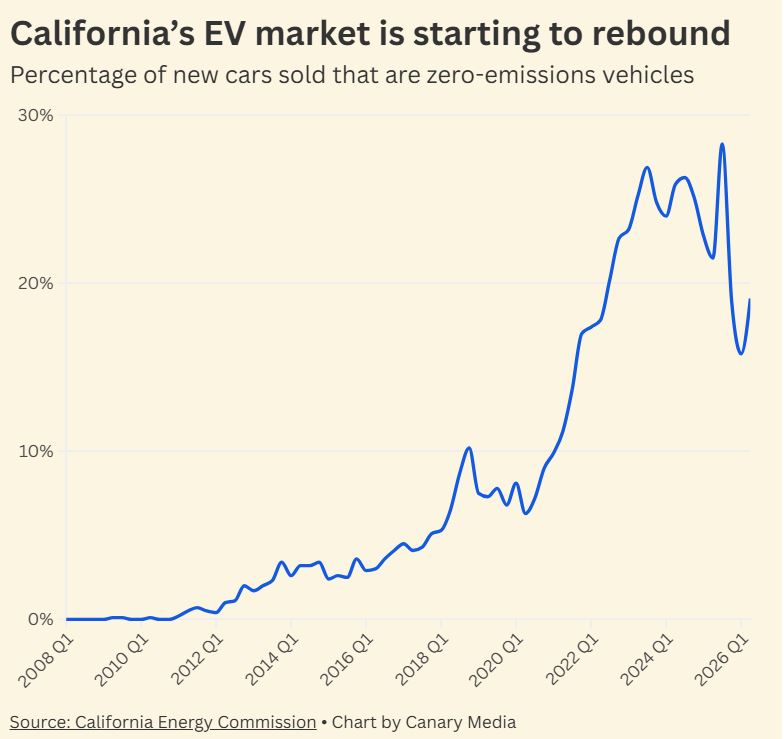
What remains to be seen is whether California and other states can help the U.S. automotive industry recover from the federal government’s pullback, Shepard said. But states are inherently more constrained in how much money they can commit to these kinds of programs, which limits their impact.
According to Shepard’s initial analysis of demand for EV incentives from the California car-buying public, the $270 million for the MyFirstEV program will most likely be depleted within less than a year. States may need to commit to “funding mechanisms that are more reliable, more stable, perhaps more meaningful,” than what they’ve been able to pull together thus far, he said.
Even a state as wealthy and as central to the EV market as California will struggle to make that happen, Atlas’ Reolfi said. “It’s clearly a constrained state budget environment,” she said. “But it’s good to see states sending a message.”
In that light, getting automakers to match the state’s $135 million in funding was something of a coup, Cantor said. German automakers have contributed to that country’s government EV subsidy programs in the past, but “that hasn’t been done in the U.S. before,” he said.
Krassner of EVs for All America said he has promoted prioritizing first-time EV buyers in testimony before the Maryland Mitigation Working Group, a key body under the state’s Commission on Climate Change.
“California just handed every other state a template that works.”
Many manufacturers burn fossil fuels to make snacks, materials, and chemicals. High electricity costs are complicating their efforts to switch to cleaner technologies.
American households are all too familiar with the pain of high electric bills, which are climbing nationwide. The same problem is quietly hindering the country’s factories from cleaning up their operations, too.
Hundreds of thousands of U.S. manufacturing facilities burn fossil fuels to produce the heat they need to make packaged foods, bottled drinks, construction materials, and likely everything in your bathroom cabinet. It’s why the industrial sector accounts for nearly one-third of the country’s carbon dioxide emissions from energy use.
Cleaner technologies like industrial heat pumps, electric boilers, and heat-storing batteries are already commercially available. Yet even companies that are committed to decarbonizing can find it hard to justify making the switch. The underlying problem is that in virtually every state, electricity costs more than natural gas for industrial users.
“We have to have solutions that are at the very least competitive with the existing cost of fuel,” said Neil Brown, a chemical engineer at Tennessee-based Eastman Chemical, which has over a dozen manufacturing sites in the U.S. and more abroad. “In some places where Eastman operates, in parts of the Southeast and Texas, it is very difficult to compete with the low cost of natural gas.”
Brown was speaking on a webinar last month held by the Renewable Thermal Collaborative and Industrial Heat Pump Alliance. The groups looked at electrifying low- to medium-temperature processes, and estimated it would add roughly 250 terawatt-hours to the industrial sector’s annual electricity demand by 2035 — or nearly 25% more power than manufacturers currently use.
On the plus side, deploying clean industrial technologies could generate around $471 billion in total economic output over the next decade, even when accounting for the lost jobs and diminished business activities of gas utilities and equipment makers, according to the groups’ June report.
But reaping those benefits will first require finding ways to drive down the cost of electricity for manufacturers. A growing number of climate and energy experts are studying that challenge and proposing solutions for policymakers and utilities to consider.
One of those strategies could be to build renewable energy projects directly beside factories.
Researchers at the University of California, Berkeley, recently modeled what would happen if factories themselves installed off-grid solar or wind projects on-site and used the clean electricity to power thermal storage systems and heat pumps. The team looked at nearly 3,600 locations across the country, evaluating land availability, solar-power potential, and local natural gas prices for each site.
Renewable-powered heat systems could economically supply up to one-third of the studied industrial heat demand by 2035, they said in an analysis announced last week.
The researchers found that such an approach would make it more cost-effective to run heat pumps than gas boilers for industrial processes below 200 degrees Celsius (392 degrees Fahrenheit) — a broad category that includes beer making, paper production, and textile manufacturing. Meanwhile, thermal batteries would offer “competitive or lower costs” for scorching-hot operations like glass melting and steel manufacturing.

“In states where you have very good solar quality and natural gas prices are high, like in California, it makes economic sense for the industry to do this, because they will save some money on their heating costs,” said Amol Phadke, a co-author of the report and an adjunct associate professor at UC Berkeley’s Goldman School of Public Policy.
However, even states without California’s abundant sunshine can still produce low-cost solar power, thanks to declining solar-panel prices. The vast majority of sites in the study have sufficient buildable land to install solar projects.
Phadke added that building off-grid systems would give factories faster access to renewables, since grid-tied wind and solar farms have to wait in long interconnection queues, which can delay projects for years. Ditching the utility would also let manufacturers avoid paying steep grid-delivery charges and other expenses — and sidestep competition with data center operators for power from an increasingly strained grid.
The new site-level data “is really helpful for project developers and technology developers to know how to prioritize their efforts, in terms of where to go and pitch industries on,” said José Domínguez, the study’s lead author and a research affiliate at the Goldman School.
The fact remains, though, that many factories will continue to rely on the electric grid in the near term. To get these facilities to consider transitioning to cleaner heat, the cost of electricity needs to come down.
The concept of electricity rate reform is gaining traction among decarbonization advocates, state policymakers, and manufacturers like Eastman as a tool for narrowing the gap between electricity and natural gas prices.
In California, Senate Bill 943 would authorize the state’s Public Utilities Commission to fix utility rates and fees to make it more affordable for large industrial and commercial customers to switch from fossil fuels to electric heat. The bill passed the Senate in May and is now headed to the state Assembly’s Appropriations Committee.
In the Upper Midwest, the utility Otter Tail Power recently developed a novel electricity tariff that is designed to boost the bottom line of thermal energy systems and to ensure they benefit everyone on the grid. The first project to take advantage of this new rate is Antora Energy’s 5-gigawatt-hour battery in South Dakota, which turns cheap wind energy into clean industrial steam for Poet’s nearby ethanol-production plant.
“Reforming electric rates is a good way to improve the economics of electrification while taking advantage of our clean electricity generation,” said Lauren Kubiak, a senior scientist for the Natural Resources Defense Council who works on California climate and energy policy.
Kubiak led a new study analyzing how this strategy could improve the costs of operating industrial heat pumps in two major manufacturing states: California and Michigan. While heat pumps are significantly more energy-efficient than gas-fueled boilers, they’re typically not cost-effective to operate in either state, given current electricity prices.
The study examined what would happen if companies paid only “marginal” electricity costs, which reflect the actual cost of generating and transporting an additional unit of electricity. Today, ratepayers also pay “non-marginal” costs that help cover things like grid maintenance and infrastructure upgrades, net-metering programs for rooftop solar, and, in California, wildfire-prevention efforts.
“In California, [marginal-cost] rates enabled heat pumps to become pretty cost-competitive with gas boilers,” Kubiak said. That’s particularly true for major subsectors that require low-temperature heating.
For Michigan manufacturers, the impact is more muted, since the state’s electricity rates are lower than California’s and don’t include as many non-marginal costs. However, charging factories marginal rates would still reduce the size of the electricity-gas cost gap, enough that layering on other industrial policies — such as a tax credit that rewards low-carbon heat production — could bridge that divide almost entirely.
In the report, Kubiak and her co-authors suggest that utilities could offer marginal cost rates only to new heat pumps that displace fossil fuel–generated heat. These rates could also be set to encourage manufacturers to use electricity during times when solar projects are producing excess electricity, or when overall grid demand is low. That should help avoid saddling other ratepayers with the non-marginal costs that these new heat pumps won’t be paying.
“Electric rate reform is a tool in our toolbox that hasn’t been used to its fullest extent just yet,” Kubiak said.
As tech firms look to build their own gas generators, a new report reveals that likely won’t be enough to avoid a hefty power shortfall in the coming years.
It’s no secret that data centers are slated to bring stunning levels of new power demand to the grid in the coming years.
Report after report has tried to put a number on just how much electricity these facilities will actually use, and BloombergNEF joined the chorus this week. Its report projects that U.S. data centers will consume 20% of the country’s power in 2035, up from 5.9% today.
In all, data centers will consume as much as 194 gigawatts of power in 2035, the report estimates. That’s nearly double the amount BloombergNEF forecast back in December, and it’s more than the firm’s analysts expect the power grid to be able to accommodate.
So what’s a data center developer to do? Well, if you’re Elon Musk, you buy a company that’s operating tons of mobile gas and diesel generators that can provide your data centers with power that’s not connected to the grid.
Federal records unearthed last week by Electrek show that in May, the xAI founder bought APR Energy, a Florida company that runs more than a gigawatt of these portable fossil-fueled turbines. These generators can be installed in just a few days, as opposed to a traditional gas plant, which may take years to build.
This isn’t a new avenue for xAI. Since last August, the company has been using diesel generators propped on truck beds to power its Colossus 2 data center project outside Memphis. A lawsuit from the NAACP and its allies alleges the turbines are running without required permits and releasing tons of pollution that harms nearby, majority-Black communities.
Other data center projects are turning to gas, too, or hope to do so in the future. In Ohio, Meta uses modular gas turbines to power servers that, as of June, are stacked up in temporary tents. Some developers want to construct more permanent fossil-fuel solutions: Google, for example, has proposed building its very own utility-scale gas plant alongside a data center in Nebraska.
But experts are casting doubt on just how much off-grid gas power that tech firms will actually be able to build. Among the challenges: Gas turbines are in short supply, and so is the workforce needed to maintain them, as the clean energy industry veteran Jigar Shah noted in an episode of Latitude Media’s Open Circuit podcast.
BloombergNEF projects that even if the grid can accommodate 7 GW of new data center demand each year — the all-time record — and if many hyperscalers install their own gas turbines, the sector will still face a 19-GW shortfall by 2035. For perspective, a standard large-scale nuclear power plant produces about 1 GW of power, and it’s going to be a gigantic undertaking to fulfill the Trump administration’s goal to build 10 of those in the coming years.
Of course, no one knows for sure just how much power data centers will actually end up needing. Data centers could get way more efficient as their processors improve. The AI boom could peter out. Or maybe, just maybe, we’ll unlock the miracle clean power source that is commercial nuclear fusion and use it to meet all our massive electricity needs — but I wouldn’t hold my breath.
Trump’s ill-timed efficiency rollbacks
America’s war with Iran isn’t letting up, and neither is the energy shortage the conflict has brought upon much of the world.
Energy-efficiency measures could provide one salve to the crisis, but in the U.S., they’re getting ever harder to access. Over the past few months, the Trump administration has scaled back a bevy of programs that make home weatherization and other utility-bill-cutting improvements more affordable. Incentives that helped people trade fossil fuel appliances for electric alternatives are dead, for one.
Even free advice hasn’t survived. The Department of Energy’s website used to be full of tips for lowering your power bills, like how to find and plug drafts in your home. But as Grist reports, those guides disappeared by early July — just in time for a grid-straining heat wave to set in across the country.
State legislatures go easier on renewables
Last year, state legislatures had clean energy in their crosshairs. Lawmakers throughout the country introduced more than 300 bills related to renewable energy siting in 2025, and nearly half of them would have made it harder to build solar, wind, and battery storage projects.
Luckily for renewables, just 10 of those restrictive measures actually became law. But this year is shaping up to be brighter, according to the Siting Solutions Project. While lawmakers introduced 86 measures to rein in solar, wind, and battery permitting in 2026, just one has become law. That record is likely to stick, as most state legislative sessions have already concluded for the year.
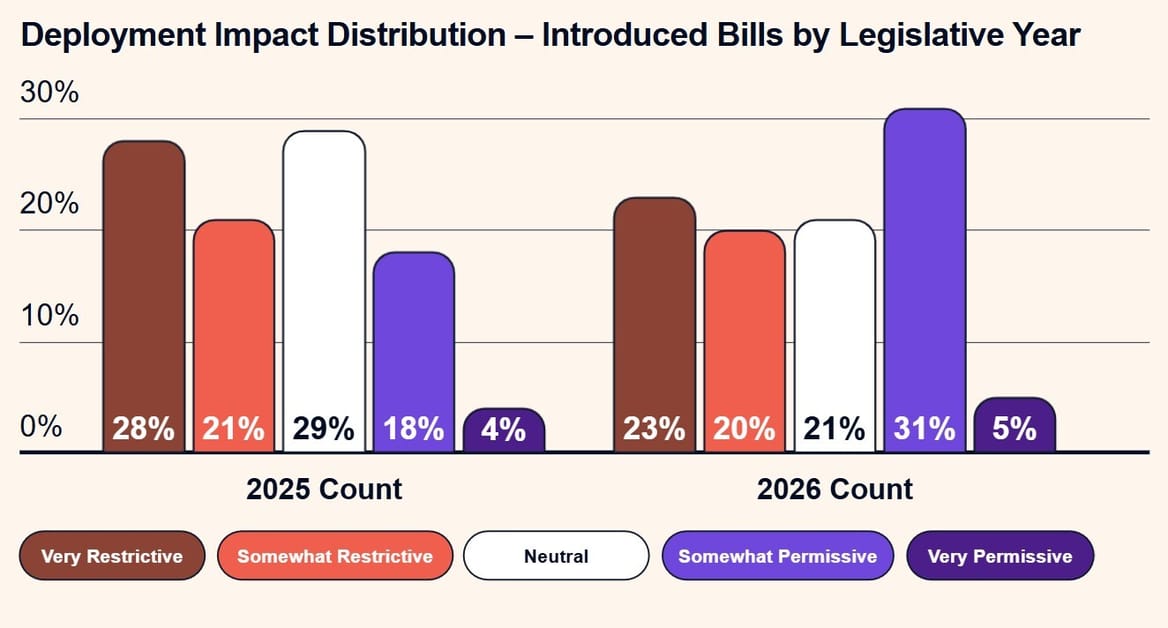
Meanwhile, a handful of pro-renewables permitting and siting policies made it into law this year in both Democratic- and Republican-run state legislatures, reports Canary Media’s Jeff St. John. That includes measures that aim to curb local bans on renewables, speed review processes, and set best practices for cleaning up retired solar and battery projects.
Where to buy balcony solar: A few companies are finding their footing in America’s emerging balcony solar market, with some German firms expanding sales to the States, and U.S. solar manufacturers potentially getting involved soon. (Canary Media)
Iran war strain continues: The world has found ways to adapt without oil from the Strait of Hormuz, but experts predict that fallout from a continued closure could be more severe as countries’ emergency stockpiles near depletion. (Grist)
International nuclear deal: The Trump administration signs a deal with Saudi Arabia that paves the way for nuclear power construction in the country — an arrangement that’s likely to benefit U.S. nuclear developer Westinghouse. (Washington Post, New York Times)
Pumping up iron: Mesabi Metallics sees green steel as a path to revitalize Minnesota’s Iron Range, and it’s rolling out a $2.5 billion plan to mine and produce iron that’s key to lower-emissions steelmaking. (Canary Media)
Coal’s climbing costs: Pushback to the Trump administration’s coal-plant stay-open orders grows, with Wisconsin’s governor saying the costs to utility customers could hit $117 million in coming years, and a Colorado analysis estimating costs over $87 million. (Wisconsin Public Radio, Colorado Sun)
Wind allies unite: A coalition of 18 states and Washington, D.C., looks to join a wind industry lawsuit fighting the Department of Defense’s blockade on onshore wind permitting. (Canary Media)
Digging deeper: Geothermal veteran Ormat Technologies is venturing into the industry’s next generation with projects that can unlock energy where natural geothermal resources don’t exist. (Canary Media)
Trump’s Department of Energy bashes solar panels for not producing 24/7, but the renewable energy source just got Texas through a heat wave.
Yesterday, the Department of Energy took to social media to try and make a scandal out of a well-known fact: Solar panels do not generate power at night.
It’s an old and lazy swipe that critics of renewable energy love to take, even though the people who operate our power grids know that this is the case and plan around the advantages and constraints it presents. That this argument is coming from the cabinet agency overseeing America’s energy system is unnerving but at this point unsurprising. It’s not the first time Energy Secretary Chris Wright has twisted basic facts about renewables.
During the early-July heat wave, “99% of solar power” in the mid-Atlantic “failed after sunset,” according to the graphic Wright’s Energy Department shared on X.
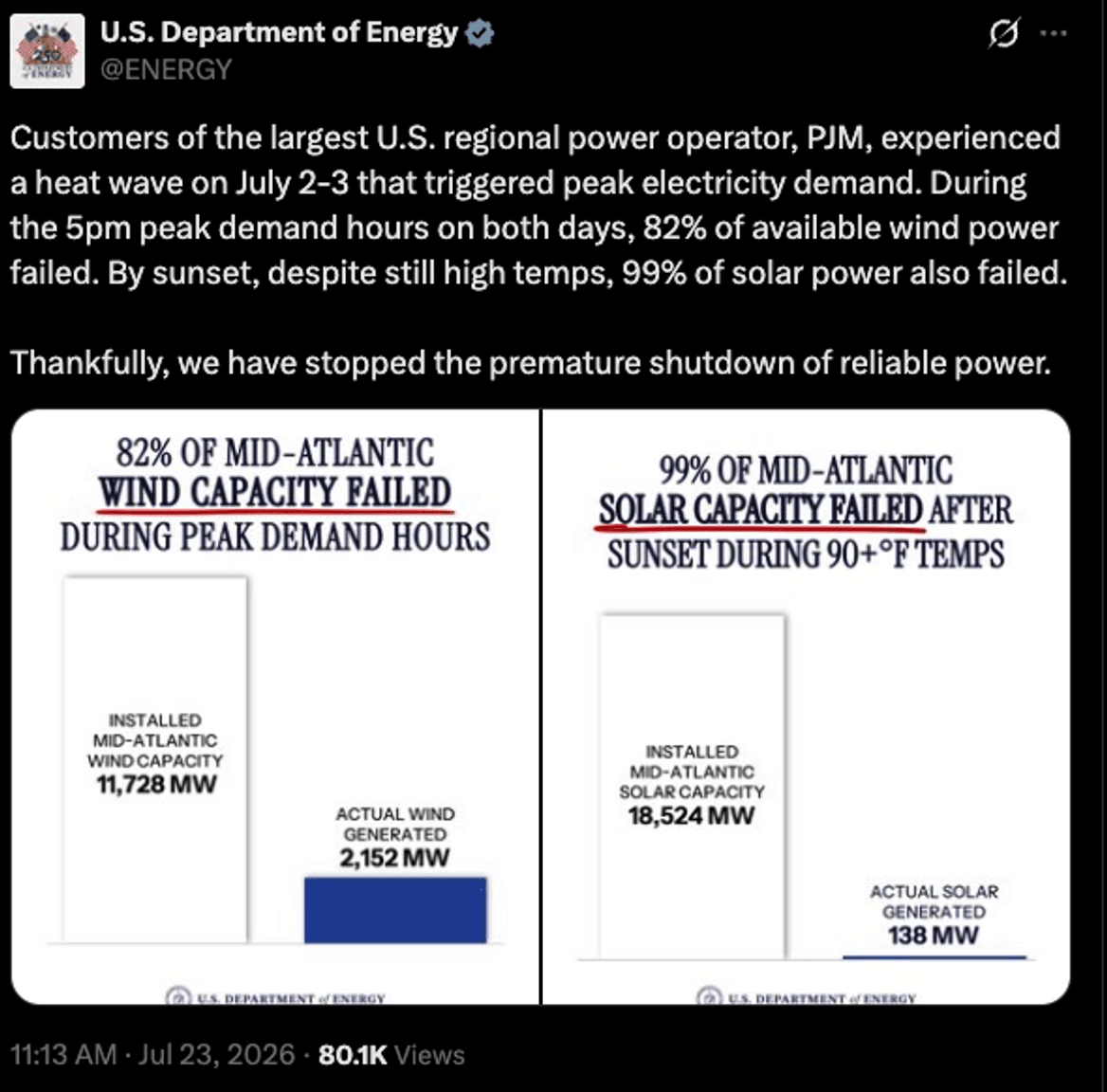
Putting aside the misleading and deceptively provocative language (“failed”? really?), the post completely ignores, you know, the rest of the day. When the sun is shining.
As Wright and others at the DOE well know, solar may not work at night — but it excels in the day. And that matters a lot.
I’ll use one very recent example to make the case. Texas experienced a heat wave this week, and its residents did what you’d expect to get through it: They cranked up their air conditioners. AC is a lifesaver but also an electricity guzzler, and so all that cooling pushed the Texas grid to new highs. On Tuesday the state’s main power grid broke its all-time electricity-demand record. That superlative didn’t stand for long: On Wednesday it set a new record with over 91 gigawatts of peak demand.
Despite this unprecedented strain on the grid, the lights stayed on and the ACs kept humming along. Solar, which Texas has built tons of in recent years, played a major role in that outcome.
On Tuesday, for nearly five hours, solar provided more electricity than natural gas did. On Wednesday, from just before 9 a.m. until just before 5 p.m. — the duration of a full workday — solar provided more than one-third of all electricity in Texas. At times each day, it topped 40% of electricity supply. Solar also helped charge up enough batteries that the Lone Star State set a new record for battery output Wednesday evening when the sun set and demand remained high.
Pretending that solar does nothing to stabilize the grid during periods of extreme stress is disingenuous at best, but it also discounts another key fact. In moments like this past week in Texas, solar can — and did — keep energy prices from spiking.
Perhaps the administration put out this post to troll people like myself. If so, then congrats — consider me trolled and triggered.
I wish we could just categorize it as inane and laugh it off. But it’s coming from a once-authoritative source and cloaked in a faux-authoritative tone and premised on figures that are technically accurate, if completely misleading. And stuff that sounds reasonable and comes from ostensibly trustworthy sources has a way of spreading around online.
Already, Google’s AI overview is promoting this DOE post as a reputable source and pointing out that solar “output dropped significantly by sunset” during the July heat wave in the mid-Atlantic.
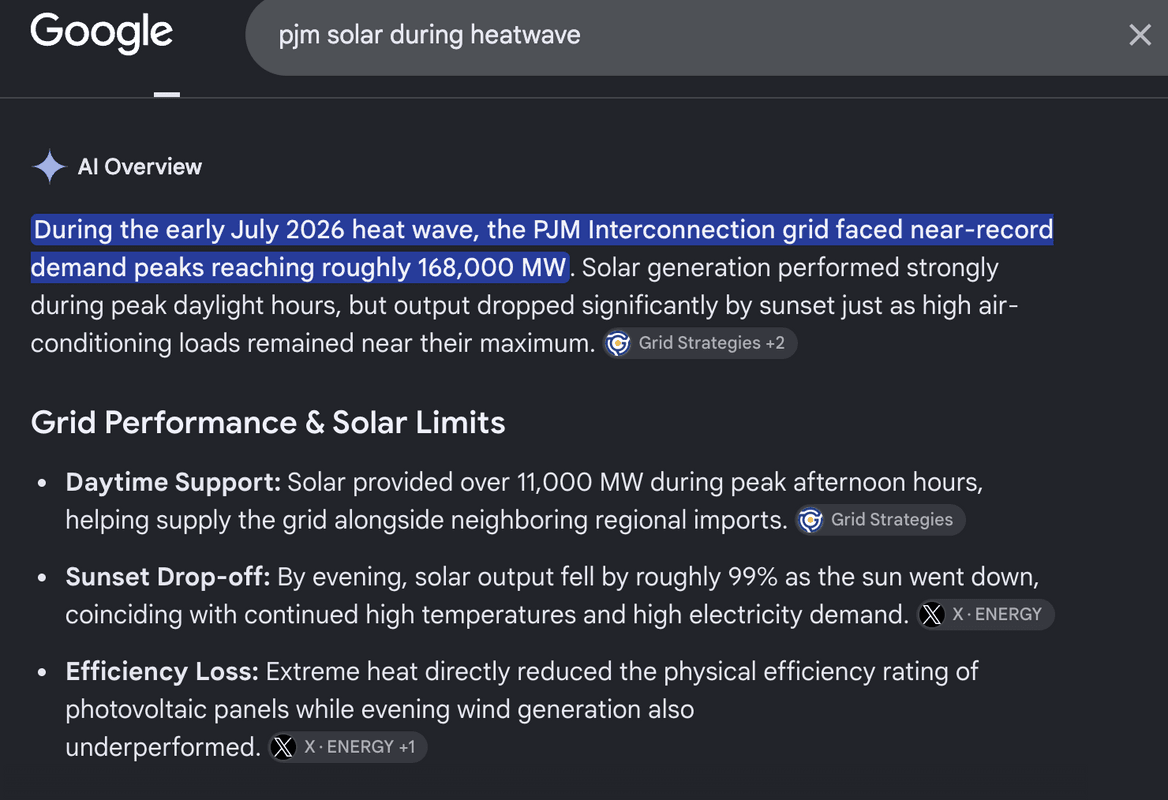
And, of course, the DOE’s message is part of a much more serious and directly damaging trend: The Trump administration’s war on solar and other forms of renewable energy.
Trump has ripped away tax credits for both large-scale solar projects and rooftop installations, crushed a program meant to help low-income Americans afford photovoltaic panels of their own, slow-rolled permitting for projects, and froze a longstanding federal effort to help farmers put solar on their land. I could, unfortunately, keep the examples coming.
But the administration can’t change the fact that solar is the cheapest, cleanest, and easiest form of energy to build — or that we are in the midst of an unprecedented boom in electricity use. People’s utility bills are soaring because supply is lagging behind demand.
It’s undeniable that solar is valuable to our energy system, even if it can’t anchor a grid on its own. Yes, of course, its value is mostly during the daylight hours, though batteries are making it possible to shift more and more of that power to evenings. And in any case, we do not live on a cold, shadowy planet condemned to long, dark days. In New York, where I am writing this, we’ll have 14 hours and 34 minutes of daylight today. If only we had even more solar panels installed here to soak it all up.
It was the EU’s top power source in early summer, generating a record 25% of electricity. The clean energy boom is likely to accelerate further from here.
Europe has had a sunny start to its summer.
Across both May and June, solar was the European Union’s top source of electricity — and provided a record-high 25% of the region’s power last month, per new data from think tank Ember. Several countries, including Spain and Germany, received more than one-third of their electricity from solar in June; in Hungary, it supplied nearly 50%.
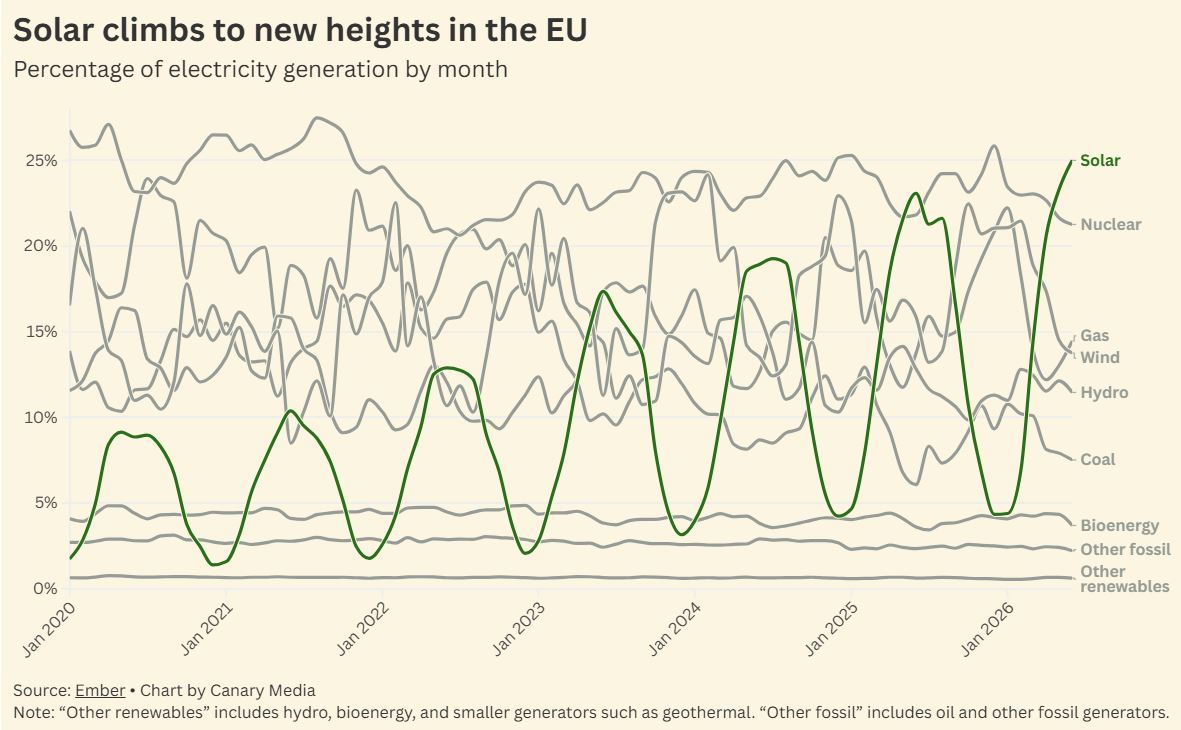
The data highlights Europe’s rapid solar adoption. Five years ago, solar delivered around 10% of the EU’s electricity even in the sunniest months. But Russia’s invasion of Ukraine in 2022 destabilized the region’s gas-dependent electricity system and spurred member states to build out clean energy faster than they had planned to.
More solar has meant less coal and natural gas on the EU grid, which has helped slash planet-warming pollution. Carbon dioxide emissions from the EU electricity sector declined by nearly one-fifth between 2020 and 2025.
Many analysts — including those at Ember — expect the war in Iran and the resulting spike in fossil fuel prices to once again accelerate the EU’s investment in renewables. Shortly after the U.S. and Israel initially attacked Iran, EU energy chief Dan Jørgensen urged the bloc to double down on clean energy. Last week, he unveiled a new Electrification Action Plan that would see the EU double its current rate of electrification.
Jørgensen paired his announcement with a simple statement: “The age of fossil fuels is coming to an end.”
An Asheville, North Carolina, group has embraced solar to secure backup power and lower bills. Its efforts go beyond the standard rooftop array.
ASHEVILLE, N.C. — Nearly two years after Hurricane Helene wreaked havoc on western North Carolina’s largest city, many Asheville residents are still rebuilding — and determined to be better prepared for the next weather disaster.
In Emma, a diverse, mostly immigrant neighborhood just northwest of downtown, solar energy is playing a key role in that work, offering not only a backstop for the next grid outage but also lower utility bills year-round.

Earlier this month, residents, clean energy workers, and organizers gathered to celebrate the latest addition to Emma’s growing solar capacity: a 46-kilowatt array on the rooftop of the community and cultural center owned by La Esperanza (“the hope” in Spanish), a neighborhood real estate co-op formed in 2019.
La Esperanza is one of many organizations and co-ops within Poder Emma, an alliance that has worked to fight displacement and ensure affordable housing in this low-income community for nearly two decades. The 100-plus panels atop the center — a gathering place for celebrations, workshops, and other functions — will lower electricity bills for Poder (meaning “power”), reducing the amount of energy it draws from the grid.
The project was made possible by a host of partners that contributed time, money, and expertise. Most came together in the immediate aftermath of Helene, when mobile solar-powered charging stations proved vital for Emma’s recovery.
“Suddenly, there was an interest in solar where there hadn’t been before,” said Ingrid Johnson, a project manager at Poder. “The reality is that solar can be for communities that are often left out.”
The panels were donated by the Footprint Project, a New Orleans–based sustainable disaster-relief nonprofit that arrived in the area right after the storm and never left. Sugar Hollow Solar, whose offices are just a few doors down from the sprawling, 20,000-square-foot Poder complex, installed the system. Invest Appalachia, a regional fund for economic development, chipped in with a bridge loan to tide Poder over until the panels pay for themselves and federal rebates are processed.
Yet even with that assistance, a typical battery backup system to power essential functions during a grid outage proved too costly. So the partners got creative: They instead have a trailer outfitted with 900 watts of solar panels and a smaller battery to help do the job.
The box on wheels, another Footprint donation, is able to plug into the community center and function as a mini generator for crucial services, including the internet, refrigeration, and the pump for a drinking-water well the collective drilled on-site the winter after Helene destroyed an Asheville water main. The damage left most of the city without clean tap water for nearly two months.
“The climate is going to get more extreme as years go by, unfortunately,” said Kelvin Bonilla, who joined Poder’s staff in early 2025. “So, being able to power the pump from the solar trailer adds that extra layer of resiliency.”
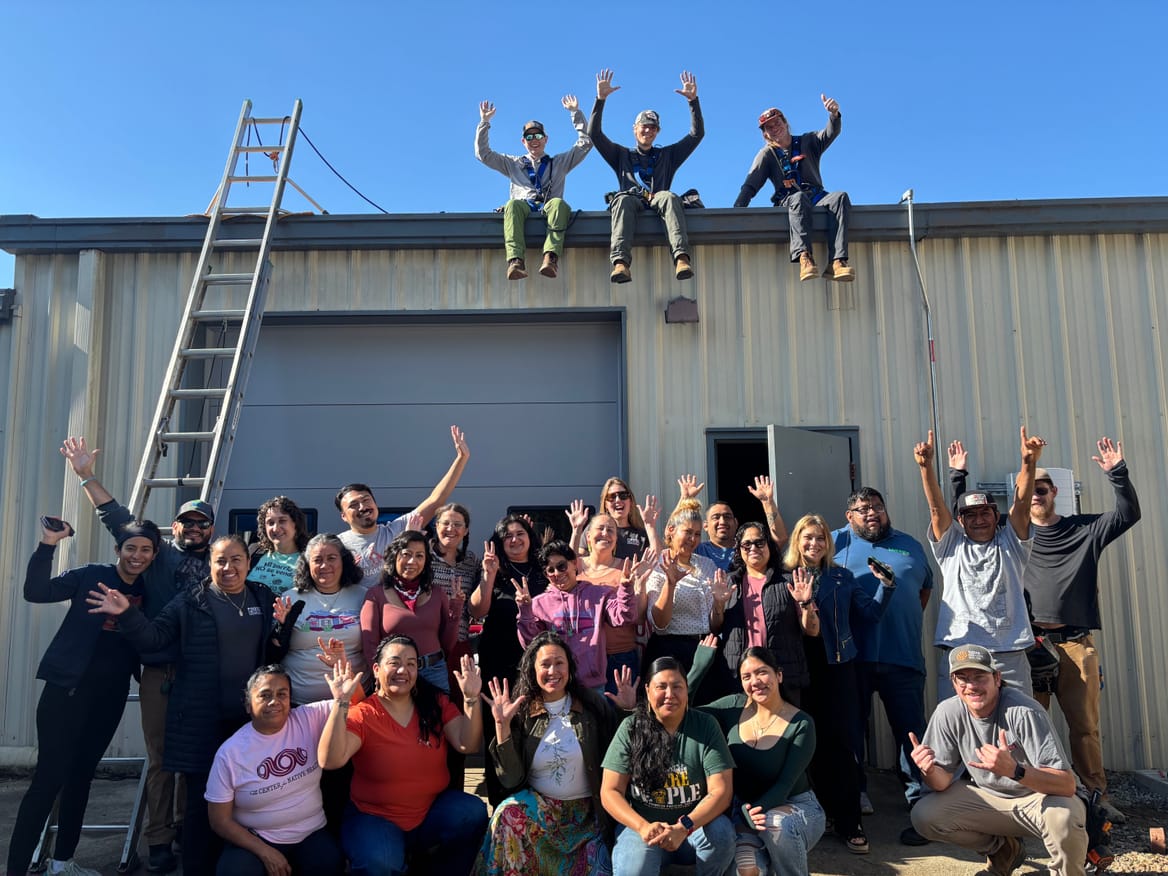
But the solar trailer is more than just an emergency generator. Most of the time, it serves as a mobile outlet and tool-charging station for Poder’s home repair crew, which was formed to address the destruction from Helene and will soon tackle energy-efficiency improvements, too. The team needs its own power source for drills, saws, and other equipment to avoid overwhelming the fuse boxes of the homes they are fixing.
“When we plug into their outlets, we have situations where we trip breakers because it’s such a big load,” said Bonilla, who manages the home repair initiative. “Having the trailer allows us to be more independent and more resilient.”
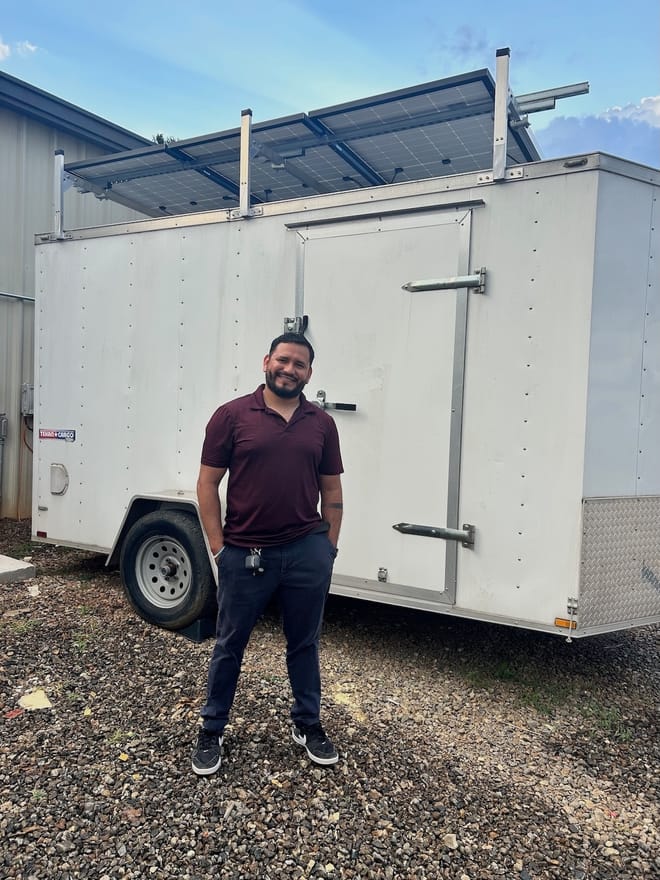
The solar trailer helps create a sort of microgrid, a self-contained system that can operate when the larger grid goes down. Sustainable microgrids are typically outfitted with a large, stationary battery, but the trailer offers a cheaper, portable option. The approach could inform other resiliency efforts prompted by the storm, staffers at the Footprint Project say, including a $5 million state grant program for 24 microgrids in western North Carolina.
Poder and Sugar Hollow are also experimenting with using solar to help individual households weather the next storm. Mobile homes make up the vast bulk of housing stock in the area, and thanks largely to Poder co-ops, a small number of families own rather than rent theirs. Still, solar has long been out of reach because of poor structural stability in manufactured homes. The solution: Attach a custom-made porch to the home and install panels on its roof.
Sugar Hollow and Poder tested the concept early this year, installing 15 panels on a porch built for a manufactured home in Emma, backed up by a Tesla Powerwall 3 battery. The system benefits the household at no cost, thanks to contributions from Footprint and an initiative Sugar Hollow launched in 2025 to help Helene-impacted groups access renewable energy.
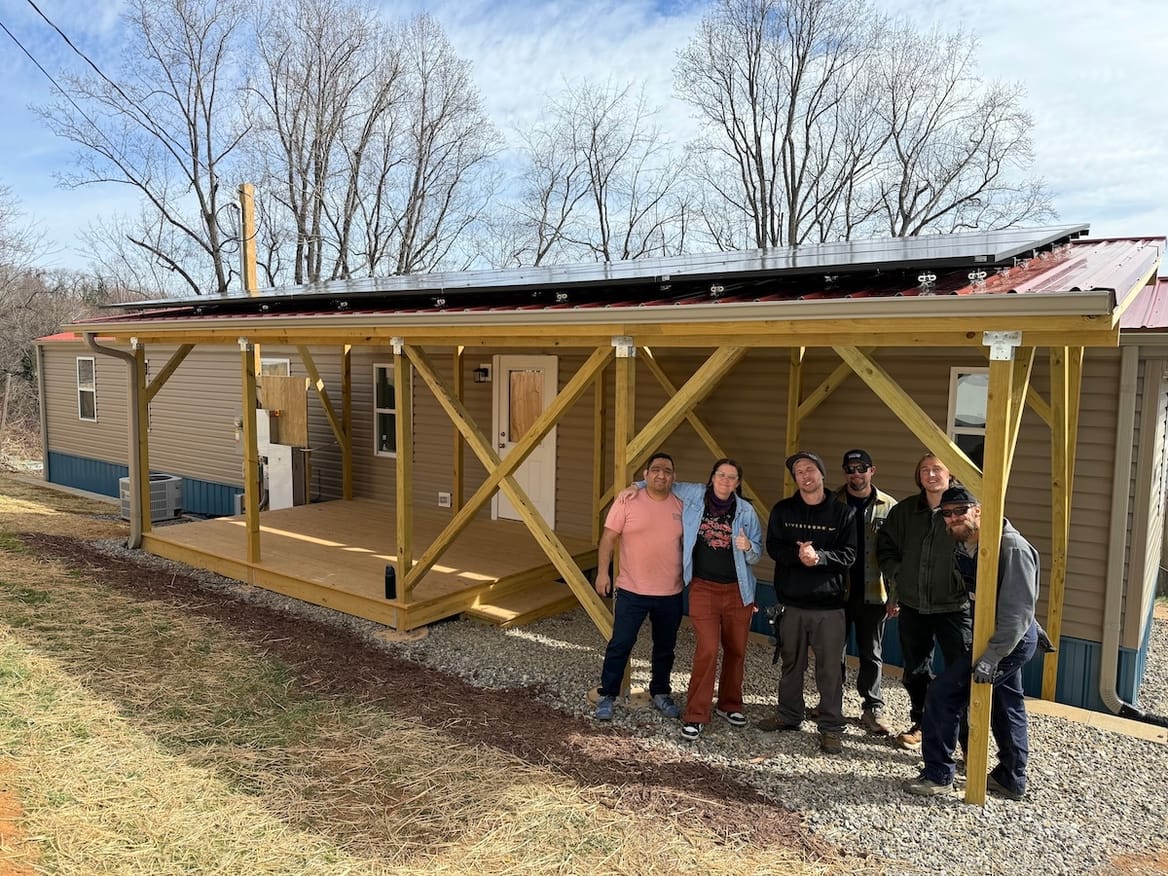
“This was a really great pilot project to understand how we can make solar available for mobile homes,” said Clary Franko, chief operating officer at Sugar Hollow. “The structure is multipurpose — it’s for solar, but also a gathering place for the community.” With additional funding, she hopes to add these solar porches for more households.
Organizers stress that Poder’s members, not its leadership, devised the front-porch model. The same holds true for virtually all the collective’s endeavors — solar and otherwise. That, Bonilla said, is a huge source of pride.
“Typically, a nonprofit is a group of people that sees a problem and goes into a community and says, ‘We’re going to solve all your problems,’” he said. But at Poder, “we listen to the community first before we do anything.”
Mesabi Metallics is opening a mine and processing plant on the Iron Range, spurring job opportunities and a chance to join the global transition to low-carbon steel.
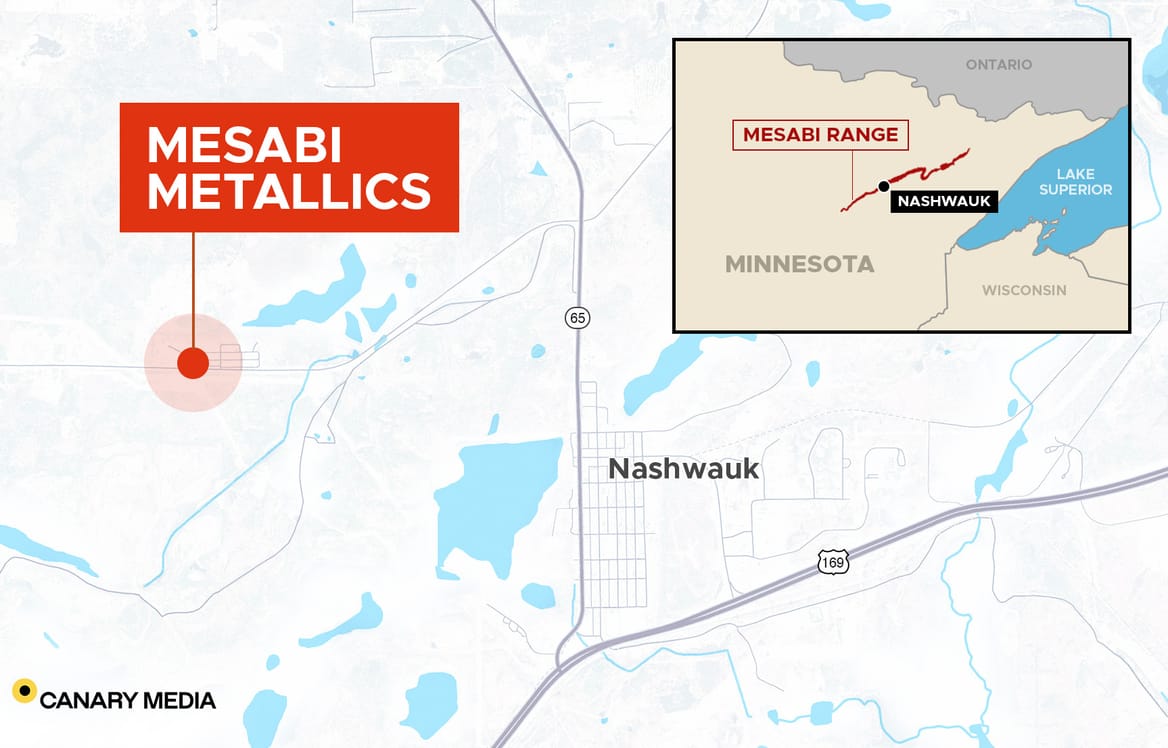
An enormous shed sits on a ridge northeast of Calumet, Minnesota, along the state’s Iron Range, visible for miles to drivers rushing by on Highway 169.
To reach it by car, I exited the highway at Nashwauk (population 950, give or take) and drove down a lonely county road, eventually pulling up to a security building. Inside, I watched a safety video while a guard stood nearby screening a steady stream of hulking work trucks. (“One of those days,” she said.) I still had to go nearly another three miles — past rough parking lots with more work trucks and onto a red-dirt road — before finally arriving at a construction site the size of a small city.
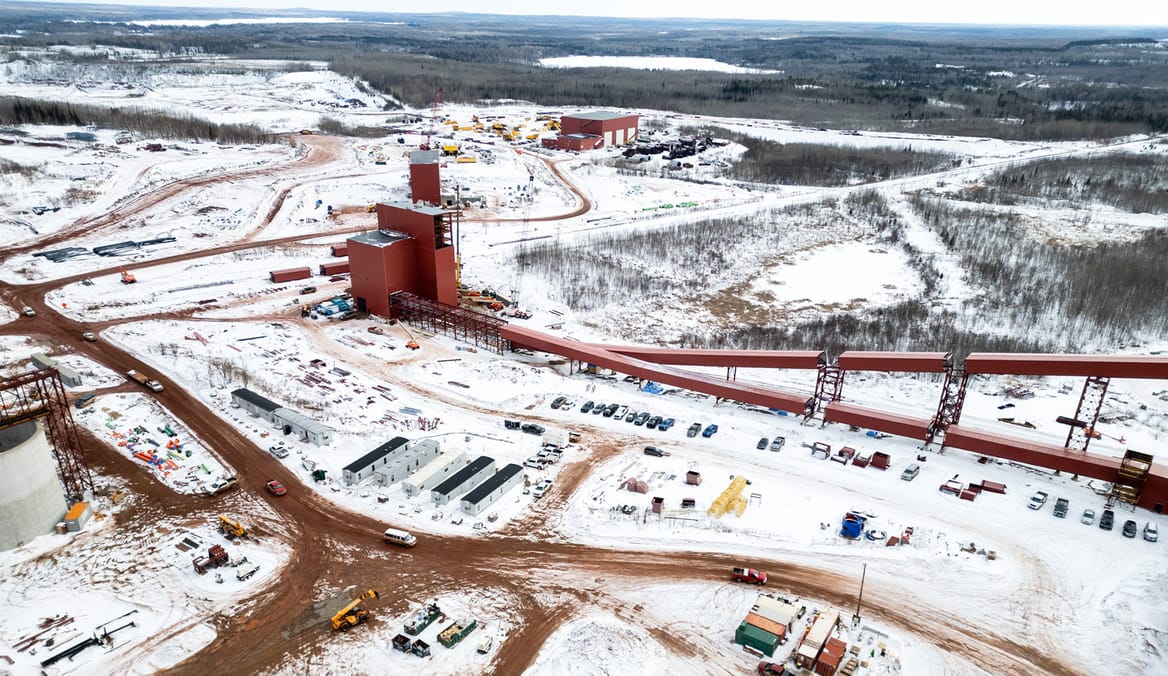
I was in the heart of Mesabi Metallics, an ore mining and processing complex under development by Essar Group, a family-owned industrial conglomerate based in India. The sprawling facility is on track to start producing iron pellets by this September, according to the company’s latest estimates. It will be Minnesota’s first new iron mine in 50 years.
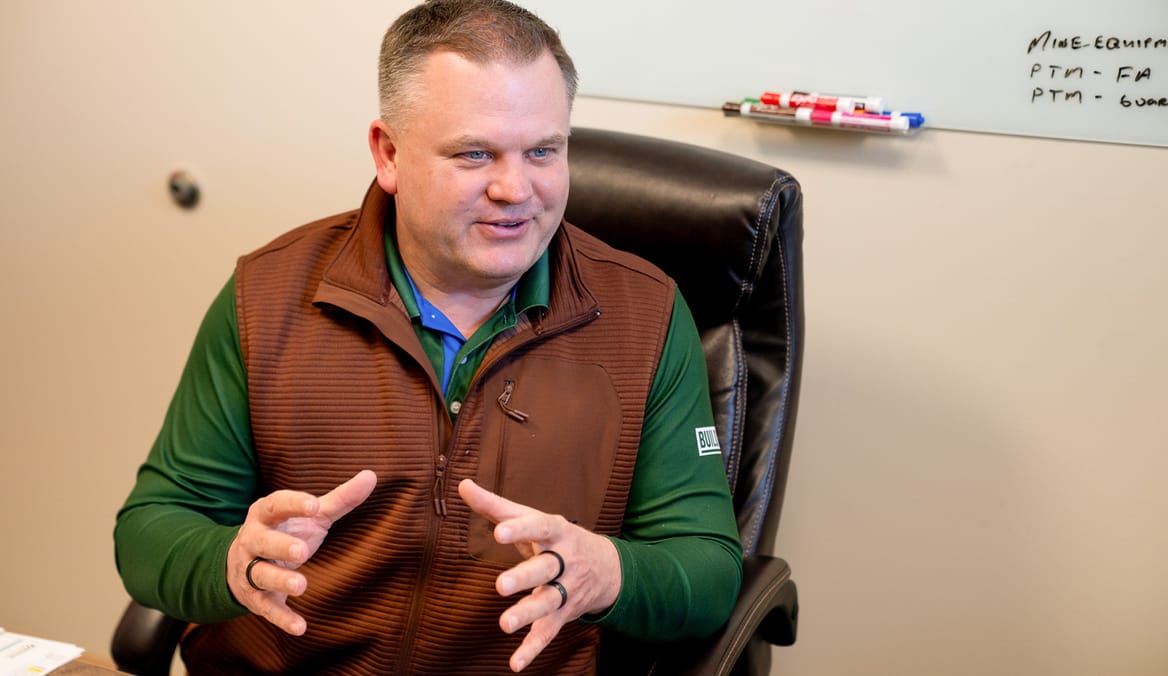
When I visited the site in February, mine officials couldn’t confirm an exact start date, but president and CEO Joe Broking told me that “it’s a matter of when and not if Mesabi Metallics will open for business.”
On July 13, Mesabi blasted its first chunk of iron ore.
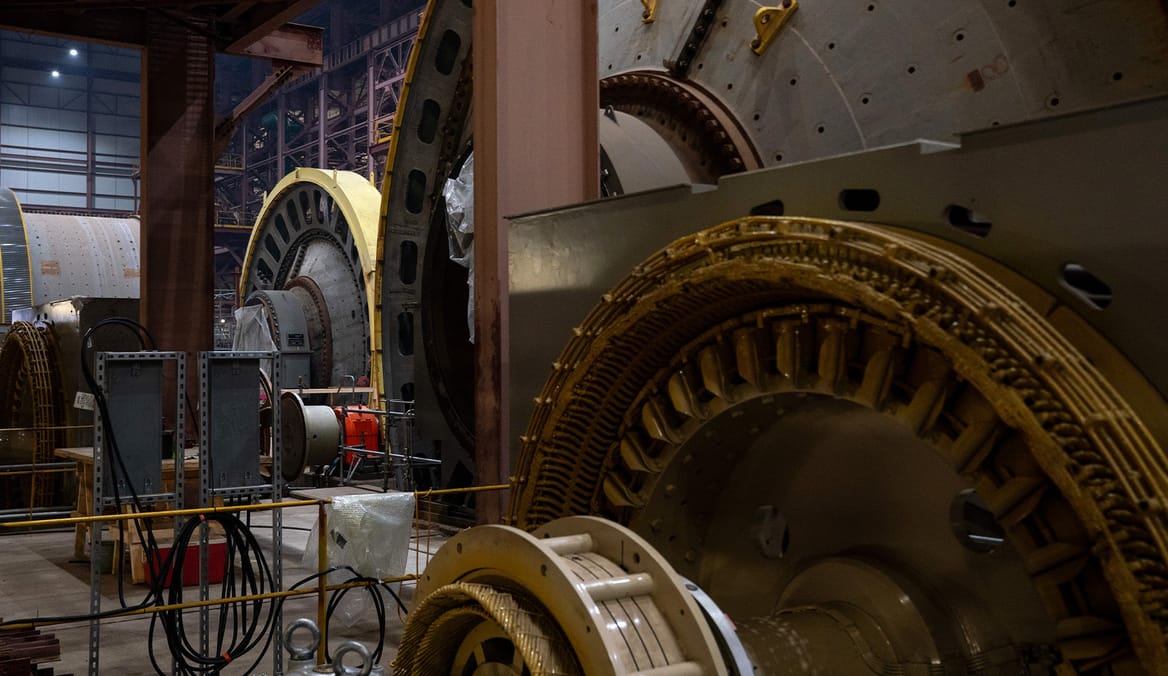
Once the mine is fully operational, huge diggers will extract raw iron ore in an open-pit mine not far from Broking’s office. Then enormous dump trucks will each cart up to 400 tons of the material at a time to a series of machines that will grind it into ever-finer particles. The later stages of the process will take place in one of the site’s biggest buildings — that “shed” I thought I saw from the highway — where giant cylinders will pulverize the ore into particles slimmer than a human hair. Other equipment will mix the powder into a stream of recycled water to create an iron-rich slurry that will be further purified elsewhere in the building. Finally, the mixture will be pumped a couple of miles away to a pelletizing plant to be formed into marble-size balls that great furnaces will sear until hard enough to survive a journey by rail and water to steel mills around the world.
Essar’s $2.5 billion facility has been in the works for decades, through commodity market collapses, corporate restructurings, a global financial crisis, and a yearslong legal battle over mineral leases. Things looked dicey at several points along the way. But by the time Broking came onboard in 2024, “the thing [Essar’s owners] were certain of is that they were going to complete this project,” he said. “And that gave me a lot of confidence.”
Now, Mesabi Metallics has a crucial role to play in the future of steel production and of the region named after its literal bedrock industry. The pelletizing plant will have the capacity to produce 7 million tons each year of concentrated iron pellets for direct reduction, a low-carbon way of turning iron ore into iron ready for steelmaking. The DR-grade pellets will advance one of Essar’s corporate mandates: to clean up an industry that accounts for about 9% of global greenhouse gas emissions.
“We’re going to be the cleanest iron ore mine in North America — in the world, arguably, by quite a long ways. And at the same time, we’ll be extremely competitive” on cost, Broking said. “To be sustainable, our philosophy is we have to do both.”
Mesabi Metallics has some competition on the Iron Range. About an hour away, the Ohio-based steelmaker Cleveland-Cliffs turns iron pulled out of its mines into DR-grade pellets for shipment to its home state. U.S. Steel, now majority-owned by Japan’s Nippon Steel, has its own DR-grade plant nearby that could — eventually — feed a lower-emissions ironmaking facility it’s developing in Arkansas. Two local entrepreneurs are separately pursuing plans to harvest iron ore from mine waste and likewise ship it out of state for use in lower-emissions steelmaking. One of those entrepreneurs expects the global market for DR-grade pellets to quadruple by 2034.
As steelmaking evolves, those investments could keep the Iron Range’s namesake industry relevant for a few decades to come. Experts are skeptical, however, that they’ll do much to reverse the slow demographic decline that began before most of the workers building Essar’s new mine were born. To accomplish that, northeastern Minnesota may need to claim a much bigger piece of the green steel future.
In his office, Broking reiterated the company’s long-term vision for vertically integrated, low-carbon steelmaking at the Nashwauk site. But he added that no investment decisions toward that end have been made.
“Between Mesabi Metallics and Essar … we are committed to taking this to the next step,” he said. “I just can’t responsibly say for certain that that can happen. What I can say is we are continuously evaluating opportunities to grow the business.”
State officials and industry experts, though, say the local economics of “mine to mill” steel are too compelling to overlook. The Iron Range has a capable union workforce, ample renewable-energy potential to power cost-effective hydrogen and electrochemical iron production, an applied research powerhouse backed by the University of Minnesota, and a potential clean energy bonanza trapped in its bedrock. If it’s going to happen anywhere, why not here?
Visible on geologic maps as a 110-mile narrow ribbon of iron-rich bedrock north of Lake Superior, the Mesabi Range is the legacy of what may have been Earth’s first great extinction event.
Oxygen-exhaling microorganisms first emerged around 2.4 billion years ago. Over the next 400 million years, the atmosphere’s methane content fell dramatically, precipitating a global ice age and relegating once-dominant anaerobic life-forms to oxygen-poor environments like the deep ocean.
The Great Oxidation Event also pulled vast quantities of dissolved iron out of the sea and scattered huge formations of ferrous rock throughout the Earth’s crust. In a few lucky places around the world — including northern Minnesota, Wisconsin, and Michigan — these deposits sit close enough to the surface for humans to exploit with relative ease.
The Mesabi Range is the largest of Minnesota’s three major iron ranges and the only one actively mined today. Most non-geologists refer to it as the Iron Range, or just “the Range.” Historically, it has produced upwards of 70% of U.S. iron.

It’s a place of stark beauty hewn by nearly two centuries of human meddling. The dense forests of birch, pine, and spruce are largely secondary growth, a dim echo of the towering white pines clear-cut in the late 19th century. The deepest, clearest lakes, some rimmed by sheer cliffs, are long-abandoned mine pits reclaimed by groundwater. The pretty, rust-colored buttes along Highway 169 west of Hibbing are piles of waste rock and low-grade ore. Twentieth-century miners pushed them out of the way to get at the good stuff.
The Mesabi Range’s first iron mine opened in 1890, followed two years later by a railroad to the port of Superior, Wisconsin. Minnesota iron could now reach the burgeoning steel mills of the lower Great Lakes by ship — still the most cost-effective way to transport heavy cargo.
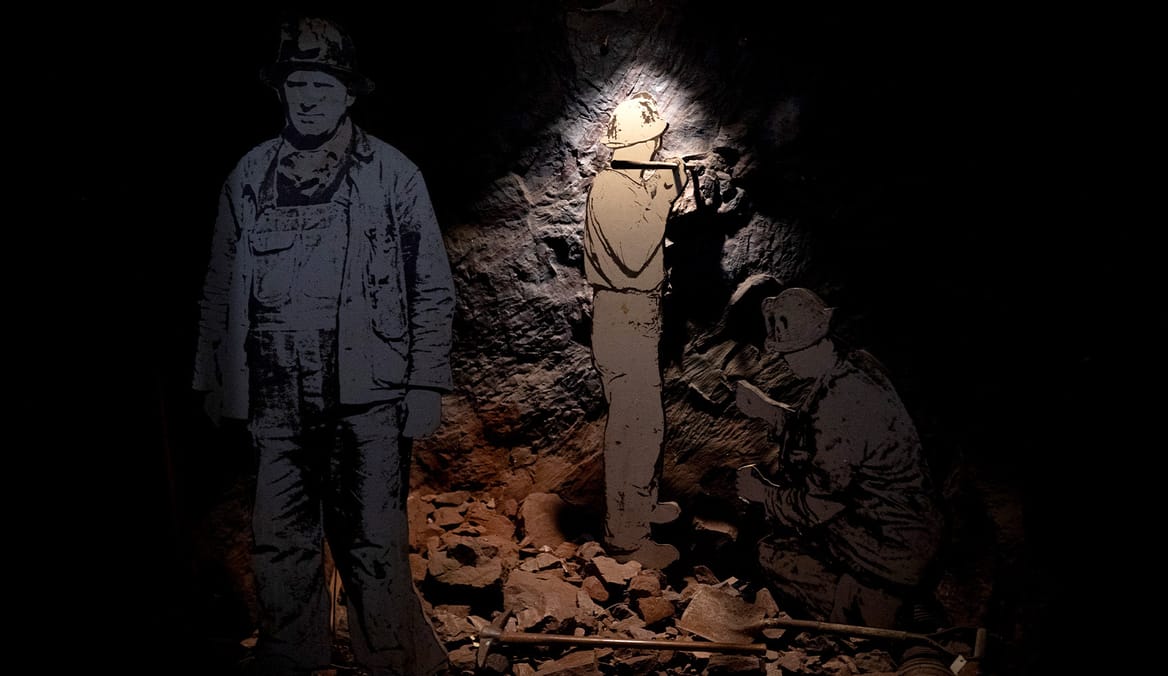
Ten years later, more than 100 mines were operating along the formation. Settlements quickly sprang up along the richest veins, with some, like Hibbing and Virginia, emerging as proper boomtowns. Around the same time, the industrialists John D. Rockefeller, Andrew Carnegie, and Henry Oliver consolidated ore mining, processing, transportation, and steelmaking operations into U.S. Steel, the country’s first billion-dollar corporation.
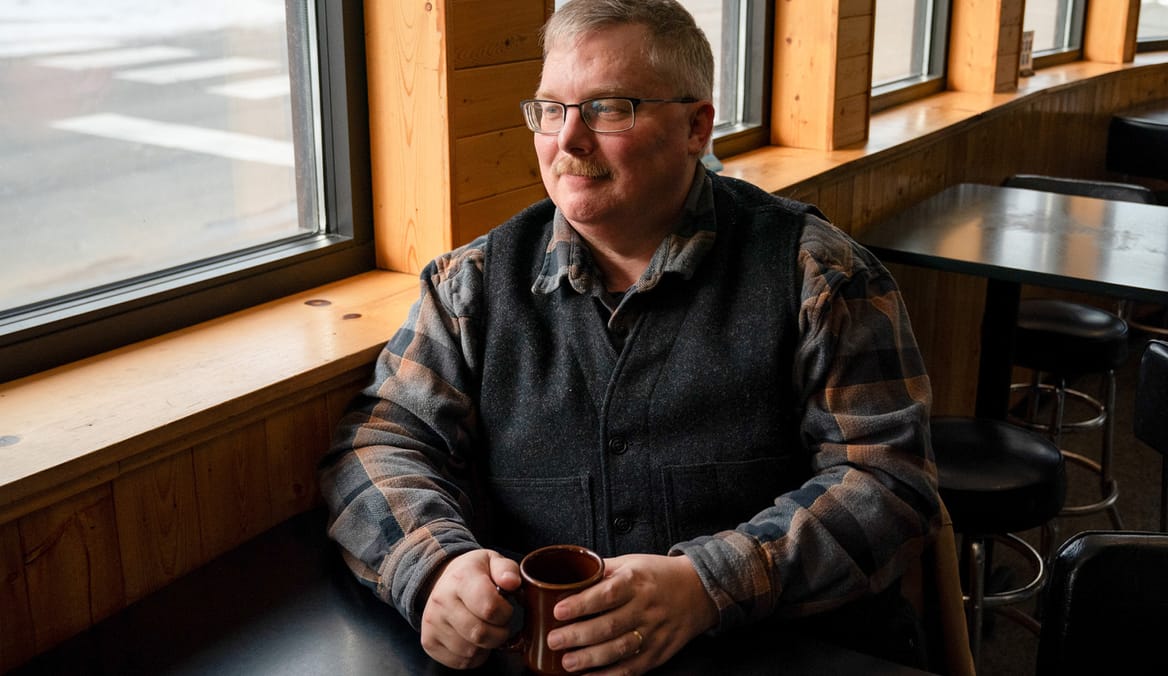
“Within 20 years, this place transformed from logged-out nothing into a vibrant industrial zone,” said Aaron Brown, a local historian and newspaper columnist.
As Iron Range mining expanded, it drew workers from other parts of the United States and from Europe. Over coffee at Wizard’s Sports Bar and Grill in Nashwauk, Brown said mine work was brutal at first, but a multi-decade push for living wages and union representation paid off. During the first half of the 20th century, the Iron Range and surrounding towns flourished. Iron money built architectural marvels like Hibbing High School — Bob Dylan’s alma mater — and seeded a network of postsecondary institutions that remains “one of the best things we have going for us,” said Ida Rukavina, the state commissioner who oversees economic development efforts across northeastern Minnesota.
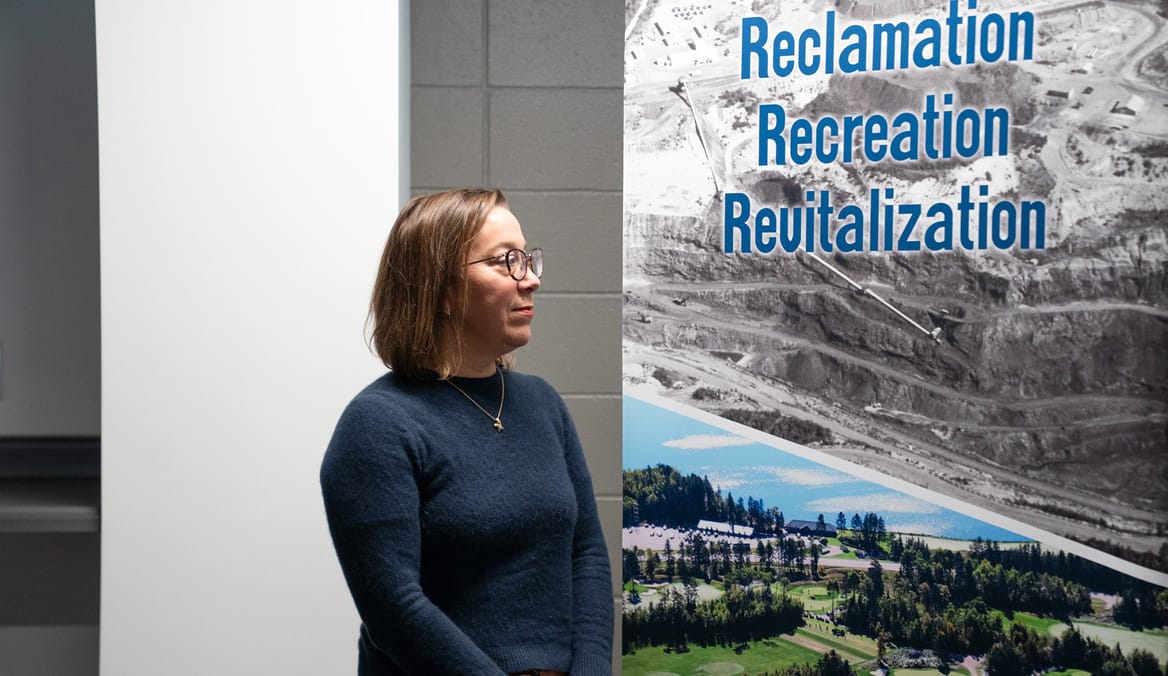
Gradually, though, high-grade natural ore deposits were depleted. In the 1950s, University of Minnesota scientists raced to develop an economical process for pelletizing taconite, a more plentiful but lower-quality soft ore that requires additional processing before it can be shipped and fed into steel furnaces. They succeeded, staving off an extinction-level event for the region’s mines.
But that very success contributed to the region’s eventual downturn. While benefiting the steel companies themselves, the shift to taconite and a host of other technological advances from the 1960s onward led to a steady reduction in the number of workers needed to run the plants.
As the 20th century wore on, the iron industry began shifting to Australia, Brazil, India, and other countries with cheaper production costs due to some combination of higher-quality reserves, looser environmental regulations, and government subsidies. The rise of recycled steelmaking in the U.S. also reduced demand for domestic ore.
The story of the Iron Range over the last 50 years, then, has been one of economic decline.
Nowadays, the Iron Range is dotted with rusting factories. Some once-bustling downtowns have more empty storefronts than occupied ones. Hibbing, the commercial center of the western Iron Range, has lost around a quarter of its population since 1980.
The Range currently has just five active iron mines. As of last August, when there were six, the combined annual production capacity of all U.S. iron mines was 48.9 million tons, according to Global Energy Monitor. That’s paltry in comparison with China’s 470 million tons, India’s 500.8 million tons, and Brazil’s 591.8 million tons. It’s a rounding error next to Australia’s 1.2 billion tons.
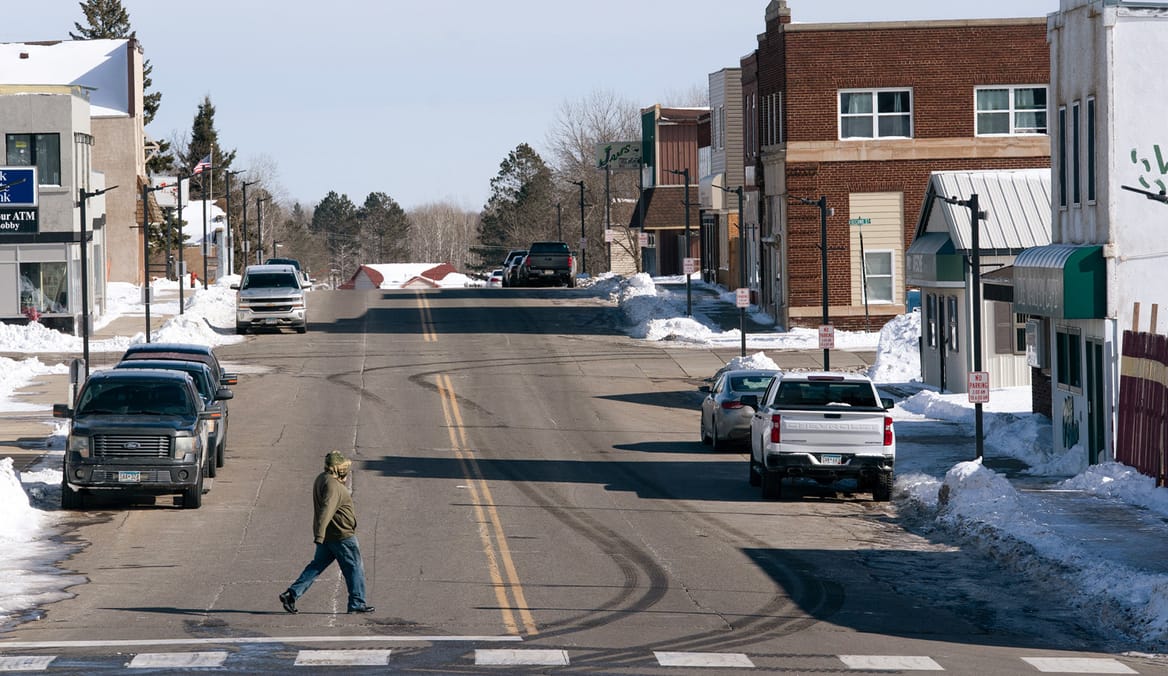
Cleveland-Cliffs, a big producer of automotive steel, has furloughed more than 600 workers at its Minorca and Hibbing Taconite mines in the last year and a half — over 10% of the industry’s local workforce. Minorca is completely shut down, while HibTac has idled two of its three pellet-production lines as its crude ore supply dwindles.
Brown and other locals say it’s an open question whether Cliffs, as most around here call it, will ever reopen Minorca. A Cliffs spokesperson did not respond to voicemails seeking an interview or comment.
John Arbogast, a blunt-talking, Range-based United Steelworkers union representative, said his industry — like so many others — is at the mercy of forces even the bosses can’t control. Slow auto sales are one reason why Cliffs and other producers are sitting on “a glut of pellets,” he said.
“The price of cars went up during Covid and hasn’t come down,” Arbogast said. “Really, you’re gonna pay $90,000 for a new pickup? It’s all part of the whole mess going on in this country, and we’re affected by it.”
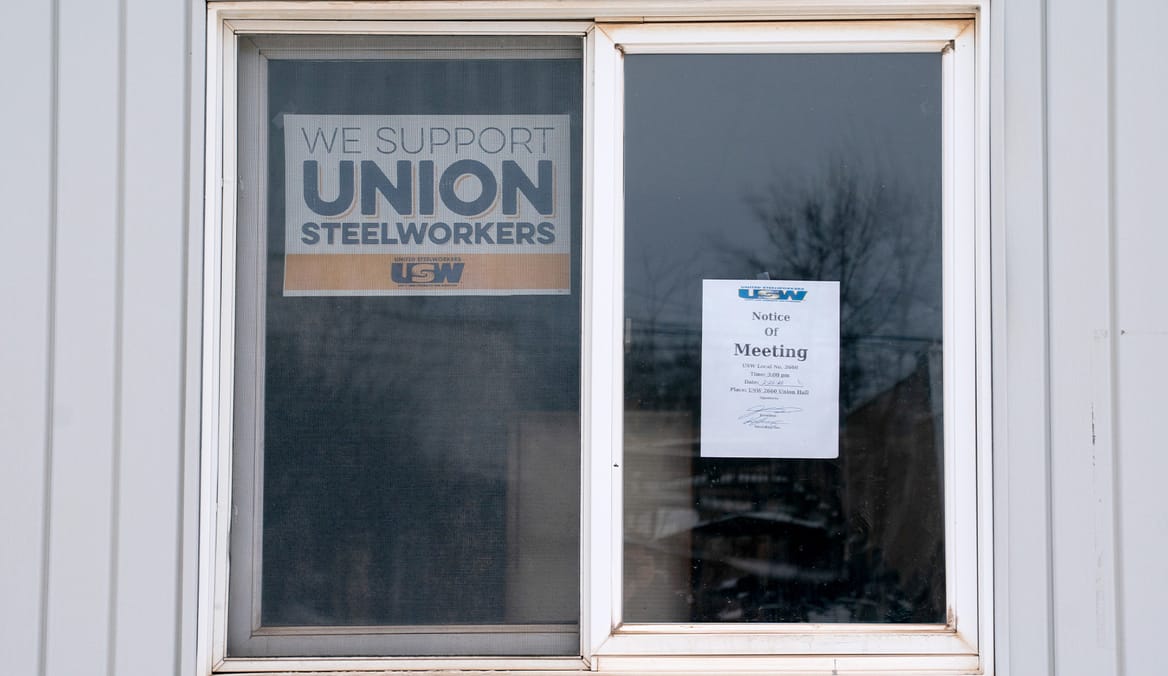
Despite its problems, the taconite industry is still the largest employer offering unionized, family-sustaining jobs on the Iron Range. For furloughed Minorca and HibTac workers, most of whom rolled off the unemployment dole this spring, Arbogast said it’s basically the only option.
“When a company closes in the [Twin Cities] metro, there’s other places you can look for a job. Here, it’s basically mining, tourism, and a little bit of lumber,” he said.
Political and business leaders have long talked up the need to diversify northeastern Minnesota’s economy away from extractive industries like taconite and forestry. But that’s easier said than done. While tourism has room to grow, seasonal employers can’t match the six-figure salaries (with benefits) nor the millions in taxes the steel companies pay every year. It’s unclear whether a controversial Google data center proposed near Duluth is an outlier or the start of a digital gold rush. Also uncertain is whether the trickle of remote workers who’ve moved north since Covid — drawn by the natural beauty and “slower pace of life,” Rukavina said — will be enough to reverse years of demographic decline.
The upshot is that most everyone who cares about the future of the Iron Range eagerly awaits Mesabi Metallics’ opening. That’s certainly true of Rep. Spencer Igo, a Republican who represents the western Iron Range in the Minnesota House of Representatives.
“I remember hearing as a kid that we were going to be mining iron and making hot-rolled steel 10 minutes from the family cabin,” Igo said in a February interview at his St. Paul office. He turned 30 in March.
Mesabi Metallics will need over 350 permanent employees, and locals expect it to snap up furloughed Minorca and HibTac workers. Arbogast said it’s poaching first-rate managers working elsewhere on the Range.
“They’re paying a heck of a lot more, throwing a lot of money around,” he said.
The mine will deploy cutting-edge technologies to turn taconite into iron while using less energy.
“We’ve learned a lot about mining over the last 50 years, and we’ve applied it here,” Larry Sutherland, Mesabi Metallics’ president and COO, told me during my February visit.
On my tour of the mine, Sutherland — who’s celebrating his 51st year in the iron business — showed off North America’s first electrified-hydraulic-shovel, diesel-electric haul trucks, whose 400-ton carrying capacity nearly doubles the industry standard, and a bevy of stationary processing equipment that in days past would have run on diesel. After digging begins in earnest, Mesabi Metallics may add overhead trolley lines that zip the haul trucks up the steep pit roads in all-electric mode, significantly reducing diesel consumption.
But Mesabi Metallics won’t single-handedly solve the region’s employment problems.
Three hundred fifty union jobs is nothing to sneeze at, but Iron Range mining will remain more than 300 good positions short unless and until Cliffs calls workers back to Minorca and HibTac. And that may not happen without a pickup in U.S. automotive sales or building construction.
Longer term, state and local officials hope to expand northeastern Minnesota’s mining industry beyond iron. The region has rich deposits of copper, nickel, cobalt, and possibly helium, a scarce and valuable industrial gas. Each of these resources is a critical input for batteries, electric motors, and other drivers of the clean energy transition.
All this is taking place against the backdrop of a transition within the domestic steel industry itself to lower-carbon production, albeit one that’s happening slowly and with less help from President Donald Trump than from former President Joe Biden.
Most of the steel produced since the Industrial Revolution has come out of blast furnaces — which use coal as fuel and also as a type of additive to remove oxygen and other impurities from iron ore — and basic oxygen furnaces. This two-furnace combination is responsible for nearly half the 2.2 tons of carbon dioxide emitted per ton of finished steel produced worldwide, according to the Institute for Energy Economics and Financial Analysis.
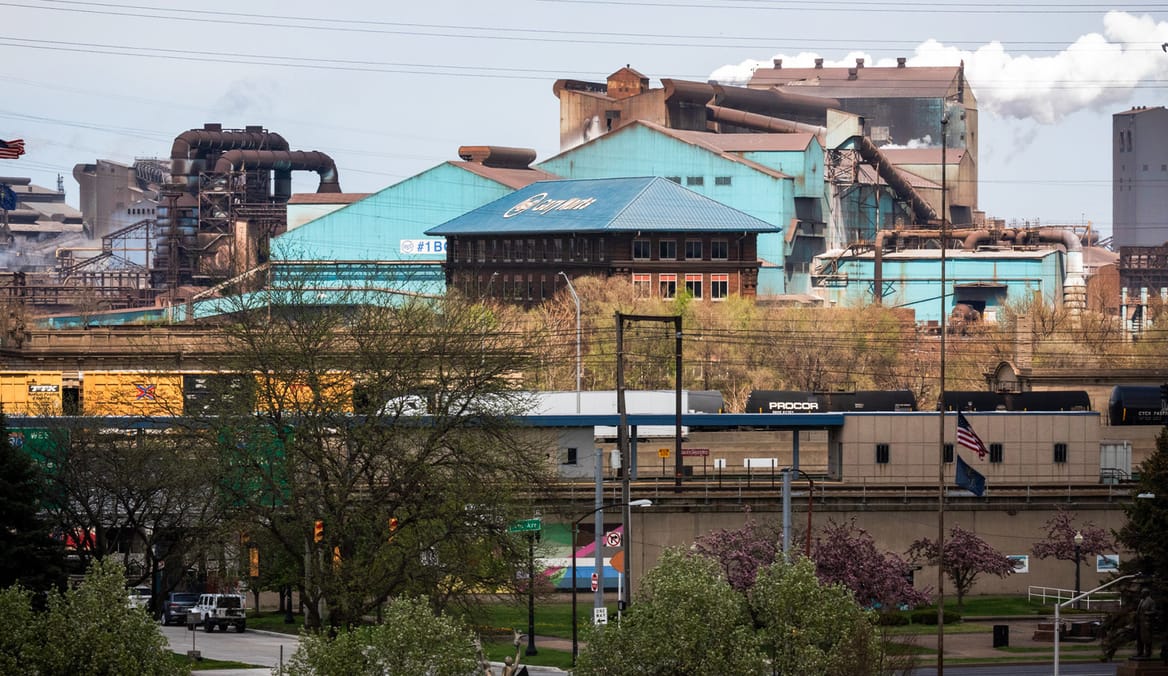
U.S. Steel and Cleveland-Cliffs still make what’s called primary steel this way at massive integrated mills across the lower Great Lakes and Ohio Valley, but about 70% of the steel produced in the U.S. these days is recycled: Scraps of the metal are combined with purified iron and then melted down in an electric arc furnace, or EAF. Supplemental materials like lime and coal are added to create fresh steel.
Since they run on electricity, EAFs create far fewer emissions than traditional furnaces. The catch is that they’re not as good as basic oxygen furnaces at removing impurities in iron. This means their steel — at least right now — is not suitable for manufacturing products that require high-quality stuff, such as automobiles.
So, EAFs are little used in primary steelmaking. To change that — and make real progress on decarbonizing the U.S. steel industry — steelmakers will need to replace blast furnaces with technologies capable of producing higher-grade iron to feed EAFs.
The front-runner for this is direct reduction, a generic term for processes that react iron ore with a “reducing” gas like methane or hydrogen at comparatively low temperatures; the resulting iron is known as direct reduced iron, or DRI. To work effectively, DRI furnaces need that DR-grade feedstock, like the pellets Mesabi Metallics will produce, which will be about 68% pure iron.
The Institute for Energy Economics and Financial Analysis says pairing direct reduction fueled by natural gas with EAFs emits 1.4 tons of CO2 on average per ton of finished steel, nearly 40% less than the conventional blast furnace and basic oxygen combo.
When the reducing gas is hydrogen made from natural gas with carbon capture or renewable electricity, reduction itself emits little or no carbon.
The United States has a few direct-reduction facilities already. Cliffs operates one in Toledo, Ohio. North Carolina–based Nucor and Luxembourg-based ArcelorMittal each have their own on the Gulf Coast.
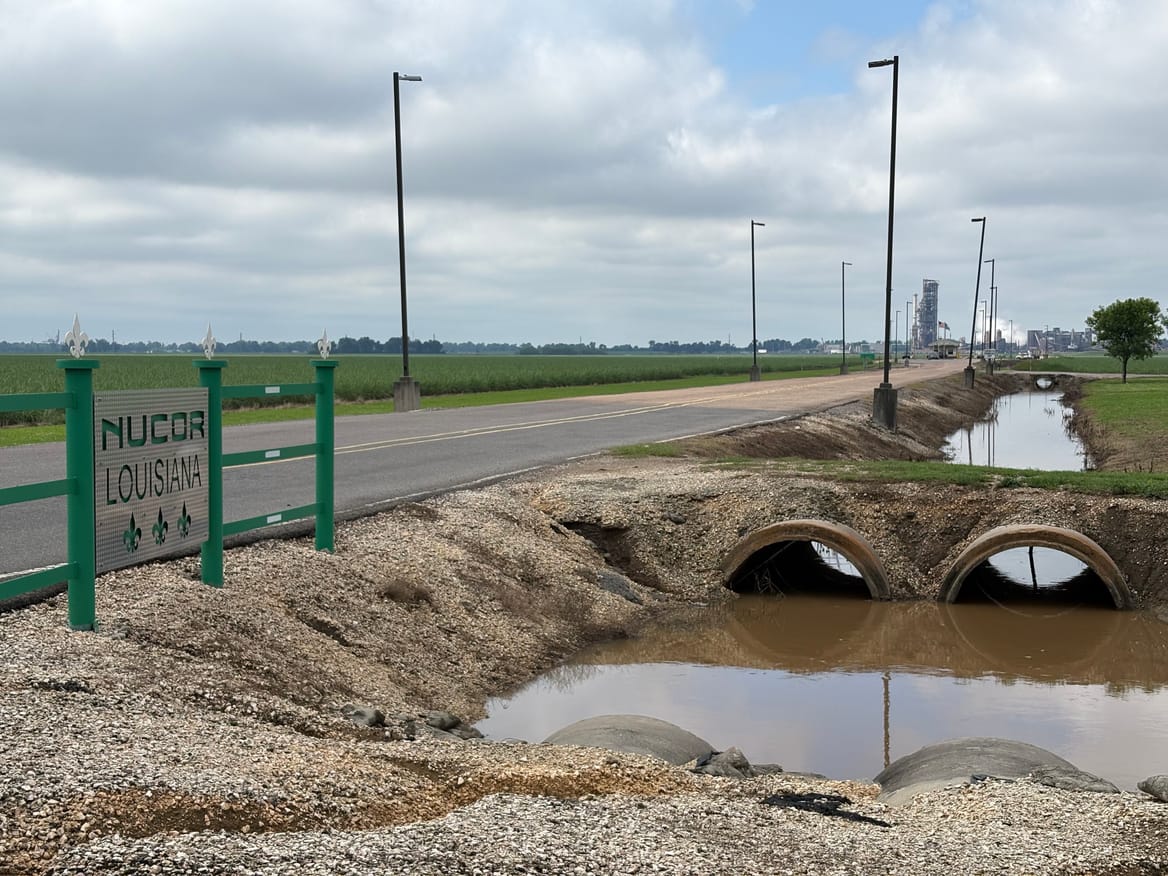
More DRI plants are on the way. The massive steel mill that Hyundai is building in Louisiana will have a DRI component when it powers up in 2029. In April, U.S. Steel announced plans to build a DRI plant at an existing steel mill in Arkansas.
However, while these facilities matter to their host communities and the steel industry’s broader effort to clean up its operations, Cliffs’ Toledo facility is the only one using Iron Range pellets today. Most others source, or plan to source, high-grade iron from abroad.
The Hyundai facility will import 3.6 million tons of iron ore each year, Louisiana’s economic development authority says. It’ll follow the example set by other Gulfside DRI plants, said Elizabeth Boatman, the Minnesota-based lead on decarbonization for 5 Lakes Energy, a think tank specializing in clean energy policy in the Great Lakes region.
“That is not American ore,” Boatman said. Southern mills’ import dependence was apparently a factor in Trump’s decision to exempt Brazilian ore and pig iron from 50% import duties last summer.
For now, most American ore supports aging blast furnaces in the southern Great Lakes and Ohio River Valley. Both U.S. Steel and Cliffs have said they will spend hundreds of millions of dollars to squeeze about 20 more years of life out from their coal-fed facilities. In a move widely seen as a concession to the coal-friendly Trump administration, Cliffs’ decision came at the expense of a previously announced plan to replace its blast furnace in Middletown, Ohio, with a hydrogen-ready DRI plant.
Arbogast said his union members welcome the big steelmakers’ commitments to keep aging blast furnaces now fed by Minnesota taconite in good working order. They also know those facilities are living on borrowed time.
“The blast furnaces are getting older, and they’re never going to build a new one,” he said. “Electric arc furnaces are the inevitable method of making steel.”
Such a future would be good news for Mesabi Metallics, U.S. Steel’s Keetac, Cliffs’ Northshore Mining, and other DR-grade pellet plants planned for the Iron Range. As the outlines of a longer-term shift to integrated, low-carbon steelmaking come into focus, the region as a whole stands to benefit.
Once operational, U.S. Steel’s Arkansas DRI furnace will join Cliffs’ Toledo facility as a major customer for Iron Range pellets. Company spokesperson Andrew Fulton said in an email that planning is “in the very early stages” but confirmed the plant will use ore from Keetac, just up the road from Mesabi Metallics.
Along with the legacy steelmakers, at least two other companies are looking to turn Iron Range ore into DRI elsewhere in the United States.
One of them is Scranton Holding Co., a nascent mining and ironmaking startup run by Jim Bougalis, an Iron Range entrepreneur.
Scranton Holding has two subsidiaries: Calumet Reclamation and North American Iron. Neither responded to my interview requests, but the companies have detailed websites, and Bougalis has spoken openly about his vision with economic development officials and other media outlets.
Calumet says it wants to recover millions of tons of ore from 20th-century stockpiles near Nashwauk and ship the material 500 miles west to a $2 billion DRI plant North American Iron is developing near Minot, North Dakota. Calumet says its Iron Range site, a former state park, has at least 15 years’ worth of ore supply.

According to a grant application submitted to the North Dakota Industrial Commission in 2023, North American Iron would use a hydrogen-based iron purification process developed by Tenova, a multinational metallurgy company that touts its “sustainable, innovative and reliable solutions.” In an October interview with Minot-area media outlet The Dakotan, Bougalis likened the process to a “microwave” that reacts hydrogen and iron without combustion.
Mark Lyman, economic development specialist with the Minot Area Chamber Economic Development Corporation, said in the same interview that North American Iron would use “stranded” methane from the nearby Bakken shale formation. A new 80-mile pipeline would collect the gas and transport it eastward to Minot. The reactions in North American Iron’s “microwave” would produce carbon dioxide that can be captured and sequestered in bedrock ideal for long-term carbon storage — or used to pull more oil out of the Bakken.
Another Iron Range entrepreneur, Larry Lehtinen, has a similar vision for a separate stockpile complex about 20 minutes west of Calumet’s proposed operation.
Lehtinen’s company, MagIron, is a leaner successor to his previous venture Magnetation, which employed hundreds of workers across several facilities in Minnesota and Indiana before going belly up in 2015 amid a global commodities downturn.
Magnetation’s Indiana facility used Minnesota ore to produce lower-purity iron pellets that fed traditional blast furnaces operated by AK Steel, a formerly independent steelmaker now owned by Cliffs. MagIron’s approach reflects where the industry is headed: It plans to restart an ore concentrator on the Iron Range and modify the Indiana plant to make DR-grade pellets for EAFs. MagIron says it could eventually add a DRI plant in Indiana, too. Testing late last year provided “critical validation” of MagIron’s reserves and pelletizing process, Lehtinen said at the time. The company says its current mineral leases offer 40 years of ore supply.
Lehtinen did not respond to requests for comment or an interview. Brown, the Iron Range historian, said the industry’s boom-and-bust nature makes at least some of the people behind new ore mining and processing proposals reluctant to speak about them in the press. With iron and steel prices trending downward, even the big steelmakers are nervous, he added.
On the other hand, Brown noted, there’s industry consensus that “the market for DR pellets has nowhere to go but up.” In a feasibility study published earlier this year, MagIron said the DR-grade pellet market could grow 13% annually through 2034. Mesabi Metallics, meanwhile, is in line for up to $10 billion in financing from the U.S. Export-Import Bank to support international sales.
Other, newer technologies for producing DR-grade iron could emerge on the Iron Range as well.
DRI is already economical today. But Rolf Weberg, executive director of the University of Minnesota’s Natural Resources Research Institute, told me that there’s much room for improvement.
“The way they do it now, they put a basket of pellets in the top [of the furnace] and hope they come out the bottom,” he said.
NRRI is a state-chartered research institution with three hubs in northern Minnesota. I visited its Iron Range outpost in the former mining town of Coleraine, some 20 miles down the road from Mesabi Metallics.
There, NRRI is commissioning a first-of-its-kind DRI simulator that can mimic the conditions found in full-size industrial furnaces. Weberg said the machine’s digital modeling capabilities would mark a dramatic leap forward in low-carbon ironmaking research.
It’s just one of around 200 projects underway at NRRI. The institute has dozens of scientists and technicians working to “de-risk” new and/or improved materials, processes, and equipment for commercial clients, including steelmakers.
Weberg and Jamie Alexander, NRRI’s director of external affairs, display infectious enthusiasm for innovations such as a ceramic ore grinder that Weberg said would boost processing efficiency at taconite plants. While Alexander noted that they couldn’t “speak to what clients will see in the field,” an efficiency improvement of any percent “is huge in a production setting as it is the largest operating cost.”
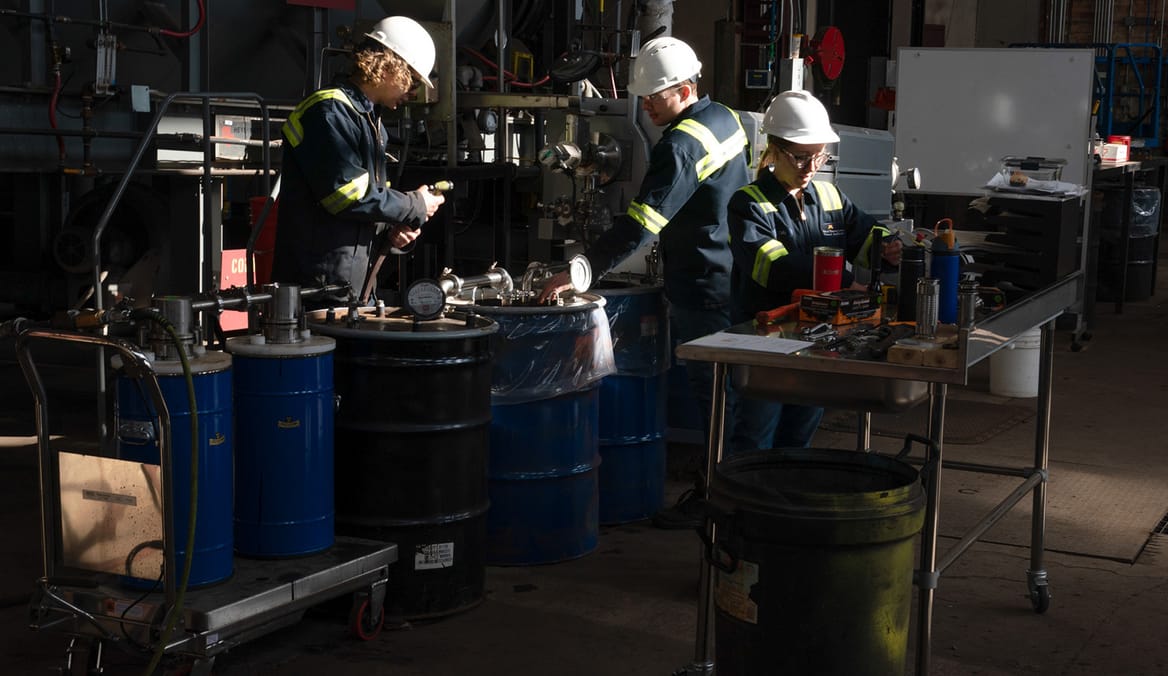
NRRI supports the forestry and agriculture sectors, too, and its domains sometimes overlap. In a century-old maintenance shed for railcars in Coleraine, NRRI staff are working to scale production of a dense form of biochar that could one day sub for supplemental coal in EAFs — making DRI-based steel production even cleaner. Weberg said an NRRI-developed poplar hybrid that can grow 10 feet a year could serve as a regenerative, lower-carbon raw material for the biochar.
All this progress leaves the higher-ups at Mesabi Metallics feeling that the wind is at their backs.
“At this location, we have the opportunity to truly do something unique: to vertically integrate modern steelmaking processes, which will allow us to be the cleanest steel producer in the world [and] one of the lowest-cost producers of steel in the world,” Broking said.
Such a play would align Mesabi Metallics with U.S. Steel, Cleveland-Cliffs, and other global steelmakers like ArcelorMittal. These companies operate sprawling mills that refine iron and a host of finished steel products all in one place.
Historically, steelmakers have sited those mills closer to where they or their suppliers dug coal out of the ground. But as blast furnaces go the way of the steam locomotive, 5 Lakes Energy’s Boatman said it makes more sense to produce purified iron — and maybe even finished steel — closer to the iron mines. The calculus is especially important for the Iron Range operations planning to mine waste piles or tailings, which tend to have lower iron content and require additional work to concentrate, she added.
“One of the push points to moving [purified] iron production here is that around one-third of the pellet is not iron,” Boatman said. “Why would you want to pay for fuel and time to ship non-iron when you could just ship the iron itself?”
It would be a return to form for northeastern Minnesota. U.S. Steel ran a blast furnace at its 1,500-acre Duluth Works from the late 1910s to the early 1970s and continued finished steelmaking there until the late 1980s. Employment peaked around 3,500 and annual output north of 900,000 tons, according to a Mesabi Tribune retrospective published in 2020.
Virtually nothing remains today. The site, a 1,500-acre brownfield just inland from a deepwater port that handles millions of tons of Iron Range pellets every year, would be a natural choice for a DRI-based steelmaking facility. In theory, it could host renewable energy facilities to enable large-scale hydrogen production, which would require hundreds of megawatts of clean power to supply a fully decarbonized shaft furnace.
Boatman said the idea of a DRI plant in Duluth has been studied, but any firm plans remain years off. As for what Rep. Igo enthusiastically calls the “dream” of integrated, DRI-based steelmaking on the Iron Range itself, the $800 million investment U.S. Steel recently said it would make in its existing Minnesota operations is too little to cover the multibillion-dollar cost of an integrated steel plant. And Mesabi Metallics would need to complete additional permitting to get permission to move forward at its own site, Boatman said. Meanwhile, local media outlet Iron Range Today reported on Feb. 24 that Mesabi Metallics is eyeing a potential DRI facility in Kentucky, citing job postings, public filings, and legislative lobbying activity. As of mid-July, the job-posting website ZipRecruiter showed about 20 active listings from Mesabi Metallics there, some mentioning “our DRI and Integrated Steel Plant.”
Broking reiterated Mesabi Metallics’ position that it would begin using hydrogen in its pelletization plant first — as soon as economically feasible. It won’t happen tomorrow, though.
“We should be studying these things,” he said. “But in terms of when that could happen or how it could happen … [We’ll] wait and see.”
State economic development officials and the steel industry itself had high hopes for green hydrogen, the kind produced with 100% renewable power, said Pete Wyckoff, who was deputy commissioner of energy resources for the Minnesota Department of Commerce when I interviewed him earlier this year. In May, he joined the clean energy nonprofit Evergreen Action as vice president of policy.
Since then, persistently high costs for hydrogen electrolyzers, rising power prices, the Trump administration’s suspension or cancellation of billions in hydrogen hub funding, and Washington Republicans’ partial repeal of federal tax credits for the fuel have worsened already-challenging green hydrogen economics. It doesn’t help when deep-pocketed data center companies compete for the same grid interconnections as price-sensitive hydrogen developers, Wyckoff said.
“Everyone is looking at it now with slightly cut-back expectations. … I’m skeptical about the turn to hydrogen happening right away,” Wyckoff said.
Unless. Wyckoff and several others interviewed for this story expressed varying degrees of optimism about the possibility of geologic hydrogen extraction in northern Minnesota. If present and recoverable in sufficient quantities at or near DRI plants, naturally occurring or stimulated hydrogen reserves would solve the vexing problems of transportation and storage. The economics of hydrogen production would almost certainly improve, and with them the economics of ultralow-carbon steel.
At least three companies have asked the state for exploratory drilling permits, including the buzzy Colorado startup Koloma.
“It might not look exactly as we imagine it, but there’s a ‘there’ there,” Wyckoff said.
Igo agrees. He’s the lead author on a bill that would give NRRI $650,000 to investigate Minnesota’s geologic hydrogen potential over the next two years. Minnesota lawmakers are separately working on gas drilling regulations that would govern hydrogen and helium extraction — a novel concept in a state with no significant oil or natural gas reserves.
“If we find this stuff near a taconite mine — wow,” Igo said, “Minnesota will be the epicenter of the iron industry.”
An update was made on July 27, 2026, to include that Mesabi Metallics plans to begin pellet production in September.


.svg)
