

 Back
Back
This story originally appeared in New York Focus, a nonprofit news publication investigating power in New York. Sign up for its newsletter here.
New York is violating its climate law — and doesn’t get a pass because implementing the law is “complicated,” a judge found Friday.
The 2019 law, which remains one of the most ambitious in the country, gave the state Department of Environmental Conservation until the start of 2024 to issue regulations that would “ensure” New York meets its binding greenhouse gas emissions targets. More than a year and half later, it has not — a fact that Ulster County Supreme Court Judge Julian Schreibman said was “undisputed” in the case.
Schreibman gave the DEC until Feb. 6 to issue regulations that comply with the law, called the Climate Leadership and Community Protection Act.
“While DEC notes that it has taken other, commendable regulatory steps to reduce greenhouse gas emissions, it candidly concedes that the impact of those regulations would fall far short” of the targets set out in the law, which requires the state cut emissions 40% from 1990 levels by 2030 and 85% by 2050, Schreibman wrote.
Climate groups brought the case in March after Gov. Kathy Hochul (D) slammed the brakes on what was expected to be her signature policy to implement the climate law: an emissions-pricing program known as cap-and-invest. Internal emails reported by Politico show that the DEC and the New York State Energy Research and Development Authority had completed draft cap-and-invest rules at the beginning of this year, before Hochul’s abrupt about-face.
The DEC argued in court that issuing the regulations was “infeasible” because it “would require imposing extraordinary and damaging costs upon New Yorkers.” (Hochul in August said much the same about her own reasons for shelving cap-and-invest.)
The judge dismissed that argument.
“It is undoubtedly true that the task placed before the DEC is very complicated indeed,” he wrote. “But as a legal argument, this is unavailing.”
Schreibman said there were two possible paths forward: Either the legislature can step in and change the law, or the DEC must act on it. He set his deadline in February, a month into the next legislative session, to give state lawmakers a chance to weigh in. If the legislature leaves the climate law intact, he said, he is “highly unlikely” to grant the DEC an extension.
The ruling does not explicitly require the state to move ahead with cap-and-invest; the policy is not named in the climate law, and Schreibman said the content of the DEC’s regulations is not up to him. But the law does require the regulations to reflect the findings of its 2022 scoping plan, which envisioned cap-and-invest as its core measure to achieve the emissions targets. State agencies spent two years working on the rules to establish that program before Hochul put them on ice. It’s not yet clear whether the DEC could find a substitute by February.
Hochul said Monday that her administration plans to appeal the decision, which could lead the case to drag on for months longer, if not more.
Reacting to the ruling on Friday evening, she said she would do what was necessary to keep New York’s energy supply reliable and affordable and keep the state attractive to business.
“New York has been, and will continue to be, a leader in climate action, but the judge’s decision fails to factor in the realities of today that include a federal government hostile to clean energy projects, the continuing impacts of post-COVID high inflation, and potential energy shortages expected downstate as soon as next year,” Hochul said in an emailed statement. “We plan to review all our options, including working with the Legislature to modify the CLCPA and appeal, in order to protect New Yorkers from higher costs.”
Headlines often paint a picture that America’s energy transition is off track, suggesting that the U.S. is no longer an attractive market for energy project investment.
But DNV’s Energy Transition Outlook and Energy Industry Insights surveys tell a different story, revealing unique perspectives from business leaders involved in North American energy projects.
Enduring optimism:
Business leaders remain confident in a long-term future for a decarbonized energy system. The coming years will see a renewed focus on an all-inclusive approach to how energy is produced, moved, stored, and used.
Pace of change:
The energy transition is seen as slowing, not stopping. Policy shifts and global geopolitical tensions impacting supply chains are the main factors contributing to the slowdown.
“All of the above” solutions:
North America needs more of all forms of energy production to meet growing demand. This includes projects that combine fossil fuels and renewables.
Grid modernization:
Urgent investment in the grid is needed. Connecting renewables, managing distributed energy resources, and meeting demand will be impossible without modernized transmission.
Smarter energy use:
Across America, consumers are reshaping the energy system by converting their homes and businesses into mini power plants featuring rooftop solar, electric vehicles, and battery storage. Advanced digital technology can use these distributed energy resources to help balance the grid.
The answer is yes — if the solutions are as broad as possible.
America needs an “all of the above” approach to meet the increasing demand for energy. The key is to think in systems, not in silos. This means an interconnected energy system that puts everything on the table — solar, wind, oil and natural gas, low-carbon and renewable products, battery storage, energy efficiency, virtual power plants (VPPs), and carbon capture, utilization, and storage (CCUS) can all contribute to a reliable, lower-carbon, and affordable energy transition.
In our 2023 Energy Transition Outlook for North America, we estimated a $12 trillion opportunity. Things have changed. Today, DNV continues to see the energy transition in the U.S. and Canada offering significant financial opportunities. However, the size of the prize is different, as regional policy shifts, ongoing geopolitical tensions, and supply chain issues have affected the economics and pace of delivering energy projects.
We will explore this in-depth in our upcoming 2025 Energy Transition Outlook for North America report, but as a preview, here are a few key insights for the major players:
Renewable developers:
Pairing renewable power generation, battery storage, and natural gas–fired power generation is an attractive opportunity to use existing infrastructure to bring lower-emission energy online faster and more affordably.
Utilities:
Virtual power Plants (VPPs) offer a way to reduce peak demand, cut energy bills, make it easier to bring more renewable power online, and — critically — boost energy efficiency.
Investors:
Financing structures are evolving as North America pursues an “all of the above” approach to energy and infrastructure creates exciting opportunities for divestment and opportunities of assets.
Oil and gas companies:
Fossil fuels — especially natural gas — will continue to play a role in the energy mix. Decarbonizing fossil fuel production with low-emission hydrogen and carbon capture, utilization, and storage (CCUS), while blending in renewable feedstock, is critical.


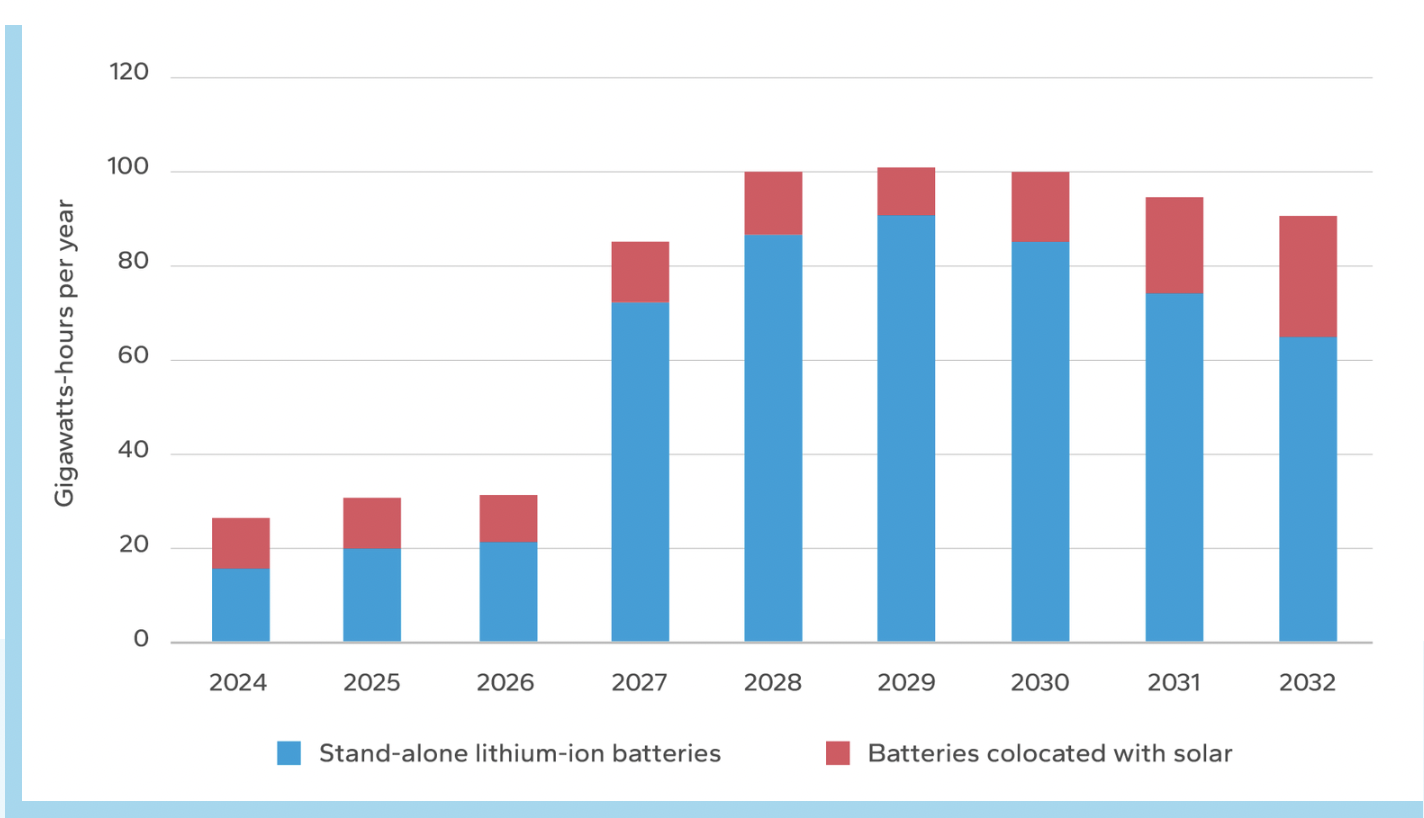
Even as incentives are phased out, market forces are making solar and solar-plus- storage projects the optimal choice for new power generation. But solar isn’t the only option. Here’s what winning companies will act now to invest in:
• Energy efficiency
• Energy storage
• Hybrid power generation
• Fossil fuel decarbonization
• Digital trust
For more than 125 years, DNV has helped businesses progress winning energy projects in the US and Canada that contribute to energy security, affordability, and reliability. DNV helps clients confidently navigate complex projects and ensure they are bankable and successful.
DNV’s proven impact
Energy efficiency:
DNV has delivered over 2 million megawatt-hours and 40 million therms in energy savings, significantly reducing costs and emissions for utilities and millions of users.
Clean energy capacity:
DNV supported 400 gigawatts of clean energy capacity and oversaw more than $1 billion in energy spending, accelerating renewable deployment and grid modernization.
Oil and gas:
DNV has a long history of supporting safe oil and gas operations. The vast majority of oil and gas pipelines are built to our standards, and we lead the industry in validating the materials used in technologies essential for offshore oil and gas development.
Research and technology centers:
We operate state-of-the-art technology centers and testing facilities around the world. At these facilities, dedicated experts research and develop solutions for some of the most challenging issues facing the energy sector.
Advanced digital solutions:
We are a world-leading provider of software and digital solutions for managing risk and improving performance of power generation assets, transmission lines, pipelines, processing plants, offshore structures, ships, and more.
Your partner for energy systems thinking
DNV ensures integrated planning across all energy types, sectors, and regions. DNV’s North American team deeply understands the entire energy system, including specific regional markets and regulatory frameworks. This local expertise is powerfully backed by a global network of experts, ready to be mobilized anywhere in the world, with access to world-class technology centers and cutting-edge digital tools.
Learn more in the Global Energy Transition Outlook 2025 report.
An Indiana utility has come up with an unusual plan for meeting growing power demand from data centers.
Northern Indiana Public Service Co. is launching a spinoff company, GenCo, that is exempt from many of the regulatory proceedings typically required before power plants can be built in the state. The utility, also known as NIPSCO, says that this will allow the new entity to quickly provide the copious amounts of energy that data centers need without pushing excessive costs onto other consumers.
But the move is raising alarm bells for watchdog groups and other critics, who argue that rather than protect consumers, the plan will mainly enrich the utility’s parent company while interfering with market competition and undercutting important regulatory safeguards. It could also set back the state’s clean-energy transition, advocates say.
As regulators around the country wrestle with how to get a lot of power online quickly to serve “hyperscaler” AI data centers, other utilities may be looking at NIPSCO’s “unique arrangement” as “a model for how to maximize profits while meeting new data-center demand,” said Emily Piontek, a regulatory associate at the nonprofit Clean Grid Alliance.
Indiana is attractive to huge data centers because of its cheap land, ample water, special state tax breaks on equipment and energy, and access to both the PJM Interconnection and Midcontinent Independent System Operator regional electric grids. The State Utility Forecasting Group at Purdue University recently predicted that data centers will almost double Indiana’s energy demand by 2035.
NIPSCO highlighted that boom to the Indiana Utility Regulatory Commission during the case proceedings to create GenCo. Vincent Parisi, president and CEO of both NIPSCO and GenCo, told regulators about the sheer number of requests the utility has gotten from potential “megaload” customers, generally data centers, seeking hundreds or even thousands of megawatts of electricity.
But it’s a competitive business, with other states and municipalities courting the same data centers. NIPSCO says that providing new power quickly, through GenCo, will be key to securing the deals.
The regulatory commission agreed with this reasoning, writing in its September order approving the GenCo plan, “The evidence shows that megaload customers are sophisticated and have many choices available to them when determining where to make developments.” The commission added that relinquishing its jurisdiction over aspects of GenCo “will enable NIPSCO to support Indiana’s efforts to compete with other states to attract this economic development.”
Nationwide, regulators and advocates have grappled with concerns that residential customers could pick up too much of the tab for new generation built to power data centers, especially if the computing warehouses don’t materialize or don’t use as much power as predicted.
NIPSCO says GenCo will protect customers from such costs since it will be responsible for providing the data centers with power. That means those expenses won’t be rolled into the rates paid by other NIPSCO consumers, the utility says.
But Citizens Action Coalition, the state’s main consumer-advocacy group, argues that the GenCo structure doesn’t really insulate customers from the risks of the data-center market.
If GenCo were to lose money, that could affect the finances and credit rating of parent company NiSource and hence impact NIPSCO’s customers, said Citizens Action Coalition Executive Director Kerwin Olson. And he worries some costs of data-center power infrastructure could still be passed on to residential customers, hidden in an opaque process created specifically for GenCo.
In September, the state regulatory commission exempted GenCo from a host of usual procedures. Chief among them is that GenCo does not have to file a detailed plan when it wants to build or acquire new generation. The commission did not set any minimum standards or requirements regarding how power will be provided to data centers, as advocates had hoped. Instead, the commission will review each proposed contract between NIPSCO and a data center, and the related power purchase agreement between NIPSCO and GenCo.
The Citizens Action Coalition called this case-by-case review process unfair and inefficient, making it too difficult for stakeholders to monitor the situation and submit public comments to the commission.
“Every single time a data center comes online, there’s another case; there’s no minimum criteria or boxes that need to be checked,” said Olson. “I know they’re claiming costs won’t be passed on to ratepayers, but we’ve been around the block. When you have what will likely be confidential special contracts, everything redacted, it’s going to be really challenging for stakeholders to dive into the details to ensure that none of these costs are being passed on.”
NIPSCO declined to answer questions but referred Canary Media to a press release quoting Lloyd Yates, NiSource president and CEO, regarding the regulatory commission’s decision.
“This is an important step forward to position Northern Indiana at the center of a fast-growing, economically essential industry,” Yates said.
The Citizens Action Coalition and the Indiana Office of Utility Consumer Counselor, a state agency tasked with protecting consumers, notified the commission that they plan to appeal the approval of GenCo.
Another major concern of critics is that GenCo will have an unfair competitive advantage over other power producers.
Indiana has a regulated energy market, wherein utilities have the right to serve as monopoly producers and distributors of energy, but regulators must approve how much capacity they build or buy and what they charge customers for the power.
GenCo is largely exempt from this structure, acting more akin to a power producer in a state like Illinois, with a deregulated market. But in Illinois, power producers compete to sell their energy to utilities, whereas GenCo has a guaranteed customer in the form of NIPSCO, and the two sister companies — which share the same parent — set the price NIPSCO will pay GenCo for power.
“The utility affiliate is being treated like an unregulated independent power producer while retaining the guarantee of a monopoly market enjoyed by regulated utilities,” Piontek said. “Essentially, the arrangement insulates GenCo from market forces, and [it] is not subjected to rate regulation. It’s going to be a very profitable arrangement for the parent company and its shareholders … by providing the affiliate with an unearned competitive advantage.”
The Clean Grid Alliance — made up of renewable-energy developers, environmental groups, and other stakeholders — and Takanock, a data-center developer, told regulators in a joint brief that GenCo “turns the federal paradigm which encourages competition … on its head by proposing that GenCo, and only GenCo, provides generation services to NIPSCO to serve its megaload customers.”
In testimony, Takanock founder and CEO Kenneth Davies told regulators about problems his company has had trying to acquire power from NIPSCO for a planned data center. Davies described the NIPSCO-GenCo relationship as “anticompetitive,” and lamented that NIPSCO will not allow new data-center customers to buy power on the open market themselves, as some existing industrial customers are allowed to do. Davies said NIPSCO seems to be “picking and choosing” which data centers to prioritize, and he is worried Takanock could be treated unfairly, since confidential contracts would make it difficult to compare the arrangements other data centers are getting.
Davies and other stakeholders say there are ways for NIPSCO to protect customers from data-center costs without creating a new market entity with an unfair edge.
Takanock and the Clean Grid Alliance, in their filing, criticize GenCo for failing to explore the more common method of pricing tariffs designed specifically for data centers. That’s where a utility makes an agreement with state regulators to treat data centers differently from other customers, ensuring they pay their fair share of costs. Davies described Wyoming regulators’ creation of such a special tariff to serve a Microsoft data center. Davies was Microsoft’s director of renewable-energy strategy and research at the time.
In another example, Citizens Action Coalition reached an agreement last year with utility Indiana Michigan Power and three new data centers, requiring long contracts, exit fees, and other protections to ensure the centers pay the full costs of infrastructure built to serve them, even if they don’t use as much power or operate for as long as expected. The agreement also requires the data centers to pay millions of dollars to support low-income electricity customers with benefits like weatherization.
Advocates point out that Indiana already has a law on the books meant to help utilities more quickly get power online to supply data centers, without sacrificing transparency or relying on a new entity like GenCo. HB 1007, enacted in May, gives utilities an expedited approval process for new generation if they provide information about the impacts on customers, predicted load growth for the next five years, and the potential of grid-enhancing tech to avoid investments in new power plants, among other things.
“NIPSCO decided to ignore 1007 and create what we think is a shell game, a scam, with this unregulated affiliate doing Lord knows what,” said Olson.
The creation of GenCo will likely undermine the clean-energy transition in northern Indiana, advocates say. NIPSCO has already made clear its plans to build lots of natural-gas-fired generation to power data centers, and if this is carried out through GenCo, stakeholders will have little opportunity to weigh in on the implications.
This is a disappointing shift for environmental groups that had praised NIPSCO for plans it announced in 2018 to retire all coal plants within a decade and build out renewables, reducing carbon emissions by 90%.
By contrast, NIPSCO’s 2024 Integrated Resource Plan says that if contracts with data centers are in place, the utility will build over 1,700 megawatts of gas generation by 2030 and another over 2,000 MW by 2035. Already, NIPSCO is seeking an air permit to build 2,300 MW of gas-fired generation at the site of a retiring coal plant, in order to serve data centers.
“GenCo is certainly a concern for the climate, demonstrating that NIPSCO has done a complete strategy reversal on sustainability,” said Ben Inskeep, program director at Citizens Action Coalition. He said the utility’s 2018 resource plan “was groundbreaking for leading the way on a clean-energy transition. Now, they are pursuing a strategy that appears to be 100% natural gas for new data centers, with no additional clean energy to serve the additional load.”
If NIPSCO had to turn to the open market to procure the power that data centers need, Piontek noted, more renewables would likely get built along with the gas-fired generation.
“Clean-energy resources like wind, solar, and energy storage outcompete other resources in speed-to-market and remain the most cost-effective resources available, making them an attractive option for bringing data centers online in Indiana,” Piontek said.
A new policy in China could ramp up the nation’s production of green hydrogen for use in airplanes, ships, and other heavy industries, potentially eclipsing output of the fuel in the United States and Europe.
Earlier this month, the National Development and Reform Commission — the high-ranking executive department in charge of economic planning — released what analyst Jian Wu called China’s single “most important low-carbon policy for 2025.”
Until now, China has encouraged provincial governments and state-owned companies to develop hydrogen technology by providing lower electricity prices and loans and by setting production quotas. But unlike the United States and the European Union, the national government in Beijing had no overarching policy to directly subsidize low-carbon hydrogen projects.
While the document published on Oct. 15 does not specify hydrogen by name, the policy change makes Chinese industries that depend on the clean fuel eligible for direct grants.
For the first time ever, the rules outlining which types of industrial projects qualify for national grants list green methanol, carbon capture, sustainable aviation fuel, and zero-carbon industry parks — “paving the way for rapid development of these applications in China,” Wu wrote in his China Hydrogen Bulletin newsletter. Of the hundreds of clean-energy directives China issues at its various levels of government each year, Wu emphasized, the latest policy is “absolutely” the most significant, particularly for heavy industry.
By designating those sectors for direct grants under Beijing’s central budget, “the government is effectively establishing its first national funding mechanism for some of these hydrogen-adjacent technologies,” said Amy Ouyang, a hydrogen associate at the Clean Air Task Force, a Boston-based environmental group.
“China’s hydrogen sector has relied heavily on private capital, so this guidance marks a potential shift toward a more coordinated, state-backed effort to turn policy ambition into on-the-ground deployment,” she said, adding that “the inclusion of these adjacent technologies could reinforce its growing role in China’s broader industrial decarbonization strategy.”
The move comes as the United States turns away from its nascent efforts to develop a clean-hydrogen industry. The landmark 45V federal tax credits meant to spur production and use of clean hydrogen, once slated to last until 2033, are now set to phase out in two years as a result of President Donald Trump’s One Big Beautiful Bill Act. The Trump administration, meanwhile, is poised to use funding meant for hydrogen-based steel projects to bolster production of steel made with fossil fuels instead.
China is already the world’s largest hydrogen market, by far. At about 33 million metric tons of demand per year, the industry is roughly three times the size of the American market. In the United States, 95% of hydrogen is produced with natural gas, primarily through a process that involves using steam heated to temperatures as high as 1,832 degrees Fahrenheit to separate the molecule out of methane. America’s reliance on natural gas is no surprise, given that it has vast reserves and the world’s largest drilling industry.
By contrast, China imports much of its natural gas, so the fuel is used to generate 25% of the country’s hydrogen. A significant share of China’s hydrogen is a byproduct of other industrial processes, such as heating coal to make purified “coke” for steel mills.
Since a portion of that byproduct hydrogen is vented into the atmosphere as waste, the new national grants could include projects that capture and repurpose more of that gas. But China’s world-leading deployments of solar, wind, hydro, and nuclear power plants also generate an ample supply of clean electricity to produce green hydrogen — the version of the fuel made by blasting distilled water with enough electricity to separate hydrogen molecules from the oxygen ones. Already, in July, China agreed to sell a historic debut shipment of green steel made with hydrogen to buyers in Italy.
Despite China’s clean-energy advantage, the U.S. and European Union had, until now, boasted stronger national policies for developing domestic green hydrogen.
While China’s government-owned businesses invested in green hydrogen, “there was nothing at the national level,” like the 45V tax credits in America’s Inflation Reduction Act or the European hydrogen bank, said Anne-Sophie Corbeau, a hydrogen researcher at Columbia University’s Center on Global Energy Policy.
For example, Beijing backed fuel-cell vehicles, but the support came primarily as a reward for reaching manufacturing targets, not as direct subsidies, she said. The central government might give an annual reward of 1.6 billion yuan ($225 million) per city based on progress toward certain deployments of fuel-cell infrastructure, but “if you are underperforming, you may get nothing,” Corbeau said.
“Broadly, that means no state support for industrial applications like what we may have seen in other countries,” she said.
This month’s policy shift will direct Beijing’s funding hose at heavy industries that transition from coal and gas to hydrogen, including “power, steel, nonferrous metals, building materials, petrochemicals, chemicals, and machinery,” said Xinyi Shen, the China team lead at the Centre for Research on Energy and Clean Air, a Finnish research nonprofit.
“This policy sends a strong signal of China’s commitment to accelerating its green transition,” she said. “Given China’s current clean-energy momentum and industrial policy direction, the country may ultimately achieve deeper [emissions] cuts than it has formally committed to.”
Still, Shen warned, “green hydrogen remains costly.” But China’s capacity to swiftly scale industries that the government makes a priority has a history of sending prices plunging, as happened with solar panels and batteries. And China’s hydrogen sector “is expanding rapidly,” Ouyang said.
Between 2021 and 2023, she said, roughly 100 to 200 new hydrogen-related companies launched each year in the country. Today, China dominates manufacturing of the most popular type of electrolyzer, the machine used to make green hydrogen, representing roughly 60% of the global market. Thanks to that scale, a Western company buying a Chinese-made electrolyzer would pay one-third the price of a locally made counterpart.
If central government funding accelerates in the next year or two as expected, “China could solidify its leadership in the industry and achieve some of the world’s lowest-cost green hydrogen,” Ouyang said.
That could put the U.S. and Europe at risk of lagging behind China, just as they have with other steps in the clean-energy supply chain, experts say.
Corbeau said the conditions are already there for China to dominate the industry. Once the federal tax credits expire, she said, “nothing much will happen” beyond “a few projects” in America.
She noted that in Europe earlier this year, the regional hydrogen bank’s second offering of a public subsidy for hydrogen tried to limit funding for projects that had too many Chinese components. But “the scheme does not give much money, and some projects told me they are better off with Chinese technology because of the cost advantage,” Corbeau said.
“It’s almost too late already,” she added.
Eavor, an advanced-geothermal startup, says it has significantly reduced drilling times and improved technologies at its nearly online project in Germany — milestones that should help it drive down the costs of harnessing clean energy from the ground.
On Tuesday, the Canadian company released results from two years of drilling activity at its flagship operation in Geretsried, Germany, giving Canary Media an exclusive early look. Eavor said the data validates its initial efforts to deploy novel “closed-loop” geothermal systems in hotter and deeper locations than conventional projects can access.
“Much like wind and solar have come down the cost curve, much like unconventional shale [oil and gas] have come down the cost curve, we now have a technical proof-point that we’ve done that in Europe,” Jeanine Vany, a cofounder and executive vice president of corporate affairs at Eavor, said from the Geothermal Rising conference in Reno, Nevada.
Eavor is part of a fast-growing effort to expand geothermal energy projects beyond traditional hot spots like California’s Salton Sea region or Iceland’s lava fields. The company and other firms — including Fervo Energy, Sage Geosystems, and XGS Energy — are adapting tools and techniques from the oil and gas industry to be able to withstand the harsh conditions found deep underground.
The industry wants to produce abundant amounts of clean electricity and heat virtually anywhere in the world, and it could serve as an ideal, around-the-clock pairing to solar and wind power. But geothermal companies are only just starting to put their novel technologies to the test.
Eavor began drilling in Geretsried in July 2023, shortly after winning a $107 million grant from the European Union’s Innovation Fund. For its first “loop,” the company drilled two vertical wells reaching nearly 2.8 miles below the surface, then created a dozen horizontal wells — like tines of a fork — that each stretch 1.8 miles long. Once in place, the wells are connected underground and sealed off so that they operate like radiators: As water circulates within the system, it collects heat from the rocks and brings it to the surface.
Operations on the first of four loops are nearly complete, and the startup plans begin construction on its second loop in March 2026. All told, the system will supply 8.2 megawatts of electricity to the regional grid and 64 MW of district heating to nearby towns, operating flexibly to provide more heat during chilly winter months and produce more electricity in summer.
In its new paper, Eavor said it encountered significant challenges in drilling its first eight of twelve lateral wells, which took over 100 days to complete — a major expense in an industry where drilling rigs can cost about $100,000 a day to run. But the company said it improved its techniques and adapted its equipment in ways that reduced the drilling time for the remaining four wells by 50%.
For example, Eavor said it successfully deployed an insulated drill pipe technology, which can actively cool drilling tools even as they encounter increasingly hotter conditions underground and helps to increase drilling speed. The adjustments also enabled Eavor to triple the length of time its drill bit could run before wearing out, further reducing downtime during the operation.
On top of cutting drilling time and costs, these improvements should also pave a path to boosting Eavor’s thermal-energy output per loop by about 35%, Vany said.
The Germany project will be the first commercial system of its kind when it starts producing power later this year. But other next-generation approaches — like the enhanced geothermal systems that Fervo is building in Utah and operating in Nevada — are also scaling up.
Enhanced geothermal involves fracturing rocks and pumping down liquids to create artificial reservoirs. The hot rocks directly heat the liquids, which return to the surface to make steam. This approach is relatively more efficient at extracting heat from the ground, but it can also raise the risk of inducing earthquakes or affecting groundwater — though experts say that’s unlikely to happen in well-managed projects. In places that ban fracking, like Germany, closed-loop systems can still move forward.
But the closed-loop design has trade-offs of its own, said Jeff Tester, a professor of sustainable energy systems at Cornell University and the principal scientist for Cornell’s Earth Source Heat project. Namely, the pipes can limit the transfer of heat from the underground rocks to the fluids inside the pipe, which in turn limits how much energy a system can produce.
“While companies developing closed-loop systems can make them work, the main challenge they face is for fluid temperatures and flow rates to be high enough to pay off economically,” Tester said. “You can get energy out of the ground; it’s just, how much can you sustainably and affordably produce from a single closed-loop well connection?”
Vany said that Eavor’s modeling shows its technology is already in line with the “levelized cost of heat” in Europe, which estimates the average cost of providing a unit of heat over the lifetime of the project. That figure can fluctuate between $50 and $100 per megawatt-hour thermal in the region’s volatile energy market, she said.
“After we’ve drilled those first four loops, we will be at the bottom of the learning curve,” Vany added. “And that’s the purpose of the Geretsried project.”
In the early 2000s, the owners of the Mammoth Pacific geothermal station proposed expanding the plant into an area just east of California’s Yosemite National Park. The project boasted on its website in 2004 that the potential new wells, which would be located in one of the state’s richest heat resources, had been “carefully chosen to reduce or avoid potential environmental impacts.”
By 2009, the company had produced a study on how the development could impact plant life. The power station had been running since the 1980s, so the decades of data on its safe operation seemed to bode well for a swift approval at a moment when, much like today, rising electricity demand and concern over climate change were converging to bolster development of carbon-free power. The prospects looked so good that, in 2010, geothermal giant Ormat Technologies bought the company that owned Mammoth. In 2013 — a decade after the expansion was first conceived — federal regulators gave the project the green light.
Yet that was just the start of Mammoth Pacific’s permitting saga.
An environmental group and local opponents quickly accused regulators of failing to properly consider how the geothermal project could release organic gases into the atmosphere and groundwater, and filed a lawsuit under the California Environmental Quality Act. The litigation took years to resolve. By the time Ormat finally completed the expansion in 2022, the so-called Casa Diablo IV project had been in the works for nearly two decades.
“People in the industry know it took 17 years to expand an existing facility,” said Joel Edwards, the cofounder and chief technology officer at the geothermal startup Zanskar. “And that’s the last facility that’s been built in California.”
Building a new geothermal plant from scratch on an undeveloped site, he said, would presumably “be an even bigger lift.”
A bill that California lawmakers passed almost unanimously last month promised to change that calculus for the geothermal industry. AB 527 would have provided geothermal developers with categorical exemptions to CEQA reviews, clearing the way for companies to carry out the most expensive part of the process — drilling wells to identify viable hot-rock resources — without the costly burden of lawsuits and ecological assessments the state’s landmark environmental law imposes. A companion bill, known as AB 531, gives geothermal energy projects the same special “environmental leadership” status as solar, wind, energy storage, and hydrogen facilities.
But, in a move that has mystified the industry, Gov. Gavin Newsom (D) vetoed AB 527. In his letter explaining the rejection, Newsom said the legislation would have required state regulators to “substantially increase fees on geothermal operators to implement the new requirements imposed by the bill.”
Of more than half a dozen industry executives and analysts that Canary Media spoke to, however, none believed that argument.
“Something doesn’t add up,” said Samuel Roland, a research fellow at the Foundation for American Innovation who has tracked the bill. “It was a political play for him.” The foundation is a right-leaning think tank that advocates for speeding up energy deployments.
While Roland said it’s difficult to determine exactly which groups may have persuaded the governor to block the legislation, “the only people who were objecting were environmentalists,” a dynamic that echoes the fight against Mammoth Pacific’s expansion.
“It does seem like it was a giveaway to environmental groups,” Roland said.
Izzy Gardon, a spokesperson for Newsom, declined to comment. “The Governor’s veto message speaks for itself,” he wrote in an email to Canary Media.
California’s unique geology has made it the destination for the geothermal industry for decades. The Western Hemisphere’s first commercial geothermal power station opened in California in 1960. That plant — The Geysers geothermal complex, located in a valley of the Mayacamas Mountains north of the San Francisco Bay Area — remains the world’s largest electrical station powered by the planet’s heat.
The state has enormous untapped potential — and a growing need for electricity. California has shut down all but one of its nuclear power plants over the past few decades. In recent years, persistent drought has made the state’s hydroelectric stations less dependable. Solar generation has soared, and a growing fleet of batteries has helped steady the supply when sun-soaked days threaten to overwhelm the grid with electrons and dark nights send panels’ production plummeting. But the state remains reliant on natural gas and power imports from neighboring states to meet surging demand. To achieve its carbon-cutting goals and bring down electricity rates that are more than double that of nearby states, California needs to increase its supply of clean, firm generation.
Burning biomass, such as dry wood cleared from California’s forests to help prevent wildfires, could provide one option — but that still generates carbon dioxide, and the demand for wood might encourage logging of healthy trees. Despite the state’s reversal of its plan to shut down Diablo Canyon, its final atomic station, building new nuclear reactors is still banned in California. Hydropower is dogged by water scarcity. That makes geothermal a particularly attractive choice.
It’s not without some drawbacks. Conventional geothermal, which involves drilling down into underground reservoirs warmed by volcanic heat, is limited to easily accessible areas and comes with the challenge of maintaining the subterranean water source over time. Next-generation geothermal companies are rapidly advancing drilling techniques that the oil and gas industry perfected in recent years to go deeper and harvest heat from dry, hot rocks, vastly expanding the locations with potential to generate energy. In a seismically active state, that carries some risk since the version of next-generation geothermal that uses hydraulic fracturing, or fracking, technology to drill could trigger earthquakes.
But every energy source comes with challenges, and neighboring states such as Utah, Nevada, and New Mexico are aggressively pursuing next-generation geothermal projects.
In theory, the best place to develop those first-of-a-kind plants would be California, with its energy-affordability woes and status as a major global economy.
“Utah has low prices, and geothermal is still expensive,” said Thomas Hochman, director of infrastructure and energy policy at the Foundation for American Innovation. “If you want to bring geothermal down to cost parity with other technologies, you have to sell it to Californians. As a result, geothermal scaling runs through California.”
For the most part, however, developers are steering clear of the Golden State. Companies such as Fervo Energy, XGS Energy, and Sage Geosystems — three of the biggest next-generation startups — are based in Houston and are pursuing debut projects in Utah, New Mexico, and Texas itself. Zanskar, a developer using modern prospecting methods to tap conventional geothermal resources, is headquartered in Salt Lake City. States such as Arizona, Colorado, Idaho, and Oregon are “really exciting” as potential next areas for development, Edwards said.
“If California ever fixes CEQA,” he added, “it could be huge.”
The regulatory hurdles represent “the only real barrier” to geothermal taking off in the Golden State, said Wilson Ricks, a Princeton University researcher who focuses on geothermal.
“You can find projects pretty much all across the Western states but very few, if any, in California, despite it being the biggest potential market,” Ricks said.
“It’s stark. People are exploring projects in Texas, which has far, far worse-quality resources than the ones in California,” he added. “That’s because of the regulatory environment there. So the fact that regulatory barriers are going to remain in place doesn’t give me a lot of confidence that California’s going to be leaping ahead on geothermal anytime soon.”
In response to emailed questions, Fervo said it maintains leases near the Salton Sea region, an area with vast geothermal potential. But those parcels aren’t currently under development since the state’s permitting regime makes investing in drilling too risky.
“With the right legislative and permitting reforms, similar to those that were proposed in AB 527, the state could better position in-state resources for development and unlock the enormous economic benefits that come with local clean energy development,” said Sarah Harper, Fervo’s senior policy and regulatory affairs associate.
Not everyone is so bearish. Ormat, the nation’s largest geothermal operator of conventional sites, said the fact that the vetoed bill passed in the Legislature without a single no vote, just a handful of abstentions, shows there’s political support for geothermal “like we haven’t seen in the past.”
“It’s like a revolution for geothermal,” said Marisol Collons, Ormat’s manager of communications and government affairs. “We’re still highly optimistic about the future and ready to kickstart all our next legislative sessions across the country.”
While Fervo lamented that a small number of green groups fought the bill, the company said the fact that there were “more environmental groups in favor than there were ones opposed, or even neutral,” left it feeling hopeful about the possibility of future legislation.
For XGS, a next-generation company whose technology forgoes fracking and minimizes its water usage by keeping the fluid for its operations contained in a closed tube, California remains “the highest-priority market.”
“We feel that California provides a unique combination from both a resource perspective and a market perspective,” said Lucy Darago, chief commercial officer at XGS. “It’s a high-demand market that really needs the attributes that geothermal brings.”
The company backed the bill and said categorical exemptions from CEQA permitting for drilling would have shaved anywhere from six months to two years off its development efforts.
“It’s disappointing, but I’m optimistic that a future iteration of the bill will pass,” Darago said.
The key, she said, is time. Geothermal will grow in California no matter what — of that, Darago said, she’s certain. The question is whether that happens in time to stave off blackouts and slash emissions on the trajectory the state has set for its electrical system.
“The industry is going to happen. It will get there,” she said. “But if it’s going to get there on a timeline that’s meaningful for California’s resource-adequacy challenges and climate goals, we’ll need some of these changes.”
When Connecticut Gov. Ned Lamont, a Democrat, first nominated Marissa Gillett to the Public Utilities Regulatory Authority in 2019, he praised the “outsider’s perspective” she would bring to the state’s energy challenges. This September, just months after a bruising reconfirmation process, she stepped down, citing a tangle of acrimonious disputes with investor-owned utilities and lawmakers who bristled at her novel approach to regulation and accused her of inappropriate, even unlawful, bias.
Public utility commissions are essential but largely invisible forces regulating and shaping electricity, gas, and water services at the state level. Traditionally, these boards have been thought of as working in tandem with utilities, rarely challenging their proposals and claims. Recently, though, the tides have shifted, as more states and advocacy groups look at ways for commissioners to advance state energy policy.
The need for decisive action from utility commissions is becoming more acute as electricity prices climb almost everywhere in the country and many states push to meet decarbonization goals. The regulatory status quo just doesn’t lend itself to the systemic changes needed to fight these battles.
Gillett has been hailed by some as an exemplar of the assertive regulator, bringing a decidedly proactive sensibility to her work on the Connecticut commission, commonly called PURA. Following her resignation from the board, Gillett sat down for a conversation with Canary Media about what that involved regulation should look like as states face down a crucial moment for consumers and climate alike.
“Regulators need to roll up their sleeves and figure out how to provide continuous, sustained rigorous oversight,” she said.
The traditional model for investor-owned utilities guarantees them a set rate of return on every dollar spent building new distribution lines, upgrading substations, and other such projects. This dynamic has led to criticism that utilities are prone to overspending on infrastructure that might not be in the interest of customers or the environment, for the simple reason that it will bolster their earnings and please their investors.
A key job of leaders like Gillett is to weigh these utility requests against the need for adequate, reliable infrastructure, and the needs of consumers and the state’s energy policy goals. But for too long, critics say, commissioners have functioned more as umpires calling balls and the occasional strike, approving most utility requests.
Before coming to Connecticut, Gillett worked for seven years at the Maryland Public Service Commission, contributing to the development of initiatives including the state’s electric vehicle programs and its offshore wind plan. After a brief stint with the Energy Storage Association, a trade group, she threw her hat in the ring for the Connecticut commissioner position.
Gillett came into the job ready to be the “change agent” the governor said he wanted. Her aim was to reform an entrenched system that had led to some of the country’s highest electricity rates and mixed progress on climate goals — and to move away from the “balls and strikes” mentality that she found unrealistic and limiting.
“I acknowledge you have to make decisions based on the evidence and record in front of you,” she said.
But she was not willing to accept that the only evidence available was what was contained in utility filings and the responses to them. She offered this analogy: If one party came before PURA saying the sky was green, and another argued it was purple, the board should not be forced to choose between those two options.
To dig deeper into the issues before the commission, she assembled a staff of 80 “who are the best in the business and are very passionate about the work,” a group she hopes stays in place despite her departure.
“It is important who sits in the commissioners’ seats, but it’s also important who staffs them,” she said.
Right from the beginning, she and her staff led PURA in several controversial decisions that left utilities and Republican lawmakers claiming she was creating a hostile and uncertain environment for the state’s two major investor-owned utilities — Eversource and United Illuminating — and their shareholders.
After the utilities struggled to restore power following Tropical Storm Isaias in 2020, PURA ordered Eversource to return $28.4 million to customers in the form of bill credits. In 2023, the commission reduced United Illuminating’s requested $123 million rate increase by $100 million. The utility challenged this move in court, but PURA’s decision was upheld.
Gillett argues she always just applied rules that were on the books but rarely enforced. She points to her track record in court cases: Five times utility challenges have made it to the Connecticut Supreme Court, and five times the court supported PURA’s rulings, she said.
“For years we heard in public that I was acting illegally, making decisions that were arbitrary and capricious,” she said. “I was now holding them to standards they had not been held to. I viewed myself as somebody tasked with implementing state policy.”
While the financial penalties and rate reductions Gillett’s PURA imposed garnered headlines, she also made changes that were less widely noticed, with the goal of prepping the grid to handle more renewable energy. Within Gillett’s first year, the board launched the Equitable Modern Grid initiative, a series of investigations into 11 topics, including advanced metering, energy storage, and affordability. The process yielded ongoing action, including a battery incentive for homeowners and businesses and a program to fund pilots trying out innovative grid technologies.
“Considering how slowly regulatory processes usually work, I think designing and launching those programs in that amount of time was very impactful,” Gillett said.
It’s difficult to assess the effect of Gillett’s philosophy on Connecticut’s energy and climate landscape quite yet: Changes to the utility industry are notoriously slow-moving, and the pandemic added an extra level of disruption to her tenure.
Electricity prices remain high there, as they are throughout the entire Northeast, but Gillett leaves behind programs intended to reduce the energy burden on low-income households. During her tenure, the state implemented its first discount electricity rate for such families and launched an outreach program to help disadvantaged households access assistance offerings.
Gillett does not yet have her next move mapped out, but she does have a degree of optimism that utility regulation is evolving toward the sort of goal-driven, engaged model she brought to her time in Connecticut.
More states are already taking seriously the need to seek out “competent, qualified” regulators with a background relevant to the work, she said. She pointed to a Brown University study that found, nationwide, the share of commissioners with previous work on environmental issues grew to 29% in 2020 from 12% in 2000. States like Maine and Colorado have taken steps to direct their utility regulators to consider emissions, equity, and environmental justice when making decisions.
“As electricity affordability becomes more front-and-center, and folks are looking to who is supposed to be watching out for them, there will be a moment when regulators embrace that philosophy more,” she said.
CEOs of artificial-intelligence companies want to spend hundreds of billions of dollars building their energy-gobbling data centers, but that can’t happen without the necessary electricity supply. And they want to move way faster than electric utilities are used to.
One idea gaining traction is to allow data centers to come online more quickly if they agree to occasionally pull less power from the grid when demand is high, a concept endorsed by none other than Energy Secretary Chris Wright in a rulemaking proposal filed Thursday. The massive computing facilities could accomplish such flexibility with the help of on-site renewables and batteries, but precious few projects using this model have materialized. That’s about to change.
On Wednesday, Aligned Data Centers announced it would pay for a new 31-megawatt/62-megawatt-hour battery alongside a forthcoming data center in the Pacific Northwest. The battery, developed by energy-storage specialist Calibrant Energy in partnership with the local utility, is now entering the construction phase and should be operating sometime next year. The kicker is, this deal will let Aligned get up and running “years earlier than would be possible with traditional utility upgrades,” per the companies.
If the plan works, would-be AI leaders will be jumping all over this battery-first strategy. In fact, many already are, they just haven’t publicly acknowledged it yet.
“There’s so much chatter right now about the potential to use energy storage in this manner to facilitate the connection that large power users want from the grid. But there hadn’t really been evidence of that theory being reality,” said Phil Martin, CEO at Calibrant, which is owned by Macquarie Asset Management. “It is possible, and it is being done — not as a proof of concept in a lab somewhere, but really a commercial project.”
Batteries aren’t, at first glance, a tool well matched to the needs of AI computing.
Lithium-ion chemistries have become quite competitive for short-form activities: First, it was managing second-by-second frequency fluctuations on the grid; now, in places like Australia, California, and Texas, batteries are shifting solar generation to compete with gas plants in the evening when demand rises.
Data centers, though, use energy around the clock — not literally at full blast 24/7, but a lot closer to it than current batteries can keep up with. Data-center developers have chased new gas, hydropower, and an exotic array of nuclear power plants in hopes of feeding the beast. But those options will take several years to come online, if they ever get built. The headlong rush into AI demands nearer-term solutions.
As a lot of exceedingly well-funded firms contemplated this conundrum, some thinkers started focusing on grid flexibility as a way to accelerate the computing-infrastructure buildout. Earlier this year, Duke University researcher Tyler Norris made waves in the AI-energy world with research that found today’s grid could handle quite a lot more data centers if the facilities could simply dial back their consumption for a couple hours at a time during moments of maximum demand.
The Aligned battery offers a concrete example of that kind of research. The utility studied just how big the battery would need to be to compensate for challenges imposed on the local grid by the data center. Aligned and Calibrant had their own calculations, Martin said, “but the validation of that, and the actual specification of that, came out of the interconnection study done on the utility side.”
Due to the local nature of the power constraint, the battery had to be built close to Aligned’s facility; the company ultimately provided the land to host the grid storage installation. In other cases, where a proposed data center runs up against a system-wide capacity constraint, a battery solution could be further away.
Another glimpse of the battery-enabled future came this summer when Redwood Materials, a richly funded battery-recycling startup, unveiled a new business line that repackages old EV batteries to serve data-center demand. The first installation, at Redwood’s campus near Reno, Nevada, fully powered a very small, modular data center using a solar array and a field of former EV battery packs laid out on the desert floor.
Redwood just got its own vote of confidence in that concept: On Thursday, it raised another $350 million from investors including AI-chip leader Nvidia.
Aligned’s commitment to paying for the battery itself could serve as a model of socially responsible AI-infrastructure development.
Some utilities around the country are jumping to build new power plants to support the projected data-center buildout, and charging their regular customers for the investment, hoping the AI titans eventually become paying customers. But this approach risks saddling consumers with unnecessary costs if the AI hubs don’t materialize.
Because Aligned is footing the bill, the utility’s other customers won’t be forced to pay for the data-center firm’s growth ambitions. But, though this one large customer will provide the land and funding, the battery will sit on the utility side of the meter. That means the utility can leverage the tech for other grid uses, like frequency management and capacity, when it’s not maintaining the flow of power to the data center during otherwise scarce hours.
In this case, Martin said, the permitting and buildout could move faster with the battery connecting to the utility grid instead of directly to the data center. In other situations, bigger batteries on the customer side of the meter might make more sense. Calibrant is already working on more and even larger batteries for the AI sector, he added.
“Whereas right now, we think this is unique, I think over a relatively short time horizon it’s going to be much more common,” Martin said. “It’ll start to look surprising if we don’t see projects like this at the largest loads as they connect [to the grid].”
A clarification was made on Oct. 25, 2025: This story originally stated that the local utility studied how many times per year the local grid could run out of electricity if the data center got built. The piece has been updated to clarify that the utility studied how big the battery would need to be to compensate for challenges imposed on the local grid by the data center.
Energy affordability has become a flash point over the past few months. It’s a key issue in this year’s gubernatorial races. It’s something President Donald Trump has promised to fix by boosting fossil-fuel production. And of course, it’s showing up in the bills that arrive in mailboxes every month.
Three-quarters of Americans count electricity costs as a source of stress in their lives, according to a new Associated Press-NORC survey. But a recent study from the Lawrence Berkeley National Laboratory provides more nuance to the conversation. When adjusted for inflation, 31 continental states actually saw their power prices decline from 2019 to 2024, while the other 17 states experienced increases.
One reason why some states saw prices jump? Utility spending on disaster recovery and preparedness. Take California, where utilities have added billions of dollars in wildfire-recovery costs and mitigation programs to retail electricity prices in recent years, the national lab found. It’s a bracing fact as the planet warms and disasters become more frequent and destructive.
But the report also tempered fears that the growth of data centers and other power-hungry industries will jack up electricity prices. Grid maintenance has been a top driver of increased electricity costs over the last few years, but spreading these expenses among more customers — like data centers and manufacturers — has helped lower retail electricity prices, researchers found. One caveat: That dynamic tends to benefit large, commercial consumers more than residential ones.
The Trump administration has elevated fossil fuels as a solution to rising electricity bills, positing that more coal and gas power can cut prices. But building a new gas-fired plant is increasingly expensive and takes years, and the U.S. is preparing to ship more liquefied natural gas out of the country anyway.
If you look at two rare examples of power utilities reducing their rates, it’s clear that falling back on coal isn’t the answer either. In Oregon, Idaho Power Co. has asked regulators to lower electricity prices by nearly 1%, saying the closure of a coal-fired power unit and demolition of another coal plant have brought down costs. And in Virginia, where a state law is pushing the electricity sector to lower emissions, Appalachian Power cited the addition of renewable power in its request to lower rates. West Virginia is meanwhile pushing to keep its coal plants running — a move that Appalachian Power said would raise prices for its electricity customers in that state.
But putting the national lab’s inflation-adjusted numbers aside, it’s clear that rising utility bills are reaching a fever pitch across the country — and it’s going to take both more clean energy and smarter utility regulation to rein them in.
Trump sinks a global shipping-decarbonization plan
Until a few weeks ago, the International Maritime Organization was on track to approve a global shipping-decarbonization strategy. That is, until the Trump administration launched a last-minute offensive and got the United Nations body to delay adoption of the plan, Maria Gallucci and Dan McCarthy reported late last week.
The tens of thousands of shipping vessels that travel the oceans are responsible for about 3% of the world’s annual greenhouse gas emissions. But as Maria points out in her follow-up dive into shipping decarbonization, the industry doesn’t currently have much incentive to replace dirty diesel-powered vessels with lower-carbon alternatives.
Some good news, some bad news for U.S. battery startups
The U.S. Department of Energy slashed another wave of federal funding this week, targeting $700 million in grants for battery and other clean manufacturing projects. Nearly half of that funding had been awarded to Ascend Elements, which had already canceled a portion of its planned battery-recycling facility in Kentucky earlier this year. A smaller portion was going to American Battery Technology Co., which said it will carry on with its lithium mine and refinery project in Nevada.
But it wasn’t a bad week for every battery company. Redwood Materials raised $350 million, which it’ll use to expand its unique energy-storage business that packages together used EV batteries into grid-scale resources that can power data centers and other industrial users. And Pila Energy raised $4 million to keep building batteries that provide backup power to large appliances, but are more affordable and portable than whole-home systems like the Tesla Powerwall.
Losing the reactor race: China has a clear head start on the U.S. when it comes to nuclear power, as China has figured out how to produce reactors cheaply and quickly, while the U.S.’s last project went billions of dollars over budget. (New York Times)
What whales? The Trump administration has repeatedly blamed offshore wind farms for whale deaths but just canceled funding for research meant to protect the marine mammals in an increasingly busy ocean. (Canary Media)
Drill here, drill there, drill everywhere: The Trump administration opens 1.56 million acres of the Arctic National Wildlife Refuge’s coastal plain to new oil and gas leasing, and reportedly plans to open significant swaths of the East and West coasts to offshore drilling as well. (New York Times, Politico)
Testing the grid: Xcel Energy is taking different approaches to building out distributed energy resources depending on the state, installing batteries at local businesses in Minnesota while pursuing a more complicated, legislatively mandated model in Colorado. (Latitude Media)
Battling battery blazes: California passes a new law to strengthen fire-safety standards for grid battery systems after a devastating blaze in Moss Landing earlier this year, though new storage-facility designs have already made similar fires unlikely. (Canary Media)
Flagged and forgotten: The United Nations says governments and oil and gas companies are ignoring nearly 90% of leaks that methane-tracking satellites have detected for them. (Reuters)
A winding road to decarbonization: Rondo Energy’s “heat batteries” could be key to decarbonizing heavy industry, but the company’s first industrial-scale test is at a controversial site: a California oil field. (Canary Media)
If you thought the world built a lot of renewables in the past few years, just wait for the next half of this decade.
Between 2025 and 2030, the world is expected to build nearly 4,600 gigawatts — or 4.6 terawatts, if you please — of clean power, according to a new report from the International Energy Agency.
That’s nearly double the amount built over the previous five-year period, which was in turn more than double the amount built across the five years before that. Put differently, the growth has essentially been exponential.
Solar is the driving force behind this expansion, which is key to transitioning the world away from planet-warming fossil fuels. It accounts for more than three-quarters of the expected increase in renewables between 2025 and 2030 — the result, IEA says, of not only low equipment costs but also solid permitting rules and a broad social acceptance of the tech.
This solar boom will be almost equally split between utility-scale installations and distributed projects, meaning panels atop roofs or shade structures in parking lots, for example. Just over 2 TW of large-scale projects will be built compared to 1.5 TW of the smaller, distributed stuff, IEA predicts. The latter category is increasingly popular both in countries with rising electricity rates and in places with unreliable grids, like Pakistan, where residents are taking refuge in the affordable and stable nature of the tech.
China is installing most of the world’s solar, but the technology is a global phenomenon at this point. At least 29 countries now get over 10% of their electricity from the clean energy source, per a separate report released by think tank Ember earlier this month.
Other types of clean energy are set to grow, too, just not at anything close to solar’s scale.
Installations of onshore wind will leap from 505 GW over the previous five-year period to 732 GW between 2025 and 2030. Offshore wind will more than double from 60 GW to 140 GW. Hydropower will rebound modestly from a down couple of years, but still won’t expand at the levels seen in the early to mid-2010s.
Still, renewables are not gaining enough ground to triple clean capacity by the end of this decade compared with 2023 — a goal countries around the world set two years ago at COP28, the annual United Nations climate conference. In just a few weeks, global leaders will reconvene in Brazil for COP30. The IEA figures, while a sure sign of progress, underscore the steep climb ahead.


.svg)
