

 Back
Back
OIL & GAS: Residents say their longtime advocacy work is paying off as five of seven fracking waste injection wells in southeastern Ohio have now been suspended after state officials said they pose a threat to the public and environment. (Ohio Capital Journal)
ALSO: A North Dakota commission will take another week to 10 days to pick the state’s next top oil and gas regulator to replace a former longtime department head. (North Dakota Monitor)
SOLAR:
CLIMATE:
GRID: North Dakota regulators will hold a conference this week on the potential power grid implications of the anticipated spike in data centers. (North Dakota Monitor)
NUCLEAR: South Dakota regulators push back on Xcel Energy’s request for South Dakota ratepayers to contribute to annual payments to a tribe located near a Minnesota power plant. (SDPB)
BIOFUELS: An Iowa ethanol company with hundreds of member producers across the country sues its marketing partner for $7 million, alleging errors in attempting to sell fuel-grade ethanol. (Iowa Capital Dispatch)
ELECTRIC VEHICLES: The police department in Green Bay, Wisconsin, launches an electric vehicle pilot program that has deployed two EVs to ticket speeding vehicles and enforce parking violations. (Press-Gazette)
COAL: A federal judge grants Ameren Missouri’s request for a private mediator to potentially resolve the utility’s 13-year legal dispute with the U.S. government over Clean Air Act violations involving a coal plant near St. Louis. (Bloomberg Law, subscription)
COMMENTARY: Federal clean energy policies are helping Ohio become a leading manufacturing hub for solar and storage, the head of a national solar advocacy group writes. (Cleveland.com)
URANIUM: The Navajo Nation plans to block trucks carrying uranium ore from a Grand Canyon-area mine across tribal land to a Utah processing center, saying the shipments expose people to a substance “that has devastated our community.” (Associated Press, news release)
SOLAR:
CLIMATE: Oregon regulators seek public input on proposed climate regulations aimed at slashing greenhouse gas emissions that were overhauled after being derailed by a fossil fuel industry lawsuit. (Oregon Capital Chronicle)
POLITICS: Left-leaning climate advocacy groups endorse Kamala Harris for president based on her record as a U.S. senator from California. (Heated)
OIL & GAS:
TRANSMISSION:
GRID: California’s grid operator finds its Western Energy Imbalance Market yielded participants $365 million in benefits from April to June this year. (RTO Insider, subscription)
WIND: A Wyoming startup looks to raise nearly $13 million to develop and market its horizontal low-to-the-ground wind energy loops, saying they are cheaper and more environmentally friendly than conventional turbines. (Cowboy State Daily)
UTILITIES: Idaho regulators seek public input on Rocky Mountain Power’s proposed wildfire hazard mitigation plan. (Idaho Capital Sun)
Oregon’s plan to regulate fossil fuel companies and reduce greenhouse gases is ready for public comment after being derailed seven months ago by a lawsuit brought by natural gas companies.
Draft regulations for the state’s redo of the 2021 Climate Protection Program were published Tuesday by the Oregon Department of Environmental Quality. The agency gave the public until Friday, Aug. 30 to comment on them. The state’s Environmental Quality Commission, which oversees rulemaking for DEQ, is expected to vote on final rules by the end of the year, once again putting the state’s landmark climate change laws into action.
Little has changed from the original program standards, which were passed three years ago by the commission. The targets for reducing greenhouse gas pollution would remain the same. Under the proposed rules, Oregon would attempt to reach a 50% reduction in greenhouse gas pollution by 2035 and a 90% reduction by 2050 to confront the growing threat of climate change.
Fossil fuel companies would have to gradually decarbonize their energy supply, largely by shifting away from petroleum and natural gas and instead incorporating renewable energy sources such as wind, solar and so-called biofuels – made from captured gas and decomposing matter – into their energy offerings.
Natural gas is almost entirely methane gas, among the most potent climate-warming greenhouse gases that trap heat in the atmosphere. One-third of global warming is due to human-caused emissions of methane, according to the U.S. Environmental Protection Agency.
Under the newly proposed rules, some heavy energy users in the state would need to meet emissions reduction targets and companies would need to show compliance with the program every two years, as opposed to every three years in the original plan.
“We did build off of the work that we already did in the prior Climate Protection Program,” Nicole Singh, senior climate change policy advisor for DEQ, told the Capital Chronicle on Tuesday. “We didn’t throw that out the window. We’re using that information to help inform this.”
To give companies a little flexibility, they would be able meet some pollution reduction targets by purchasing credits sold by the state. Money from those credits are invested in projects that reduce greenhouse gas emissions.
Besides the three-year compliance schedule, the largest change to the newly proposed rules is who has to follow them.
The state, for the first time, would regulate the emissions of companies that are heavy natural gas users, not just the suppliers of their gas. These include some cement, fertilizer and gypsum producers. Gypsum is in plaster, drywall and some cement. Companies operating in Oregon, including cement maker Ash Grove and Georgia Pacific, which works with gypsum, would need to meet new emissions standards, Singh said.
The agency included other changes in the investment portion of the Climate Protection Program. This section covers what is ostensibly Oregon’s carbon crediting market, where polluters can offset some of their greenhouse gas emissions by investing in projects that reduce overall emissions. One credit would be equal to one metric ton of carbon dioxide released into the atmosphere, and companies could buy them for $129 per credit. This market, which would have begun operating this year, was previously projected to bring in $150 million a year for community decarbonization and renewable energy projects, according to the Portland-based nonprofit Seeding Justice, which had previously been tasked with overseeing the investments.
Credit recipients, largely nonprofits working on community-based projects, could use the grants to help people and businesses buy and install solar panels and heat pumps, purchase electric vehicles and chargers and help weatherize homes and buildings.
Under the proposed rules, Oregon’s nine federally recognized tribes would play a bigger role in determining grants and would receive more funding, according to Singh. It’s unclear yet what role Seeding Justice could play in distributing grants in the future, she said, because such details would follow final rulemaking.
The state would also take a fraction of the funding – about 4.5% – to pay for its oversight of the grants and to undertake internal and external auditing to ensure money is being spent appropriately and that projects are, in fact, reducing the amount of greenhouse gas emissions required.
Under the new rules, companies could offset 15% of their emissions through the purchase of these credits during the first two years of the Climate Protection Program and 20% during each two-year compliance period thereafter. Previously, companies could only offset 10% of their emissions through the credits in the first two years.
DEQ also proposes to work more closely with the Oregon Public Utilities Commission to understand how the Climate Protection Program will affect natural gas rates for Oregonians and to ensure companies aren’t passing all the costs of decarbonization on to their customers.
The Climate Protection Program was approved in 2021 by the Environmental Quality Commission after more than a year of meetings, presentations from the environmental quality department and public comment.
But in December, Oregon Court of Appeals judges agreed with lawyers representing NW Natural, Avista Corporation and Cascade Natural Gas Corporation, who argued that in the process of imposing state regulations to cap and reduce emissions, the commission failed to submit required disclosures to the companies and to other entities that hold federal industrial air pollution permits. The department was required to issue a written statement about why the state was adopting emission limits that exceeded federal rules, disclose a list of alternatives that were considered and explain why they were not adopted.
The judges ruled the program invalid on those technicalities.
Rather than appealing the decision to the Oregon Supreme Court, which would likely not hear the case until mid-2025, state environmental regulators announced in January that they would start over.
All over the country, small and niche farming operations have proved solar panels and agriculture can not only work well together, but can actually be mutually beneficial.
In Maine, low-growing blueberries have had some success being planted around panels. In Vermont, fussy saffron thrives around an array. And there are plenty of farms where sheep and other small livestock graze around solar panels, enjoying the shade while keeping vegetation under control.
Now, an Ohio research project aims to find out how farming/solar partnerships — also known as agrivoltaics — can succeed on a much bigger scale, the Energy News Network reports.
At the 1,900-acre Madison Fields project, Ohio State University researchers planted popular crops grown in huge numbers across the Midwest — mainly alfalfa, hay, and other forage crops — among an 180 MW solar array. Researchers found these crops grew well among solar panels in an earlier, smaller pilot, but it’s unclear how feasible it is to grow them on a large scale.
“You hear a lot about produce and specialty crops,” explained Sarah Moser, the director of farm operations and agrivoltaics at Shell subsidiary Savion, which built the solar array. But raising them is “hard to do on 1,000 acres.”
Another part of the project focuses on farm equipment, including whether tractors and other wide equipment can fit between rows of solar panels. And after crops are harvested, the farm will bring in sheep to help trim back any extra vegetation. Researchers will keep an eye on the sheep’s health, and take note of what other care they’d need to live among solar panels.
It’s all in an attempt to alleviate fears in Ohio and beyond that solar farms are using up valuable agricultural land — though as one agricultural conservation group has found, urban sprawl is a much bigger threat.
Read more about the Madison Fields project at the Energy News Network.
💧 Hydrogen debate continues: As the federal government starts sending funding to seven hydrogen hubs, researchers and advocates warn the industry could worsen greenhouse gas emissions and air pollution if it uses non-renewable power to make the fuel. (Grist/Public Health Watch)
☎️ Unexpected IRA lifeline: Former President Trump promises to halt Inflation Reduction Act spending if he’s elected, but legal and practical challenges, as well as Republican governors and lawmakers benefitting from the law, could hinder his efforts. (Politico)
🛢️ ‘Sacrifice zone’: A surge in oil and gas production, largely driven by fracking, has turned the U.S. into the world’s top producer — and fuels concern that the Gulf Coast is becoming a “sacrifice zone for the oil and gas industry.” (The Guardian)
💲 Tax credit firsts: A set of projects across Washington, D.C., and California mark the first time a company sold its Inflation Reduction Act solar tax credits to another company, a key tool to help encourage solar in new construction. (Canary Media)
💸 Paying for nothing: A condition of free trade agreements often lets fossil fuel companies pursue and secure big payouts if governments cancel their projects. (Inside Climate News)
🏛️ Federal proving ground: The U.S. General Services Administration, which runs the nation’s federal buildings, is using Inflation Reduction Act funding to decarbonize its infrastructure and derisk new technologies that can help other buildings cut their emissions. (Canary Media)
⚖️ Emissions rule fight continues: Republican state attorneys general ask the Supreme Court to temporarily block the U.S. EPA’s power plant emissions rule after a federal appeals court declined to do so. (CNN)
✅ Duality of the deal: Climate advocates hope Vice President Kamala Harris rekindles her support for the Green New Deal as she runs for president — as do Republicans, who hope to paint Harris as an “avowed radical.” (New York Times)
🔋 Batteries’ recycling edge: Researchers argue that the recyclability of electric vehicle battery minerals give them an environmental advantage over fossil fuels, despite the massive impact of mining for lithium and other components. (Canary Media)
🌬️ Winds of change: Wind development continues to divide residents in Midwest states, as misinformation leads to restrictive local regulations and local economic benefits can take years to materialize. (Associated Press)
BRUSSELS — The European Union plans to pressure emerging economies such as China to contribute funding for climate action in developing nations at global negotiations in November, according to a document seen by POLITICO.
Financing is at the center of this year's United Nations climate conference, known as COP29, with developing countries clamoring for a significant increase in funds to help them cut emissions and prepare for the consequences of global warming.
The current funding pledge of $100 billion a year — which runs until 2025 and needs to be replaced with a new target at COP29 — is financed by countries classified as industrialized when the U.N. climate treaty was drawn up in 1992.
The EU is the largest contributor and intends to continue providing funding, but wants countries that have become wealthier in the past three decades to chip in as well, according to a draft of the bloc's COP29 position obtained by POLITICO.
In the document, dated July 26, the EU calls for an expansion of the target's "contributor base" reflecting the "evolving nature of respective capabilities" since the 1990s.
"Such broadening of contributions provides an opportunity to increase the finance to support the most vulnerable countries and communities and reflects strong global solidarity towards them," the draft paper continues. "In this context [the EU] CALLS on all countries according to their financial capabilities, including emerging economies, to contribute to the new goal."
The statement does not mention a specific country, but European diplomats and officials have sought to push Beijing in particular to contribute funding, given China has not only become the world's second-largest economy but also the top emitter of planet-warming greenhouse gasses.
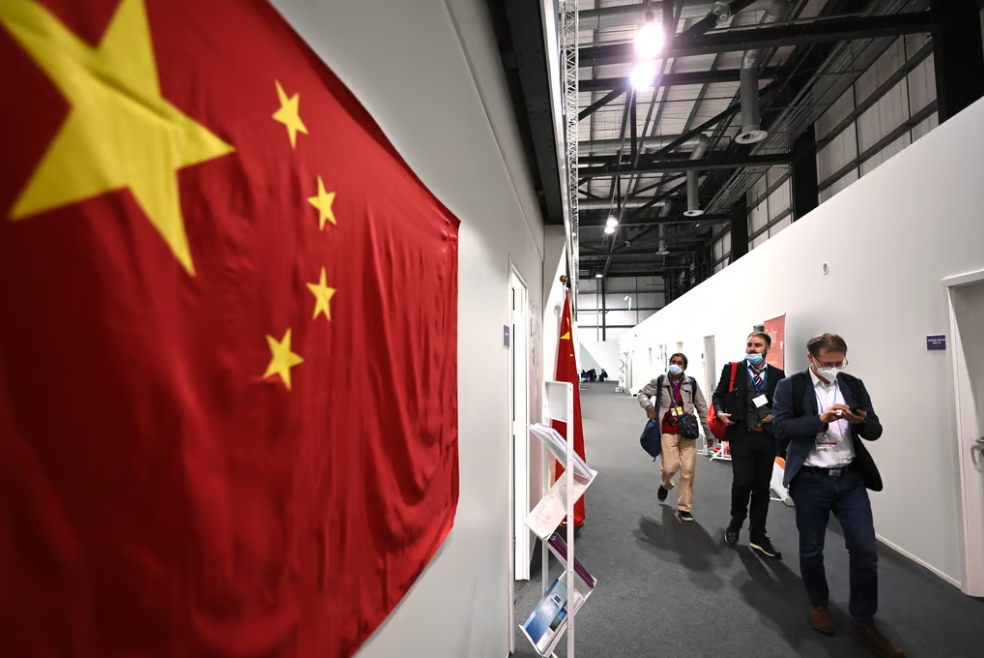
Last week, senior German climate negotiator Jochen Flasbarth told POLITICO that rich countries would only step up funding if China starts paying up.
The draft position also suggests that the EU may push to limit the list of possible beneficiaries or direct more money to countries that are particularly vulnerable to global warming, rather than allow all countries classified as developing to access the same level of funding.
The bloc "stresses the importance" of setting up a new funding target "while taking into account the needs and priorities of the most vulnerable countries," such as island nations and members of a group known as the Least Developed Countries. The document shows that an earlier draft referred more broadly to "the needs and priorities of developing countries."
The fight reflects a dispute last year over whether China would donate to a fund to support damaged communities. China stared down the demands from the U.S., EU and their allies, despite the UAE breaking ranks and becoming the first country from outside the traditional donor group to give climate finance through an official U.N. fund.
That fund garnered around $655 million. The showdown in November scales up the financial stakes many times over — with some developing countries setting $1 trillion annually as their starting negotiating point — and is seen by European diplomats as a moment to fundamentally break with what they view as an outmoded distinction between rich and poor.
It is not only China that is seen as an able contributor. Wealthy Gulf states, with their own huge legacy of climate damage via sales of their fossil fuel reserves, such as Qatar, UAE and Saudi Arabia, are likely to be pressured to stump up. Singapore will likely receive pressure, as well.
In the draft document, the EU also suggests that the bulk of the new target can't come from national budgets, underlining that "private investments will have to undertake the largest share of the required investment in low emissions, resource-efficient and climate-resilient development."
The draft position, which was discussed by EU member country officials on Tuesday, is still expected to change before the summit starts in Azerbaijan on November 11. Officials will try to refine the text in September before handing the matter over to ministers.
EU finance ministers are expected to agree on the funding element of the position at their meeting on October 8, with the final COP29 position signed off by the bloc's environment ministers on October 14.
Karl Mathiesen contributed to this article.
SOLAR: Texas surpassed California as the nation’s leader in solar installations last year, but a professor explains that has less to do with the state’s commitment to fighting climate change and is more about making infrastructure projects easy to permit and build. (The Atlantic)
ALSO:
OIL & GAS:
GRID:
UTILITIES:
SUSTAINABILITY: Texas A&M University faculty and students work with teachers from Texas’ Coastal Bend to research and develop lesson plans around renewable energy and sustainable agriculture. (Corpus Christi Caller-Times)
COMMENTARY:
SOLAR: A set of projects across Washington, D.C., and California mark the first time a company sold its Inflation Reduction Act solar tax credits to another company, a key tool to help encourage solar in new construction. (Canary Media)
ALSO:
OIL & GAS: Analysts predict Biden administration rules that curbed new and existing drilling could be taken even further under Vice President Kamala Harris. (E&E News)
CLEAN ENERGY: Solar and HVAC companies, advocacy groups, and other entities with a stake in the clean energy transition sign on to an initiative meant to spread the word about available Inflation Reduction Act incentives. (Axios)
GRID:
TRANSPORTATION:
ELECTRIC VEHICLES:
POLITICS: Federal prosecutors argue that a corruption trial involving former Illinois House Speaker Michael Madigan and alleged gifts from ComEd over several years should proceed despite a recent U.S. Supreme Court ruling. (Chicago Sun-Times)
SOLAR: The U.S. Energy Department plans a 1,000 MW solar installation on about 8,000 acres of the Hanford nuclear weapons production site in south-central Washington. (Canary Media)
ALSO:
CLEAN ENERGY: Data show the California grid met 100% of its electricity demand with renewable energy during 5- to 10-minute periods on 100 of the last 144 days. (news release)
ELECTRIC VEHICLES: A southern California city becomes the nation’s first to replace its entire fleet of gasoline-powered police patrol cars with electric vehicles. (Associated Press)
ELECTRIFICATION: The U.S. EPA awards Alaska organizations nearly $39 million to replace households’ fossil fuel based heating systems with electric heat pumps. (KTOO)
BATTERIES: A developer and a Colorado electric cooperative bring a 78.3 MW battery energy storage system online. (news release)
CLIMATE:
UTILITIES: Tucson, Arizona’s city council considers establishing a municipal utility as part of its goal to achieve community-wide carbon-neutrality by 2045. (Cronkite News)
HYDROPOWER: A firm deploys a 1.25 MW wave-energy generator at a U.S. Navy testing site off Hawaii’s coast. (Marine Technology)
HYDROGEN: California environmental justice advocates worry a public-private effort to establish a hydrogen production and distribution hub in the state could increase pollution if strict guidelines aren’t followed. (Grist)
OIL & GAS: Oregon advocates continue to protest a natural gas pipeline expansion even though developers began construction earlier this month. (KTVZ)
COAL: Wyoming officials predict a 25% dip in coal production from the Powder River Basin and weak natural gas prices could diminish mineral tax revenues and strain the state budget. (Cowboy State Daily)
OIL & GAS: Texas regulators announce they’ll investigate whether fracking is responsible for earthquakes in a county that recently experienced 61 seismic events in a week. (Houston Chronicle, Abilene Reporter-News)
ALSO:
TRANSITION: The Biden administration has ushered in billions in investment in West Virginia’s clean energy infrastructure while simultaneously opening the door for more fossil fuel growth, yet remains deeply unpopular with voters. (Charleston Gazette-Mail)
SOLAR: A federal board files a lawsuit challenging amendments to a law that extends Puerto Rico’s one-to-one net metering policy until at least 2031. (Associated Press)
WIND: Federal officials again gauge interest in offshore wind lease areas in the Gulf of Mexico after a company expresses interest in developing a commercial wind facility near Texas. (Louisiana Illuminator)
CARBON CAPTURE: The U.S. Forest Service is considering a draft rule to allow carbon storage under federal land after twice denying a company’s requests to do so under national forests in Louisiana and Mississippi. (Floodlight/Mississippi Today)
GRID:
BUILDINGS: A growing number of North Carolina officials call for a reversal of a state law that blocks building code updates until 2031, which Gov. Roy Cooper says will affect insurance and potentially cause the state to miss out on federal disaster recovery funding. (Port City Daily)
TRANSIT: Public transportation advocates launch a campaign to secure tens of millions of dollars to restore New Orleans’ bus transit service to levels of service not seen since Hurricane Katrina severely disrupted the system. (NOLA.com)
HYDROGEN: Researchers find elevated levels of hydrogen around geological features known as Carolina Bays, suggesting the possibility of “white” or “gold” hydrogen wells. (Sierra)
EMISSIONS: A federal appeals court declines to block the U.S. EPA’s new rules restricting emissions from coal and new gas-fired power plants, though it will still consider a case brought by West Virginia and other states. (West Virginia Public Broadcasting)
ELECTRIC VEHICLES: Philadelphians are increasingly buying electric vehicles, but many apartment dwellers and street parkers find it hard to install home charging and use limited chargers in the city. (Billy Penn)
SOLAR: Eversource says 11,600 of its Connecticut customers, most of them residential, installed solar panels in 2023 — up 60% from 2022’s total installations. (Hartford Courant)
CLIMATE:
CLEAN ENERGY: U.S. Agriculture Secretary Tom Vilsack announces Maine will get $4.3 million from the Rural Energy for America Program to help farmers install clean energy and make efficient building improvements. (News Center Maine)
CARBON CAPTURE: Gas industry groups celebrate a new Pennsylvania law paving the way for a carbon capture and storage industry, though some environmental groups say it will prolong the gas industry’s life, and that carbon capture wells can be dangerous. (StateImpact)
BUILDINGS:
OIL & GAS:Pennsylvania advocates celebrate a court’s ruling earlier this month that will let them challenge permits issued for a gas pipeline expansion slated to cross Monroe and Luzerne counties. (Lehigh Valley News)
GRID: A Maryland transmission project meant to shore up power reliability in the face of growing power demand becomes a point of contention in the state’s U.S. Senate race. (Baltimore Banner, WBAL)
STORAGE:
NUCLEAR: Women in the nuclear power industry gather at a Pittsburgh conference. (WTAE)
COMMENTARY: Two New York state lawmakers call on Gov. Kathy Hochul to employ the state’s public power authority to build out 15 GW of new clean energy projects by 2030. (City & State)


.svg)
