

 Back
Back
After insisting it wasn’t needed, Duke pitched a “large load tariff” for big energy users — a concession to critics before a hearing on its proposed rate hike.
For months, clean energy and consumer advocates in North Carolina have pressed Duke Energy to follow the national trend and create special rules and prices for data centers. The state’s predominant utility insisted such rules were unnecessary, rejecting claims that the power-hungry facilities could overwhelm the grid or burden households with unfair costs.
But now, the company is changing its tune.
In testimony submitted to the North Carolina Utilities Commission in late June, Duke proposed what it calls a “large load tariff” — a scheme by which data centers and other big electricity customers would pay a minimum bill amount for at least a decade, no matter their actual power use.
The transparent setup would replace the confidential, one-off service agreements that Duke makes with large energy users now. The system would result in a “measured set of customer protections” as data centers flock to the state, the company said.
Duke recently raised its 2035 forecast of electricity demand from large customers to 8 gigawatts in the Carolinas — an increase of 2 gigawatts since its projection from last year — with most of the new growth expected in the form of the gigantic computer warehouses. The company is using that prediction to help justify building a whopping 9.7 gigawatts of new gas plants over the next decade.
Around the nation, large load tariffs are gaining steam as states scramble to prevent the AI boom from exacting an enormous cost on consumers and the climate. At least 75 such tariffs have been proposed or approved in some 35 states, according to data tracked by the Smart Electric Power Alliance and the North Carolina Clean Energy Technology Center.
Duke’s about-face on large load tariffs comes as it prepares to defend its deeply unpopular bid to raise electricity prices at commission hearings that begin July 7. The company has lowered its original rate request but still seeks an increase of 11.6% over two years for residential customers.
The reversal on data centers follows advocacy from the state’s attorney general, state-sanctioned consumer advocate Public Staff, and clean energy groups — all of which have argued for large load tariffs.
“This is a welcome development,” said Munashe Magarira, senior attorney with the Southern Environmental Law Center, which is representing the Southern Alliance for Clean Energy, the North Carolina Housing Coalition, and other nonprofits at the commission as it weighs Duke’s rate-hike request.
“It builds on hard work that’s been done to push the commission to address these issues head on because of the impact large customers will have for the utility, the grid, and society as a whole in North Carolina,” he said.
Still, Magarira said, Duke’s proposal falls short in a few ways. The company recommends that large electricity users pay at least 75% of their maximum potential energy use, instead of the 85% proffered by advocates. The tariff would make minimum contract terms of 10 or 15 years — less than the 20 years proposed by the nonprofit coalition. And it would only apply to customers with loads of at least 50 megawatts, as opposed to the 25-megawatt floor that the nonprofits pushed for.
Advocates say these details matter because it’s vital to minimize risk as much as possible: If Duke builds expensive gas-burning power plants and other infrastructure in anticipation of data centers that don’t materialize as planned — a distinct possibility, according to some analysts — households could be left holding the bag.
Even more concerning for Magarira: Duke doesn’t appear to propose that data centers become a new class of customers. Instead, it offers to standardize the bilateral service agreements it already signs with tech companies.
The distinction is more than semantic, he said. A separate customer class would better enable regulators to design rates tailor-made for data centers and their immense energy needs.
“If the projections are right, we’re facing a pretty unique moment with regards to electricity growth,” Magarira said. “We think there’s a real need to create a separate customer class for these customers — just given how different they are.”
A final overarching concern: Duke’s most recent filing fails to mention a “clean transition tariff.” Such programs are vital in vertically integrated electricity markets like North Carolina’s, where entities that want 24/7 carbon-free energy can’t independently contract for it. Only Duke can sell them electricity, so if Big Tech firms want to pay for clean electrons for their data centers — as many say they do — they need a program like a clean transition tariff that lets the utility serve as a go-between.
A handful of other states have enacted clean transition tariffs. In North Carolina, the idea has been bandied about for years, and Duke has publicly agreed to consider it. But the utility has never formally proposed such a tariff to regulators.
“Let large customers who want to be good corporate citizens, who care about the environment, have the opportunity to purchase incremental clean energy to meet their power consumption,” Magarira said. “That feels like a win-win for everyone involved.”
Duke declined to comment for this story, pointing instead to its testimony. The five-member Utilities Commission could open a separate docket on the large load tariff proposal. Otherwise, its decision on that and other matters in the rate case is expected this fall.
The unicorn startup launched its first move outside its home state of Texas, pitching low-cost energy and backup power in northern Illinois.
PJM Interconnection, which serves 67 million people across 13 states from the mid-Atlantic to the Midwest, has become a poster child for how not to keep up with soaring energy demand. Startup Base Power is taking a whack at that problem by installing a network of unusually large home batteries in one corner of that regional grid.
Starting today, the first 2,000 customers in Illinois utility ComEd’s territory who sign up with Base Power can get a 40-kilowatt-hour home backup battery for just $95 up front. Subsequent customers will pay $295, still a mere sliver of the $10,000 or more that a backup-capable home battery normally costs. All these customers will then buy retail electricity from Base Power at a 25% discount to the prevailing ComEd rate, which was 10.4 cents per kilowatt-hour this summer. Customers sign a 12-year battery agreement, but can pay a $500 deinstallation fee if they want out early.
This business model gives customers in Chicagoland more options for cheap and resilient power while also giving Base Power the rights to operate the battery fleet in response to broader market dynamics. Base Power will be adding capacity in the northwesternmost territory of the constrained regional grid, but its unique model allows it to avoid PJM’s ossified procedures for expanding large-scale grid production.
“We are deploying capacity behind the meter at the residential home, where an interconnection already exists, so we don’t wait in the interconnection queue,” said Base Power’s founder and CEO Zach Dell. “There’s some work around that, but it’s certainly less onerous and much faster than the large-load interconnection queue.”
PJM famously hosts the densest corridor of data centers, in northern Virginia, but the AI buildout has taken off in Indiana, Ohio, and Pennsylvania as well. While hyperscalers stare down yearslong waitlists for new gas turbines to meet their colossal power needs, Base Power can install miniature power plants every day, which add up over time.
The Illinois offering is even cheaper than Base Power’s prices in its home state of Texas, where it has installed more than 500 megawatt-hours of storage since it launched in 2024. Base Power operates most of that in the Texas’ freewheeling, competitive energy market, but it also is working with a cooperative utility to install 100 megawatts of instant discharge capacity at customer homes over the next two years.
Base Power’s two-part pitch of customer benefit and aggregated grid resource has made it arguably the most effective fundraiser in the residential battery space — it netted a billion-dollar raise last fall from mainstream VCs like Andreessen Horowitz and Valor Equity Partners, an early backer of Tesla and SpaceX. Base Power needs that cash to fuel its vertically integrated model: It designs, manufactures, markets, installs, owns, and operates all the batteries in-house.
After a few years of tremendous growth, though, the question had remained whether this model would work outside the particularities of the Texas market. Now, Base Power is staking a claim on a new state that provides access to the country’s biggest regional power market.
Several layers of policy and regulation made Illinois the right entry point for Base Power in PJM. The state allows retail competition, so Base Power can sell power directly to customers. However, it still has to get permission from a wires utility to hook up the batteries to the distribution grid, and ComEd stood out as a partner.
“ComEd, they’re an innovative utility,” said Travis Kavulla, Base Power’s head of policy, who on Monday was tapped to run the Bonneville Power Authority, a New Deal–era federal power agency. “They’ve done things that other utilities have not done.”
In particular, ComEd has rules that compensate homes at market rates for discharging power to offset high capacity prices in PJM. These rules emerged from a recent revision to the long-standing net-metering policy, which originally paid homes for shipping excess rooftop solar to the grid; now, the policy also allows stand-alone batteries to export power and participate in the market.
Base Power will also tap into a new Illinois policy to encourage virtual power plants that was created by the Clean and Reliable Grid Affordability Act, which became law in January. Starting this summer, battery customers can receive a rebate if they install a battery and agree to discharge it to the grid for multiple hours during the evening peak on a certain number of summer nights. It’s a simple way to ensure that the batteries make themselves useful, and Base Power will apply that rebate to support its very low pricing.
All this means that Base Power will not rely on specific PJM programs to make money in Illinois. The grid operator is working on a new mechanism for distributed energy resources to play a broader role in capacity markets, in response to the Federal Energy Regulatory Commission’s Order 2222. That process will have its first auction next month, to pay for capacity in 2028 and 2029, Kavulla noted.
“Our approach is not something that has to wait on that. It’s more ready to go to market if you’re configuring it on the retail side through a competitive retailer, in the way we’re doing it,” he said.
Down the road, the startup could tap another source of revenue by selling aggregated capacity to hyperscalers that need power for new data centers. Google signed a bilateral deal with demand-response provider Voltus to do just that in PJM. Sunrun, Tesla, and Renew Home just announced a national strategy to tap existing home batteries and smart thermostats to sell capacity to data center customers. Dell confirmed that Base Power is in talks with data center clients, but said his Illinois strategy does not depend on that kind of deal.
Whether or not Base Power deals directly with data centers, the households in Illinois are feeling upward pressure on their energy bills as the region struggles to supply the AI arms race. Some governors have threatened to exit PJM if the capacity costs keep rising, though that would take years of thorny wrangling to execute. If other PJM states want to do something to help customers short of the nuclear option, they could look to the ComEd policy that rewards households for peak exports.
“One of our takeaways here is that if you’re a state in PJM, this is something that you can kind of cause your utilities to do,” Kavulla said.
The clean energy giants are uniting their home batteries and smart thermostats to help tech giants power booming, AI-driven data centers without crushing the grid.
The leading U.S. providers of rooftop solar, home batteries, and grid-responsive smart thermostats have combined forces to create what could be the country’s biggest virtual power plant — or, more precisely, a lot of VPPs in data center hot spots.
On Wednesday, Sunrun, Tesla, and Renew Home announced an agreement to “deliver more than 16 gigawatts of flexible energy capacity” to tech giants and utilities around the United States. Those gigawatts will be produced by hundreds of thousands of home battery systems managed by Sunrun and Tesla, as well as more than 8 million smart thermostats and devices managed by Renew Home.
These batteries and smart thermostats are already installed in homes and businesses across the country, Paul Dickson, Sunrun’s president and chief revenue officer, told Canary Media. Some are enrolled in utility or grid programs that call on batteries to discharge, or thermostats to turn down energy use, during the handful of hours per year when grid demand is at its peak, he said.
But he noted, “Most of the constructs for these distributed power plants are tapping into the resources a fraction of the time they could be realized.” This new partnership is meant to “further legitimize these devices as core dispatchable, capable resources.”
Wednesday’s announcement is just the latest — and biggest — proposal for solving the country’s rising energy costs and grid congestion challenges through the power of distributed energy.
The aggregated energy-injecting and load-shifting capacity of batteries, smart thermostats, electric vehicle chargers, and remote-controllable appliances such as water heaters could add 80 gigawatts to 160 gigawatts by 2030, or roughly three to five times what’s now available across the country, according to analysis from the U.S. Department of Energy. VPP deployment at that scale could save U.S. utility customers about $10 billion in annual grid costs, the DOE estimated.
To make that happen, VPP companies need to coordinate with — and convince — utilities, regional grid operators, and state and federal regulators that distributed energy resources can do the work of traditional power plants. That’s easier said than done. The grid has been designed to deliver electricity from central power plants, not to rely on thousands of customer-owned devices turning on and off in unison to keep supply and demand in balance.
But traditional ways of managing the grid are falling short in the face of booming demand from the massive data centers that tech giants like Amazon, Google, Meta, Microsoft, and Oracle are building to fulfill their artificial intelligence ambitions. Some states are already seeing big spikes in energy costs due to data center growth. Across the country, lawmakers and regulators are demanding that developers of these facilities find ways to finance their own energy resources to avoid pushing more costs onto everyday consumers.
That’s putting pressure on tech giants to pursue novel approaches, from shifting when they use power, in order to avoid stressing the grid during times of peak demand, to investing in VPPs that can do the same work.
Home batteries and thermostats obviously can’t power data centers around the clock, Dickson said. But they can “solve elegantly for your peak-capacity needs, which is the bottleneck for data centers getting connected,” he said. “We want to provide for getting more data centers online in a way that doesn’t strain the grid or cause costs for customers to rise.”
Sunrun, Tesla, and Renew Home have a lot of existing customers to work with. Sunrun and Tesla already operate hundreds of megawatts of battery-based VPP capacity, including large-scale aggregations in California, New England, Texas, and Puerto Rico. And Renew Home — a spinoff of Google Nest’s smart-thermostat energy-shifting service Nest Renew and California startup OhmConnect — has partnered with major energy retailer NRG Energy to aggregate a gigawatt of flexible capacity in Texas, and is working with utilities in Arizona and other states.
Lots of companies are promising similar solutions. Voltus, a major U.S. demand-response and VPP aggregator, launched its “bring-your-own-capacity plan” last year, targeting tech giants struggling to interconnect to overburdened power grids. Earlier this month, Voltus and Google announced plans to develop 100 megawatts of this distributed capacity as part of the tech giant’s broader efforts to finance new energy resources for its expanding data center footprint.
Data centers want to “lock in that capacity, which is important to them,” Voltus’ CEO Dana Guernsey told Canary Media in early June. “They’re giving us the right signals to build, which we can take to our customers to save them money. And it’s not putting the cost on the ratepayers.”
The more data centers are willing to pay for VPP capacity, the more companies can offer customers to participate in them, Dickson said. Sunrun and Renew Home have paid out nearly $70 million to customers participating in existing grid-services programs, he added.
Low-income households could particularly stand to benefit if these programs prioritize these customers, according to a recent study by consultancy Brattle Group for the Natural Resources Defense Council. It found that if programs directed energy efficiency and VPP investments from data centers to lower-income customers in four cities — Atlanta; Memphis, Tennessee; Kansas City, Missouri; and Columbus, Ohio — participating households could save from $50 to more than $1,000 per year on their utility bills.
It’s not yet clear how Sunrun, Tesla, and Renew Home might deliver additional savings to customers at large. The companies didn’t disclose which existing or in-development VPP programs or data center opportunities they’re jointly pursuing.
But they are staking claims in key markets, including northern Virginia’s “Data Center Alley,” where massive data center expansions are pushing the grid to its limit, driving lawmakers and regulators to explore policies to limit cost and environmental impacts. Sunrun, Tesla, and Renew Home claimed they collectively have “more than 300 megawatts of capacity readily available for immediate deployment” in the region, which they expect will grow to at least 500 megawatts by 2030.
Sunrun, Tesla, and Renew Home also intend to provide VPP capacity to PJM Interconnection, the country’s biggest energy market, where power costs are spiking because of new data centers and PJM’s inability to bring new generation resources online. Specifically, the companies plan to commit capacity to PJM’s upcoming reliability backstop procurement, which is being designed to encourage data center developers to pay for new resources to match their grid impacts.
Renew Home has a lot of smart thermostat–equipped customers in the 13 states and Washington, D.C., region who are served by PJM but aren’t yet enlisted in VPP programs, CEO Ben Brown told Canary Media. “We have over a gigawatt of capacity in the ground, installed, flexing every day, providing savings for customers every day,” he said.
Last year, Renew Home ran tests of the potential grid relief those thermostats could provide, and found that customers were able to reduce summertime peak demand by about 380 megawatts over three consecutive afternoons, he said. That represented a little less than half its available “fleet” of customers, he added.
Dickson highlighted other parts of the country where the three companies have capacity to spare. According to the partners’ calculations, they can collectively relieve grid stresses for roughly two hours at a time by about 4.7 gigawatts in California, about 1.7 gigawatts in Texas, and about 1 gigawatt across Illinois and Ohio.
The number of home batteries and smart thermostats available for future service could expand if data centers are willing to pay more for these services, Dickson said. “Unlike a traditional power plant, this number grows every single day.”
The flow has been stop and go for the first few months, but the line shows plenty of potential to boost Massachusetts’ renewable energy supply.
When the New England Clean Energy Connect transmission line started carrying electricity from Canada into Maine in January, supporters hailed the project as a triumph for renewable power. Now, after nearly six months of operations, the early numbers raise questions about whether the project will be able to advance the region’s energy transition as much as advertised.
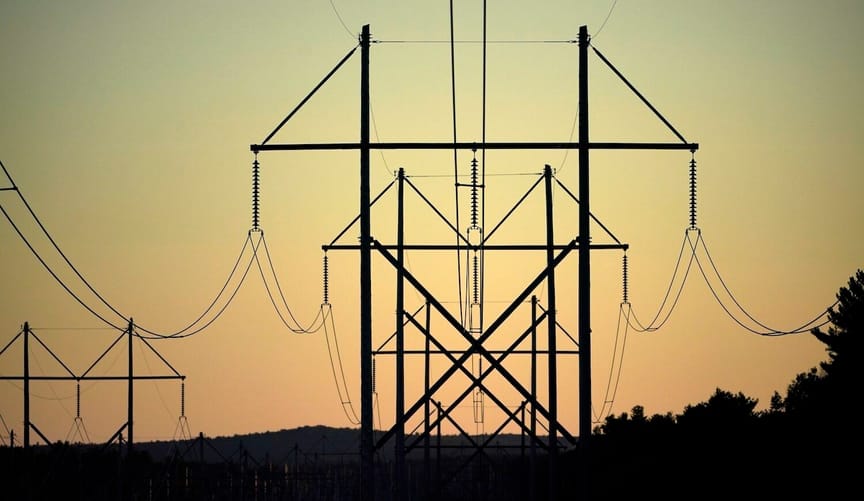
Energy flow into New England is up just marginally, and there have been roughly 27 days when no power at all traveled along the new line, commonly called NECEC. If current trends hold, New England will receive less hydropower this year over two transmission lines than it did over just one line in 2023 and previous years.
“What we’ve seen so far is not what some people expected to see,” said Joseph LaRusso, manager of the Clean Grid Program at climate nonprofit Acadia Center.
Potentially putting further strain on the supply of Canadian hydropower is the Champlain Hudson Power Express, a transmission line that started sending electricity from Quebec into New York City this month.
NECEC has its origins in a 2016 Massachusetts law that required the state to procure 1.6 gigawatts of offshore wind power and another 1.2 gigawatts of additional renewable energy. The plan was to contract with state-owned Canadian power supplier Hydro-Québec to tap into the region’s abundant hydropower resources and build a new transmission line to carry the electricity south.
The first proposal — a 192-mile project through New Hampshire — was abandoned in 2019 after public outcry about the impact on the state’s forests. The transmission line through Maine faced similar controversy. In 2021, a statewide referendum vote put the project on hold until 2023, when a jury ruled that the development could be restarted.
Two and a half years later, NECEC came online and started carrying the first electrons into New England. It’s certainly a notable achievement in a time when the Trump administration has been doing all it can to stop progress on clean energy, including offshore wind — the cornerstone of the Northeast’s decarbonization plans. And although the results so far have been mixed, some see potential for the line to make a sizable impact on New England’s clean energy future.
When NECEC came online earlier this year, Massachusetts Gov. Maura Healey, a Democrat, and climate advocates touted it as a major win for the state’s renewable energy goals and a way to save residents money on their utility bills. Massachusetts contracted with Hydro-Québec for 9.55 terawatt-hours of hydropower per year, roughly 20% of the state’s annual electricity demand.
The operations have not had the smoothest start. NECEC was completely inactive for several spans — from a half day on April 28 to nearly two weeks at the end of May and beginning of June. The most recent outage was due to “technical difficulties,” Hydro-Québec spokesperson Lynn St-Laurent said in a written statement.
“Once repairs were completed, deliveries resumed,” she said. “With any new transmission infrastructure, a period of optimization and fine-tuning is to be expected.”
Still, most of the time, hydropower has flowed steadily on the new infrastructure. Through the end of April, Hydro-Québec exported about 2.4 terawatt-hours of power on the transmission line.
If the power is (mostly) moving as planned, why are some people still skeptical that the project will deliver the promised benefits? Because so far, it hasn’t done much to add to the total supply of renewable energy in New England.
Before NECEC, New England already imported significant amounts of hydropower on a transmission line known as Phase 2, which runs from Quebec into central Massachusetts. In 2019, the year the Massachusetts regulators approved the contracts between utilities and Hydro-Québec, more than 12 terawatt-hours traveled onto the New England grid over the line.
But starting in 2023, Hydro-Québec started selling less and less energy to New England over Phase 2. For nearly three weeks in early 2025, exports ceased entirely. Through the end of April this year, just over half a terawatt-hour has come south over that line. On paper, it can look a lot like NECEC isn’t allowing more energy into New England but is instead just giving it a new road to travel along.
“We’re not seeing much net new flows coming from our neighbors,” said Dan Dolan, president of the New England Power Generators Association. “We are running pretty close to the net energy flows we had in 2025, which were the lowest amount of imports that New England has ever gotten from Quebec.”
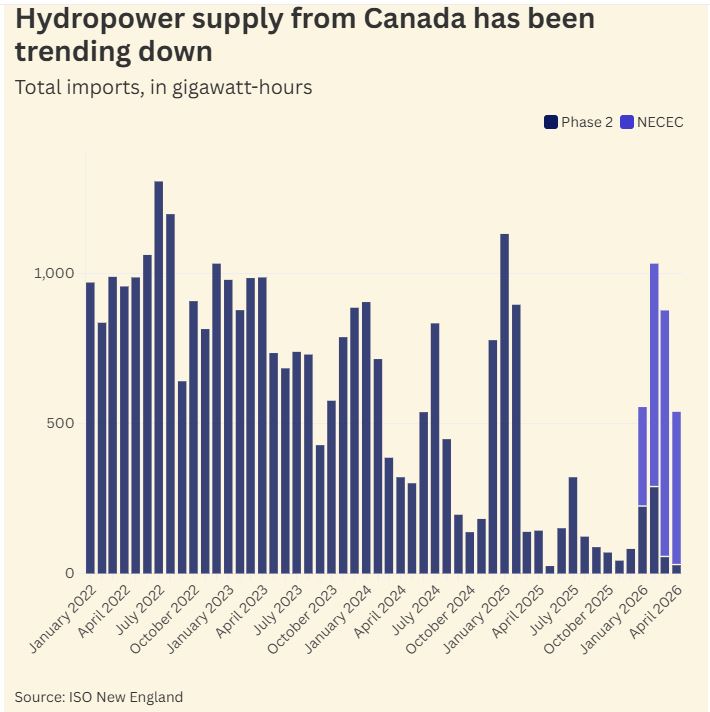
At the same time, Quebec has started importing power over the Phase 2 line, a rare occurrence before 2025. In the first four months of this year, more than 500 gigawatt-hours traveled into Canada on the line. Because New England’s electricity supply relies heavily on natural gas generation, the region is still burning fossil fuels to ship energy north even though it is receiving hydropower for its own use.
“We’re seeing a heavier natural gas burn on the rest of the generation fleet than I think many of those states had assumed going into this year,” Dolan said.
The main driver behind slowing exports seems to be the drought conditions that have lingered in Quebec for the past few years. During wetter periods, the hydropower industry uses large reservoirs to store water to help it ride out these drier times, said Gilbert Bennett, a senior adviser for WaterPower Canada, a hydropower trade group.
As generators wait for rainier days, their first obligation is to supply domestic customers, he said. That means there will likely be times when Hydro-Québec needs to import electricity over the Phase 2 line to offset some of the hydropower it is contractually obliged to send to Massachusetts over NECEC.
“Electricity flows between Québec and New England are dynamic and vary continuously based on market conditions and system needs on both sides of the border,” St-Laurent said.
Financially, New England customers should not be at risk from these ongoing shifts, LaRusso said. Massachusetts’ contract with Hydro-Québec includes provisions that require the Canadian company to pay financial penalties if it fails to deliver according to its contract.
“To the extent that imports are curtailed, Hydro-Québec is liable to make the electric utilities whole for the cost of replacement power,” LaRusso said.
It is less clear whether NECEC will boost Massachusetts’ renewable energy supply in the long run.
Still, the new transmission line has at times demonstrated its potential to help New England achieve a cleaner energy supply, LaRusso said. He pointed to May 16, a sunny day when solar power reduced demand on the grid and NECEC was going full tilt. Natural gas plants were running at low levels, and most of the power was heading to New York. For a short time, all the region’s power needs could be met by nonfossil fuel resources.
“Hypothetically, [grid operator] ISO New England could’ve turned off its gas generators,” LaRusso said. “It really gets you thinking of the resources available and how they could be managed and shared in the future.”
Bennett is also confident in the long-term outlook. In general, he said, climate change is forecast to create wetter conditions in Quebec. And the region is investing heavily in additional hydropower facilities as well as onshore wind. The years to come, he said, will bring plenty of renewable resources to share with Canada’s southern neighbors.
“Over the long term, we see a bright future,” Bennett said.
Most U.S. grid operators already use OATI’s software. Now the firm wants to tap AI and data to boost transmission capacity — and it’s asking the DOE for funding.
A major grid-tech company is asking the Trump administration to fund a project it says could significantly boost the nation’s ability to move power around — without building a single new transmission tower or line.
Open Access Technology International (OATI) is a Minneapolis-based firm whose software is used by nearly every North American transmission grid operator to manage the flow of electrons. Now, it envisions developing new features for that software. Huge amounts of data, parsed by artificial intelligence, would be used to more accurately calculate how much power can run along power lines — providing both real-time estimates and forecasts days and weeks into the future. That intel would be automatically shared among neighboring grid operators, allowing them to make better decisions about how to run their networks.
If all goes to plan, OATI says the facelift could accomplish a 10% to 20% increase in capacity across participating systems by 2030.
OATI unveiled its scheme in a May proposal for an undisclosed amount of money from the Department of Energy’s $1.9 billion SPARK grant program. The program uses money from the 2021 bipartisan infrastructure law, in a somewhat rare example of Biden-era energy funding spared from the Trump administration’s clawbacks.
The company’s proposal is a kind of “grid-enhancing technology,” a family of hardware and software that could squeeze more capacity out of the nation’s increasingly congested grid. These solutions have the potential to save the nation billions of dollars in excess power costs by unclogging transmission bottlenecks that prevent cheap electricity, much of it from wind and solar farms, from reaching places that need it. That could help curb skyrocketing utility bills for households and businesses.
The problem in the U.S. today is that these tools are almost exclusively deployed as pilot projects on one power line at a time. To achieve the big savings, multiple utilities and grid operators will need to use this tech in a coordinated way across the country’s region-spanning transmission networks.
OATI — with its decades of data and vast existing connections across the power industry — thinks it can catalyze that sort of large-scale deployment. It’s already enlisted a sizable group of partner organizations that have agreed to implement the new software add-ons, among them the grid operators California Independent System Operator, New York Independent System Operator, and Southwest Power Pool; the utilities Dominion Energy, Duke Energy, NextEra’s Florida Power & Light, PacifiCorp, and Portland General Electric; and the electricity cooperatives Great River Energy and Lakeland Electric.
John Engel, OATI’s associate vice president of strategic marketing, noted the company would bring significant matching funds to the table to deploy its software.
“What we can do is across 95% of North America,” Engel said. “There’s a speed and scale there that’s unique — and the [Trump] administration has said they want fast, durable, and cost-effective solutions.”
One of the key goals of OATI’s proposal is to deploy a version of a technology called dynamic line rating, or DLR. Over the past 20 years, DLR has evolved from devices that clip onto power lines, to sensors on transmission towers that monitor lines via optics and electromagnetics, to software-only approaches — like OATI’s — that use weather and grid data.
All these different methods have a common purpose: to determine the constantly changing true capacity of high-voltage power lines.
Quite often, that true capacity is greater than the traditional “static” ratings assigned to power lines, which don’t take weather and wind speed into account. For example, breezy conditions can cool lines, allowing them to safely carry more electrons at the same time that wind farms are generating the most energy.
Armed with this knowledge, operators can dispatch higher levels of power flows across parts of the grid they’d otherwise have to curtail. In a 2024 report, the DOE estimated that widely deployed DLR could increase existing grid capacity by roughly 80 gigawatts, saving billions of dollars in transmission infrastructure costs.
DLR in the U.S. has been hindered by a fractured regulatory landscape and the fact that transmission-owning utilities earn money by investing in new infrastructure, not by installing technology that makes their existing grids operate more efficiently. But players in Europe have been using the tech in a systematic way for more than a decade. Belgian grid operator Elia has achieved an average 30% increase on its transmission grid using DLR.
OATI, for its part, already has some experience tweaking line ratings based on weather, said Kevin Sarkinen, the company’s chief operations officer.
Back in 2021, federal regulators ordered all transmission operators to start using ambient adjusted ratings — essentially, hourly ratings based on daily temperature forecasts — by July 2025. OATI’s platform has already integrated those ratings into its transmission capacity calculations. “Now we’re adding in the capability for the DLRs,” Sarkinen said. That will bring in additional real-time data, like cloud cover, heating from the sun, and, most importantly, wind speed and direction, which have a huge impact on power line capacity.
The U.S. hasn’t been standing still on DLR. Deployments in Indiana, Minnesota, New York, Ohio, Pennsylvania, Texas, Virginia, and other states have shown the technology can significantly increase capacity on individual power lines.
But getting more headroom on one line only gets you so far on a networked grid that must operate as a unified whole. As a 2019 DOE report put it, “DLR has the potential to expand the Nation’s power highway system, but the exits and intersections must be capable of using that new capability for it to be worthwhile.”
OATI wants to leverage its broad customer base to make such an integration possible, Sarkinen noted. It will work the real-time DLR data into its software suite, which 95% of North American transmission operators use to share information about their available capacity and to manage the flow of power across networks.
The firm also plans to leverage its AI-informed Genie platform to boost the usefulness of all these figures. It’s been deploying that tech with California’s grid operator over the past two years, Engel said, processing large amounts of data to quickly decide how to safely reconfigure systems when power plants go offline or individual transmission lines are overloaded.
In this new use case, OATI’s Genie platform “looks at the modeling and coordination of these grid operators, and applies some AI technology to these coordination processes to increase the accuracy of the grid,” Sarkinen said. The AI applications allow for “constant assessment of how accurate your calculations were” as well as forecasting “if you want to make capacity available tomorrow or next week.”
OATI and its partners hope to start turning these technology deployments into real-world grid capacity improvements by the third and fourth years of their joint project, Sarkinen said. That’s practically light speed in the world of transmission, where construction of a single line can sometimes take decades.
All this is easier said than done.
OATI may not get the DOE funding, although company executives said they plan to move forward with the initiative regardless.
And the project could face unforeseen technical hurdles and delays. The new features are still works in progress, and even though they are based on lots of data, dynamic line ratings are still just estimates. Utilities and grid operators will need to learn to trust the data for both real-time decisions and forecasts, since these organizations make commitments to transport energy hours, days, or even weeks in advance.
“We can’t perfectly predict the weather, and we have to integrate that uncertainty into how we operate the grid,” said Aidan Tuohy, director of R&D for transmission operations and planning at the Electric Power Research Institute, a nonprofit utility research organization that’s working on a range of grid-enhancing technology projects with partners including OATI. But the latest advances in AI are increasingly useful in “using past data to predict what’s going to happen,” he said, by cross-checking ongoing forecasts against historical data from grids operating under similar conditions.
A lack of confidence in these weather-based predictions is one of the main barriers to making the most out of DLR, said Georg Rute, CEO of Gridraven, a startup that’s deployed its technology across Finland’s national grid and relocated to Texas last year to support plans to expand in the U.S.
“What I hear from the engineers, who have a veto right at transmission companies to turn on DLR, is that they don’t have the confidence that the forecasts work,” he said. “That is the real blocker. It’s not so much the incentives or the regulation.”
But although sticking with the status quo may be simpler, all U.S. utilities and grid operators are under federal mandate to integrate grid-enhancing technologies into how they bring new power generation online and make long-term plans for expanding their grids — and to find near-term ways to manage strains caused by power demand from data centers.
Meanwhile, utilities are struggling to manage a “more complex grid, with more exchanges between regions, more data centers, more variable and distributed resources,” Tuohy said. “Having the data to make decisions is going to become increasingly important.”
A correction was made on June 10, 2026: This story originally misstated that OATI executives declined to comment on whether they would move forward with their grid-enhancing tech project without DOE funding. Executives have clarified they plan to move forward with the initiative regardless of whether it secures the federal funding.
The Tumbleweed installation just went online in Kern County. It can store clean energy and discharge it for eight hours straight, a harbinger of what’s to come.
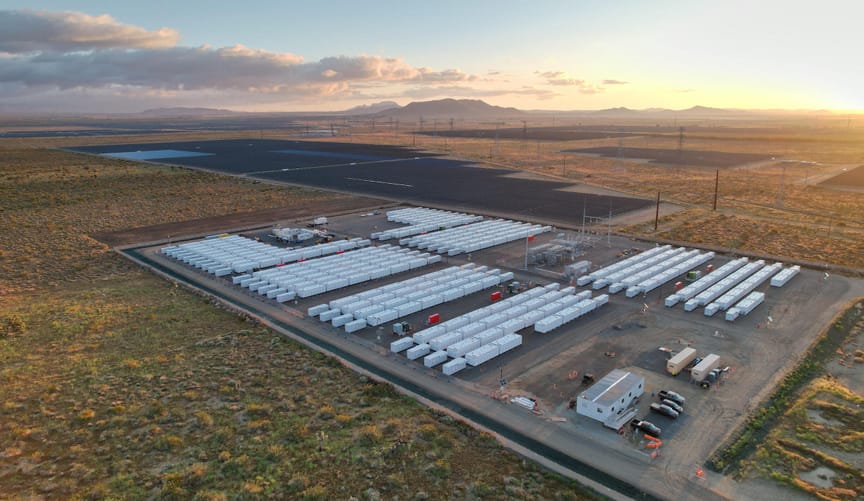
On June 1, the Tumbleweed project in California’s Kern County became the first major battery installation in the U.S. that can discharge power for up to eight hours at a time — twice as long as typical energy-storage facilities.
The U.S. power sector now builds more battery storage capacity than any other form of on-demand power, like gas, nuclear, or geothermal. But battery developers typically design their projects to discharge at maximum capacity for four hours before running out of juice; that’s what has made sense, so far, given equipment costs and market opportunities. Analysts have concluded that longer-duration storage is needed to cost effectively power the grid with clean energy 24/7.
Consequently, California regulators in 2021 ordered power companies to procure longer-duration storage as part of the state’s planned transition to zero-carbon energy. California Community Power, a consortium of local nonprofit power providers, issued a contract for Tumbleweed back in 2022 to fulfill this obligation.
“This was one of our first eight-hour contracts in the country for batteries, and now it’s one of the first projects online, and it’s a complex deal with a bunch of members coming together,” said Alex Morris, general manager of California Community Power. “It’s designed to be part of the clean energy mix, helping capture the solar and discharge that later when they need it.”
Granted, the system’s 125 megawatts of instantaneous capacity are modest compared with the multi-hundred-megawatt batteries getting built elsewhere in the West. But Tumbleweed is far bigger than the 6-megawatt, eight-hour battery installed in Nantucket in 2019 for a special-case island power role, and larger than the 50-megawatt, eight-hour battery that went live in Australia in May. Tumbleweed has finally delivered eight-hour storage at a meaningful scale to test what this emerging resource means for the grid.
The patch of inland Southern California that surrounds Tumbleweed resembles Texas, said Cody Hill, who leads storage development for Rev Renewables, which built the project. It’s a flat, scrubby desert that’s hosted ample oil production for decades and more recently turned into a hot spot for wind turbines, vast solar arrays, and batteries. Rev picked up a parcel there that was too small to fit serious solar capacity but just right for an energy-dense battery installation.
Rev built the site in two phases, first activating 125 megawatts with four hours of duration back in the summer of 2024. Ava Community Energy, the locally governed nonprofit that secures electricity for customers in Alameda and San Joaquin counties, paid for 50 megawatts to serve its capacity obligations. For two years, Rev used the rest of the available capacity as a merchant power plant, bidding into the markets run by the California Independent System Operator.
To convert this very regular four-hour battery into a groundbreaking eight-hour battery, Rev “literally doubled the number of battery boxes on the site,” Hill said. “Technology-wise, the differences are pretty trivial.”
Rev hired the same construction firm, Mortenson, to build both phases sequentially, so lessons learned during the first stage ensured that “the expansion went really smoothly,” Hill added. Now, Ava controls 50 megawatts with eight hours’ duration, and California Community Power can use 75 megawatts with eight hours’ duration.
Any grid needs power 24/7, and by law, California is working to provide that without burning fossil fuels by 2045. At the highest level, the state’s strategy is to build as much solar power as possible and add enough storage to spread that throughout the day (and then hope that a major floating offshore wind complex materializes sometime in the 2030s, but that’s another story).
At this time of year, California gets strong solar generation from around 8 a.m. to 6 p.m.; Tumbleweed can fill up on that very cheaply, given its proximity to the sun-drenched solar fields, and then push that clean energy back onto the wires for another eight hours, say from 6 p.m. to 2 a.m. That leaves six low-demand hours while most people are sleeping; California currently serves the 2 a.m. to 8 a.m. period with a mix of wind, nuclear, geothermal, hydropower, and some fossil gas. If this eight-hour battery format takes off, California would have a clear path to serving clean electricity for nearly all of a typical 24-hour cycle.
That’s the theory, anyway. California Community Power and Ava are deciding exactly how to operate their portions of Tumbleweed in California’s wholesale markets in order to fulfill their capacity obligations and maybe even generate savings for their customers. The real run-time data will tell the full story.
People generally agree that at some point between now and a 100% clean grid, renewables will produce such an abundance that they’ll effectively require longer-duration bulk storage to distribute that power through the day and night. But experts and grid planners have not formed a consensus on when exactly that tipping point will hit.
Regulators at the California Public Utilities Commission originally mandated the state’s utilities to start obtaining some long-duration storage by 2026, to figure out what it takes to build this new kind of project. Later, the commission punted its own deadline to 2031. This happens sometimes when investor-owned utilities, armed with vast capital budgets and legions of in-house experts, fail to deliver on deadlines they’ve known about for years. The scrappy teams at Ava and California Community Power plowed ahead with the project even as state officials took their feet off the pedal.
So now the eight-hour battery is online even though it no longer technically has to be.
The project wouldn’t make financial sense without the anchor contracts spurred by California’s long-duration procurement policy, Hill noted. In other words, the additional merchant market revenue from doubling the size of the battery wouldn’t justify the additional costs on its own. But the goal of the mandate was to start building things the grid will need soon, so the state doesn’t have to scramble to keep pace with a rapidly changing market.
“This is proactive and not driven by the short-term energy markets,” he said.
With the battery fully operational, though, the customers are going to make the most of the opportunity. California is already tapping batteries as the biggest power source for two- to three-hour stretches after sunset. Tumbleweed can keep that discharge going into the night. Batteries are very inexpensive to run, since their fuel can be low-priced midday solar power, and they have few moving pieces. As long as more-expensive gas-powered plants are setting the market price through the night, Tumbleweed can displace them with its cheaper, cleaner power.
Scores of entrepreneurs have raised billions of dollars from venture capitalists on the presumption that lithium-ion batteries — the kind used at Tumbleweed and nearly every other existing battery facility — cannot meet the needs of shifting renewables to round-the-clock energy delivery. In the last decade or two of trying to come up with an alternative, though, this long-duration startup sector has delivered a raft of bankruptcies and hardly any utility-scale projects.
Tumbleweed, by its very existence, suggests that all this investment in novel technologies may have been a massive waste — at least for the ones purporting to reach up to eight hours.
Hill said he takes calls from startups pitching new storage devices, but he chose lithium-ion phosphate cells from Chinese energy giant BYD as a bankable technology that was already in high-volume production. Lithium-ion, he added, keeps getting better.
“It improves along every metric, and it gets cheaper,” Hill said. “It is totally ready to be deployed at infrastructure scale today.”
That doesn’t preclude the potential for alternative devices to serve multiday storage, like Form Energy’s iron-air batteries and Noon Energy’s carbon-based system. At the 100-hour level, the material costs of lithium-ion look prohibitively expensive. But many startups launched to beat 2010-era projections for lithium pricing at four-, six-, or eight-hour durations, and they’ve now been overtaken before they ever got to scale.
If Tumbleweed can do eight-hour grid storage today, lithium-ion won’t stop there. It forces the question of how much further this tech can push with additional cost declines and improvements, if more regions realize a need for longer-lasting storage.
The Champlain Hudson Power Express is bringing tons of hydropower to the city — but amid years of drought, can Canada spare the clean electricity?
New York City has a lot to celebrate this week. The Knicks are in the finals, the Mets actually won a game, and the city is now a big step closer to meeting its clean energy targets.

Tons of clean electricity is finally flowing from Canada to New York City via the 1.25-gigawatt Champlain Hudson Power Express, a big power line also known as CHPE (pronounced “chippy”). The city is now able to power all of its government operations and cover 20% of citywide electricity demand — equivalent to that from 1 million homes — with hydro shipped in by utility Hydro-Québec.
CHPE, along with the eventual completion of the Empire Wind project off Brooklyn, is essential to attaining New York City’s goal of cutting greenhouse gas emissions 80% by 2050. Last year, the city got nearly 90% of its electricity from fossil fuels, and just a measly 3% from hydro.
It’s a long journey from Quebec down to Queens, but it’s been an even longer one to get the power line built. Plans for CHPE began more than a decade ago, and the project faced opposition from environmental groups and residents as discussions progressed. But in the end, CHPE came online a few weeks earlier than expected, just in time to shore up power supplies ahead of summer’s demand spikes.
CHPE is one of two major transmission projects that recently launched to bring Canadian hydropower into the Northeastern U.S. Electricity started flowing into Maine via the New England Clean Energy Connect line earlier this year, capping a decade of controversy that saw the project scuttled and relocated multiple times.
But other challenges remain for both New England Clean Energy Connect and CHPE. Some experts are questioning whether Hydro-Québec can actually generate enough electricity to share with the U.S. When all these transmission line discussions first started, Hydro-Québec was running on 15 years of abundant rain flow, Pierre-Olivier Pineau, a professor of energy sector management at HEC Montréal, tells Marketplace. Over the past three years, though, the province has faced consistent drought that has diminished Hydro-Québec’s reservoirs.
For its part, Hydro-Québec said earlier this year that its reservoirs are prepared to weather drought conditions. But Quebec also has decarbonization goals of its own to meet, and demand is rising from data centers and industry — two factors that weren’t so big when the utility agreed to sell off its hydropower more than a decade ago.
Trump tries to save coal — again
The Trump administration is unleashing $700 million to prop up the coal industry, even as more evidence piles up to show it isn’t worth the expense.
On Thursday, Trump announced that he’d use wartime powers under the Defense Production Act to funnel $425 million to boost 13 coal plants across the U.S. Another $75 million will go toward building an export terminal in Oakland, California, and $185 million is slated for the construction of two new coal plants in Alaska and West Virginia.
The move is just the latest in the administration’s coal-bolstering campaign, which has also seen Trump use an “energy emergency” to justify keeping old coal plants from shutting down. But as Canary Media’s Kari Lydersen reported this week, there doesn’t seem to be much of an emergency going on: One Indiana coal plant ordered to stay open has actually been broken since February, and experts say the grid will be just fine without it this summer.
Data center discontent is reaching new heights
More and more Americans are getting fed up with data centers, and that pushback is turning into policy action.
A survey out this week from Heatmap shows that 71% of Americans say they’d somewhat oppose or strongly oppose a data center being built near where they live. Just 42% said the same last fall. The mounting blowback comes alongside a wave of data center project cancellations, according to Heatmap: At least 20 projects were called off in the first quarter of this year.
A wave of cities and states are meanwhile looking to head off data center projects altogether. The New York State Legislature passed a one-year moratorium on new construction on Thursday, though it’s unclear if Gov. Kathy Hochul (D) will sign it into law. Residents of Monterey Park, California, meanwhile took their discontent to a new level, voting this week to become the first U.S. city to outright ban data center development.
Offshore wind in the court: Seven states sue the U.S. Interior Department after it reimbursed French energy giant TotalEnergies for abandoning its offshore wind leases. (Canary Media)
Upending electrification: New U.S. Energy Department guidance blocks states from distributing Inflation Reduction Act rebates to people who buy electric heat pumps, stoves, and other appliances to replace gas ones. (Inside Climate News)
Mashing myths: A rumor swirling on social media and pushed by some state lawmakers claims Frito-Lay is refusing to buy potatoes grown on land that has hosted solar panels, but the company says that’s not true, and experts say the arrays don’t put the tubers at risk. (Canary Media)
The grid gets schooled: A Massachusetts school district’s electric buses will serve as grid batteries while they’re parked this summer, bringing in cleaner, cheaper power overnight and saving the district money. (Canary Media)
Making nuclear safer: A “meltdown-proof” nuclear fuel has largely failed to take off thanks to its high cost, but the nuclear power renaissance in the U.S. could bring it into the mainstream. (Canary Media)
Risky business: The U.S. Securities and Exchange Commission formally moves to rescind a Biden-era rule that would’ve required public companies to disclose their climate risks and emissions, after already vowing not to defend the rule against court challenges. (The Hill)
From the suburbs to the barrier islands, the state’s local cooperatives are using aggregated battery systems to weather outages and protect consumers’ wallets.
In July 2022, a fierce summer storm rocked Wake Electric, a North Carolina cooperative serving nearly 60,000 households and other customers from the dense suburbs of Raleigh, the state capital, to rural areas along the Virginia border and in the coastal plain. Wind downed lines and knocked out power for thousands for over seven hours.
“It was one of these very difficult outages where we had a line laying across a road,” said Don Bowman, the co-op’s senior vice president and assistant general manager. “We had to coordinate a lot of activities, and it took us a while to get this power back on.”
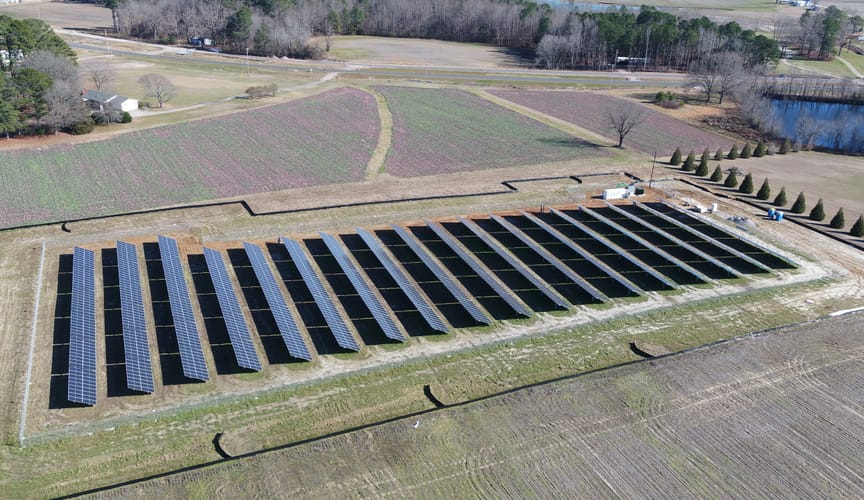
But Eagle Chase, a small housing community equipped with a propane-fueled generator and a 1-megawatt Tesla battery pack, was almost completely unscathed. The devices form a microgrid that can function without the co-op’s larger distribution system of poles and wires.
“The success story,” Bowman said, “is the Eagle Chase development saw an outage of less than about 58 milliseconds.”
The Eagle Chase battery is among three storage systems in Wake Electric’s territory. The second, in Wake Forest, is a 1-megawatt-hour battery paired with a 500-kilowatt solar farm; its purpose is to dispatch solar electrons when the sun doesn’t shine. The third, a 5-megawatt battery located at the co-op’s main substation, stores power that can be discharged when supplies are constrained and electricity prices are high.
The systems illustrate three key advantages of battery storage, Bowman said: providing resiliency, increasing the reliability of renewable energy, and responding to periods of high demand.
“We have three systems, and I think that we check all three of those boxes differently with each of the projects,” he said.

Wake Electric isn’t alone. As of April 2025, rural co-ops across North Carolina had 43 battery projects operating or in development, according to the National Rural Electric Cooperative Association. Co-ops here were spearheading more grid batteries than those in any other state; Alaska was a distant second with 13 projects.
The co-ops say they aren’t trying to win any national contests. They’re just trying to do right by the members they serve.
“Community support is one of the pillars we drive toward,” said Erik Hall, a director at the North Carolina Electric Membership Corp., a statewide entity that owns the battery assets and provides generation and transmission for 25 rural cooperatives. “What can we do to support the membership?”
The battery investments are partly a response to challenges now sweeping the country: Skyrocketing demand from data centers and other factors are constraining supplies and triggering expensive grid upgrades, driving up the costs of electricity.
Storing electrons for use when demand is at its peak and prices are high is a huge money saver for these customer-owned nonprofits — especially as the costs of batteries are falling and federal tax credits for the resources are still available.
“What these battery systems have been able to do is really save folks money while increasing resilience, and helping with reliability sort of across the footprint,” said Rob Greskowiak, chief commercial officer for Lightshift Energy, a storage developer that has worked with several co-ops outside North Carolina, including in neighboring Virginia. “It’s really an economic story.”
Money isn’t the only motivator. Co-ops often serve far-flung corners of the state, where an investor-owned utility like Duke Energy would earn a meager profit. Many of these areas — from rugged mountains to fragile barrier islands — are also prone to outages from extreme weather.
That’s why almost a decade ago, Tideland Electric Member Corp. set up the state’s first cooperative-run microgrid on Ocracoke Island — complete with 62 solar panels, a battery pack, and a diesel generator. The system kept the power on for island residents in the summer of 2017, after a construction crew accidentally severed a transmission line to the mainland.
“The solar worked,” Heidi Smith, a Tideland co-op manager, said back then. “The Tesla batteries were able to add power to the system.”
North Carolina’s co-ops also have set a target of zeroing out their carbon emissions by midcentury, though, unlike Duke, they’re not required to by law.
“It’s in our mission statement to constantly be moving toward cleaner energy solutions,” Bowman of Wake Electric co-op explained.
The benefits and costs of the individual battery systems can be spread out among the co-ops and their millions of customers, since all these storage devices are managed by the North Carolina Electric Membership Corp.
“Having all of these assets is wonderful,” the corporation’s Hall said. “But if you can’t aggregate them and utilize them when they’re needed, then you’re not really bringing to bear the value of them.”
That means calling on the storage assets when high demand sends electricity prices soaring or dispatching them during extreme weather events to enhance reliability.
“I sound like I’m tooting our horn, and I am,” Hall said. “We’ve built one of the most innovative and capable [distributed energy resource management] systems in the country.”
“I don’t call it a virtual power plant, because it sounds very financial, economic,” he added. “Our systems are grounded in reliability.”
Still, not every move made by the state’s co-ops has been in lockstep with the clean energy transition. North Carolina Electric Membership Corp. is pursuing a large new gas-generation plant in Person County in conjunction with Duke and already owns two single-cycle, peaking gas plants outright. It’s also made a long-shot bid to the Federal Energy Regulatory Commission that, if successful, could upend how transmission upgrades are paid for and stall new solar from coming onto the grid.
The split screen just reinforces that batteries are not, for many adopters, first and foremost about curbing carbon emissions.
“North Carolina can be viewed as a leader in this space, but I think it’s important to reiterate that it’s not because of sustainability goals or clean energy goals,” Greskowiak said. “The economic case for battery storage is only going to grow. The rest of the country is catching up.”
The startup is turning on a 200-battery project in South Dakota — and pioneering an electric utility rate that could help boost thermal energy storage more widely.
A giant energy-storage project in South Dakota will soon turn cheap wind energy into clean industrial steam for a neighboring biofuels facility.
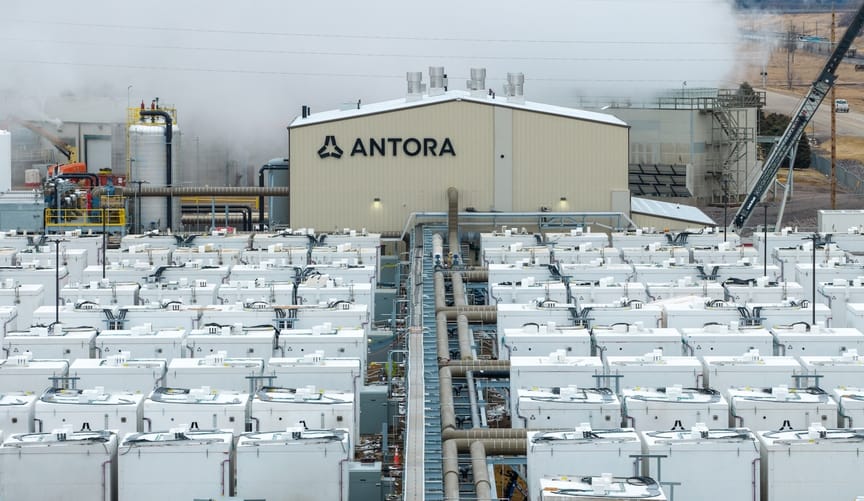
The startup Antora Energy said it recently began booting up a 5-gigawatt-hour thermal energy storage system at Poet’s ethanol-production plant near Big Stone City, close to the Minnesota border. With a fleet of more than 200 batteries, Antora’s project is expected to become the largest of its kind worldwide when it’s fully operating later this year.
San Jose, California–based Antora has likened its setup to an enormous toaster. Clean electricity runs through a large resistance heater to warm big blocks of solid carbon to extremely high temperatures for days on end. That heat can then be used to generate steam for industrial processes — which typically rely on fossil fuels — or to produce electricity on demand, including for power-hungry data centers.
Yet Antora’s project is notable for more than just its technology. The startup is also pioneering an electricity tariff, developed with the utility Otter Tail Power, that is designed to improve the bottom line of thermal energy systems and to ensure they benefit everyone on the grid. Experts say the new energy rate could be a model for the fledgling sector.
The installation itself “adds another proof point to the technology being used to help decarbonize industry,” said Melissa Hulting, director for industrial decarbonization at the Center for Climate and Energy Solutions (C2ES). “But the distinguishing factor is the tariff.”
Antora is one of dozens of thermal energy startups that are using a variety of materials — such as crushed rocks, firebricks, and molten salt — to store renewable electricity and deliver low-carbon heat to factories that make fuels, chemicals, construction materials, and even beer. In the United States, industrial heat use accounts for roughly 12% of the country’s greenhouse gas emissions.
Thermal batteries by firms like Antora, Brenmiller Energy, Electrified Thermal Solutions, and Rondo Energy can already support temperatures at or above 750 degrees Celsius (1,380 degrees Fahrenheit) — hot enough to meet nearly 75% of all industrial heat demand in the United States, according to a 2023 report by The Brattle Group for C2ES and the Renewable Thermal Collaborative. Antora, for its part, says it can store heat up to around 2,400℃.
But many projects are still in the pilot and demonstration stages. Of the few large-scale commercial systems operating today, most are in Europe, where companies can more easily access wholesale electricity markets that “can help projects pencil out,” Hulting said.
In the U.S., by contrast, utility rates for large industrial customers are among the biggest barriers to reaching widespread deployment of thermal batteries. Antora’s flagship project offers a real-world solution that other utilities and companies could replicate across the country.
“There’s a really big potential here if we can get those rate structures right in the U.S.,” Hulting added.
Antora’s Big Stone City project will be roughly 1,000 times larger than its 5-megawatt-hour pilot system near Fresno, California.
It launched the smaller project in late 2023 at a Wellhead Electric facility. Months later, Antora raised $150 million from corporate and venture investors to ramp up thermal-battery production at its San Jose factory, which the company just expanded into a three-building manufacturing campus.
Justin Briggs, Antora’s chief operating officer and co-founder, said the sprawling South Dakota system took less than a year to build on an empty lot beside Poet’s facility. He declined to discuss costs for the 5-GWh system, but he noted that the Australian investment fund Grok Ventures provided the financing needed to bring the installation to life.
“We really wanted to show how fast this technology could be deployed at scale,” Briggs said.
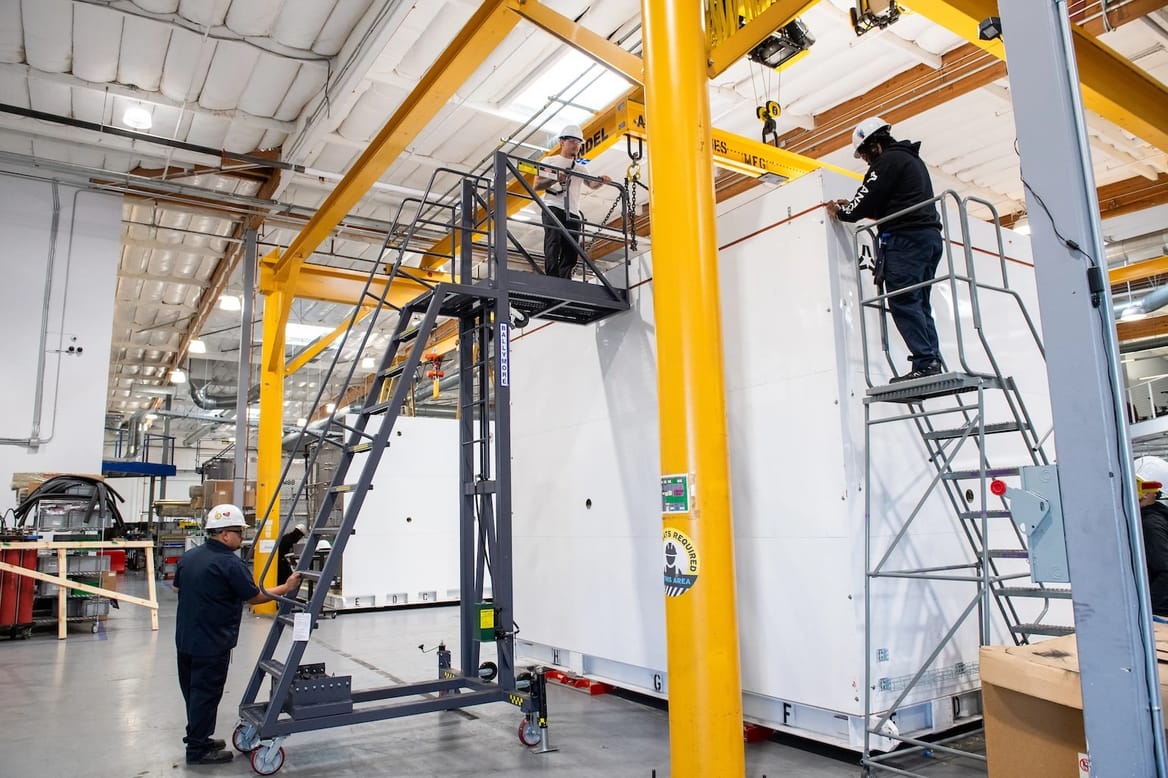
Antora and Grok Ventures jointly own the system and will sell heat to Poet under a long-term offtake agreement. The batteries will pipe steam over the fence to the bioprocessing plant, which uses copious amounts of low-temperature heat to turn corn into ethanol. Right now, at least some of that steam comes from boilers inside the 475-MW coal power plant that Otter Tail operates next door.
The novel electricity rate is key to allowing Antora to deliver competitively priced clean heat.
Noah Long, Antora’s director of state and regulatory affairs, said the problem with traditional retail utility rates is that they’re like peanut butter: They spread the average costs of generating and distributing power across all customers, regardless of whether they use power during the busiest, costliest times of day or during off-peak hours.
But thermal energy systems are designed to be highly flexible. If a wind or solar farm is producing more electricity than the grid needs, the batteries can absorb electrons that might otherwise go to waste. In that way, they curb their reliance on the grid when electricity supplies are limited, which in turn limits strain on the system and avoids the need for expensive grid upgrades.
Existing rate structures don’t always reflect such nuances, so project developers don’t see savings from using cheap, clean power and can’t capitalize on their ability to help balance the grid. That can make it harder for the technology to compete with inexpensive steam from boilers fired by natural gas or coal.
To solve this, Antora and Otter Tail developed a voluntary “thermal market energy pricing rider,” which pairs the timing and volume of Antora’s electricity draw with periods of surplus local renewables production. Technically, the batteries are plugged into the regional energy system and can use grid power at any time. But the tariff disincentives this approach, including by applying penalties if customers go beyond their agreed-on service baseline, and by charging regular market pricing for any power drawn above and beyond that baseline, said Francesco Aimone, an industrial electrification senior fellow at C2ES.
Utility regulators have approved the tariff in the three states where Otter Tail operates: Minnesota, North Dakota, and South Dakota. Farther west, in California, policymakers are considering a Senate bill that would likewise update electricity rates to help manufacturers switch to using electricity for industrial heat.
“This is a win-win, because the customer can save money, and the electricity that might otherwise have gone unused is now being used,” Stephanie Hoff, Otter Tail’s director of communications, said of the utility’s tariff. “It also enables a new technology that reduces the carbon-intensity of industrial processes that rely on steam or heat.”
Under the new arrangement, the two companies will actively exchange data about how much electricity Antora needs to recharge its batteries for the following day as well as Otter Tail’s estimated pricing, similar to how day-ahead trading works in wholesale electricity markets.
“It’s a kind of dance that they’re going to continue to do day in and day out to try to get a good outcome for everyone,” Aimone said. Antora is “taking the risk on market pricing to make sure that they can deliver heat to their customer at a certain rate.”
Hoff noted that if Otter Tail does need to upgrade its electric system to serve a large-load customer, the tariff requires that customer to pay those costs directly in order to avoid raising rates for other grid users. Antora, for example, said it worked with the utility to build a 34.5-kilovolt transmission line to connect the thermal storage system to the grid.
Aimone said the tariff’s emphasis on using existing grid assets and intermittent energy sources is particularly important. As the country moves (ever so slightly) toward electrifying industrial heat and other manufacturing processes, it’s crucial that the shift avoids overburdening the grid or making electricity even more expensive for everyone else.
“One thing we want to make sure as we’re talking about industrial electrification or load growth … is, What does it mean for affordability?” Aimone said. “Flexible loads are really important for making that happen.”
A total of 112 gigawatts of batteries were deployed around the world in 2025 — 10 times the amount added just four years prior.
See more from Canary Media’s “Chart of the Week” column.
First came the solar. Now, the batteries have arrived.

Installations of grid batteries, which can store solar and other energy for later use, surged by 48% in 2025 from the year prior, per new data from BloombergNEF. A total of 112 gigawatts of battery storage capacity was installed worldwide in 2025 — a record high that represents a tenfold increase over the amount constructed in 2021.
So, where are all of these batteries sprouting up? The short answer: mostly in China and the United States.
China alone installed more than half of the world’s grid battery capacity last year. The U.S., meanwhile, accounted for 16%.
Other places are seeing rapid uptake, too. Sun-soaked Australia grew its battery installations by a factor of nearly six last year, albeit from a pretty small base of just 827 megawatts in 2024. The U.K., which shuttered its last coal plant in 2024, saw installations nearly double between 2024 and 2025, to 2.6 GW. Meanwhile, across the broader sub-Saharan Africa region, installations roughly quintupled to 4.3 GW.
Battery installations are now starting to catch up to solar installations, BNEF says. A decade ago, the world was installing 56 MW of solar for every 1 MW of storage. Last year, that ratio was 6-to-1. This year, BNEF expects it to drop to 4-to-1.
The key driver of this growth is the ever-decreasing cost of energy storage, with lithium-ion battery prices dropping by more than 90% over the last 15 years.
The case for batteries is also strengthening as the world builds an incredible amount of wind and solar, since the technology can stockpile wind and solar power when it’s abundant to dispatch later when the grid needs it.
BNEF expects the storage boom to continue as data centers surge onto the grid — especially in the U.S. — and as power demand rises because of the electrification of vehicles and buildings.
The firm forecasts that the world will install a total of 158 GW of batteries in 2026, resulting in 41% year-over-year growth. Although the pace tapers off a bit from there through 2030, BNEF projects that by the end of the decade, annual additions will top 200 GW — more than double the record-setting amount seen last year.


.svg)
