

 Back
Back
The legislation expands subscription-based solar farms from 250 to 875 megawatts and is the product of the state’s “new affordability politics.”
When Steve Ault got an offer about six years ago to lease a bit of his 100-acre family farm in Prince Edward County, Virginia, for solar panels, he let the letter sit on the kitchen table for a few days.
Then he showed it to his wife, Chris. “Well, shoot,” she recalled telling her husband. “Let’s give them a call and see what they’ve got to say.”
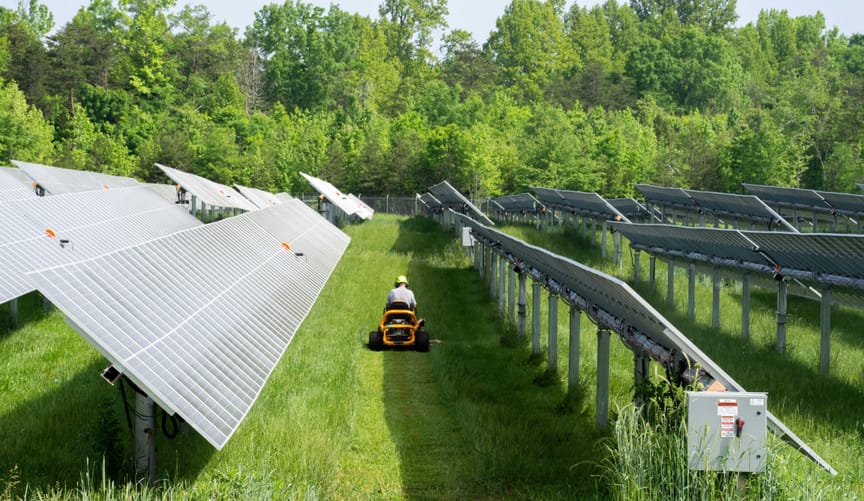
The couple ultimately agreed to rent 20 acres of their pastureland to developer Dimension Energy for a small, 5-megawatt solar array, nestled behind a nearby railroad track and far from public view. Called a “shared solar farm,” it serves customers who subscribe through their utility, Dominion Energy.
As groundbreaking neared, they took some initial flak from their neighbors in this bucolic county on the edge of Amish country, about 80 miles from Richmond.
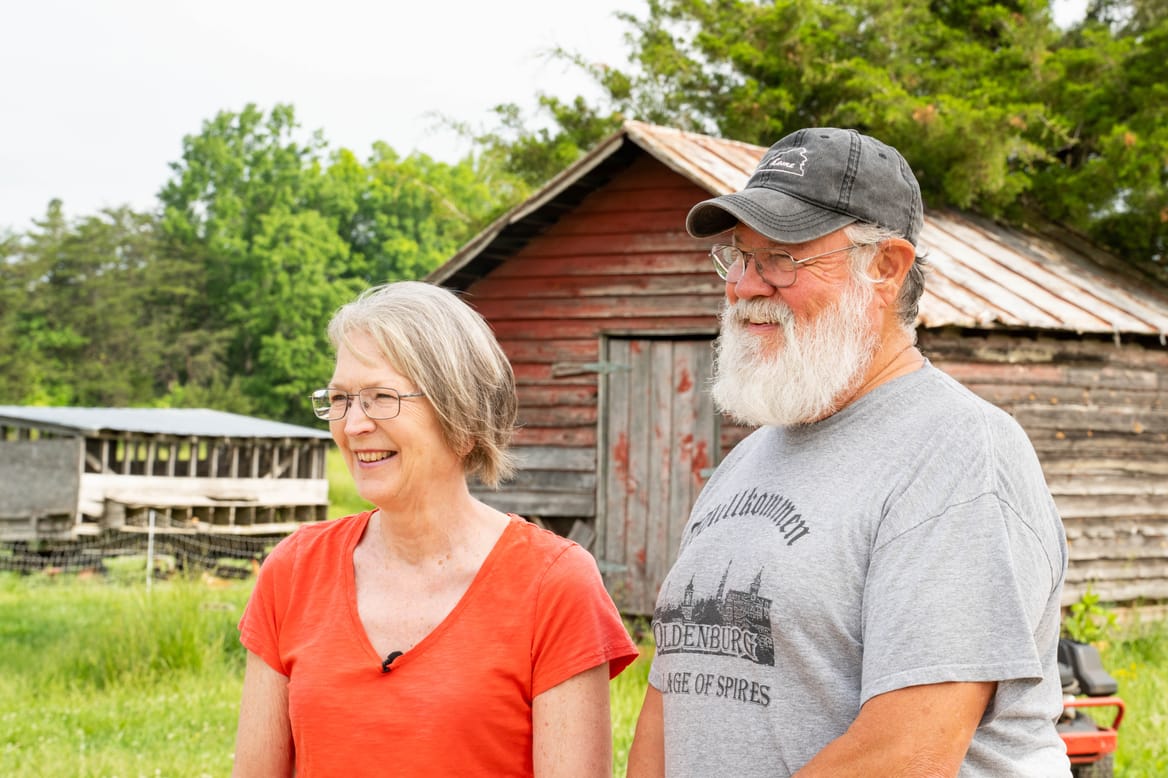
“We saw the signs going up,” Steve said, which read “Stop the solar grab.” But now, the couple believes, some of those same neighbors are probably envious. After all, the duo, who began raising hogs, sheep, and other livestock two decades ago as a second career, have netted tens of thousands of dollars each year on the panels, which began sending power to the grid in February 2024. The funds have enabled them to retire comfortably.
“They’re going to pay three times what this farm’s worth at the end of the day,” Steve said.
The grass beneath the panels in the solar field, a stone’s throw from the couple’s renovated 19th-century farmhouse, is maintained by an area shepherd and his 50-some sheep. All in all, Steve said, the solar array “has been such a win-win.”
Now, many more farmers can take advantage of the same opportunity, thanks to a pair of laws signed this spring by Gov. Abigail Spanberger, a Democrat who has made containing energy prices a focus of her administration.
The laws require Dominion and Appalachian Power, the state’s other investor-owned utility, to develop more shared solar farms — also known as community solar — like the one on the Aults’ property. Up to 5 megawatts in size, the arrays are partially financed by subscribers who want solar energy but don’t own their homes, have shaded roofs, or otherwise aren’t in a position to invest in their own panels.
“The Spanberger administration and the state legislature realized they had to tackle affordability,” said Brandon Smithwood, Dimension Energy’s vice president of policy. With shared solar, he said, “that comes on two fronts.”
For one, subscribers can lower their bills because solar is generally cheaper, and its costs are less volatile, than electrons produced from fossil fuels. Plus, Smithwood said, small solar farms are relatively quick to develop — adding valuable capacity as prices soar across the regional grid and data centers strain supply.
“You can tuck this in a farmer’s back 40 where it can’t be seen from a road,” Smithwood said, just as the Aults’ solar array is. “Standing up a program like this reduces both near-term and long-term energy costs that benefit all ratepayers” — even those who don’t subscribe.
Sponsored by northern Virginia Democrats Sen. Scott Surovell, the Democratic majority leader, and Del. Rip Sullivan, the two new statutes are the latest chapter on shared solar in Virginia.
In 2020, state lawmakers passed the Clean Economy Act, which required Dominion and Appalachian Power — known as APCo — to sell 100% carbon-free electricity by midcentury. That law directed Dominion to develop 200 megawatts of shared solar farms. A follow-up measure in 2024 required APCo, the smaller of the two utilities, which serves mostly southwest Virginia, to invest in 50 megawatts.
Consumers eagerly embraced the opportunity to take part in shared solar, according to the national trade group Coalition for Community Solar Access. In Dominion territory, the original 200-megawatt offering serves tens of thousands of residents across 52 projects. APCo’s version launched in 2025 and was almost immediately oversubscribed.
At the same time, dozens of renewable energy developers are waiting in the wings, ready to deploy more shared solar for both Dominion and APCo customers.
The new laws require the utilities to respond to all this interest. Under Senate Bill 254/House Bill 807, Dominion must make another 525 megawatts of shared solar available for consumers beginning this summer. Under Senate Bill 255/House Bill 809, APCo will improve its billing practices and offer up another 100 megawatts.
“This program expansion is a reflection of a new affordability politics,” Smithwood said, whereby policymakers are relying on clean energy and efficiency to lower utility bills, rather than doubling down on expensive fossil fuels.
Indeed, this year lawmakers passed, and Spanberger signed, a flurry of clean energy bills aimed at curbing costs. The measures include allowing plug-in balcony solar units, reining in local restrictions on large solar farms, and pushing for better utilization of the state’s existing network of poles and wires.
“‘Affordability’ is the word of the decade, of the year,” said Charlie Coggeshall, the mid-Atlantic regional director for Coalition for Community Solar Access. “We were grateful that community solar was recognized as part of the affordability solution.”
Data from the National Laboratory of the Rockies shows how the expansion to 875 megawatts could catapult Virginia to fifth in the country for shared solar, just behind Minnesota, which has one of the oldest such programs in the U.S.
Depending on how it’s designed, shared solar saves consumers around the country between 5% and 15% on their utility bills, while delivering millions of dollars in system-wide benefits by reducing the need for costly generation, transmission, and distribution investments.
But Virginia’s shared solar scheme has a key feature that distinguishes it from those in many leading states: Subscribers are charged a minimum monthly fee.
The concept, known as a minimum bill, is a concession by clean energy advocates, who tout the net benefits of the shared solar for all ratepayers. And in early versions of the Virginia program, the minimum was set so high that only those exempt from paying it — low-income customers — ended up subscribing.
Yet after years of debate and refinement, Coggeshall and others are hopeful that policymakers have finally set the right balance.
“The gist of it is you’re paying at least $25 or $50 on your electricity bill every month,” Coggeshall said. “It just ensures that the utility is always going to get paid: Essentially, you can’t zero out your bill.”
The lower minimum bill should invite more diverse participation among customers of all income levels.
“What’s exciting is, not only are we going to be able to serve more Virginians in terms of numbers,” Smithwood said, “but we’re going to be able to serve people of different incomes and different parts of the state.”
To wit: Dimension Energy expects the Virginia expansion to cut bills by at least 10% for another 125,000 households in the state.
Dominion and APCo will be still required to serve a set target of low-income customers. That, in addition to the economics and sustainability of solar, was a key draw for the Aults years ago.
“The energy we generate here serves low-income [households],” Chris Ault said. “I really like that.”
Nationwide grid reliability has improved since last summer — and new solar and batteries, not aging coal plants, are the main reason.
It’s set to be an abnormally hot summer this year — but the U.S. grid appears to be in decent shape to handle the heat. The credit goes to a boatload of new solar and storage and a handful of new gas plants.
That’s the upshot of the new summer reliability assessment from the North American Electric Reliability Corp., which oversees the U.S. and Canadian electric systems.
“Record resource additions have strengthened readiness for the summer season,” NERC highlighted, including “a substantial influx of solar and battery” resources — the most prevalent and lowest-cost new sources of grid power — as well as “some new natural gas-fired generators.”
The report contradicts the Trump administration’s claims that aging fossil-fueled plants are needed in order to prevent blackouts. Over the last year, the Department of Energy has forced five coal plants and one oil- and gas-fired power plant to stay online past their planned retirements, citing an energy emergency that grid experts say does not exist. The approach is now being challenged in court.
However, it’s not the presence of expensive old fossil-fueled power plants that has put the grid in a good position heading into the summer — it’s the rapid expansion of solar and energy storage.
In fact, NERC’s latest summer assessment reached its conclusions without including any of the power plants forced to stay open by the Trump administration. “These plants and units were not incorporated into the anticipated resources of their corresponding assessment areas for Summer 2026,” the report notes.
“NERC’s summer reliability assessment confirms what we’ve known all along,” Tyson Slocum, director of the energy program at nonprofit watchdog group Public Citizen, said in a Thursday statement. “Delaying the retirement of outdated coal plants that require millions of dollars in upgrades and maintenance to keep them operational only prevents more reliable sources from being added to the grid.”
To be clear, some regions still face an elevated risk this year.
NERC’s report says New England, the Pacific Northwest, West Texas, and Canada’s Saskatchewan province could face potential electricity shortfalls under “abnormal summer conditions,” like elevated temperatures that push up air-conditioning demand. The Pacific Northwest is also facing drought conditions that hampered the hydropower it relies on.
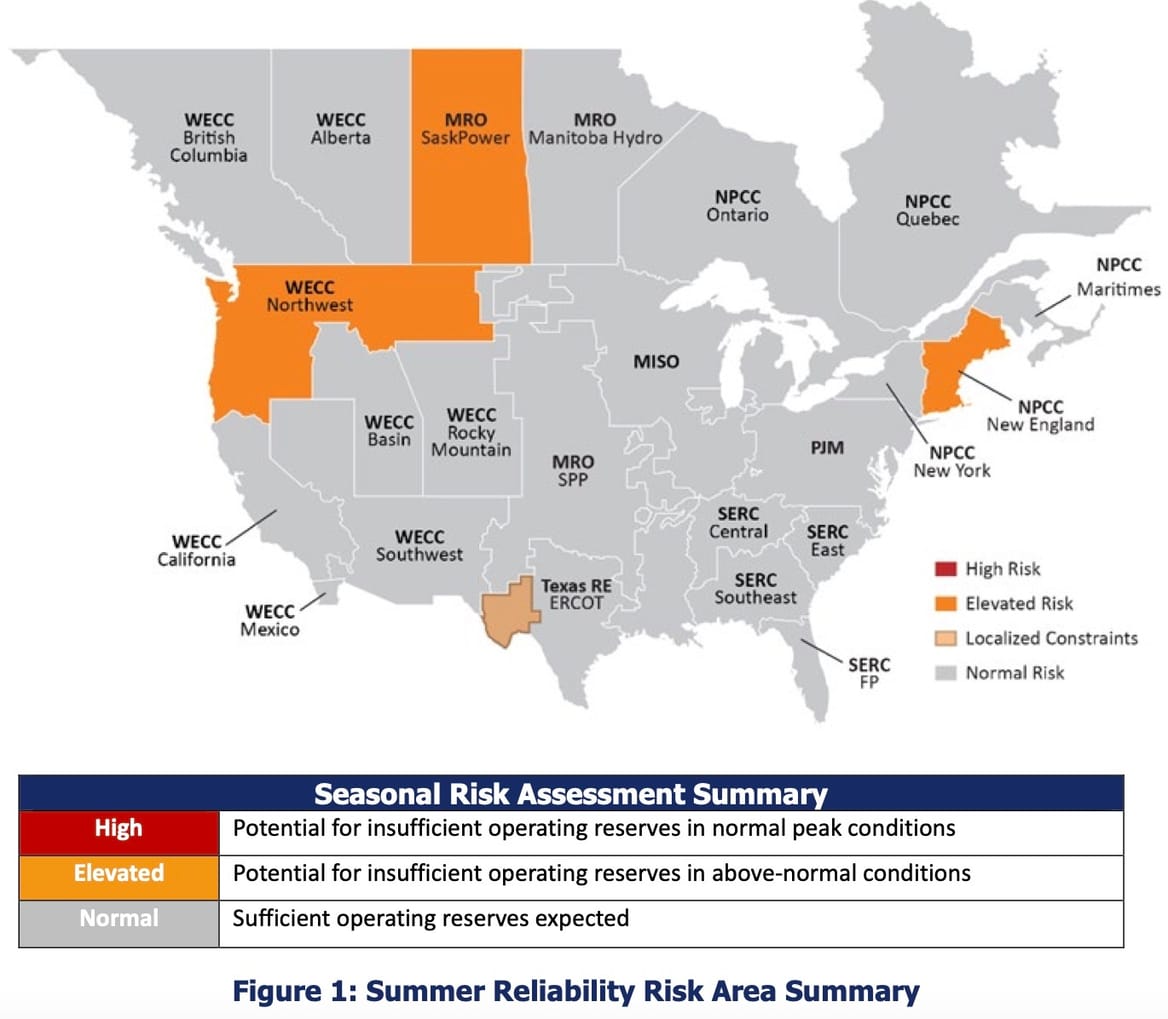
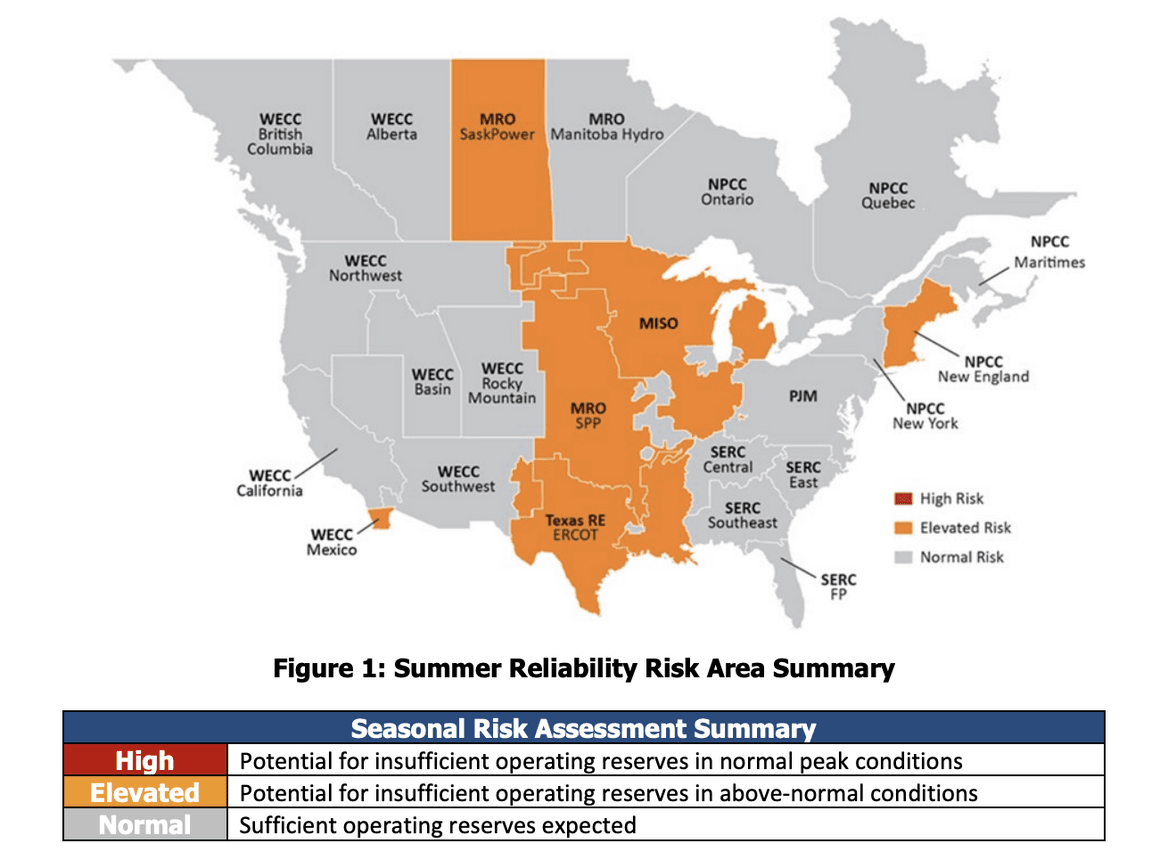
Still, that’s a big improvement from the assessment for the summer of 2025, when NERC projected elevated risk during abnormally hot and dry summer conditions in six U.S. regions, including a wide swath of the middle of the country from Texas to the Canadian border.
Those areas no longer at risk include the 15 U.S. states from Louisiana to North Dakota and the Canadian province of Manitoba, whose grid is managed by the Midcontinent Independent System Operator, which provides power to about 45 million people. Notably, MISO is host to several of the coal-fired power plants in Michigan and Indiana that the DOE has forced to stay online.
While NERC did track about 7 gigawatts of new fossil gas generation added since last summer, that was eclipsed by the 30.5 gigawatts of solar generation capacity added in the same period, according to the report.
Solar doesn’t provide its full nameplate generation capacity during morning and evening hours or when it’s cloudy, and of course it generates nothing at night. But it does generate a lot of power during the hottest hours of typical summer days. NERC found that the 30.5 gigawatts of new solar are contributing 16.4 gigawatts of capacity at times of peak summer demand.
Batteries that can store excess solar power for use later in the day have also come online at a rapid clip. NERC tallied more than 16 gigawatts of battery capacity added since last summer.
Most of those batteries have been built in Texas and California, as well as in other parts of the U.S. West, the report notes. Solar-charged batteries have been saving the California and Texas grids from summer shortfalls in recent years, helping to dramatically reduce the risk of heatwave-driven blackouts.
But solar and batteries have also bolstered other regions.
“MISO’s capacity resources have improved since Summer 2025,” the report says, with the new additions “made up of predominantly solar resource installations, along with smaller amounts of natural gas, wind, and battery storage resources.”
The assessment underscores the fact that solar and wind make the grid more reliable even though the Trump administration likes to argue otherwise, said Jessi Eidbo, a senior adviser at the Sierra Club and member of NERC’s Large Loads Working Group.
“This is not a conversation about renewables being tied to reliability risk,” she said. “This report reflects the conclusion that renewables are significant contributors to reducing risk on the system today.”
To prove the point, Eidbo highlighted the section of NERC’s report that calculates what proportion of the total capacity of solar, wind, hydropower, and battery storage is available to serve the peak demand hour in a given area. That’s an important metric to determine how helpful different resources are during crunch time for the grid.
NERC found that the 20.4 gigawatts of solar available in MISO are capable of providing 60% of their nameplate generation capacity during peak hours. NERC’s assessment of the peak load contribution of MISO’s fleet of roughly 3.6 gigawatts of battery storage was even higher, at 97%.
NERC found similar, if slightly lower, values for solar and batteries to meet summer peak hours in the Southwest Power Pool, a grid operator serving 14 Midwest and Great Plains states. The report assigned a 54% peak contribution rating to SPP’s 3.9 gigawatts of solar, and an 84% peak contribution rating to the region’s 1.3 gigawatts of battery storage.
Both of those regions have fallen from “elevated” risk to “normal” risk from summer 2025 to summer 2026, Eidbo noted — and both “have very high percentages of nameplate capacity from energy storage systems.”
This is a good sign that solar and batteries, both of which can be built more quickly and cheaply than gas plants, can also serve the grid when the summer heat hits and demand goes through the roof.
Startup MeanderX maps bottlenecks on distribution lines in Illinois and seven other states, so projects can avoid lengthy delays.
Forrest Bagley was eager to dive into Illinois’ community solar market.
The solar company he owns with his father and brother had successfully developed arrays in Maine, Massachusetts, and New York, and generous state incentives for community solar plus ample open land made Illinois seem an ideal new frontier.
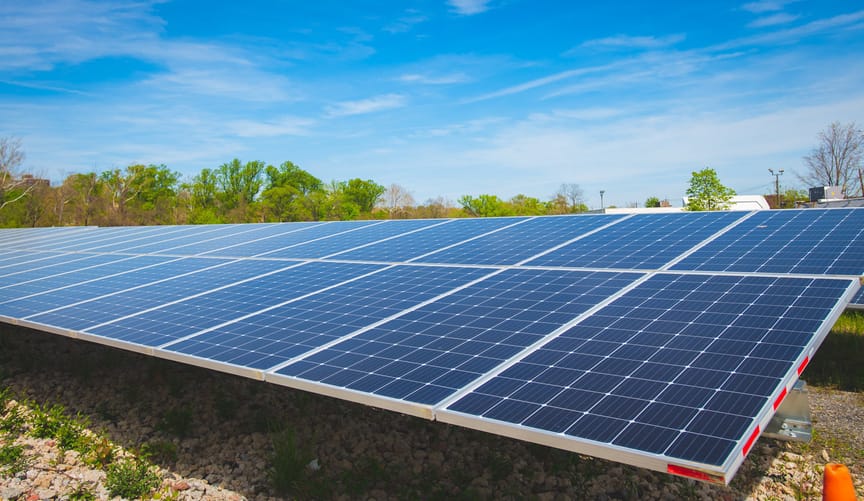
Now, several years later, Bagley finds himself in a frustrating situation: Dozens of projects proposed by their company, Blue Redwood, are still languishing in interconnection queues run by the utility Ameren Illinois. Meanwhile, the clock is ticking on federal tax credits for solar projects, which must either start construction by this summer or start generating power by the end of 2027 to qualify.
Ameren, which serves central and southern Illinois, has been dogged by a slow interconnection process. Applications for community solar have flooded in ever since a 2017 law created incentives, and a 2021 law further expanded that support. Legal wrangling over Ameren’s process for ensuring that solar arrays can safely connect to the grid has bogged down the process even more.
But a recently formed startup could help keep community solar rolling across downstate Illinois by letting those developers better understand where to locate their projects to avoid lengthy connection delays.
When Bagley logs on to the platform MeanderX, he can see an interactive map and dashboard illustrating the capacity of feeder lines and substations across Ameren’s service territory.
Red, yellow, and green circles give a sense of what the wait time is for the interconnection queues at different points on the grid. Bagley can monitor how his own proposals are progressing — or not — and prioritize accordingly. He can also use the tool to figure out where to propose new projects.
“It’s been super helpful,” Bagley said. “We’re all under the gun here to get stuff done as fast as humanly possible.”
Proposals for community solar — and, more recently, batteries — have “increased dramatically” over the past decade, according to Ameren Illinois spokesperson Karly Combest. “This substantial growth reflects Illinois’ clean energy policies and increasing customer interest in distributed generation and energy storage as a means to manage rising power supply prices,” she said.
Bagley described the scene as “like the California gold rush.”
Illinois is “a fairly easy state to develop in — you don’t have the terrain of New York, the difficult environmental legislation of Massachusetts,” he said. “You have a flat state, and legislation backing you. The missing link is the interconnection.”
When the state’s solar boom began, Ameren’s policy was to study proposed projects one at a time, meaning developers had to wait their turn to learn if they would get approval and how much they would have to pay for the grid upgrades their project required.
Developers can’t decide whether to move forward or finalize financing until that step is complete. The backlog got so problematic that Illinois’s 2021 clean energy law established an interconnection working group, wherein utilities collaborate with regulators and other stakeholders to improve the process.
Since last fall, disputes over Ameren’s system for determining whether a project can safely connect to the grid have further complicated the process.
Many community solar developers were told their projects didn’t meet Ameren’s requirements related to a “weighted short-circuit ratio test,” a measure of “a distribution grid’s ability to handle a push of electricity coming from solar or storage,” in the words of Brett Sproul, who leads regulatory work in Illinois for Advanced Energy United, a national trade association that represents energy technologies including solar and storage.
Solar developers appealed to the state’s regulatory commission, which ordered Ameren to allow developers that file a “dispute” about its short-circuit-ratio findings more time to address the concerns, and to promise that those projects wouldn’t lose their place in line. But that means an increasing number of projects are essentially blocking the queue as they go through this process. There were 19 such disputes filed by solar developers related to this issue in October, and 123 by mid-March, a MeanderX analysis shows.
As of April, over 3,000 distributed energy projects were pending in Ameren’s interconnection queues, representing more than 13 gigawatts of potential power, according to MeanderX. Disputes filed by developers in 132 projects represented 551 megawatts – just over 4% of the total – but were clogging up 41 of the 68 queues.
“We’ve had stuff in the queue for 18 to 19 months,” Bagley said. “That’s the frustration.”
Interconnection delays and backlogs are hindering the deployment of renewable energy nationwide. Software companies such as Pearl Street Technologies have sprung up to provide regional grid operators and renewable energy developers with the data they need to navigate queues and connect utility-scale wind and solar projects to regional transmission grids.
MeanderX provides a similar service but tailored to developers of midsize projects like community solar, which can connect directly to the distribution grids that utilities run across smaller areas. While Ameren’s bottlenecks are especially problematic, community solar developers around the country struggle with delays in interconnection queues and a lack of transparency from utilities to help navigate them.
MeanderX co-founders Jack Angela and Robert Huppertz previously built a software platform, Orbio Earth, to use AI and global satellite imaging to map methane emissions. They wanted to help track the projected increase in natural gas–fired plants to serve data centers. Angela and Huppertz had a similar motivation in creating MeanderX: to use mapping to examine the country’s energy transition, Angela said.
They launched the platform last year in Ameren Illinois’ service territory, and it is now available to developers in the service areas of more than 20 investor-owned utilities across eight states, including ConEd in New York, Xcel in Minnesota, and Potomac Edison in Maryland, according to MeanderX Founder’s Associate Sandra Hu. The platform is also available for parts of New Jersey, Delaware, and Washington, D.C.
MeanderX uses AI to scrape and analyze data from utilities that is in theory publicly available, but is difficult to access without complicated coding.
“Pre-AI, having to navigate and automatically track the web of hosting-capacity and interconnection-queue datasets available to developers from different utilities would have been incredibly time-consuming and complex,” Huppertz said. “AI has allowed us to centralize and automatically update this data.”
Hu explained that for solar developers, there is normally “very little visibility into what’s actually happening ahead of them” in the queue. “We provide live tracking of queue movements — which projects have dropped out, which have advanced to construction, where disputes are clustering.”
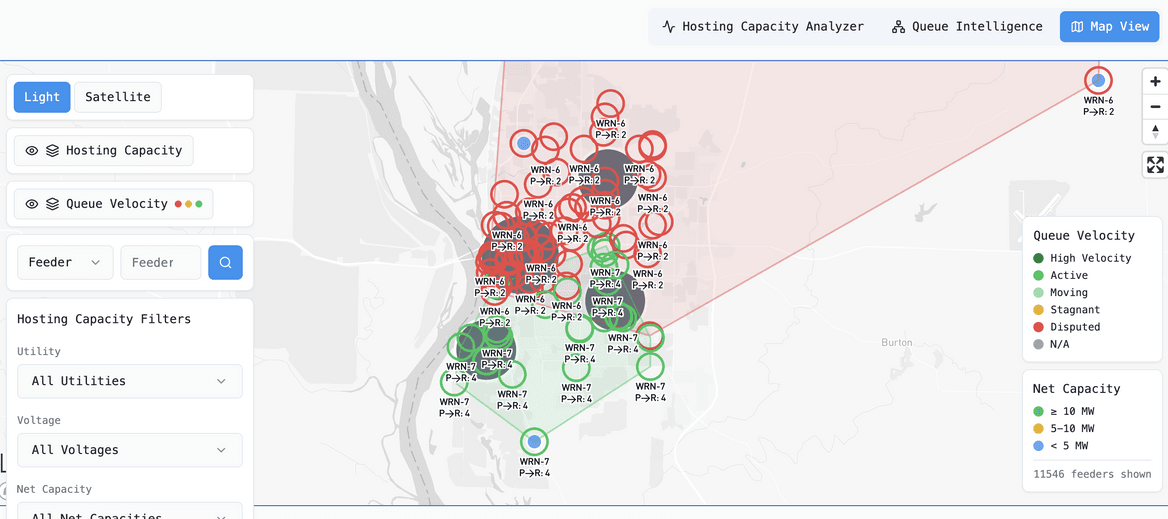
For example, community solar developers in Illinois can quickly see on MeanderX that the area on the south edge of Quincy, near the Mississippi River, has a relatively open queue. The area around the University of Illinois at Urbana-Champaign, by contrast, is a virtual traffic jam.
“We’re basically identifying fast-moving queues with fresh capacity coming on the system so people can use those signals to develop more targeted siting,” Angela said.
MeanderX’s data also shows when Ameren starts actively studying a given project, meaning there’s movement in that queue. There was a surge of such activity in January. But that month also saw an even larger influx of applications for distributed generation, possibly driven by fears of federal tax credits expiring.
MeanderX maps where a high number of proposals is causing congestion, and also where developers are abandoning their projects. If multiple developers withdraw projects in the same area, it could mean other developers would be wise to steer clear, Angela noted.
“Siting is often a spray-and-pray approach,” he said. “Developers maintain a portfolio of potential sites that get eliminated at every stage of development. Granular data on interconnection bottlenecks, disputes, and capacity lets them de-risk sites earlier, eliminating dead-end locations from their portfolio before committing capital. If the data tells you a substation is saturated or a feeder is tied up in disputes, you know not to commit there.”
Understanding the grid hosting capacity and queue outlook is only a first step — developers still need to figure out if there is land available for lease or purchase in that area, what the costs are, and whether there are other barriers to development.
Land southeast of St. Louis, for example, appears inviting for community solar development given the uncrowded queues shown on MeanderX.
“But you’ve got some NIMBYism, also floodplains and other issues that may be challenging,” Bagley said. “It looks great, but how do you develop a good project that everybody’s excited about, where they’re not going to bring their pitchforks out at the local meeting?”
While exploring such factors takes serious legwork, MeanderX can be an important tool in narrowing down where to consider locating solar or other storage or renewable energy projects.
“We do a lot of on-the-ground prospecting, so knowing where to point is really helpful,” Bagley said. “You don’t want to spend a bunch of time shaking the sifter to find the little nuggets” of land ripe for solar development.
Both Sproul of Advanced Energy United and Combest of Ameren Illinois said discussions between Ameren and industry groups about resolving bottlenecks and disputes have been productive.
Sproul said the issue shows the need for “a larger study around grid stability,” and to this end, he thinks MeanderX’s platform can help stakeholders understand grid capacity and saturation.
Combest said Ameren is supportive of MeanderX’s efforts, as the utility works to improve transparency and accessibility around its data. Commitments around information-sharing and flexibility included in the utility’s recently filed 2028–2031 grid plan, Combest noted, should also make the interconnection process faster and more transparent, “and increase the volume of renewable resources that can be safely and reliably connected to the grid.”
Leaders of Reactivate, a developer that prioritizes bringing community solar to low-income customers, would like to see the utility make MeanderX part of its own system.
“It would be a significant step forward to see a utility like Ameren implement a high-transparency tool directly,” said Jeannette Torres, marketing and communications manager for Reactivate, which has projects under development in Ameren territory. “Standardizing real-time visibility into grid capacity would help developers submit higher-quality, more viable applications, which ultimately reduces the administrative burden on the utility and speeds up the interconnection process for all parties.”
Angela says he hopes the mapping tool is eventually adopted by utilities themselves to help them better understand where delays are cropping up in their own systems.
“There’s going to be other states that experience this clogging up,” he said. “It’s a microcosm of what’s going to happen across different [distributed generation] markets.”
It’s a milestone moment that shows just how much clean energy has matured in a short amount of time — and a lot more growth is on the way.
April 2026: Remember the date for the energy-transition history books.
It’s the first month when wind and solar combined to produce more electricity than natural gas did, per new global data from energy think tank Ember.
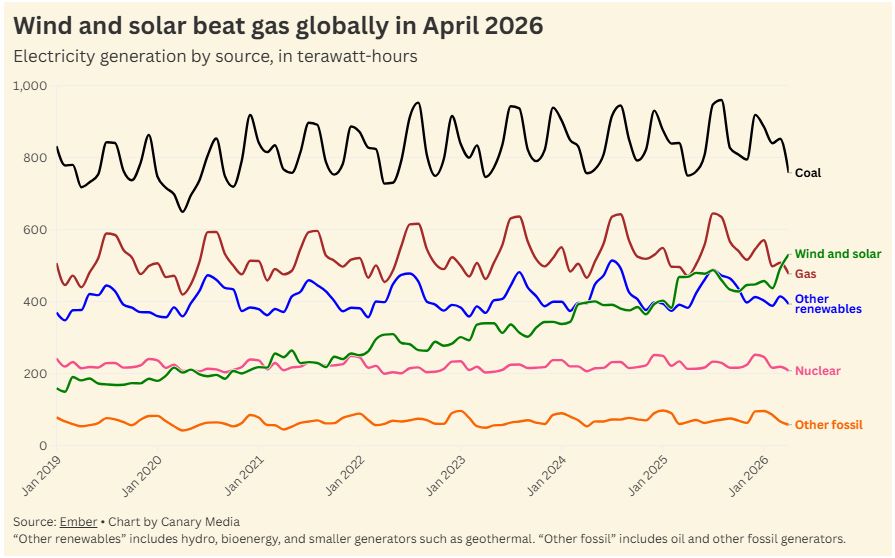
Just five years ago, the gap between what those renewable resources and gas generated was huge. Even in the best month for renewables, gas plants churned out about twice as much power. Now, the picture is very different: Wind and solar generated about 532 terawatt-hours of electricity worldwide last month, while gas contributed just 477 TWh.
This won’t be the first time wind and solar outcompete gas on the global stage.
Last year, the world met 75% of its new electricity demand with solar alone, and the remainder with other forms of carbon-free energy. The result? Fossil-fuel power generation declined — very slightly — even though the world consumed more electricity.
Meanwhile, the ongoing war in the Middle East bolsters the case for renewable energy. Iran’s blockade of the Strait of Hormuz and its retaliatory strikes on Qatar forced one-fifth of the global liquefied natural gas export capacity offline earlier this year, causing supply shortages and price spikes for the many countries that depend on imported, rather than domestic, natural gas.
Already, some nations appear to have increased their adoption of renewables to shore up their national energy security.
The caveats of the April milestone must be mentioned. It’s just one month — and occurred during the shoulder season, the best time of the year for renewables, as breezes pick up and days get sunnier.
Then there’s King Coal, which still produces far more electricity worldwide than wind and solar. But it’s clear where we’re headed. The share of coal-fired electricity actually fell by half a percentage point from 2024 to 2025, marking the first annual drop since Covid and the first time in history that the dirty fuel produced less than a third of the world’s power.
In other words, coal should watch its back: It’s only a matter of time before wind and solar come for its crown, too.
Grouping wind, solar, and batteries together can already be more affordable than building a coal or gas plant in prime locations, new report finds.
One of the biggest knocks against renewables — their intermittency — could soon be defanged.

As technology prices fall and industry prowess compounds, a new type of clean megaproject is starting to look not only possible but also economically attractive. These projects would load up the sunniest and windiest places on Earth with enough solar panels, wind turbines, and batteries to deliver “firm power” 24 hours a day.
Such firm renewable projects could already compete with the cost of building a new coal- or gas-fired power plant in many regions, according to a new report from the International Renewable Energy Agency. It may sound fanciful to American ears, but projects resembling what IRENA describes are already getting built elsewhere in the world.
Wind and solar have for years competed extremely well on the basic cost per unit of generation, often calculated as the levelized cost of energy; they can generate electricity cheaper than anything that must burn fuel. Last year, onshore wind and fixed-axis solar tied for the lowest levelized cost, at around $40 per megawatt-hour globally, per BloombergNEF, compared with $100 per megawatt-hour for new combined-cycle gas plants.
But that energy cost metric doesn’t tell the full story, because solar and wind famously can’t generate electricity all the time. Utilities and grid operators have to pay extra for firm energy that can fill the gaps between renewable production and demand — and usually that comes from fossil-fueled power plants.
This dynamic has limited the transformational potential of cheap renewables so far. California, for example, floods the wires with cheap solar at noon, but even with its massive fleet of lithium-ion batteries, it still needs gas power plants to keep the system running through the night.
Breakthrough technologies could someday solve the problem of cost-effective, around-the-clock clean power. While enhanced geothermal is making progress, batteries that run for days on end and nuclear fusion are further off. But in the meantime, lithium-ion batteries, which tend to run for just four or five hours at a time, continue to get cheaper and better — making it conceivable to firm up renewables by overbuilding them alongside stacks of conventional energy storage.
IRENA’s report, then, asks how far you can push the clean energy technologies that are available right now.
To answer that, the analysts tapped their database of global renewable project costs and geographical profiles of solar and wind resources “to assess what it actually costs to deliver firm, round-the-clock electricity from a hybrid renewable system at a given site, under realistic technology and financing assumptions.”
The results IRENA found are startling: “In high-quality resource regions, firm renewable electricity has crossed the threshold of cost competitiveness with new fossil fuel generation,” the authors write. “The central question is no longer whether firm renewables can compete on cost, but how quickly the structural conditions needed to realise their potential can be put in place across the diversity of markets and institutional contexts prevailing globally.”
China sets the bar with its shockingly low cost of firm renewables today.
IRENA looked at 252 solar projects that went online there in 2024 and found that many of them could be augmented with extra solar capacity and batteries to deliver power cheaper than the $100-per-megawatt-hour benchmark for new gas-fired plants. Almost all the modeled solar-battery plants could beat that cost for firm clean power 90% of the time; even at the higher reliability threshold of 99%, nearly half the projects remained competitive, and the lowest cost was $46 per megawatt-hour.
A handful of sensationally large developments are underway around the world, testing just how big solar can get.
Until recently, pacesetting solar projects were measured in the hundreds of megawatts. But panels keep getting cheaper, and developers keep getting better at installing them. As a result, power companies are undertaking projects that are bigger than anyone could have conceived five years ago.
China has led the way on this with a series of installations that push past the gigawatt scale. Other countries aren’t far behind, including the U.S., though it hasn’t reached the gigawatt threshold yet.
Giga-scale construction requires a whole new level of land access, workforce mobilization, and transmission planning. Collectively, these projects presage a future when the sunniest, most remote places in the world serve as electrical breadbaskets, supplying energy to population hubs far away.
Here are three of the most prominent giga-projects currently underway, to give you a sense of just how big solar power plants are becoming and what it takes to make them happen.
The scale of this project is vertigo-inducing. Adani, the corporate empire of self-made billionaire Gautam Adani, has branched out from building ports, airports, and coal plants to manufacturing solar cells and panels, installing them, building transmission lines, and retailing the electricity. This vertically integrated strategy reaches its apotheosis in Khavda, which will have 30 gigawatts of combined solar and wind capacity, and already features one of the world’s largest operating grid batteries.
Adani Green Energy picked a 200-plus-square-mile expanse in the Rann of Kutch, a seasonally flooded salt flat in Gujarat, to turn into this clean energy colossus. The region combines strong winds and blasting sunshine, but makes for a challenging work environment. The company had to run its own fiber-optic cable and build a desalination plant to furnish water for the isolated work camp it assembled for 15,000 laborers. Solar panels extend as far as the eye can see, with 5.2-megawatt Adani-made wind turbines interspersed every half mile, so they don’t block each other’s access to strong winds.
Construction began in 2023, and in February 2024, the first 551 megawatts came online, sent via an Adani-owned transmission corridor to customers in Mumbai and elsewhere. Since then, the generation capacity has risen to 13 gigawatts, assisted by robots waterlessly cleaning dust off the panels twice a day.
When Adani realized that some of the power was going to waste during the sunny hours, the company added a battery to the plan. In nine months, workers installed a 1.1-gigawatt/3.5 gigawatt-hour storage facility, which was officially commissioned earlier this month. That impressive scale puts it in contention for largest single-site grid battery in the world, outstripping even the Edwards & Sanborn battery in California’s Mojave Desert.
This hulking battery lets the company sell power after sunset at merchant rates that are much higher than the daytime rates. Adani plans to add another 10 gigawatt-hours of storage there by next April.
“Mr. Adani just bit the bullet and went for it,” Arun Sharma, chief sustainability officer for the Adani Group, told Canary Media on the sidelines of Boston Climate Week. “We don’t do anything on the megawatt level — or even hundreds-of-megawatt level. If it is not gigawatt, then our CEOs don’t have the attention span.”
Like Adani, Chinese solar developers are looking for the widest open spaces with the best possible sunshine, and that has led them to the Tibetan Plateau. At a 10,000-foot elevation, the sun shines more brightly than at sea level, and the chilly air helps the panels convert those rays more efficiently.
The country’s largest cluster of solar farms has accumulated at Talatan Solar Park, in Qinghai Province. As of last fall, it could produce nearly 17 gigawatts, and it was still growing, per a rare foreign-media dispatch from the remote region by The New York Times. The solar cluster covers an area equivalent to seven Manhattans.
Indeed, multi-gigawatt solar projects have become commonplace in China. A few more soak up the high-elevation sunshine elsewhere in Qinghai; others catch the light in Xinjiang province and Inner Mongolia. But Talatan towers above them all, in stature and elevation. It helps that few people live on that part of the alpine plateau, and the plant accommodates those who do by installing the panels high enough for sheep to graze beneath them. Starting in the 1990s, China displaced a million people to create an enormous power plant with the Three Gorges Dam, the Times noted, but now it installs solar capacity equivalent to that project every three weeks.
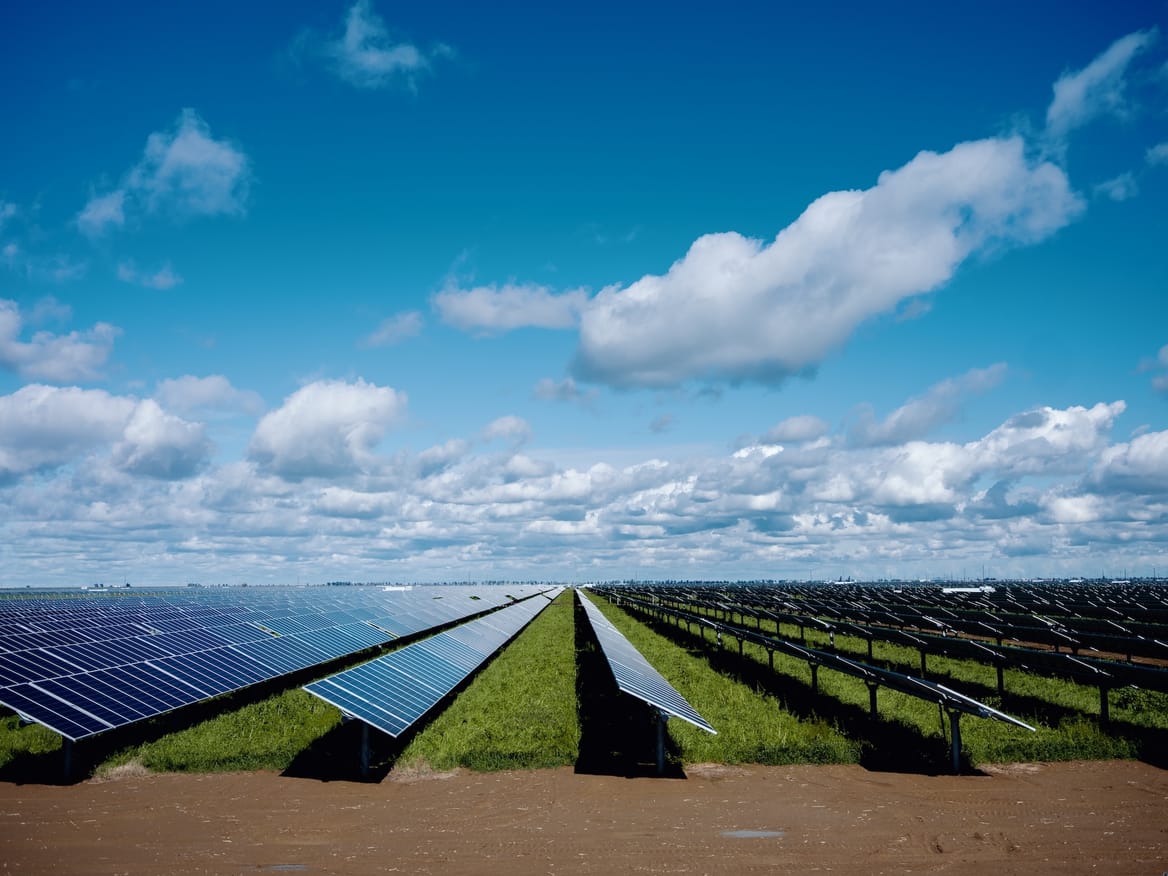
The Central Valley of California churns out one-quarter of the agricultural crop in the U.S., but its water is disappearing. The Westlands Water District has tackled this head-on with a coordinated strategy that, if implemented, would allocate fallow lands for a sprawling 21-gigawatt solar complex, served by a privately developed transmission corridor.
The scale of this would be staggering. If fully built, the Westlands effort would add as much utility-scale solar as the whole state of California has built thus far, as Canary Media’s Jeff St. John recently reported. It could give California one of the largest solar plants in the world, especially impressive given the state’s famously high cost of doing business, and the elevated solar-panel prices from U.S. trade protectionism.
What makes this project special is how it seeks to overcome the collective action problems stymieing renewables development across much of the U.S. While Gautam Adani can direct his empire with sheer force of will, and the Chinese government can clear the way for its long-range energy plans, the U.S. doesn’t typically have a centralized entity planning energy, transmission lines, permitting, water supplies, and optimal land use. But the Westlands district has taken on that role as an evolution of its historical duties coordinating water infrastructure on behalf of its members.
The project could inject much-needed clean energy for California’s quest to phase out fossil fuels by 2045. Plus, with its incentives for farmers and requirement of a community benefits plan, it could also model how clean energy can help communities adapt to a changing environment without leaving people behind.
The Trump administration likes to cast renewables as a socialist scam, but solar has soared in the competitive markets of the Lone Star State.
The Texas sun keeps rising, as Texas coal wanes.
For the first time ever, solar is set to generate more electricity than coal in the power market managed by the Electric Reliability Council of Texas. Nobody is building new coal power plants in the state, but developers are adding more solar there than anywhere else in the country. As a result of those diverging trajectories, the federal government expects ERCOT will receive 78 billion kilowatt-hours from solar in 2026, and just 60 from coal.
This trend does have seasonal variations. Last year, solar output beat coal on a monthly basis from March through August, and this year it is expected to do so from March through December, per the U.S. Energy Information Administration at the Department of Energy.
Nationally, the combination of wind and solar surpassed coal generation in 2024, as noted in an analysis by Ember, a think tank that conducts research on clean energy. In other words, the solar industry is further along in Texas than it is nationwide.
The Texas solar surge undercuts the prevailing energy narratives coming out of the Trump administration, which has attempted to boost coal and gas as tools of “energy dominance,” while blocking or canceling American energy that comes from renewables. The Department of Energy, for instance, is keeping struggling coal plants on life support at great expense to taxpayers. Meanwhile, the Department of the Interior is blocking wind and solar developments that intersect with public lands.
Trump officials have argued that coal is more reliable than solar because it can generate power around the clock. But even with that advantage, coal plants in Texas can’t keep up with the total annual and monthly production from the rapidly growing solar fleet. This has not damaged grid reliability, because ERCOT meets evening demand with a diverse portfolio, including gas plants, nuclear, wind, and, increasingly, batteries, which store all that excess solar power for use when the sun stops shining.
Of course, Texas leaders did not set out to disprove the Trump administration’s energy claims. The maverick Lone Star State kept its electricity system out of the hands of federal regulators, and in the 1990s and early 2000s reformed it to promote free market competition instead of centralized planning by monopoly utilities. That market, coupled with lots of space and lax building regulations, has made an ideal environment for wind, solar, and batteries to flourish. Now, Texas is fortified with tens of gigawatts of new capacity with which to tackle heat waves and temper price spikes.
Deep-red Texas offers lessons for the liberal states that have committed to lofty climate goals yet failed to build much solar or batteries so far. They can’t immediately switch over to an ERCOT-style market, but they can take steps to speed up the time it takes to get permits and grid connection, dial back the level of deference to habitually conservative legacy utilities, and make sure that clean energy gets a fair shot in the race to serve surging energy needs. And it’s always a good time to reexamine old market rules that subtly privilege entrenched players at the expense of new entrants that would make cheaper and cleaner power.
After more of the rapid-fire solar buildout, EIA expects ERCOT will produce 99 billion kilowatt-hours of solar power in 2027, up 27% from 2026. At that point, the upstart industry will have left its well-established coal competition in the dust.
Distributed solar developers say they could build gigawatts of projects to help ease the state’s power crunch — if lawmakers and regulators set clear rules.
Pennsylvania needs more energy. Data centers are pushing demand skyward, utilities can’t build new capacity fast enough, and electric bills are on the rise. Medium-sized solar installations — smaller than utility-scale farms but larger than home rooftop arrays — could help ease the pressure.
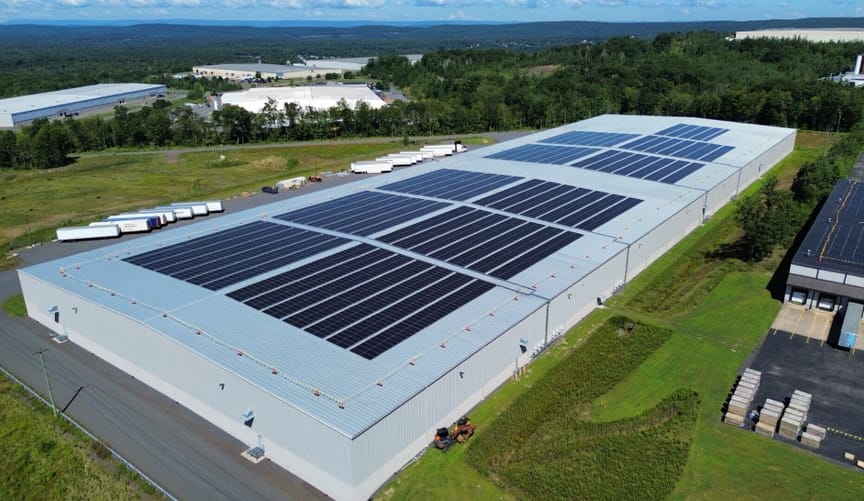
But state lawmakers, utilities, regulators, and solar developers are tussling over the rules that govern such installations, and it’s unclear whether new legislation to resolve their disputes will be passed this year. That worries Victoria Stulgis, president of Black Bear Energy.
Last month, her company and its partners celebrated the energization of 4.9 megawatts of solar on the roofs of two warehouses owned by EQT Real Estate in Mountain Top, Pennsylvania. The two projects, developed by Sigma Renewables and Scale Microgrids and managed by Black Bear Energy, are among roughly 2,100 mid-sized generation projects being planned in the state, most of them distributed solar.
What makes these projects possible is Pennsylvania’s Alternative Energy Portfolio Standards Act, a 2004 law allowing medium-sized projects that generate power with a range of technologies, from solar and wind to waste biomass and coal-bed methane, to earn a relatively high rate for the energy they feed to the grid.
After years of battling with utilities, solar developers won a 2021 decision from the Pennsylvania Supreme Court that laid the groundwork for a rapid expansion of mid-sized projects throughout the state.
But in the past few years, Pennsylvania utilities have cast a pall over that growth with a series of actions that could curtail the revenues these projects can earn, Stulgis said.
“Developers and institutional property owners have invested significant time and capital to develop these solar projects,” she said. Black Bear Energy has completed 15 megawatts of projects, has 22 more megawatts under construction, and has secured interconnection rights for another 106 megawatts across 34 projects, she said.
“Changing those rules midstream would undermine confidence and create real risk for projects already in development,” she said. “Some developers are still leaning in, believing there may be a viable path forward, while others are walking away from shovel-ready projects because of the uncertainty.”
Unlike neighboring states such as Maryland, New Jersey, and New York, Pennsylvania hasn’t adopted a program to enable community solar. Such projects are designed to provide enough revenue to spur third-party developers to build mid-sized solar arrays, to which utility customers can subscribe to lower their bills.
Instead, solar projects of up to 3 megawatts in Pennsylvania are compensated through net metering, a system that’s more commonly used with residential rooftop solar and other small-scale installations. The projects earn a close-to-retail rate for power they send to the grid, notably more than the wholesale rate that larger projects earn.
Solar developers argue that the existing rules allow businesses, school districts, public agencies, and farms to offset rapidly rising electricity costs by hosting solar projects. But utilities argue that paying close to retail rates for electricity from these arrays forces them to raise rates on the rest of their customer base — a version of the cost-shift argument that has dogged battles over rooftop solar net-metering programs over the past two decades.
The Pennsylvania Public Utilities Commission supports the utilities’ cost-shift argument. In March testimony before the state’s House Energy Committee, PUC Chair Stephen DeFrank said that costs from distributed generation projects moving through the interconnection process are projected to exceed $90 million per year by 2027, and could reach $700 million per year if the more than 2,100 projects seeking to be built “proceed under existing rules.”
If utilities aren’t able to recover those costs, they’ll have to increase other rates, he said. Those increases will be “first borne by commercial and industrial customers, including small businesses operating on narrow margins,” he said.
Advocates of distributed solar are pushing back against this cost-shift argument. Rather than increasing everyone’s utility bills, distributed solar will lower utility costs at large, they say, by bringing much-needed new clean generation to a state facing increasing electricity costs driven by the data center boom.
Those are the findings of an April report by Aurora Energy Research commissioned by community-solar developer Dimension Energy. The report analyzed whether building 2 gigawatts of distributed solar by 2030, a number that’s in line with current market growth, would reduce demand for power across the low-voltage distribution grids they’re connected to.
Aurora found that additional solar power could generate a total savings of $1.7 billion over the next 20 years, compared with a scenario under which it wasn’t built. Utilities would still need to pay those projects about $780 million over that time. But that would leave just under $1 billion in net savings that could be applied toward lowering utility customers’ energy bills.
“There are multiple mechanisms by which distributed solar can reduce costs,” said Zachary Edelen, a senior associate at Aurora.
For example, there is the roughly $1.2 billion over 20 years that Pennsylvania utilities could save in decreasing “capacity procurement obligations,” the costs they pay for resources to keep the grid running when demand for electricity peaks, he said. That change could make a substantial difference in Pennsylvania, which is part of PJM Interconnection, the grid operator serving 13 states and Washington, D.C.
PJM’s skyrocketing capacity costs have been a major factor in pushing up utility rates between 12% and 26% for customers of the state’s major utilities from December 2024 to December 2025. That has driven politicians including Pennsylvania Gov. Josh Shapiro (D) to demand reforms from both PJM and the state’s utilities.
Unlike California, Texas, and other states that are awash in solar and need more batteries to store it to lower summertime peak loads as the sun sets, Pennsylvania gets only about 1% of its electricity from solar, Edelen noted. Adding 2 gigawatts would bring that total to about 4% of the state’s total generation capacity.
That means there’s plenty of room for new solar to flow onto utility grids and reduce overall peak loads — especially during the late afternoon summer hours when PJM measures how much peak demand utilities have, and thus how much capacity they’ll need to procure.
These capacity cost reductions are the biggest source of savings from distributed solar, but not the only one, Edelen said. Aurora’s analysis found that 2 gigawatts of distributed solar could cut the cost of purchasing energy from other resources by about $250 million. And because that solar would provide power to nearby customers, it could cut roughly $200 million from future transmission grid expansions that would be needed to deliver power from large power plants farther away. Aurora also estimated that Pennsylvania could earn about $140 million in renewable energy credits from 2 gigawatts of solar.
And that’s not counting the environmental benefits. The state could reduce carbon emissions by more than 11.3 million metric tons and abate harmful air pollution by supplanting fossil-fueled generation with 2 gigawatts of distributed solar.
To be clear, utility-scale solar can deliver electricity at prices well below those being paid to mid-sized projects under the current Alternative Energy Portfolio Standards Act regime. Some energy experts agree with the utilities that policymakers should cut the rates paid to distributed solar systems and instead compensate them at the lower wholesale electricity prices earned by power plants and other competitive generators.
The problem with relying on utility-scale projects is that PJM’s notoriously backlogged interconnection process has made it difficult to add new generation capacity to its grid over the past half decade. PJM recently reopened its interconnection queue after a multiyear pause. But new projects are still expected to take several years to move through that process, and years more to win permits and secure financing to get online.
Distributed solar, by contrast, can be permitted, built, and interconnected to lower-voltage utility grids within a year or two, according to developers working in the region. That could make it one of the few options to prevent what PJM forecasts could be a regional shortfall in energy supplies as early as next summer.
“The reliability of our energy system is increasingly uncertain,” Elowyn Corby, Mid-Atlantic regional director with the nonprofit Vote Solar Action Fund, said in March testimony to the state House Energy Committee. Distributed solar is “one of the fastest, most cost-effective tools available to bring new supply online where it’s needed most, and ease pressure on an overstretched, under-supplied grid.”
Corby also noted that Pennsylvania’s unusual regulatory structure, unlike almost all other net-metering programs in the country, allows distributed solar systems to have little or no “on-site load” — meaning a solar array on a building or one constructed on open land could send all its power to grid instead of using the bulk of it to meet the host’s needs. This makes many of the projects being developed in the state more akin to “merchant” generators that compete with other power producers, lending weight to arguments that they should receive lower compensation.
“Thoughtful reform that addresses how excess generation is treated, and that draws a clear line between distributed generation intended primarily to meet on-site load and merchant generation where the aim is primarily to sell excess generation to the grid, is not an attack on solar — it is responsible stewardship of a valuable policy,” she said.
Pennsylvania lawmakers have proposed similar bills to draw that clear line — one in the Democratic-controlled House and one in the Republican-controlled Senate. Both bills would allow projects that have already been built or that had utility interconnection agreements before mid-2025 to retain existing payment structures, although they would give the Public Utilities Commission the option to cap the total number of projects that qualify.
For projects that don’t meet that cutoff, the bills would significantly cut the rates earned for power sent to the grid. But the bills would offer higher compensation for projects built on “preferred sites,” such as on warehouse rooftops and parking lot canopies, on abandoned mines and capped landfills, and adjacent to closed coal plants, as well as for systems that serve school facilities.
Brandon Smithwood, vice president of policy at community solar developer Dimension Energy, would like to see these kinds of reforms, but he’s not confident that lawmakers will pass a bill. If they don’t, the state will end up with a patchwork of rules. Different utilities around the state have been making changes to how they classify mid-sized projects and lowering the compensation they earn, and developers have been challenging those changes.
Smithwood thinks that solar advocates can reach compromises with individual utilities to preserve some room for the market to grow. He pointed to a settlement agreement reached in March — between utility PPL Electric Utilities, solar trade groups Coalition for Community Solar Access and Solar Energy Industries Association, and the Pennsylvania Office of Small Business Advocate — as a “workable outcome” for solar developers in the absence of legislative action. The settlement would allow up to 140 megawatts of projects to retain retail net-metering compensation for up to 10 years, and then impose a complex and likely lower compensation structure for projects beyond that cap.
But other distributed solar developers are pushing for the legislature’s bills to be passed into law to avoid rules that differ from utility to utility.
“We are asking for regulatory clarity through a legislative foundation with clear and protected rules and rates,” said David Riester, managing partner at Segue Sustainable Infrastructure, a solar and battery project investor. Segue has invested in a portfolio of roughly 250 megawatts of distributed solar projects in development across Pennsylvania, which, if completed, could represent roughly $500 million in infrastructure investment, he said.
That’s just a portion of the total capacity being targeted by developers in the state. “If the light went green tomorrow, I would put the over-under on 700 megawatts getting placed in service within a year, and up to 2 gigawatts by the end of next year,” he said. “There’s this huge supply of power that’s ready to build.”
Segue is considering putting more money into more projects in Pennsylvania, Riester said. But without some clarity from utility regulators or lawmakers on how much these distributed solar projects will be able to earn, “those investments are on hold,” he said.
In the late 20th century, a handful of countries — led by Brazil and the United States — turned to liquid biofuels to reduce their dependence on foreign oil markets, producing transport fuels from cheap crops instead.
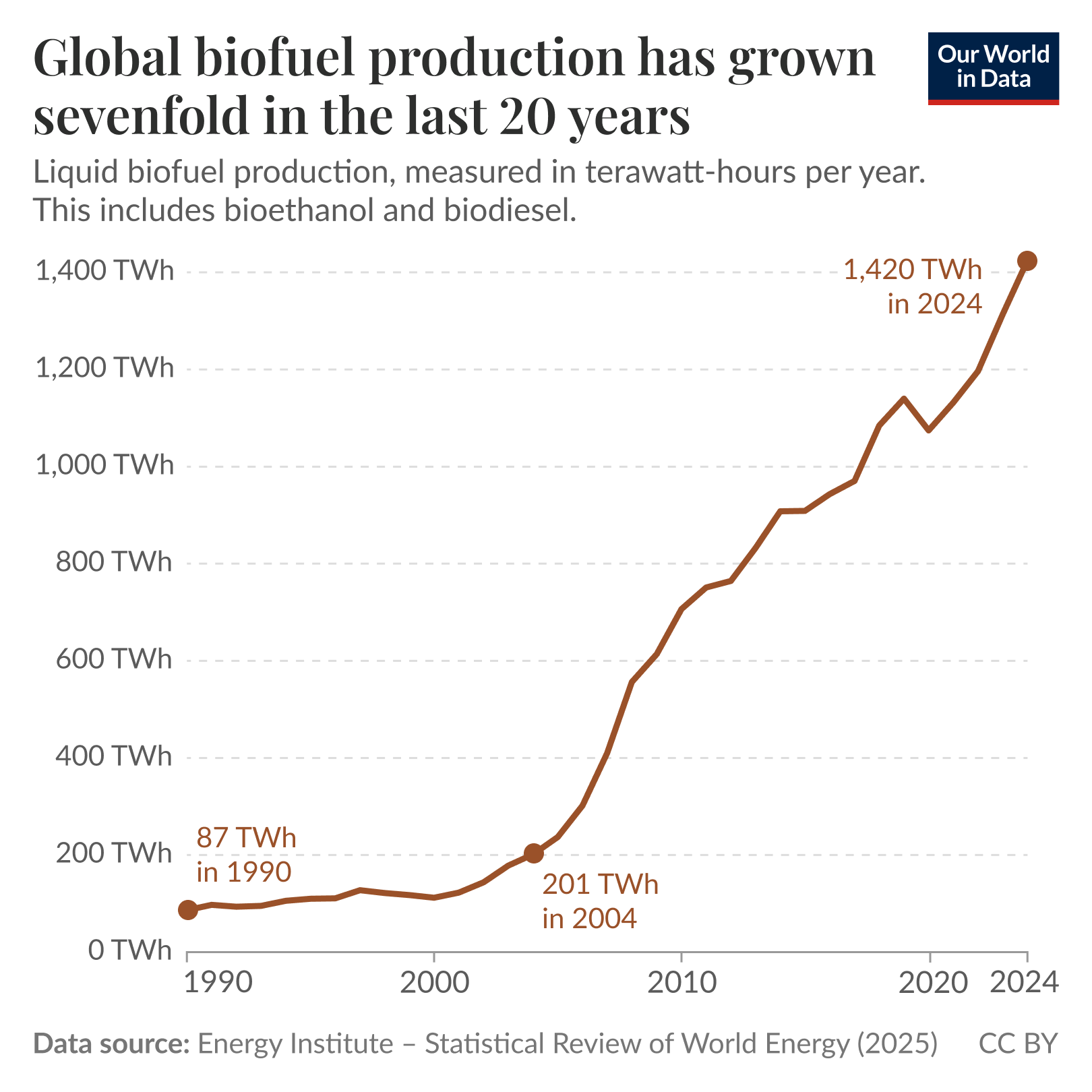
In the early 2000s, interest in biofuels ramped up sharply, and not just in the Americas. They came to be seen as a leading method to decarbonize road transport. This was because today’s alternative to the combustion engine, the electric car, was still far too expensive.
Over the last two decades, global liquid biofuel production has grown sevenfold, as the chart shows.
Electric vehicles are now far cheaper and, in some places, cost-competitive with petrol cars, so biofuels are no longer seen as the central answer to low-carbon transport.
Yet, the world produces more of them than ever, and this is expected to grow over the coming decade, largely due to fuel standards and national policies that have promoted them.
The share of power generated by wind and solar exceeded 30% in over a dozen states in 2025, which was a banner year for renewables even amid Trump’s attacks.
Quick — ignore the map above and take a guess: Which three states get the highest share of their power from wind and solar?

If you said Iowa, South Dakota, and New Mexico, well done. If you had Texas or California in there, fair enough — but neither of those clean-energy behemoths made it onto the podium, per the latest report from trade group American Clean Power Association.
Of the electricity produced in Iowa last year, 61% came from wind and solar — and pretty much all of that was wind. For decades, the state has been a leader on wind energy, though in recent years, development of new projects has dried up because of mounting local opposition and the Trump administration’s broader attacks on renewable energy.
South Dakota is a similar story, at 59%. Consistently gusty weather and ample land have led the state to install lots of wind turbines, and solar is scant in comparison.
New Mexico, which got about half its electricity from wind and solar in 2025, is a bit more balanced. Wind accounted for 36% of its power, and solar for 17%. The state is also a leader in grid batteries, which it is building out quickly to save more renewable energy for periods when the sun isn’t shining and the wind isn’t blowing.
The leaderboard could soon change as some states charge toward ambitious 2030 clean energy targets. California, for one, saw a massive leap in renewable energy production last year, with solar and wind accounting for 44% of its generation. The year before, that figure was 38%.
In total, 13 states generated more than 30% of their electricity from wind and solar last year, and the clean energy sources provided 17% of the nation’s grid-scale electricity overall — a new record.
Wind and solar are growing in the U.S. despite fierce opposition from the Trump administration, which has ripped away tax credits and slow-rolled or withheld permits for dozens of gigawatts’ worth of projects.
The reason for the sector’s ascent is simple. As electricity demand and utility bills spike, solar and wind — along with batteries — are cheap and fast ways to get more power flowing. The same cannot be said for coal plants (which are expensive to run) or natural gas facilities (which take a long time to build because of an equipment supply crunch).
These facts add up to one outcome: Solar and wind will keep rising to new heights in states across the nation.


.svg)
