

 Back
Back
This story was originally published by The Texas Tribune.
When Texas legislators conceived of the Texas Energy Fund in the spring of 2023, its goal of jump-starting the construction of more natural gas power plants to support the state’s strained power grid seemed reasonable.
In the two years since that vote, however, experts say the energy market has turned against the development of gas-fired power plants. Experts and energy companies say the fund’s $7.2 billion worth of low-interest loans and bonus grants may not be appealing enough to overcome those economic headwinds.
“It is a challenging market for natural gas developers right now, and it has been for a good amount of time,” said Walt Baum, CEO of Powering Texans, a trade association representing Calpine, Constellation, NRG, and Vistra, the state’s four largest operators of dispatchable power.
Only two new proposals have been approved so far through the TEF’s In-ERCOT Generation Loan Program, one of four programs included in the fund intended to coax energy companies into building new gas power plants. The two loans, both to be paid back over 20 years at a 3% interest rate, would tap just $321 million of the $7.2 billion total.
Together, the plants would have a capacity to generate 578 megawatts of electricity, a drop in the bucket compared to the roughly 62,500 megawatts of additional electricity that regulators forecast the state will need to generate by 2030.
Another 15 loan applications are currently in the pipeline, totalling 8,392 megawatts, according to the Public Utility Commission, which administers the TEF.
But of the 25 total loan applications that have advanced to the fund’s due diligence review stage, seven have been pulled from consideration by the companies that filed them, citing supply chain issues or forecasts that the projects would not be as profitable as expected. An eighth application was denied funding last fall due to accusations of fraud.
The most recent company to withdraw an application, Hunt Energy Network, cited the cost-effectiveness of constructing a natural gas power plant under the loan program as the reason for its withdrawal, according to a July 25 letter to the PUC.
The fund was created in the wake of Winter Storm Uri, the February 2021 storm that plunged most of the state into blackouts during freezing weather for days, leaving hundreds of people dead.
Gov. Greg Abbott and other Republican leaders were quick to blame trouble with wind and solar power generation for the power outages. While renewables did struggle to generate electricity in the frigid temperatures, so did natural gas power generation after power plant equipment and some pipelines that supply gas to the plants froze.
After that disaster, lawmakers argued that the state needed more on-demand power — specifically natural gas power plants — that doesn’t require wind and sun to generate electricity. They started the Texas Energy Fund with an initial $5 billion, and earlier this year added another $5 billion — but $2.8 billion was set aside for separate programs to support backup power generation for critical infrastructure and modernization incentives for natural gas plants.
But since 2023, the economic factors working against the development of natural gas plants have only worsened.
Energy demand is rising globally due to the construction of new data centers for artificial intelligence, and many regions are turning to natural gas power because of its relative affordability, lower emissions compared to coal, and its ability to operate at all times of the day, unlike wind and solar.
That demand is straining the supply chain for turbines, specialized equipment used in power plants that cost tens of millions of dollars. Wait times on orders for the machinery have doubled just over the past year, and tariffs are now increasing their price further.
A turbine order placed today likely would not arrive before 2029, and only if a company were willing to pay a premium to get it quickly, said Doug Lewin, author of the Texas Energy and Power Newsletter.
At the same time, the Electric Reliability Council of Texas, the state’s power grid operator, is predicting energy demand in the state will double by 2030. The increase is driven by oil and gas operators in the Permian Basin transitioning operations to run on electricity rather than gas or diesel, as well as Texas’ own AI and data center boom.
The state is on course to meet those electricity demands, but largely through advancements in solar technology and battery storage, which are significantly cheaper than natural gas power plants to install. In Texas’ deregulated energy market, which gives preference to the least-expensive power, this takes away the forecast market share available to companies hoping to profit from a new natural gas power plant, meaning the plants cost more to install and are likely to make less money over time, said Dennis Wamsted, an energy analyst with the nonprofit Institute for Energy Economics and Financial Analysis.
“Markets speak loud and clear if you listen to what they’re saying,” Wamsted said. “The market in Texas is saying loud and clear that gas is not going to be built any time soon.”
Legislators this spring have responded by extending the deadline for spending the $5 billion they approved in 2023. Under the original legislation creating the fund, the PUC had until the end of this year to distribute the money earmarked for power plant construction loans. Senate Bill 2268 by state Sen. Charles Schwertner, R-Georgetown, gave the PUC authority to extend that deadline if “market factors necessitate.”
“What we didn’t know two years ago is that various market influences would affect the TEF application process, such that supply chain disruptions … would impact the timeline for several otherwise well-qualified projects,” Schwertner said in an April committee hearing about the bill.
The PUC said in a statement that demand for the natural gas plant loan program has been high, citing the 15 applications that have reached the due diligence review stage. The agency said it is focusing on reaching loan agreements for those 15 applicants before deciding if an extension on the disbursement deadline is necessary.
State Rep. Rafael Anchía, D-Dallas, said he believes those who have applied for loans were planning to build a natural gas plant without the state energy fund and are now asking taxpayers to help cover the cost.
“If taxpayers are subsidizing a lower interest rate than what they could get in the market, of course [energy companies] will take a free ride,” Anchía said.
Anchía voted against SB 2268, calling the loan program a “big government” approach to influencing the energy market. He did vote for the additional $5 billion in money for the fund, citing the fund’s two other programs supporting backup power generation for critical infrastructure and modernization incentives for natural gas units.
Members of the Legislature’s Texas Energy Fund Advisory Committee have not met since October but plan to in the coming months as part of a regular review of the effectiveness of the fund’s policies, said Rep. Ana Hernandez, D-Houston, and a member of the committee.
Rep. David Spiller, R-Jacksboro and cochair of the advisory committee, said he believes the fund’s effectiveness is worth studying because the Legislature’s original intention was to bring these gas plants online quickly.
“We know that over a period of time we will get to where we need to be,” Spiller said. “My concern is over the next five or six years, bridging that gap. I think sooner rather than later, we need to look at that and maybe review what we have in place and tweak it some.”
The Texas Tribune is a nonprofit, nonpartisan media organization that informs Texans — and engages with them — about public policy, politics, government, and statewide issues.
It sure looks like the Trump administration is not going to let any coal plants close down during its term — no matter the cost to consumers and to the climate.
About 27 gigawatts’ worth of coal is slated to retire in the U.S. between now and the end of 2028, per U.S. Energy Information Administration data, equal to roughly 15% of the country’s current coal fleet.
Coal plant retirements have been the engine of U.S. progress in cutting emissions. As natural gas became more abundant and renewables plummeted in cost, more than 140 gigawatts’ worth of coal plants have retired since 2011, when the dirty energy source peaked at nearly 318 GW of generation capacity. Carbon emissions from the power sector have fallen steadily over that same period.
Now, the U.S. gets more power from wind and solar alone than it does from coal, an extremely carbon-intensive form of energy that provided around half of the country’s electricity at the start of the millennium.
But President Donald Trump is trying to put a stop to coal’s demise. On his first day in office, Trump declared a national energy emergency that experts have called baseless and which is now being challenged by 15 states in court. The “emergency” is also belied by Trump’s efforts to obstruct clean energy, which for years has accounted for over 90% of new electricity added to the grid.
Trump has since built on that edict by availing himself of emergency powers to force fossil-fuel plants to stay online past their scheduled retirement.
In May, the Trump administration issued 90-day stay-open orders for two facilities set to close days later: the J.H. Campbell coal plant in Michigan and the Eddystone oil- and gas-burning plant in Pennsylvania. Trump just reupped those mandates for another 90 days. Families and businesses will pay the price: The first three months of continuing to operate J.H. Campbell alone could cost consumers as much as $100 million, estimated Michigan’s Public Service Commission chair.
And in July, the Department of Energy released a specious report that overstates the risk of grid blackouts. States are attempting to make the agency fix the report, which they expect will be used to justify additional emergency stay-open orders for other coal plants. Blocking all planned closures of fossil-fuel power plants could result in billions of dollars in additional yearly energy costs for consumers by the end of Trump’s term.
The administration’s desire to revive America’s dirtiest form of power will only exacerbate the nation’s brewing utility bill crisis. The price of electricity has been rising for several years, and despite promises of slashing energy costs, Trump’s pro-coal, anti-renewables agenda is making things even worse.
The Trump administration’s order to stop construction of the nearly completed Revolution Wind project is putting hundreds of offshore workers out of a job — including dozens of local fishermen who voted for President Donald Trump and are asking him to reverse course.
A week ago, the acting director of the Bureau of Ocean Energy Management, Matthew Giacona, ordered the Danish wind developer Ørsted to stop all offshore work on the Revolution Wind farm so the federal government can“address concerns related to the protection of national security interests of the United States.” Giacona did not specify the nature of those security concerns.
Construction began on the 704-megawatt project in January 2024 and is now 80% complete, according to Ørsted. The wind farm is being built off the coast of Massachusetts and Rhode Island in a federally designated “wind energy area” that received sign-offs from multiple branches of the military, Canary Media reported Sunday.
Though often seen as opposed to offshore wind, many New England fishermen have made peace with the industry in recent years.
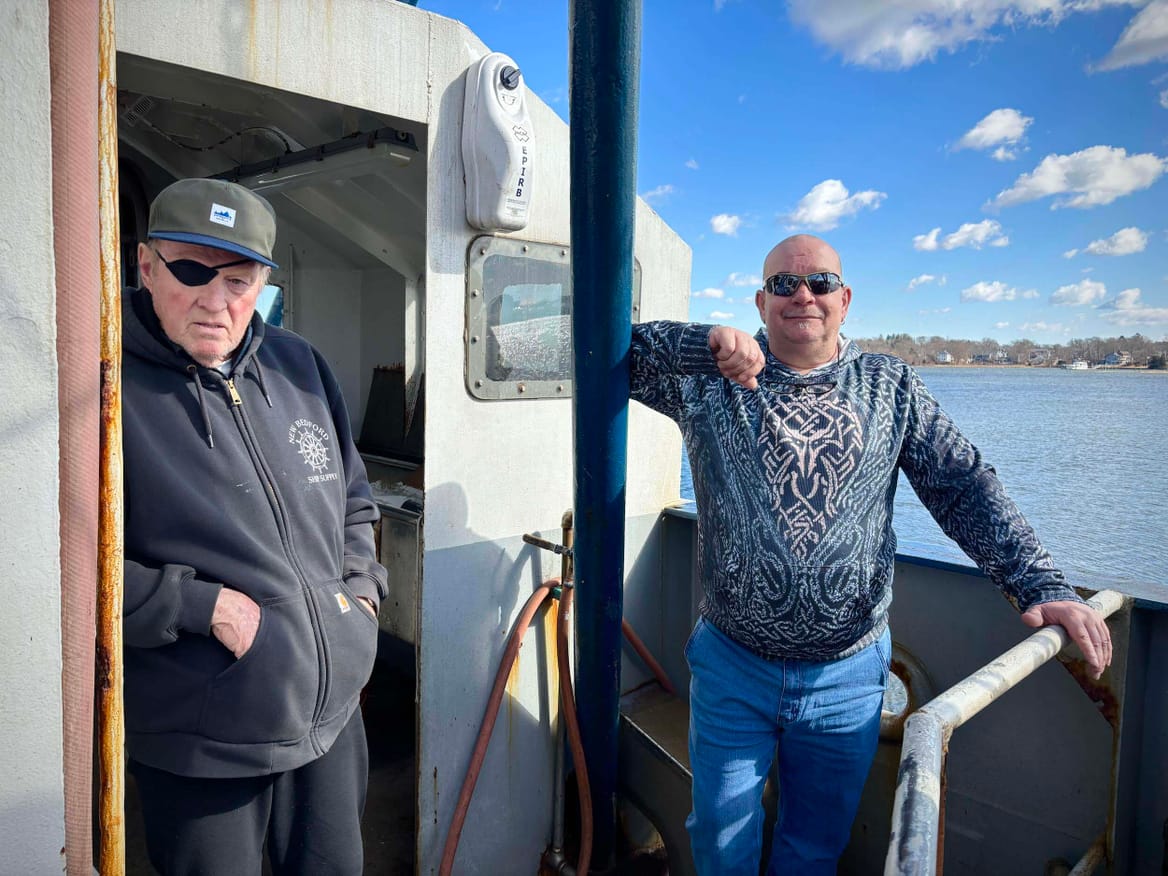
They increasingly rely on part-time salaries from wind companies as fishing revenues dry up. Over the past two years, Ørsted put 80 fishermen to work on the Revolution Wind project, paying out $9.5 million to captains, deckhands, and fishing boat owners, according to Gary Yerman, a Connecticut-based fisherman who founded and leads a fisher cooperative called Sea Services North America, which has an active contract to work on Revolution Wind.
“Most of us are Trump voters, and we still believe in a leader who builds. That’s why we’re asking President Trump to reverse the stop-work order issued to Revolution Wind by Interior,” Yerman told Canary Media.
The stop-work order echoes a similar one the Interior Department gave in April that froze all offshore work on New York’s Empire Wind project — a move that grounded Sea Services’ fishermen for a month, until Trump lifted the ban.
Yerman and other commercial fishermen remained quiet the last time Trump’s assault on a wind farm put them out of work. This time they’re speaking out.
“It’s madness to stop a project that already had permits,” said Jack Morris, a Massachusetts-based scalloper and manager for Sea Services who voted for Trump. “This is not something any of us planned for: the captains, the crew, the shore engineers, the people we buy food from for our trips.”
Ørsted was one of the first firms building turbines in U.S. waters to employ local fishermen, offering Sea Services a contract in 2021 to perform safety and scout tasks. The cooperative helped build Ørsted’s South Fork Wind — America’s first large-scale offshore wind farm, which went online last year.
Today, it’s common for wind developers to rely on local U.S. fishermen. Avangrid and Vineyard Offshore, codevelopers of the embattled Vineyard Wind project off the coast of Massachusetts, have paid out about $8 million over the past two years directly to local fishermen and vessel owners.
“If the infrastructure and pilings are already in, what good is stopping now?” fisherman Tony Alvernaz told Canary Media when asked about the Revolution Wind pause. A Massachusetts fisherman unaffiliated with Sea Services, Alvernaz works part-time for Vineyard Wind, assisting with the ongoing construction of its 62 turbines. Of those, 17 are already sending power to the grid.
Alvernaz is concerned about the Trump administration’s pattern of halting wind projects without warning and with little justification. Trump has already pressed pause on two of the five offshore wind farms currently under construction in America today.
In a statement Monday, an Ørsted spokesperson said Revolution Wind supports more than 2,500 jobs around the U.S., including “hundreds” of local offshore jobs.
Commercial fishermen have spent a total of 1,109 days working at sea for Revolution Wind, according to Yerman. Now, sitting at the docks due to the Trump administration’s stop-work order, the 15 fishermen who planned to be at sea, working 10-day shifts throughout this month, will get paid nothing.
“Our cooperative only invoices when our boats are on active duty. Fishermen are paid for the days they work, not for standby,” Gordon Videll, CEO of Sea Services, told Canary Media. The group is calling on Trump to lift the ban so that its members can resume the job, which would have involved eight more fishermen helping with an offshore substation this fall.
The extra income from Revolution Wind has been a lifeline, particularly for scallop fishermen who, in recent years, have been severely restricted in how much they can fish.
Strict federal quotas have been put in place to allow scallop populations to rebuild after years of being overfished, according to Morris, but that has meant scallopers — who form the majority of Sea Services’ members — are off the water for about 10 months a year.
Before the pause on Revolution Wind, scalloper Kevin Souza expected to make an additional $200,000 working on the project as a part-time boat captain for two years. Souza told Canary Media in February that, had he stuck to scalloping alone, he’d be “lucky” to earn $100,000 in a single year. The deckhands he hires only bring in around $30,000 per year working on scallop boats, but the offshore wind gig makes it possible for them to earn a “middle-class wage,” said Souza.
Souza has recruited both of his sons, his nephew, and other young people from longtime fishing families to work for the wind industry. They might have otherwise left the scallop industry if not for the supplemental income, he said.
As a group, America’s commercial fishermen have long been loyal to Trump. Last week’s order is shaking that confidence.
“I can’t think of one guy who isn’t a Trumper in our co-op. We’re blue-collar guys (and some gals too) who get up before dawn, work with our hands, and we trusted him to look out for us. The truth is, we love President Trump,” Yerman said.
In New Bedford, Massachusetts, home to the country’s most profitable fishing port, “TRUMP 2024” flags fly from dozens of boats docked in the harbor. A few of those crews work for the offshore wind companies, and at least one captain lowers his MAGA flag before setting out to the wind farms, according to Rodney Avila, a Sea Services fisherman.
That kind of faith makes Trump’s pause on Revolution Wind even more gutting.
“It’s like having the rug pulled out from under you. … Nobody understands why Trump did it. I don’t know what Trump’s agenda is,” said Morris.
Trump’s attacks on wind have dried up job prospects for local fishermen up and down the East Coast. His administration’s hostile actions have thrown sand in the gears of a New Jersey wind farm that planned to start construction in the next three years, Maryland’s first offshore wind farm, and another wind project off the coast of Maine.
In addition to targeting individual projects, the Trump administration has initiated policies intended to undermine the entire sector: killing offshore wind leasing, pausing permitting for wind farms, and sunsetting tax credits critical to their economic viability.
Many fishermen, including those who have pocketed thousands by working at offshore wind farms, remain wary of the companies building turbines out at sea.
“No fisherman loves new structures in the water, but we all have grandkids,” Roy Campanale, a Sea Services member based in Rhode Island, told Canary Media. “We’ve lived with the water getting warmer, watched the fish move north, and had to adapt again and again.”
Trump’s pause on Revolution Wind imposes yet another hardship.
Alvernaz voted for Trump and opposes certain wind farms that he believes pose a risk to his favorite fishing grounds. He said that he does not support Revolution Wind due to its placement on Cox Ledge, a swath of seabed identified by the National Oceanic and Atmospheric Administration as critical habitat for Atlantic cod.
But if Trump decides to freeze Vineyard Wind, for example, Alvernaz said he “would not be happy.”
Alvernaz has worked on the water for over 40 years. Yerman’s fishing career spans 50 years. With nearly a century of combined experience in New England’s waters, neither of them are buying the Trump administration’s excuse for pausing Revolution Wind.
“Something about national defense? How can it be an issue of national defense if there are other wind farms out there with the same technology?” pondered Alvernaz. “It’s kind of odd.”
President Donald Trump has put energy front and center during his second term. On his first day in office alone, he froze spending under the Inflation Reduction Act, took a wrecking ball to offshore wind, and declared an “energy emergency,” citing affordability and grid reliability issues.
Critics have dismissed the emergency as a fabrication. Attorneys general from 15 states are challenging it in court. And Trump, whose policies are slowing the construction of cheap, clean energy, is not exactly acting like there’s an emergency at hand.
Take the Revolution Wind project as the latest example. Last Friday, the Trump administration ordered developer Ørsted to stop all construction on the huge, nearly complete project, citing unspecified “national security” reasons. It’s the second time the government has issued such an order to an offshore wind project that would’ve brought clean power to the Northeast.
The stoppage poses a real threat to the grid in New England, which is home to some of the highest power prices in the nation.
Revolution Wind was supposed to start delivering power next year — very soon in grid-planning terms. ISO-New England, the region’s grid operator, said Monday that it is banking on the wind farm to help meet demand and maintain power reserves. Further delays will continue the region’s reliance on natural gas, which ISO-New England has warned is in short supply and which is subject to price volatility.
Blocking major energy projects from coming online is not exactly consistent with declaring an energy emergency.
And yet, the Revolution Wind pause is just one example of how the administration is stymieing clean energy deployment. In recent months, it has rolled back federal subsidies and grants and implemented new federal leasing rules under which renewables are doomed to fail. Because of these policies, the country is expected to build less than half as much clean energy over the next decade — an outcome experts widely agree will raise power prices.
In fact, the only place the administration has acted as if its emergency is real is when it comes to preserving fossil-fuel power plants on the brink of closure.
The U.S. Department of Energy recently extended its emergency order barring a Michigan coal plant from retiring — a decision that cost the plant’s owner $29 million in its first five weeks. And on Thursday, the DOE extended another order keeping a Pennsylvania gas- and oil-fired peaker plant online. Regional grid operators had previously deemed both plants safe to close.
The moves reveal the incoherence at the heart of Trump’s energy policy, which exploits a questionable emergency to prop up expensive and unnecessary fossil-fueled power plants on the one hand — and blocks the fastest-growing and lowest-cost form of energy on the other.
Clean energy is getting its own day of action
If you’ve read even one edition of this newsletter since Trump took office, you’ll know that clean energy is facing a crisis in the U.S. Sun Day aims to elevate that message and boost the transition from fossil fuels with a nationwide day of action coming up on Sept. 21, Canary Media’s Alison F. Takemura reports.
The brainchild of climate journalist and activist Bill McKibben, Sun Day looks a lot like Earth Day. Advocacy groups and individuals will hold more than 150 events across the country, offering tours of homes with rooftop solar arrays, EV test drives, and other just-plain-fun activities like performances and face painting. You can find an event near you via the Sun Day website, or tap into Sun Day’s toolkit to host an event of your own.
Two nuclear plants inch closer to “renaissance”
Two retired nuclear plants each took a step toward restarting this week. On Monday, the Federal Energy Regulatory Commission approved a waiver that will let the Duane Arnold plant in Iowa move toward restarting, which plant owner NextEra Energy hopes to do by 2029. And in Michigan, the Palisades plant has returned to operational status after being decommissioned for three years. The designation just means it can start receiving fuel again — it’s not yet generating electricity.
The Trump administration is pushing for a “nuclear renaissance,” both through the development of new advanced nuclear reactors and the reopening of large, retired facilities. The administration and nuclear advocates say the power source can help meet growing electricity demand, though the U.S.’s most recent attempt to build a new nuclear plant took years and billions of dollars more than expected.
‘It’s madness’: New England fishermen who rely on salaries from their work with Revolution Wind call on Trump to reverse the Interior Department order stopping work on the offshore wind project — and point out that most of them voted for the president. (Canary Media)
From misinformation to memorandum: The Trump administration has turned “capacity density” — a fossil-fuel industry talking point that argues wind and solar take up too much land for the power they produce — into a criterion for federal leasing that renewables are doomed to fail. (Canary Media)
Keeping solar affordable: With power prices on the rise, developers of bill-cutting solar projects for low-income households are finding ways to move projects forward despite federal funding rollbacks. (Canary Media)
Fossil-fuel injustices: A peer-reviewed study finds premature deaths and illnesses stemming from oil- and gas-related air pollution disproportionately affect Black, Indigenous, Asian, and Latino communities. (Los Angeles Times)
The state of permitting: State lawmakers across the U.S. have introduced a total of 148 bills aimed at restricting clean energy development this year via increased local approvals, expanded setback requirements, and other measures, though only a handful of those proposals have passed. (Latitude Media, Clean Tomorrow)
Visualizing emissions: A research group’s new Methane Risk Map visualizes invisible methane emissions and the harmful pollutants released alongside them, in hopes of warning neighbors about their health effects. (Inside Climate News)
A red flag for nuclear: Former Nuclear Regulatory Commission leaders say the Trump administration’s attempts to exercise control over the independent agency have led senior leadership to depart, “creating a huge brain drain” that raises the risk of accidents. (Financial Times)
Good news for solar: Despite federal setbacks, the U.S. is on track to build a record amount of new solar this year, with the renewable resource estimated to make up more than half of generating capacity added in 2025, according to the U.S. Energy Information Administration. (Canary Media)
Gas plans fizzle: In the two years since Texas lawmakers created a $7.2 billion state fund to jump-start the construction of more gas-fired power plants, officials have approved only two proposals totaling just $321 million, and developers have pulled other applications over supply chain issues and profitability concerns. (Texas Tribune)
The Department of Energy has once again delayed the retirement of an oil- and gas-fired power plant, adding to concerns that the Trump administration aims to prevent any fossil-fueled power plant from closing during its term.
Today, the Trump administration reissued an emergency order forcing the Eddystone power plant outside of Philadelphia to stay open another 90 days. The plant’s two main units, totaling 760 megawatts, were originally set to shutter on May 31, but one day before their scheduled retirement, the DOE issued an emergency stay-open order, which expired today.
Eddystone is not the only fossil-fueled power plant being forced to stay open past its closing date. Last week, the Trump administration extended its emergency stay-open order for the J.H. Campbell coal plant in Michigan, which was also slated to close in May.
Before this year, the DOE had wielded its emergency powers sparingly, issuing orders mostly in response to utilities or grid operators who requested federal restrictions be lifted during times of extreme strain on the grid. It has never before used Section 202(c) of the Federal Power Act to intervene in a power plant retirement, according to Caroline Reiser, senior attorney for climate and energy at the Natural Resources Defense Council.
But under President Donald Trump, the agency is invoking those powers to extend the life of fossil-fueled units that grid planners had already deemed unnecessary, raising costs for consumers and stalling the transition to carbon-free energy.
In today’s order, the DOE once again pointed to an “emergency” in portions of the electricity grid operated by PJM Interconnection, which serves Washington, D.C., and 13 states from Illinois to Virginia. The agency cited recent reports from PJM that found, among other things, that the grid operator could struggle to keep up with demand this summer during heat waves.
The DOE said in the new order that the emergency conditions that led to the first directive are still in place, as summer isn’t over. The Eddystone station’s units 3 and 4 generated over 17,000 megawatt-hours during June, per U.S. Environmental Protection Agency data cited by DOE. They also ran for a combined total of 47 hours during a three-day spell of hot weather in late July.
The order also cites a widely criticized report that the DOE released in July, which energy experts say vastly overstates the risk of grid outages. The citation further confirms fears that the Trump administration will use the methodologically flawed report to continue to justify keeping aging, expensive fossil-fueled power plants online.
PJM has supported both stay-open orders, calling each one a “prudent, term-limited step” that would allow the DOE, PJM, and Eddystone’s owner, Constellation Energy, to analyze the longer-term need for these generators.
“PJM has previously documented its concerns over the growing risk of a supply and demand imbalance driven by the confluence of generator retirements and demand growth,” a spokesperson said in an emailed statement about the new order. “Such an imbalance could have serious ramifications for reliability and affordability for consumers.”
Regulators, energy experts, and advocates have questioned the DOE’s justification for keeping the Eddystone and the J.H. Campbell plants open. They point to the fact that the power plants’ owners, state officials, regional grid operators — including PJM itself — and other experts spent years evaluating the impact of closing these facilities and decided it was safe to shut them down.
For its part, the Eddystone plant has operated infrequently in recent years because the facility was not economical. Constellation filed a deactivation notice with PJM in December 2023, which was approved by the grid operator months later following a study that “did not identify any reliability violations” from the shutdown.
In June, state utility regulators and environmental groups filed rehearing requests with the DOE in an attempt to force the agency to reconsider its emergency orders. The agency denied those requests, clearing the way for critics, like the state of Michigan, to take the agency to court.
Advocates fear that these directives, taken together with recent executive orders and other DOE moves, signal the Trump administration’s commitment to keeping every fossil-fuel plant running, no matter the consequences.
In total, just over 38 gigawatts’ worth of power plants are slated to close between now and the end of 2028, more than two-thirds of which is coal.
Blocking all planned closures of fossil-fueled power plants would be disastrous for efforts to decarbonize the U.S. power grid — and also for consumers, who are already navigating fast-rising power bills. It could cost utility customers billions of dollars each year to prop up this unnecessary infrastructure, according to an August report from research firm Grid Strategies.
The administration’s statements have done little to quell advocates’ fears. In fact, a Tuesday post on X from the DOE was crystal clear.
“Coal plants will STAY IN OPERATION,” it read.
Commonwealth Fusion Systems just raised $863 million in additional funding as the company works to achieve the decades-old dream of commercializing nuclear fusion.
On Thursday, CFS said that, with its Series B2 funding round, the startup has raised about $3 billion in capital since it was spun out of the Massachusetts Institute of Technology in 2018. That’s just under one-third of the $9.8 billion in total funding for fusion companies globally.
Seemingly every type of investor showed up for CFS’ latest funding round as the world’s interest in the long-promised, highly speculative technology continues to soar. Over three dozen names appear in the startup’s new announcement, including those of venture capitalists, sovereign wealth funds, private equity firms, individual investors, industrial firms, hedge funds, pension funds, and private banks.
CFS has ambitious plans to begin supplying one of its big-name investors — Google — with power in the next few years from a plant in Virginia.
“This funding recognizes CFS’ leadership role in developing a new technology that promises to be a reliable source of clean, almost limitless energy,” Bob Mumgaard, CEO and cofounder of CFS, said in an Aug. 28 press release. He said the company “will enable investors to have the opportunity to capitalize on the birth of a new global industry.”
To oversimplify, nuclear fusion — the source of the sun’s energy — involves converting hydrogen into plasma, which is then compressed and confined in a process that releases massive amounts of energy. Proponents say that fusion power plants could offer the best of nuclear energy — carbon-free electricity supplied around the clock — without the drawbacks of today’s nuclear fission plants, including the risk of catastrophic meltdowns and evergrowing stockpiles of radioactive waste.
Despite decades of research and billions of dollars in funding, fusion energy remains on the extremely early end of the technology-development curve. Yet a handful of recent engineering breakthroughs are giving fusion scientists and their deep-pocketed investors fresh hope that commercial fusion power could finally come to fruition.
Other startups such as Avalanche Energy, General Fusion, Helion Energy, TAE Technologies, Xcimer Energy, and Zap Energy have also raised jaw-dropping funding rounds in recent years from billionaires and investment funds. The Fusion Industry Association lists more than 50 companies working in the field, which together raised $2.64 billion in private and public funding in the past year — nearly three times more than in the previous year.
This growing fleet of fusion startups is pursuing a variety of technologies, such as systems using mighty laser beams or extremely high voltages. CFS is taking a magnetic approach.
At its site in Devens, Massachusetts, CFS is building a donut-shaped device called a tokamak that uses high-temperature superconducting magnets to contain and stabilize plasma during the nuclear reaction. The startup said it aims to have its SPARC reactor running by 2026 and to achieve another crucial milestone the following year: producing more energy in its reactor than is needed to power the machine.
CFS is also advancing its plans to build the world’s first grid-scale fusion power plant in Chesterfield County, Virginia, with the goal of putting power on the grid in the early 2030s. In June, Google agreed to buy half of the carbon-free electricity produced at the facility, which will go on a site owned by the utility Dominion Energy. Last week, Chesterfield County’s planning commission unanimously approved a conditional use permit for the 400-megawatt plant.
“We’re excited to make this longer-term bet on a technology with transformative potential to meet the world’s future energy demand, and support CFS in their efforts to reach the scientific and engineering milestones needed to get there,” Michael Terrell, head of advanced energy at Google, said in a June 30 press release.
Now all that’s left for CFS to do is prove its technology can work as promised.
AI data centers could flood the overtaxed U.S. power grid with demand and further drive up energy costs for consumers. Or, they could simply agree to use less electricity during the handful of hours per year when the grid is under the greatest stress, making it possible for tech companies to get the power they need without straining the system.
It sounds like an easy fix, but in reality it’s complicated to modulate the demand of a data center that can use as much power as a small city. That’s why it’s rarely done today. In fact, a Department of Energy report last year “identified no examples of grid-aware flexible operation at data centers” in the U.S., with one exception — Google.
Now, the tech giant is taking its flexibility efforts one step further and applying the concept to the machine learning operations that underpin its large language models, the technology driving the current boom in AI development.
This month, Michael Terrell, Google’s head of advanced energy, announced agreements with Indiana Michigan Power (I&M) and Tennessee Valley Authority (TVA), two utilities facing a lot of data center demand, that “represent the first time we’re delivering data center demand response by targeting machine learning workloads.”
Google’s new announcements are a really big deal, said Tyler Norris, a Duke University doctoral fellow and former solar developer and special adviser at the Department of Energy. That’s because they’re the first example of the kind of collaboration between data centers and utilities that needs to happen to keep costs from spiraling out of control.
Estimates of power demand from the AI race are all over the map and hard to trust, but at a minimum, most experts agree that data center demand for electricity outstrips supply. Consumer advocates and state lawmakers are increasingly worried that this dynamic is going to cause electricity rates to surge, as utilities incur the costs of building the power plants and grid infrastructure to serve data centers, and potentially push those costs onto customer bills.
That supply-demand imbalance is also a problem for firms like Google and its competitors, which are locked in a multibillion-dollar race to build the best possible AI system — a heated competition in which who gets electrons first could be a deciding factor.
Over the past five years or so, through its “carbon-intelligent computing” program, Google has been actively shifting nonurgent computing workloads — like processing YouTube videos — to prioritize clean power and avoid dirtier energy. It has also shifted computing load to help utilities manage grid emergencies.
Until recently, it hadn’t messed with power demand for machine learning. This sort of flexibility is new territory for utilities and grid operators, too: It’s not standard practice to allow large customers to come online only if they agree to curtail their power use, Norris pointed out.
“We’ve never planned loads this way, essentially for the entire history of the electric utility industry,” Norris said. But without this kind of approach, “it’s effectively impossible to see how some of these load forecasts can be met with purely physical infrastructure building.”
Flexible data centers like Google’s may have a significant advantage in getting those all-important electrons in the near term. A more rigid project may have to wait years to come online as grid infrastructure and power plants are built; a flexible data center, meanwhile, could be fast-tracked for interconnection using the grid capacity that’s already available.
The solution has its limitations, Terrell told Canary Media in an interview, but where it makes sense, it can be a powerful tool.
“We can’t do it everywhere. Some of our loads can’t be curtailed,” Terrell said. But where Google is able to do it, “there’s value to being able to secure capacity without having to wait for new infrastructure.”
The grid is crowded — but there’s plenty of room for data centers that can be flexible. That’s what Norris and a team of researchers at Duke University concluded in a February report.
The analysis found nearly 100 gigawatts of existing capacity on U.S. grids for data centers that can commit to 0.5% “annual average load curtailment.” That equates to being able to curtail less than half of their total power use for about two hours at a time during peak demand events that happen about 100 hours of the year.
There’s a simple explanation for this spare space: Grids and power plants are overbuilt to meet peak demands, or “worst-case conditions,” as Norris put it. But if data centers agree to avoid using power during those moments, it can obviate the need to expand the grid further to serve new, higher peaks.
It’s not a new idea in principle. Utilities have paid customers to reduce power use during peak demand for decades. But existing “demand response” programs tap current customers to help prevent emergencies for the grid as it is built today, Norris explained.
Google’s new deals with I&M and TVA, by contrast, are aimed at managing growing demand “in the form of a definitive long-term contract the utility can use for planning purposes,” he said. In other words, instead of using demand response to manage existing power needs, the utilities and Google are now wielding this approach to allow new users to come online. “That’s what sets it apart.”
Norris isn’t aware of any other data center-utility projects that are taking this longer-term planning view. In fact, “most data center developers won’t even release the nameplate megawatt scale of the facility,” he said — a feature of the highly competitive AI race.
In part because of this secrecy, it’s unclear how data center growth will play out in the real world. Most projections are based on speculative requests from developers seeking power in multiple locations for projects that may or may not end up being built.
But forecasts of data center growth generally indicate that they’re set to overwhelm the grid.
A December report from consultancy Grid Strategies found that five-year growth forecasts for U.S. utilities and grid operators have quintupled between 2022 and 2024, with data center hot spots such as Virginia, Georgia, Texas, and swaths of the Midwest particularly impacted. The past month has seen utilities in California, Colorado, New Jersey, and Pennsylvania report gigawatts of new data center requests.
That’s going to drive up utility rates, which are already rising due to a number of factors, including expensive investments in grid maintenance and expansion. While it can take time for the costs of accommodating new data centers to arrive on customers’ utility bills, the sheer scale of that expansion means that “the affordability concerns here are being put into stark focus,” Norris said.
Those future costs are starting to pile up.
Georgia Power won regulatory approval earlier this year to move ahead with plans for a controversial and unprecedentedly rapid buildout of power plants, almost entirely based on huge, uncertain forecasts of data center growth. The company has filed a more than $15 billion proposal revealing that much of its new infrastructure will be gas-fired. Virginia utility Dominion Energy is pushing for a similarly massive investment in fossil-fueled power to serve the world’s highest concentration of data centers. And Louisiana regulators last week approved utility Entergy’s plan to spend billions of dollars on gas-fired power plants and grid investments to serve a $10 billion data center from Meta.
In some states, customers are already paying more for energy because of data centers. PJM Interconnection, the grid operator serving Washington, D.C., and 13 states from Illinois to Virginia, has seen prices for capacity to maintain its grid skyrocket in the past year. PJM’s inability to bring new generation online is a chief culprit. But its ballooning future demand, another important part of the equation, is “almost entirely due to existing and projected data center load additions,” according to PJM’s independent market monitor.
Norris argued that utilities, regulators, and grid operators must start demanding that would-be data centers commit to some level of flexibility to receive grid interconnection. “If you’re planning for all new loads to be inflexible and serving them with firm at all hours of the year, that’s going to be extraordinarily expensive,” he said.
While data centers could build their own power supplies, “we also don’t want them to be running the backup [diesel generators] 200 hours a year to get online faster,” Norris said. Reliance on polluting on-site generators is already a problem for communities in Memphis, Tennessee, which are protesting the use of hundreds of megawatts of gas-fired turbines at a data center built by Elon Musk’s xAI.
Google’s approach of managing its data center power use to reduce carbon emissions represents a much cleaner alternative. “The capabilities we developed to do load shifting for carbon, we use the same capabilities to do demand response,” Terrell said.
Google’s agreement with TVA applies to existing data centers “north of Nashville and in North Alabama. We need to grow, but [TVA was] not in a position to serve us” in the short term, Terrell said. TVA has not released details of its agreement with Google, and Terrell declined to provide more specifics.
Google’s agreement with I&M centers on the tech giant’s $2 billion data center in Fort Wayne, Indiana, which started operations late last year but expects to ramp up its power needs over time, Terrell said.
In broad terms, the plan states that Google will commit both to restraining its use of power at its Fort Wayne data center during critical hours and to transferring credits for a portion of carbon-free energy it has contracted for in the region to I&M to help it meet its capacity requirements. “We need to be bringing new resources onto the system,” Terrell said.
Many of the details of I&M and Google’s plan filed with state regulators last month have been redacted for confidentiality reasons, which has raised concerns from consumer advocates. But the proposal does appear to align with new regulations aimed at controlling data center costs.
Earlier this year, Indiana utility regulators approved a settlement between I&M, data center developers, and consumer advocates that set new requirements for “large loads” — namely data centers — to commit to covering a significant portion of the costs they incur. The goal is to avoid forcing customers to pay higher bills for decades due to investments made to meet data centers’ needs.
More such rules are coming. Ohio regulators in July approved a similar settlement agreement, and a broader energy law passed in Texas this year will require large data centers to reduce power use during grid emergencies. PJM launched a fast-tracked effort this month to create new large-load interconnection rules, and Southwest Power Pool, a grid operator serving 14 Midwest and Great Plains states, plans to streamline connection for data centers and other big facilities that can commit to flexible operations or to providing their own power.
Data center operators have traditionally shied away from altering operations to save or shift energy, said Astrid Atkinson, CEO of grid-software startup Camus Energy. That makes sense, given the high value of the computing they’re doing — something Atkinson dealt with as former lead of the Google teams that maintain reliable computing at data centers providing web services and social media.
But data centers training AI models have more flexibility than those providing time-sensitive or business-critical services like processing financial transactions, she said. “They’ll be running large training jobs that use up a lot of their nameplate capacity for a period of time, but then they may sit idle for a long period of time,” she said. “You can potentially move them around in time a little bit.”
Camus Energy is already working on projects to enable flexible EV charging, but much of its recent work with utilities centers on managing new data centers, she said. “If it makes the difference in being able to build or expand a site now, or having to wait five years, that makes it worth doing.”
Indeed, some other utilities and data center operators are exploring grid flexibility. The Electric Power Research Institute, a largely utility-funded nonprofit, last year launched its DCFlex initiative, a collaboration that’s testing flexible computing at sites including an Oracle data center in Arizona and a Google data center in North Carolina.
And although most regulated utilities lack incentives to work on flexible interconnection — they earn guaranteed profits based on how much money they spend on grids and new power plants — Norris thinks the surge in demand could change their calculus. There’s only so much cost regulated utilities can put on their customers before regulators are forced to intervene, and the AI boom is testing those limits.
“The more they’re looking at big upgrades and infrastructure investments, the more they need to balance that with affordability,” Norris said.
Terrell said that Google is “having more conversations with utilities” about data center flexibility, though he declined to provide further details. “It’s an advantage for our business to be able to go to utilities and offer this.”
The Trump administration is making it harder for low-income households to access the money-saving benefits of solar — but hard doesn’t mean impossible.
There’s a lot for developers of affordable solar projects to navigate at the moment.
The Trump administration has clawed back billions of dollars in Inflation Reduction Act funding for projects serving low-income communities across the country, including $7 billion for the federal “Solar for All” program. In July, the GOP-controlled Congress passed a sweeping law that will swiftly phase out the tax credits solar developers use to bring down costs. And for months now, the administration has held up $20 billion in federal green bank funding, which some organizations planned to use to make solar available to more people.
Clean energy supporters are opposing the Trump administration’s freeze on green bank money in court and are expected to challenge the Solar For All clawback as well. In the meantime, the nonprofits and state agencies planning affordable solar projects with the money are left in limbo.
Still, some developers are forging ahead.
Take John Miller and Jessica Pitts as an example. The pair, which founded Flywheel Development in 2014, is still proceeding with all 35 of their planned low-income solar projects, which will deliver a total of 17.5 megawatts of solar power to people who otherwise wouldn’t be able to access the clean energy source. Miller and Pitts think organizations like theirs can withstand Republican attacks on clean energy programs — so long as other financing and policy partners pick up the slack.
Figuring out a way to continue this work is crucial as energy costs rise even faster under Trump.
Rooftop solar is an effective way for households to reduce their electricity bills. But for a number of reasons, many low-income households can’t install rooftop solar: They may not own their home, or if they do, the up-front costs might be too high or they could struggle to qualify for a loan. Meanwhile, solar power is a tough sell for most multifamily housing, particularly rental properties where landlords take on the cost of installing panels that primarily benefit tenants, who usually pay the lion’s share of utility bills.
Community solar projects like those developed by Flywheel and others can solve these problems. Low-income households are able to sign up to access energy from these shared installations, letting them tap into the benefits of the clean energy resource.
In places where community solar isn’t available, multifamily properties can still use on-site arrays to reduce their utility bills. Those savings can be used to invest in cost-of-living upgrades, as can lease payments paid to properties that are hosting solar systems.
Federal action may not have completely foreclosed affordable solar aspirations — but in many cases, it has narrowed what’s possible.
“This is a drastically different world,” said John Fox, senior director of clean energy at Enterprise Community Partners. His organization runs Enterprise Community Development, one of the nation’s largest nonprofit affordable housing providers.
Enterprise has deployed 2.1 megawatts of solar at 13 of its properties in Maryland, Pennsylvania, Virginia, and Washington, D.C. It’s working on another 7.6 MW of solar as well as various projects around battery storage, electric vehicle charging, geothermal heating and cooling systems, and energy-efficiency retrofits.
Enterprise had hoped to deploy 24 megawatts of solar across its properties by 2032. “Now, I think it’s going to be half of that, because that’s what’s cost-effective in this new environment,” Fox said.
And although Flywheel is pushing ahead with its full project pipeline, the financial calculus has gotten tougher due to Trump’s policy changes. The tax-credit phaseout “has a fairly significant impact on the timeframes for projects, and how we manage compliance,” Pitts said.
While the new law doesn’t immediately eliminate the federal tax credits that cover 30% or more of the cost of solar investments, it does require projects to start construction by July 2026 or to be delivering energy by the end of 2027 to qualify for the incentive. It also forces installers to abide by complex and still-vague anti-China rules starting next year.
These policy headwinds are raising costs and cutting into the utility bill savings that developers can pass on to low-income residents, Fox said. Enterprise has historically offered average savings between 20% to 50%, and while Fox says the nonprofit can maintain that 20% level for systems that still qualify for tax credits, the “steep discounts of 50%” are not tenable in the current policy environment.
Flywheel earns a fairly good return on its investments, if not as lucrative as those possible from higher-end real estate projects, Pitts said. The company evenly splits its revenues with host properties for some of its projects, and accepts 30% of the revenues for its Solar for All projects — a skinnier cut that still pays out well, given the program’s generous long-term payments for the solar power generated, she said.
Losing federal tax credits will make solar projects more expensive, which will require lenders to adjust their expectations, but Pitts said she thinks their more community-focused financing partners, like the DC Green Bank and local nonprofit community development financial institutions (CDFIs) will understand that need.
“With that category of financier, there’s a focus on community investment,” she said.
A large part of why Flywheel can press on with its plans is its partnership with the local government.
Much of its work has been backed by payments from D.C.’s Solar for All initiative, the inspiration for the embattled federal program that offers lucrative payments for shared solar projects that can reduce energy bills for lower-income D.C. residents. To date, Flywheel has installed 6.2 megawatts of solar across 88 sites in D.C. and Maryland.
Finding lenders for these relatively novel solar projects was tough at first, said Miller. The company has primarily worked with CDFIs, which focus on underserved communities.
It also found a crucial partner in the DC Green Bank — one of a growing number of “green banks” that make clean energy, efficiency, and environmental remediation loans in communities that have been shunned by mainstream lenders. Flywheel’s Fairfax Village project received one of the DC Green Bank’s earliest loans in 2020, said Gary Decker, the bank’s chief operating officer. The DC Green Bank has also financed some of Enterprise’s projects.
The results speak for themselves. Flywheel’s D.C.-backed projects at properties like the Fairfax Village and Perrington affordable condominium communities and Abrams Hall, an affordable senior living community at the former Walter Reed Army Medical Center, have delivered $15.4 million in no-cost electricity to low-income residents of Washington, D.C., Pitts said.
They’ve also provided $4.25 million in lease payments to the properties involved, which have used the money for tasks including replenishing reserve funds and paying for roof repairs.
Flywheel is helping property owners put some of those proceeds toward energy-efficiency upgrades, Pitts said, which would slash utility bills even further.
At the Perrington Condominiums property in D.C., for example, Flywheel combined solar photovoltaic panels that meet about half the building’s annual electricity needs with rooftop solar thermal systems to offset about 40% of the property’s use of fossil gas to heat water. The property plans to invest the money it’s saving on energy into other capital investments, including efficiency improvements, Pitts said.
Enterprise is encouraging its buildings to do something similar. The nonprofit is working on long-term solar power purchase agreements to hedge against rising utility rates in the region. “We’re not going to be passing on fluctuations in the market,” Fox said.
Any savings Enterprise can achieve through solar PPAs can be put toward energy-efficiency investments. “We have to run tight buildings. We don’t have a lot of profits to dole out,” Fox said. “Our residents pay 30% max of their living wage on rent plus utilities.”
Plowing energy savings back into properties is key to increasing the financial attractiveness of low-income solar projects to conventional lenders, said Sadie McKeown, president of Community Preservation Corp., a CDFI specializing in affordable multifamily financing. CPC has provided $15 billion in investments and loans over the past half-century for more than 230,000 housing units in 24 states, with a focus on New York.
“We know when you make buildings better, their operating economics improve, and you can do more financing because you improve cash flow,” she said. Energy efficiency has been part of CPC’s approach for decades, she said. ”It keeps rents down. It provides much better air quality and health outcomes. It creates resilience against storms. And yes, it addresses getting carbon out of the atmosphere.”
CPC is hoping to use its share of a $7 billion award from the still-frozen federal green bank program to spur more lenders and investors to “crowd in” to building-sustainability projects like these, McKeown said. “When the money comes back, we are ready,” she said.
Driving down the cost of borrowing to pay for these kinds of sustainability investments is a critical step in reducing the need for incentives or subsidies to make them pencil out financially, she said.
“Niche lenders like green banks and CDFIs are really important actors in the front end of this transition,” she said. “Mainstream private capital doesn’t want to change until they see results.”
There’s no sugarcoating it: A new North Carolina law unraveling utility Duke Energy’s climate goals is a massive setback for the state’s clean energy transition, and it’s being exacerbated by the Trump administration’s full-scale assault on wind and solar power across the country.
Yet many observers believe that in the short term the renewable energy sector will bend but not break — buoyed by the realities of rising electricity demand and the increasingly bleak economics of fossil fuels.
The Republican-led legislature passed Senate Bill 266 last month, overriding the veto of Gov. Josh Stein, a Democrat. The legislation erases a 2030 deadline by which Duke must cut its carbon emissions by 70% compared to 2005 levels, though it retains a mandate for the utility to decarbonize by midcentury.
Those deadlines were set into state law in resounding bipartisan fashion only four years ago, with just over two dozen “no” votes in the GOP-controlled House and Senate combined.
But it was a different era politically. Democrat Joe Biden had just won the presidency, spurred in part by voters animated by the climate crisis. Then-Gov. Roy Cooper, a Democrat, had made promoting the clean energy economy a signature of his administration, and his party held enough seats in both chambers to sustain his veto.
Elected in 2024, Stein has made no secret of his support for clean energy, but his focus to date has been recovery after Hurricane Helene, which struck the state nearly a year ago. Republicans in the General Assembly are only one vote shy of a supermajority. President Donald Trump’s stunning attack on wind, solar, and climate science has given license to like-minded allies in his party and in powerful state industrial groups to follow his lead.
The utility landscape has also shifted dramatically. In 2021, Duke, ever-influential with lawmakers, was willing to compromise on a wide-ranging energy bill to secure approval for a long-sought multiyear ratemaking scheme. Before a cleantech manufacturing resurgence and the explosion of AI, the company also faced relatively flat electric demand. State utility regulators, all but one appointed by Cooper, appeared inclined toward climate action, even if they sometimes frustrated advocates.
Today, Republican-appointed members — including one with an apparent axe to grind against solar — comprise the majority on the Utilities Commission. After the passage of SB 266, the panel wasted no time in ordering Duke to stop near-term planning for cutting its carbon emissions by 70%.
Duke still must zero out its climate-warming pollution by 2050, and its latest plan for doing so is due Oct. 1. But if predictions from Public Staff, the state-sanctioned customer advocate, are any indication, removing the near-term goal could mean seismic changes to the company’s forecast for the next decade.
With the blessing of regulators, the company was already on pace to miss the interim target by five years. Without any midway goal, Duke could build about 12 fewer gigawatts of new power capacity by 2035 and lean harder on aging fossil-fuel plants and purchased power instead. The forgone generation includes 4.4 gigawatts of solar, 2.8 gigawatts of battery storage, and 4.5 gigawatts of wind, according to Public Staff.
Advocates are working hard to make sure those predictions don’t come true.
One dynamic that may help is the urgency of rising electricity demand. According to June figures from Duke, new economic development projects in the form of data centers and other large customers could require roughly 6 new gigawatts of capacity by 2030.
Yet wait times for new natural gas turbines are as long as seven years, according to S&P Global. And Duke plans to be a so-called second mover on small modular nuclear reactors — meaning it doesn’t foresee becoming the first U.S. utility to put the nascent resource into service. A new reactor won’t come online for at least 10 years, per the company.
Even if the most extreme predictions about new economic development don’t pan out, solar and battery storage, and even onshore wind, are all poised to fill a need left by these delays, advocates say.
“It’s a matter of meeting a deficit — a potential deficit — in energy demand,” said Karly Brownfield, a senior program manager with Southeastern Wind Coalition, a nonprofit that advocates for the industry. With similar development timelines as gas and a well-established and tested permitting process in the state, she said, “I think onshore wind is definitely going to continue to move to the front.”
Another factor favoring renewables: cost. While the tax and spending bill signed by Trump this summer indubitably scrambles the calculus on wind and solar by phasing out tax incentives more quickly than before and making them harder for developers to access, these resources are still cheaper than new fossil-fueled plants — even without subsidies. The cost of battery storage, meanwhile, continues to decline.
At the same time, the specter of rising natural gas prices should loom large, says Josh Brooks, chief of policy strategy and innovation with the North Carolina Sustainable Energy Association. “The passage of SB 266 puts into sharp focus retail ratepayer exposure to fuel-price volatility,” he said. “The best and quickest opportunity to address that risk is through distributed renewables — especially solar paired with storage.”
Brownfield is also not giving up on offshore wind, despite the Trump administration’s aggressive antipathy for ocean-based turbines and Duke’s recent decision not to solicit any offshore projects in the near term. The three developers who hold leases off North Carolina’s coast have spent relatively little on their projects so far, Brownfield said. They can bide their time until the politics and the economics become more favorable.
“They’re early enough in the process that they feel like they can mitigate that risk over the next couple of years,” Brownfield said. “The conversation about offshore wind is not going to go away.”
Advocates also point to the colossal economic development impact of renewables in the state — from the farmers who increase their profit margins by leasing land for turbines or solar panels to the county commissioners looking to fund public schools. An analysis released just before lawmakers passed SB 266 showed the law could cut investment in power plant construction by more than $47.2 billion between 2030 and 2035, and reduce tax revenue by more than $1.4 billion — mostly because of forgone renewable energy development.
In hurricane-prone North Carolina, resiliency concerns loom large, too, said Brooks, who noted the success of solar microgrids and other climatetech in the wake of Helene’s devastation. “There’s no doubt about it that that was the quickest way to respond to Helene,” he said. “As incidents like that increase, we’re only going to see more need for the utility to think about decentralized assets.”
Even without the 2030 carbon goal, clean energy advocates will have several chances over the next year to advance these arguments before the Utilities Commission.
An analysis of Duke’s large load growth projections is ongoing, and an expert witness hearing is scheduled for October. The company’s latest draft plan for phasing out climate-warming emissions comes this fall and must be finalized by the end of 2026. What’s more, Duke is proposing to merge its two separate utilities in North Carolina, and could soon proffer another three-year rate increase to begin in 2027.
“There’s going to be tens of billions of dollars of investment decisions made at the regulatory level in the next year,” said Will Scott, Southeast climate and clean energy director for Environmental Defense Fund.
Regulators have also directed the company to test gas-fired plants that can be fueled with hydrogen. If that experiment ultimately proves unworkable, it could force Duke to abandon its apparent plan to convert its fossil-fueled plants to hydrogen at the last minute to comply with the midcentury carbon deadline.
“Given how big a piece hydrogen was in their 2050 plan, in terms of reducing emissions from the new proposed gas units, that’s going to be good to keep an eye on,” Scott said.
Still, the immediate future of renewables is likely to depend most on Duke itself, whose sway with regulators appears steadfast as ever. And the company’s shareholders, who per one Wall Street firm secured a “more predictable earnings trajectory” from the passage of SB 266, could pull away from wind and solar and toward more robust investments in fossil fuels.
What’s more, the current political climate, as set by the White House, could embolden anti-clean-energy lawmakers to push to eliminate Duke’s carbon goals entirely before possible Republican losses in next year’s midterms.
Advocates are clear-eyed about that risk. But they also point to electric bills that are already rising and predicted to climb even more under SB 266, especially for households. That could create the impetus for bipartisan legislation to course correct.
“I can easily foresee a world where we do not have to engage much to get parts of this bill overturned in a future session once the economic realities of it hit the ratepayers,” Brooks said.
Nippon Steel, the parent company of U.S. Steel, is moving forward with its plans to renovate a giant coal-fueled furnace in Gary, Indiana.
The Japan-based steel manufacturer, which acquired U.S. Steel in June, will begin “relining” its largest blast furnace at the Gary Works steel mill in 2026, U.S. Steel CEO David Burritt said this week at an industry conference in Atlanta, details first reported by the Japanese newspaper Nikkei.
Such an investment can extend a furnace’s operating life by up to 20 years — prolonging the company’s reliance on coal-based steelmaking, and potentially delaying America’s broader transition to low-carbon manufacturing methods.
Nippon Steel has committed to spending around $300 million to revamp Blast Furnace No. 14, the largest of four blast furnaces still operating at the sprawling Gary Works complex on Lake Michigan. The Japanese steelmaker said it will spend a total of $3.1 billion across Gary Works as part of a $11 billion capital investment in U.S. Steel’s footprints through 2028.
“Gary Works supports a large number of jobs and demand in the Midwest, and we are moving forward with numerous investment plans to support the industry,” Burritt said at the conference, adding that U.S. Steel and Nippon Steel expect to announce more specific details about their plans soon. (A spokesperson for U.S. Steel confirmed Burritt’s remarks in an email.)
Blast furnaces make the iron that’s turned into high-strength steel, an essential material found in everything from cars, boats, and planes to buildings, bridges, and roads.
The scorching-hot furnaces combine iron ore with purified coal, or “coke,” and limestone to produce liquid iron, which is then moved into a separate furnace to become steel. Only seven of these integrated iron and steel facilities are currently operating in the United States, accounting for about a quarter of total U.S. steel production. But the steel mills are responsible for around 75% of the industry’s greenhouse gas emissions. They’re also among the biggest sources of toxic air pollution in the communities where they operate.
A recent report by the Environmental Integrity Project found the Gary Works complex is a major source of health-harming pollutants like chromium, which can cause breathing problems and increase the risk of lung cancer.
America’s blast furnaces — among the oldest in the world — use specialized bricks that degrade over time. When that happens, companies can decide to undertake a costly and lengthy maintenance process to replace the bricks and prop up aging plants. Or they can put that money toward building cleaner facilities that make use of “direct reduced iron” technology that doesn’t require coal.
Climate advocates and community groups in Gary, Indiana, are urging Nippon Steel to take the second route.
“Today, the company is at a crossroads,” Toko Tomita, campaigns director at the advocacy group SteelWatch, said in a statement. “If this relining decision goes ahead, it would be a slap in the face for communities, and a coffin-nail for Nippon Steel’s reputation on climate.”
Tomita said that relining the Gary Works furnace is “an extremely short-sighted move” that will leave Nippon Steel with outdated facilities at a time when automakers and other major steel buyers are increasingly signaling their demand for products made using lower-emission methods.
At the moment, however, America’s steelmakers seem committed to keeping their coal-based mills up and running.
Along with its four Gary Works blast furnaces, U.S. Steel operates two blast furnaces at its Edgar Thomson plant in the Mon Valley Works in southwestern Pennsylvania — the same complex that suffered a deadly explosion on Aug. 11 at a coke-producing plant. Nippon Steel has announced plans to schedule all six blast furnaces for relining or major repairs by 2030 in order to “extend their useful lives for many years to come.”
Cleveland-Cliffs, the only other U.S. steelmaker that uses coal-fueled facilities, operates blast furnaces across its steel mills in Indiana, Ohio, and Michigan. The Ohio-based firm has said it plans to reline a furnace at its Burns Harbor steel plant in Indiana in 2027.
On an earnings call last month, Cleveland-Cliffs CEO Lourenco Goncalves confirmed that, in addition to the relining, the company is no longer pursuing a federally supported project to build a new green steel facility in Middletown, Ohio. Cleveland-Cliffs is instead working with the Trump administration to “preserve and enhance” its Middletown steel mill using fossil fuels.


.svg)
