

 Back
Back
GILLETTE—The Biden administration’s proposal to end federal coal leasing in the Powder River Basin will have “grave” and “drastic” consequences for Campbell County, the nation’s largest coal supplier and a bulwark of Wyoming’s economy for the past 50 years, residents and local officials say.
If implemented, the proposal will destroy the livelihoods of thousands of miners and their families here and gut the community’s economy, Gillette resident George Dunlap said.
“We have to stop the Biden administration from destroying it because they will. We can’t sit back and say ‘What’s going on?’”
Dunlap, who owns and operates a photography business in Gillette, was among several speakers to address the Campbell County Commission on Tuesday. The commission solicited public testimony during its regular meeting to accompany a formal protest letter opposing the Bureau of Land Management’s proposal.
The five-member commission is hoping to rally a massive outpouring from the public and is encouraging the state to take immediate legal action to stop the BLM from banning federal coal leasing.
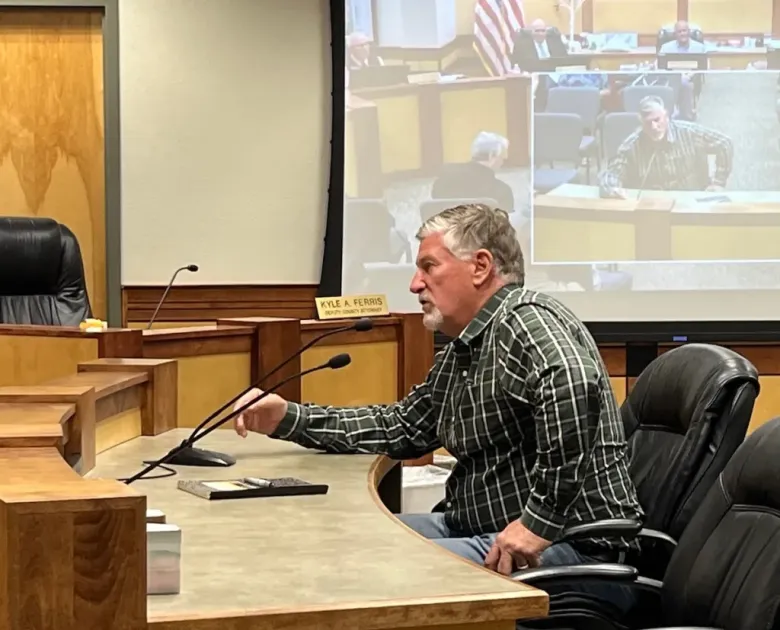
“The effects it’s going to have on this local community are going to be grave, and we need to fight,” Commission Chairman Del Shelstad said.
But the commissioners’ efforts to solicit testimonials garnered participation from only a handful of residents Tuesday — a disappointment for the body, even considering the shift-work nature of this blue-collar community and the 11 a.m. weekday timing of the hearing. Residents who spoke were outnumbered by other elected officials and reporters.
The coal industry — which includes 10 active mines in the county and directly employs more than 3,000 workers here — was a no-show.
Shelstad asked whether there were any coal producers or representatives of coal mining companies in the room. There were none, which elicited a frustrated response from Shelstad.
“I think that’s a darn shame that the coal producers aren’t here fighting — if for nothing else, for their employees,” he said. “They’re probably going to have a strategy that takes a little different approach, and I’m OK with that. But it’s really shameful that we can’t get them here to make public comment and to enter this fight with us.”
The public comment hearing was organized in response to what many regard as a historic move by the Biden administration to effectively set an expiration date for one of the nation’s largest sources of electrical power generation, as well as planet-warming greenhouse gas emissions: Powder River Basin coal.
The BLM on May 16 announced its preferred “no future coal leasing alternative” in a federal court-mandated update of its land use plans for the Buffalo, Wyoming and Miles City, Montana field offices that oversee coal leasing in the Powder River Basin, which spans portions of both states. Conservation groups had successfully argued the federal agency must fully consider the environmental, climate and human health implications of leasing federal coal in the region.
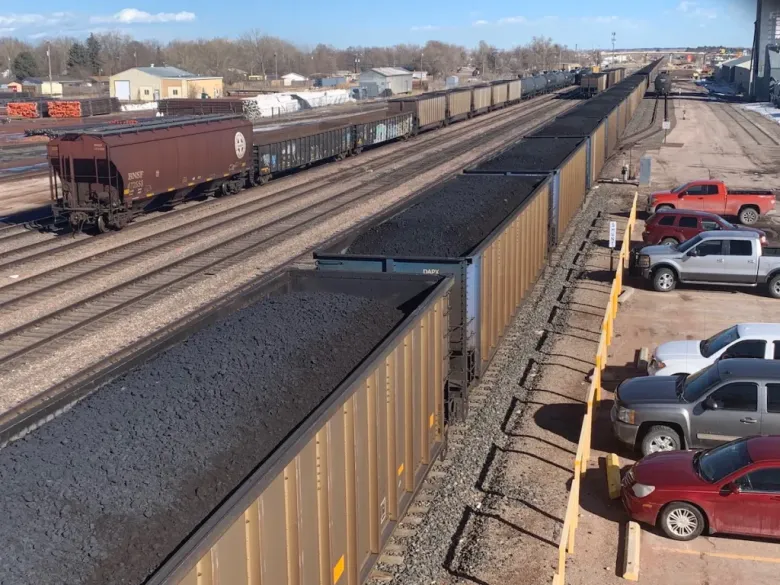
In its proposal to ban further federal coal leasing, the BLM estimated that existing leases will support the current rate of Powder River Basin coal production to 2041, according to the agency.
Cooperating agencies — such as local and state governments in the region — have until June 17 to file letters of intent to protest the BLM’s preferred no future leasing alternative. That gives those entities legal footing to challenge the decision. In addition to filing a protest letter, Campbell County commissioners are circulating an online petition urging the BLM to reconsider its preferred alternative.
“The coal industry employs thousands of workers across the country, and this ban will put many of these jobs at risk,” the petition states. “Additionally, coal is a vital source of baseload electricity for millions of Americans. Without a reliable supply of coal, our nation’s energy grid could become unstable.”
As of Wednesday morning, the county had collected 455 petition signatures, according to officials. Shelstad said he hopes to eventually collect at least 20,000 signatures.
Coal proponents in Wyoming say the BLM’s coal leasing ban is the latest in a series of Biden administration actions designed to kill the industry in favor of renewable energy sources and an effort to appeal to voters concerned about the global climate crisis.
The U.S. Environmental Protection Agency in April issued four “final” rules aimed at drastically cutting coal pollution, including a mandate that operators of existing coal-fired power plants commit to cutting or capturing 90% of the planet-warming carbon dioxide emissions by 2032 or convert the facilities to natural gas or close altogether.
Those coal-fueled power plants represent nearly the entirety of the Powder River Basin coal market today.
Energy market analysts, along with conservation groups, have suggested that the administration appears to be issuing rules and compliance deadlines that follow market trends already in motion, noting that many utilities are moving up coal plant retirement dates and that mining companies have not nominated a major new federal coal lease in the Powder River Basin since 2012.
Market trends have already cut production in the region by half since 2008, and the decline in demand for Wyoming coal appears to be accelerating — down by 20% so far this year. In fact, one of the region’s biggest coal producers, Arch Resources, has said it plans to sell or close its two coal mines in Campbell County: Coal Creek and Black Thunder.
Rep. John Bear (R-Gillette) and other local elected officials assured commissioners that they’re hearing pleas from their constituents to use every resource to fight the federal rules. If there is a lack of presence among coal companies themselves, Bear told WyoFile, it might be attributed to years of bad news and mounting pressures on the industry.
“The local [mining companies], most of those boards are located in St. Louis [Missouri] and they’re not interested in fighting this fight the way we’re going to have to fight it as government entities,” Bear said.

Wyoming Mining Association Executive Director Travis Deti, who could not attend the meeting, has said the mining companies rely on the association to speak on their behalf in the state, as well as other advocacy groups at the national level.
“As far as the Mining Association, which represents those companies, we’re fully engaged with our congressional delegation, with the governor’s office, with the Legislature, and we’re using every tool at our disposal to try to fight back on some of this stuff,” Deti told WyoFile by phone on Wednesday.
Some state and local officials are skeptical that the market has already spoken louder than the Biden administration. While some companies such as Arch Resources might not anticipate a future in Powder River Basin coal, others see an opportunity to apply carbon capture technologies and coal-to-products manufacturing — all of which is under threat by the BLM’s no future leasing proposal, according to Bear.
“Even if we’re forced to do it alone, other investors will see an opportunity,” Bear told WyoFile. “They have to see that somebody is fighting back right now.”
Bear said he worries that even some in Campbell County might not be aware of future opportunities for coal, or the dire consequences if the industry goes away completely.
“The rest of the country is going to be in trouble, too,” he said, adding that the rapid move to shut down coal plants presents an electric reliability issue. “Reliability is absolutely critical and that’s what this stuff provides.”
Though most coal miners and residents here squarely pin the blame for the coal industry’s decline on the Obama and Biden administrations, they’ve been burned by coal companies in the past.
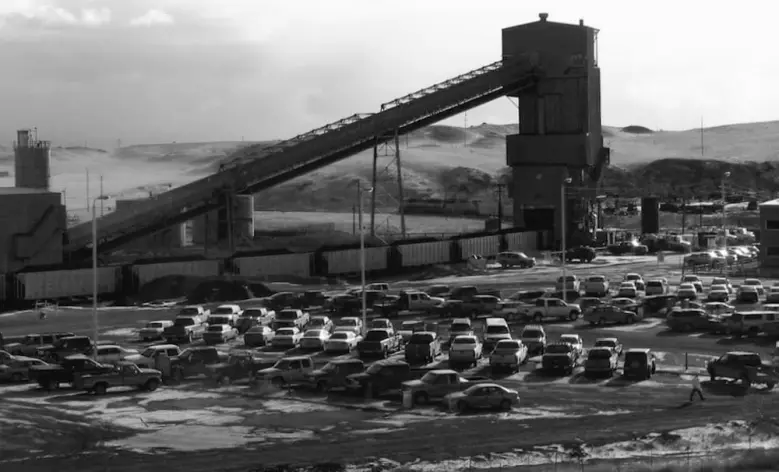
Most infamously, Blackjewel in July 2019 abruptly closed its Eagle Butte and Belle Ayr coal mines — among the nation’s largest — leaving some 600 miners in limbo about whether they could return to work or collect paychecks. The company furloughed many workers and eventually brought others back as both mines resumed operations. But the company’s unannounced mine closures and subsequent bankruptcy left coal miners as well as local businesses and governments fighting to get paid for wages and taxes owed.
Arch Resources (then Arch Coal) and Peabody Energy separately announced massive layoffs on the same day in March 2016, cutting jobs for some 500 miners. Both companies subsequently shed billions of dollars in debt in Chapter 11 bankruptcy reorganizations.
WIND: An energy and port services company says the state won’t consider their alternative offshore wind port plan, which they say would be cheaper and not have land use concerns like the state’s preferred site on Sears Island. (Portland Press Herald)
ALSO:
GAS: A Massachusetts firm wants to invest $100 million to build an anaerobic digestion facility in Pennsylvania’s Adams County to turn food waste into gas. (Fox 43)
SOLAR:
GRID:
TRANSPORTATION:
ELECTRIC VEHICLES:
BUILDINGS: A Maine firm will soon open a new assembly line process to manufacture 25 – 50 prefabricated homes that meet passive house standards every year. (Bangor Daily News)
WORKFORCE: Three Massachusetts schools will share a $3.4 million grant to provide clean energy job exposure and training to underserved students . (Mass Live)
SOLAR: Florida installed 2.7 GW of new solar capacity and Texas 2.6 GW in the first quarter of 2024, leading the U.S. in a record-breaking quarter that saw a 71% increase in solar manufacturing capacity from late 2023. (PV Magazine)
ALSO: A new report finds Texas is set to more than double its solar capacity to nearly 80 GW by 2030. (San Antonio Express-News)
ELECTRIC VEHICLES:
OIL & GAS:
NUCLEAR:
COAL: Congressional Democrats announce legislation to restart a study of how surface mining affects health in central Appalachia. (E&E News, subscription)
EFFICIENCY: A Kentucky utility rolls out nine energy efficiency programs, with more set to come before 2026. (Louisville Courier Journal)
CYBERSECURITY: The University of Arkansas participates in a multi-partner initiative to fortify the cybersecurity of solar inverters. (news release)
UTILITIES:
COMMENTARY:
CO2 CAPTURE: Capturing carbon emissions at ethanol plants along the route of a proposed carbon pipeline would increase water use by billions of gallons annually, according to a new Sierra Club report criticizing the pipeline. (Cedar Rapids Gazette)
GRID:
UTILITIES: Xcel Energy is at odds with Minnesota officials over whether customers should pay at least $23 million in costs incurred last year after a maintenance worker error caused a nuclear plant to shut down for 100 days. (Star Tribune)
CLIMATE: Insurers are the “climate change canary in the coal mine,” one former state insurance commissioner says as billion-dollar disasters reach record highs, driving up policy costs and making homeownership less attainable. (Stateline)
SOLAR:
ELECTRIC VEHICLES: The engineering researchers behind a project electrifying a section of highway in Indiana hope the technology makes electric vehicles more palatable for drivers. (NPR)
EMISSIONS:
SOLAR: A two-year pause on federal solar import tariffs from Southeast Asia ends, which experts say could drive a solar installation boom as developers use up components they’ve imported duty-free. (Reuters)
ALSO:
EMISSIONS:
POLITICS: The debate over federal permitting reform has divided clean energy and environmental justice advocates, with some worried that speeding deployment of renewables and transmission will also benefit fossil fuels and weaken environmental protections. (Utility Dive)
NUCLEAR: The U.S. Energy Department issues grants to eight fusion technology companies looking to produce emissions-free power with the unproven technology. (E&E News)
BATTERIES: Republican Congress members cite forced labor allegations as they push the Biden administration to block imports from two top Chinese battery makers that are working with Ford and other electric vehicle manufacturers. (E&E News)
ELECTRIC VEHICLES:
WIND:
CLIMATE: The Biden administration’s youth climate corps program begins this month, sending workers to take on climate and environmental jobs, largely across Western states. (High Country News)
TRANSMISSION: A federal judge dismisses a lawsuit from a tribal nation and environmentalists seeking to block construction of a segment of the SunZia transmission line through a culturally significant valley in southern Arizona, saying the plaintiffs’ challenge came too late. (Associated Press)
TRANSPORTATION: As New York’s governor halts a traffic congestion plan in New York City, cities around the world have kept similar policies in place — even in areas where it was initially unpopular. (Washington Post)
TRANSPORTATION: Republican Virginia Gov. Glenn Youngkin declares the state will no longer tie its vehicle emissions standards to California’s more restrictive rules — which phase out the sale of new gas-powered cars by 2035 — but critics argue he doesn’t have the authority to unilaterally roll back a law passed by the Democratic legislature in 2021. (Washington Post)
ALSO: The small city of Charlottesville, Virginia, moves to grow its bus fleet over the next decade and phase out diesel buses entirely by 2040, matching much larger cities in its commitment to an emissions-free transit system. (Energy News Network)
UTILITIES: As Alabama courts more companies that want to power their operations with renewables, Alabama Power looks for ways to incorporate more clean energy into its portfolio. (Lagniappe)
EMISSIONS: Dominion Energy asks Virginia regulators to remove a monthly fee from its bills for participation in a regional carbon market from which the state has withdrawn. (Virginia Mercury)
WIND: Dominion Energy meets with residents of a Virginia community about construction of a facility to bring power onshore from its planned offshore wind farm. (WTKR)
HYDROPOWER: An Alabama-based company plans an expansion in Knoxville, Tennessee, after acquiring a firm that makes water-powered generators. (Knoxville News Sentinel)
PIPELINES:
COAL ASH: Testing at a growing North Carolina sinkhole where coal ash is used as filler material indicates it hasn’t contaminated a town’s drinking water, but concerns remain. (WFAE)
OIL & GAS:
CLEAN ENERGY: A North Carolina bill would provide a new financing mechanism for commercial property improvements such as solar installations and energy efficiency upgrades, but the state treasurer argues the program is unconstitutional. (Port City Daily)
CLIMATE: U.S. Sen. Sheldon Whitehouse says Florida’s insurance industry appears to be “swirling the drain” as insurers dramatically increase premiums or pull out of the state altogether because of its climate risks. (South Florida Sun-Sentinel)
COMMENTARY: West Virginia policymakers’ insistence on keeping the state reliant on coal while dismissing renewables and energy efficiency programs is driving electric rates higher, writes an environmentalist. (West Virginia Watch)
BATTERIES: Chicago officials advance regulations that would create fines for distributing lithium-ion-powered devices that fail to meet safety standards as fire risks grow with the rise of electric bikes, scooters and vehicles. (Chicago Sun-Times)
COAL: Critics question Alliant Energy’s commitment to clean energy after the utility delayed for three years plans to convert a Wisconsin coal plant to run on gas, citing grid reliability concerns. (Sheboygan Press)
CLEAN ENERGY: Former U.S. EPA Administrator Gina McCarthy says northeastern Ohio cities are providing a model for collaborative, regional planning around clean energy and job training. (WYSO)
CARBON CAPTURE:
GRID: Time-of-use rates are now in effect for Michigan’s two largest utilities, which state regulators say are meant to curb electricity use during high-demand months. (Bridge)
WIND:
SOLAR:
BIOGAS: Springfield, Missouri, plans a $31.6 million project that would convert landfill gas into renewable natural gas and generate revenue to pay off the debt service associated with the project. (Daily Citizen)
ELECTRIC VEHICLES: U.S. senators tell a senior transportation official that the pace of electric vehicle charging infrastructure construction is too slow years after the bipartisan infrastructure law took effect. (E&E News, subscription)
OIL & GAS: Colorado advocates prepare to sue a Denver-area petroleum refinery, citing 9,205 air pollution violations over five years and accusing state and federal regulators of inadequate enforcement. (Colorado Sun)
ALSO:
NUCLEAR: California lawmakers reject Gov. Gavin Newsom’s bid to include another $400 million loan to keep the Diablo Canyon nuclear plant operating as the state faces a budget deficit. (Modesto Bee)
CLIMATE: An Alaska wildlife refuge plans to step up firefighting against blazes that don’t threaten humans or property in an effort to keep carbon sequestered in the ground. (Anchorage Daily News)
CLEAN ENERGY:
SOLAR:
UTILITIES: A San Diego community power authority begins offering a more carbon intensive, less-expensive energy mix to compete with investor-owned utilities. (Voice of San Diego)
HYDROGEN: An Oregon utility partners with a startup to produce “turquoise” hydrogen fuel from methane and blend it into natural gas distribution lines. (KGW 8)
LITHIUM:
GEOTHERMAL: Colorado awards $312,000 to a community in the western part of the state for designing and constructing a geothermal heating and cooling network. (Sopris Sun)
COAL: A Wyoming county’s officials express frustration after only a handful of residents and no industry representatives attend their meeting to protest a Biden administration proposal to end federal coal leasing in the Powder River Basin. (WyoFile)
POLITICS: U.S. Sen. Cynthia Lummis, a Wyoming Republican, accuses the Biden administration of unfairly targeting red states with its fossil fuel policies, even though domestic oil and gas production is at all-time highs. (E&E News, subscription)
COMMENTARY: Hawaii energy analysts say severe weather and unexpected oil plant failures — not increasing reliance on renewable energy — led to the state’s recent power outages. (Honolulu Civil Beat)
By gradually nudging aside its diesel buses, Charlottesville’s transit agency is punching above its weight.
The city of 45,000 at the edge of Virginia’s Blue Ridge Mountains is matching the likes of larger counterparts in New York, Chicago and San Diego with a carbon-curbing proposal to convert to a zero-emission public transit fleet by 2040. By then, its routes will be served by electric buses.
Granted, some environmental advocacy organizations urged a speedier transition and are disappointed the city won’t retire its last diesel bus until 2039.
However, groups aligned with the Community Climate Collaborative (C3) — which emphasizes social justice in its work to reduce emissions — are relieved the city was willing to address route and ridership issues in addition to a commitment to wean itself off diesel and avoid compressed natural gas as a power source altogether.
“I think this is a victory,” said Caetano de Campos Lopes, C3’s director of climate policy. “We are very pleased that the city’s approach was so thorough and holistic.”
As it stands now, Charlottesville Area Transit (CAT) plans to double the size of its fleet from 38 to 76 by 2034. That peak fleet will be a blend of diesel and electric buses.
CAT is on track to roll out a pair of pilot programs to add at least two battery electric buses and then at least two hydrogen-electric fuel cell models by 2029. The transit agency will stop ordering diesel buses in 2027, meaning the last ones will come into service by 2028 or 2029.
While CAT is owned and operated by the city, the University of Virginia and Albemarle County contribute a small amount of its non-capital budget.
De Campos Lopes was reassured in late February when the Charlottesville City Council voiced unanimous support for advancing zero-emission fuel choices, because compressed natural gas was still under consideration the previous year. At its June 17 meeting, the council is scheduled to take a final vote on CAT’s Transit Strategic Plan.
C3 had collaborated with several dozen private companies and environmental, social justice and faith groups to pressure the council to adopt a measure in favor of zero-emission buses, particularly battery electric. It submitted a petition with 640-plus signatures last autumn.
Ben Chambers started his position as the city’s transportation planning manager in November 2022, when the community was in the thick of a back-and-forth exercise about its fleet makeup. The University of Virginia graduate is no stranger to the region or its routes, as he drove a University Transit Service bus while earning a religious studies undergraduate degree in 2006.
Over the last several years, he said, his most difficult task had been explaining to the public that CAT can’t turn on a dime to purchase zero-emission buses and upgrade their accompanying charging and fueling infrastructure.
He praised the council for conducting its deliberations openly so the public could better understand the process.
“For a long time, the constant refrain in the community has been ‘Get cleaner buses,’” Chambers said. “We’ve come to a solution that may not please everybody, but at least people understand how it’s going to work. We’re in a much better place now.”
C3, which released a transit equity and climate report in 2021, prodded the city to think beyond financial considerations when it found out that same year that CAT was on the verge of studying how to fuel its future buses.
The nonprofit and its allies feared the city would lean toward a known entity, compressed natural gas, and shy away from less time-tested technologies such as battery electric and hydrogen fuel cells.
That choice, de Campos Lopes said, wouldn’t align with the city’s ambitious target set in 2019 to curb greenhouse gas emissions 45% by 2030 and 100% by 2050. The transportation sector is a leading source, with an estimated 30% of total emissions.
Indeed, a recent analysis for CAT by the Northern Virginia-based Kimley-Horn engineering firm revealed that running CNG buses would amount to only a slight drop in emissions when compared to diesel.
In contrast, that same Kimley-Horn report stated that switching to battery electric buses or fuel cell buses powered with green hydrogen would reduce greenhouse gas emissions 99.4% and 99%, respectively, compared to the baseline diesel fleet.
Both technologies come close to achieving carbon neutrality, assuming the Virginia Clean Economy Act is heeded. Dominion Energy is supposed to achieve a carbon-free electric grid by 2045, with Appalachian Power following suit by 2050.
Both types of buses use batteries to power their electric motors. Fuel cell models use hydrogen to charge a battery, while the other uses electricity from the grid.
Initially, CAT had eyed compressed natural gas as one option because it’s cleaner than diesel and the gas buses didn’t cost that much more, Chambers said. Plus, both Richmond and Williamsburg had demonstrated success with gas buses, which qualified for funding under the federal government’s low- and no-emissions grant program.
“That CNG option caused a lot of mistrust,” he continued. “People thought CAT was trying to get around their request for clean energy buses. We dropped CNG mostly because of the feedback we got from the environmental community.”
In addition, some green groups said the transit agency was acting in bad faith by keeping diesel as part of its fuel mix.
The timing for looking beyond all fossil fuels was right, Chambers said, when usage data about electric buses was becoming available from other transit agencies and funding opportunities became abundant.
“We could finally have that conversation about electric buses, but we weren’t just responding to what the mob wants us to do,” he said. “We want to balance the hue and cry for alternative fuel with the need for reliable bus service.”
The transit agency is in the midst of devising a zero emission transition plan to submit to the Federal Transit Administration this fall, Chambers said. The document includes details such as a turnover timeline and specifics about bus storage and storage infrastructure.
On the pilot program front, the city is set to order as many as five battery electric buses this summer — each one roughly twice the cost of a $500,000 diesel model — that are scheduled to join the fleet in 2027. CAT will wrestle with details such as driving range, maintenance requirements, and whether it makes sense to install on-site solar to charge the buses.
“I have serious concerns about longer routes and the impact of terrain because we’re quite a hilly town,” he said. “We’re talking about big heavy machines and the details can get technical.”
Bringing up to five hydrogen-powered buses on board by 2029 — at between $1.2 million and $1.3 million each — will be trickier. Most pressing is finding a nearby source of hydrogen fuel that doesn’t contribute to emissions of heat-trapping gases.
“We’re investigating the idea of on-site generation,” Chambers said. “But if we need to truck it in, where would it come from?”
CAT won’t necessarily choose one technology over the other as it replaces its diesel models, he said, adding that having both choices available provides an added benefit of resiliency.
Money for the pilot programs is a mix of federal, state and local dollars, with the bulk of it from the federal government. The exact funding formula is still in the works, he said.
“Lucky for us, we won’t be the first out of the blocks,” Chambers said about gaining insights from transit agencies “on the bleeding edge to learn about the headaches they had to deal with.”
For instance, neighboring Blacksburg has put battery electric buses on the road, and leaders in Oakland, California; the Champaign-Urbana region of Illinois; and Montgomery County, a suburb of Washington, D.C.; have experience with hydrogen fuel cell buses.
He admitted that Charlottesville was a bit leery about delving into alternative technologies because of continued hassles with the 10 hybrid diesel buses it purchased about 15 years ago. Some of those models are still in the fleet. Parts of the hybrid drivetrain failed regularly and replacement parts were often on back order. As well, CAT had problems fully charging battery packs that didn’t last as long as promised.
“CAT couldn’t keep them on routes,” he said. “We didn’t want to end up with that same scenario.”
Susan Kruse, C3’s executive director, said she recognized that some groups focused solely on climate issues were frustrated by the city’s plans to boost greenhouse gas emissions in the short term by not pivoting away from diesel immediately.
Her group tried to play the role of mediator because “it was best to take the time to get everyone literally and figuratively aboard the bus,” she said.
“Sure, we would rather see buses move to zero emissions faster. But this is a great example of how moving toward a carbon-neutral community is difficult. This issue is complicated and we have to take the time to get it right.”
Generally, diesel buses cycle out of use after 12 years of service or accumulating 500,000 miles on the odometer.
It’s vital that CAT’s strategic plan calls for addressing shortcomings that frustrated riders, Kruse said. CAT will be doubling the amount of service, adding routes on nights and weekends, and limiting wait times between buses to 30 minutes.
She and her colleagues are especially pleased by the local environmental impact of battery electric and fuel cell buses powered by green or “gray” hydrogen produced using natural gas. A transition would improve air quality and reduce noise levels, according to the Kimley-Horn report.
For instance, the changeover would eliminate emissions of pollutants such as carbon monoxide, nitrogen oxides, sulfur oxides and volatile organic compounds, all gases that are harmful to humans. For example, nitrogen oxides can irritate airways, aggravate asthma and other respiratory diseases, and lead to emergency room visits and hospital admissions.
As well, cleaner buses would reduce the tiniest bits of particulate matter by 25% when compared to diesel. The microscopic particles endanger human health because they can deeply embed in lungs and also enter the bloodstream. Regardless of bus technology, particulate matter is still produced by wear and tear on a vehicle’s brake pads and tires.
C3 advocates and Chambers agree that Charlottesville’s achievements can be a model for smaller municipalities shifting to carbon-free buses. After all, the timeline for its proposed transition is ahead of Denver and Washington, D.C.
Setting an example doesn’t just apply to public transit, Chambers said, emphasizing that other communities view the university city as a test bed for plucky endeavors.
“In Charlottesville, we tend to think a bit bigger than our britches when it comes to policy decisions,” he said. “We do new bold things because we like to see if we can get it done.”
GRID: Data centers are creating a climate dilemma in states like Michigan, where a Democrat proposes incentives to lure the facilities while acknowledging their spiking electricity use could move the goalposts for the state’s renewable energy goals. (E&E News)
SOLAR:
CLEAN ENERGY: Illinois regulators approve the state’s first roadmap to reach 100% carbon-free power by 2050 as required under a 2021 law. (E&E News, subscription)
PIPELINES:
OVERSIGHT: Attorneys representing Ohio energy regulators continue to claim that there is no record of the names of staffers who recommended a protective order that hid key details about an audit into the state’s power plant bailout law. (Checks and Balances Project)
TRANSPORTATION: Michigan House Democrats propose a 10-year, $6 billion economic development plan that would direct a portion of business incentives toward statewide transit. (Bridge)
EFFICIENCY: The market monitor of grid operator PJM claims FirstEnergy and other utilities should be barred from collecting nearly $130 million in revenue for failing to show they are eligible for the energy efficiency capacity payments. (Utility Dive)
BIOFUELS: Production of renewable diesel, which can be made from similar products as biofuels but doesn’t need to be added to traditional diesel, exceeded biodiesel production in the U.S. for the first time in 2022-2023. (Farm Progress)
COMMENTARY: Michigan needs legislation to allow independently owned community solar projects that benefit the grid while taking advantage of new federal funding, a solar advocate writes. (Bridge)


.svg)
