

 Back
Back
This story was originally published by Capital B, a nonprofit newsroom that centers Black voices and experiences. To read more of Adam Mahoney’s work, visit Capital B.
Ninety years ago, President Franklin D. Roosevelt and South Carolina Gov. Ibra Blackwood worked together to bring electricity to rural South Carolina. But to build the power plant that would make it happen, they destroyed the homes of 900 Black sharecropping families. With them, 6,000 graves — including those of formerly enslaved people — were removed or desecrated.
Today, as South Carolina races to power its digital future, history seems to be repeating itself, with Black communities once again paying the price for progress.
Last year, the parent companies of Facebook and Google pledged more than $4 billion for new data centers in South Carolina. Every email you send, question you ask ChatGPT, or Instagram post you share relies on these centers. However, on this new digital frontier, the health and safety of Black communities are at risk.
While state officials work to craft legislation to attract these new projects, residents and community advocates say this will ramp up environmental hazards, increase utility bills, and exacerbate health disparities. Meanwhile, experts say, the economic promise of AI remains a mirage for Black communities, widening wealth gaps and displacing workers.
“Most Black households, especially rural ones in the South, are not using AI or as much computing power, but they are having to pay for that demand in both money and dirty air,” said Shelby Green, a researcher at the Energy and Policy Institute.
South Carolina is joining other states, like Texas and Illinois, with proposals to reopen at least two power plants in rural Black communities to run these new projects. Rural communities have begun to attract tech companies for data centers due to their low population densities, ample open space, and relatively lower energy and land costs.
Energy experts argue that the growing electricity demands from data centers are prolonging America’s dependence on dirty energy sources. Nationwide, at least 17 fossil fuel generators scheduled for closure are now delayed or at risk of delay, and about 20 new fossil fuel projects are being planned to meet data centers’ soaring energy demands. By 2040, South Carolina projects the need for four new fossil fuel power plants.
At a protest last year, Audrey Henderson, a resident of one of the towns facing the prospect of a polluting power plant, said she fears the impacts on her and her neighbors’ properties.
“My forefathers worked hard to get that property; that we have land. I have children in New York to get land when I pass away. Grandchildren and so forth and so on,” she said. The fact “they could just come in here, give us a couple of dollars, and take our land and put pipelines into it. Then we also have well water, just stuff going into the wells is very disheartening, and I’m really concerned.”
Across the country, low-income Black communities face the harshest pollution exposure from these plants, while Black workers are disproportionately in roles most vulnerable to AI and automation. A McKinsey & Co. analysis warns that if AI growth continues at its current pace, the wealth gap between Black and white households could widen by $43 billion annually within the next two decades because of disparities in who it serves.
Compounding these issues, data centers are expected to use 12% of the nation’s energy by 2028, a 550% increase from last year. An artificial intelligence search using ChatGPT, for example, uses anywhere from 10 to 30 times more energy than a regular internet search.
“The energy demand, data centers, and where the energy sector is going should not come at the expense of low-income and Black communities,” said Xavier Boatwright, an activist who has worked on environmental issues in rural South Carolina for years.
In South Carolina, officials predict data centers will drive 70% of the state’s increased energy use, with subsidies already raising utility bills for consumers. Through his canvassing across the state, Boatwright said he now regularly sees rural mobile home communities where people are paying more for their utility bills than mortgages because of this increase.
“It’s kind of like if you go out and your employer is paying for your dinner, and you order the fanciest stuff on the menu,” explained Green, who researches how rising utility bills are pushing Southern Black communities into poverty. “You don’t really have to worry about how expensive it is because it’s not coming out of your pocket. That’s how these companies are operating; they’re not holding the risk associated with increasing electricity costs and these new power plants — you are.”
In majority-Black, poor rural Fairfield County, the state is proposing to reopen a stalled nuclear plant that has long been a symbol of broken promises and financial strain for residents. Advocates warn that restarting this decades-long gamble could further burden a population already facing systemic neglect. Billions of taxpayer dollars and rising energy costs are at stake, yet the benefits of the project seem unlikely to reach those facing the worst consequences.
In South Carolina, and across the country, statistically, Black people use the least amount of electricity, yet experience the highest energy burden — meaning a larger share of their income goes toward energy bills.
In the other case, a Black stronghold in Colleton County celebrated the monumental victory of closing a coal-fired power plant in their neighborhood, which was connected to poor health outcomes for residents. Now, the state proposes to convert that very site into a gas-fired power plant to meet the energy demands of data centers. Every year, the pollution from natural gas plants is responsible for approximately 4,500-12,000 early deaths in the U.S., studies show.
“If you mapped all of the existing power plants in South Carolina, they’d follow the old path of one of the foundational pillars of the American economy through South Carolina: plantations and enslaved labor,” Boatwright said. “We’ve seen the repeated pattern of these threats in our community.”
With this boom, tech companies like Google are making huge profits by securing special deals with utility companies.
Google’s head of data center energy, Amanda Peterson Corio, said Google’s energy supply contracts undergo “rigorous review” by utility regulators and are crafted “to ensure that Google covers the utility’s cost to serve us.”
Yet, last year, the company inked a deal in South Carolina to pay less than half the rate that households pay for electricity.
These low rates, combined with tax breaks and state-approved subsidies, are used to lure big tech companies. However, these deals force local families and households to cover the cost of building extra power plants, meaning everyday customers end up footing the bill.
A data center is a combination of massive warehouses packed with rows of servers and high-tech gear that stretch longer than football fields, all humming away to store and manage the digital data we use every day. They’re so massive, for example, that Google’s first South Carolina data center, which opened in Berkeley County in 2009, uses the equivalent electricity of roughly 300,000 homes and the amount of water of at least 9,000 homes. As of 2021, it was also powered by more fossil fuel based energy sources than any of Google’s two dozen other data centers nationwide.
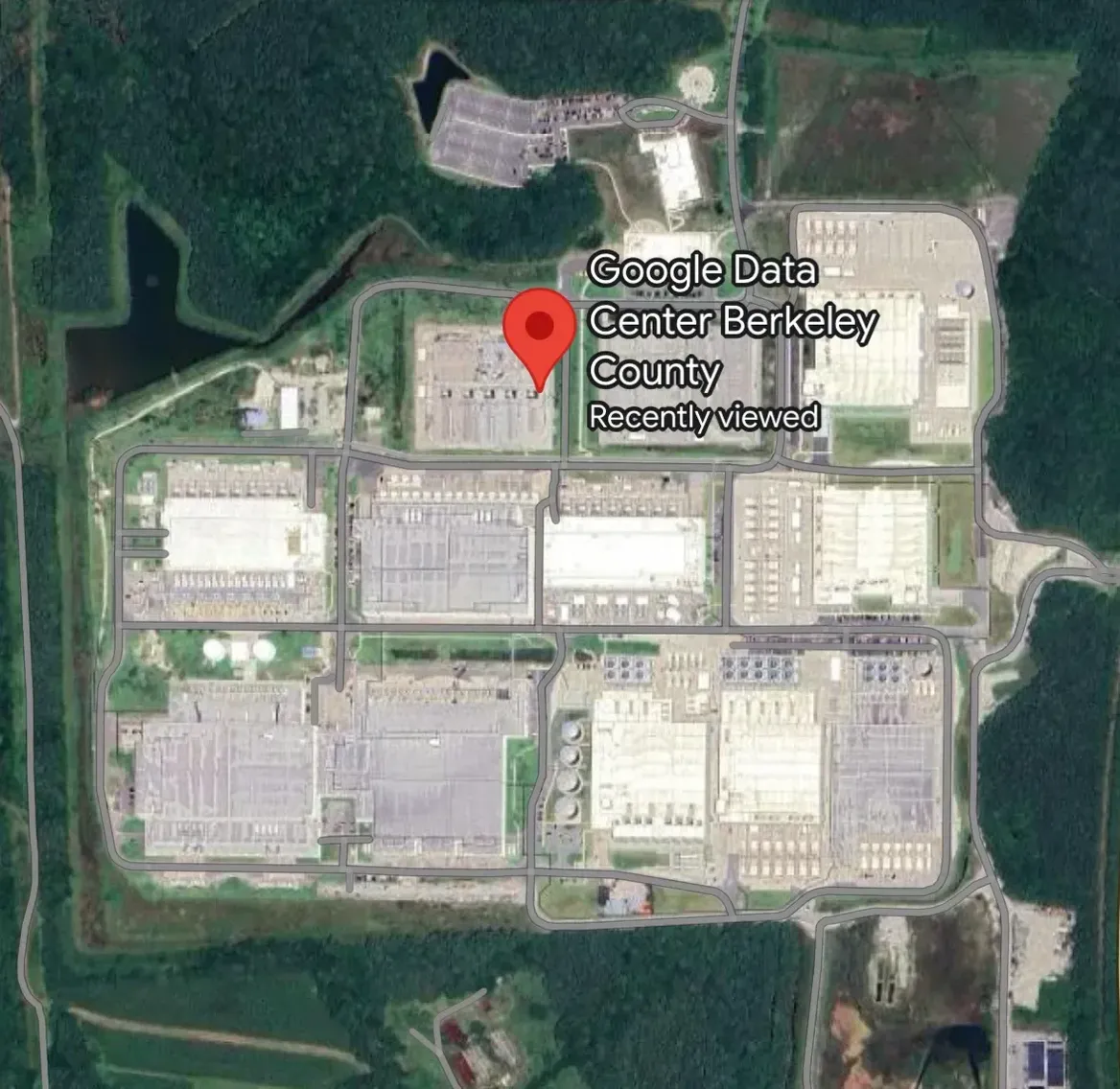
This uneven situation leads to a growing gap between corporate savings and community expenses, with everyday people shouldering the extra burden. Black communities, in particular, tend to face higher utility costs and, as a result, are more likely to have their power shut off for missed payments. Along the East Coast, monthly utility bills are expected to increase as much as $40 to $50, mainly due to data centers.
South Carolina legislators — Democrats and Republicans — have implored the state’s regulators to rethink discounts and other subsidies, but the push has not made waves so far.
“Current residential ratepayers are going to pay a lot, lot more because of data centers that bring almost no employees,” Chip Campsen, a Republican South Carolina state senator, said at a legislative hearing last September. Tech companies must “participate in paying the capital costs for building the generating capacity for these massive users of energy.”
This issue ties into broader government policies aimed at boosting American technological growth and making the United States a leader in artificial intelligence. The Trump administration, for example, has signaled that it might bypass some environmental regulations to speed up projects like data centers and power plants. The new leader of the Environmental Protection Agency, Lee Zeldin, has said making “the United States the Artificial Intelligence capital of the world” will be one of his five guiding pillars, along with making it easier for tech and manufacturing companies to invest in the American economy.
Near Jenkinsville, South Carolina, half-built nuclear reactors — remnants of the long-stalled V.C. Summer project — tower over a Black community where three out of four live in poverty. They stand as a stark reminder of a $9 billion investment that never produced power. Despite customers still footing the bill for this abandoned venture to the tune of multiple utility bill increases, the state-owned utility company Santee Cooper is now inviting proposals to complete one or both units. Supporters argue that reviving the project would add 2,200 megawatts to the grid — enough to power hundreds of thousands of homes — and help meet surging energy demands driven by tech giants. Recent inspections by the state’s Nuclear Advisory Council have deemed the site in excellent condition, bolstering growing legislative support.
Researchers say it would be the first and only nuclear project to restart after being halfway built. Critics caution that history warns against overly ambitious nuclear bets that can lead to decades of delays, spiraling costs, and additional burdens on customers. They contend that immediate, incremental investments in solar power and battery storage could offer a safer, more adaptable path forward rather than reinvesting in a risky long-term gamble. Currently, nuclear energy is about four times more expensive to produce than solar energy.
Last year, the state was granted over $130 million from the Biden administration for solar projects, but the funding is now in limbo under the Trump administration.
The Black-led South Carolina Energy Justice Coalition has spent years advocating for solar and wind energy in rural Black communities. “Every citizen is worthy of that type of energy by virtue of just being a human being,” Shayne Kinloch, the group’s director, said last year.
Along the banks of the Edisto River in the heart of South Carolina, a former coal-fired power plant — closed in 2013 — is poised for a dramatic transformation. Dominion Energy and Santee Cooper plan to convert the site into one of the nation’s largest gas-fired power stations, a move approved by the state’s Public Service Commission. Designed to produce up to four times the energy of the old plant, this project is a central part of efforts to retire remaining coal facilities by 2030 and transition toward a future of “reliable, affordable, and increasingly clean energy,” the companies said.
However, environmental advocates and legal experts warn that this expansion of gas infrastructure may echo a troubling legacy where vulnerable communities bear the brunt of environmental and economic risks. Shifting from coal to gas plants isn’t environmentally or cost-effective, opponents say, because while gas produces slightly less pollution than coal, it still contributes significantly to greenhouse gas emissions. It also comes with high infrastructure and maintenance costs.
This month, the state’s House of Representatives approved legislative changes that would weaken oversight of gas power plants. Joining Republicans, South Carolina’s Legislative Black Caucus Chairwoman Annie McDaniel, a Democrat representing the county home to the nuclear plant, voiced support for the legislation.
McDaniel did not respond to Capital B’s request for comment.
The changes, if passed by the state’s Senate, would allow the groups to bypass rigorous environmental reviews when proposing projects. Supporters claim these measures are necessary to meet rising energy demands from tech-driven growth. Critics argue this could sideline investments in renewable alternatives like solar and battery storage and raise the risk of rising costs, delays, and potential noncompliance with federal pollution standards.
“Instead of investing in more risky energy generation and infrastructure, they should be investing in energy solutions like solar and storage,” Boatwright said, “but utilities are choosing the most expensive and environmentally risky.”
NUCLEAR: The Navajo Nation agrees to allow Energy Fuels to transport uranium ore across tribal land from the company’s Grand Canyon-area mine to its Utah mill. (AZ Mirror)
ALSO: Wyoming lawmakers kill legislation that would have encouraged the federal government to establish an interim nuclear waste repository in the state, citing concerns it would end up being permanent. (WyoFile)
UTILITIES:
COAL:
SOLAR:
CLEAN ENERGY: Hawaii Gov. Josh Green signs an order aimed at accelerating clean energy targets and setting a goal of 50,000 distributed solar and battery installations by 2030. (Maui Now)
STORAGE: A Utah utility and a firm look to develop 70 MW of demand response capacity using flywheel energy storage systems. (news release)OIL & GAS: The U.S. EPA reports seven methane super-emission events over one week near oil fields and refineries in a southern California county. (KBAK, news release)
BIOFUELS:
CARBON CAPTURE: Northwestern New Mexico officials hope a direct air carbon capture hub proposed for the area will replace declining coal industry jobs. (New Mexico Political Report)
COMMENTARY: Colorado labor advocates say a new pro-clean energy union coalition aims to tackle the climate crisis while ensuring green jobs also prioritize workers. (Colorado Newsline)
CLIMATE: Montana’s Supreme Court upholds a landmark climate ruling saying the state’s fossil fuel-friendly permitting policies violate residents’ constitutional right to a clean environment. (Associated Press)
ALSO: Portland, Oregon’s city council votes to spend $300 million from its clean energy fund to install solar on low-income homes, build 230 net-zero energy housing units, decarbonize city vehicles and other climate projects. (OPB)
OVERSIGHT: The U.S. EPA greenlights California rules banning new gasoline-powered car sales by 2035 and establishing cleaner engine standards for heavy-duty trucks, drawing advocates’ praise and industry criticism. (Los Angeles Times)
OIL & GAS:
HYDROGEN: The U.S. Energy Department unveils plans to conduct environmental reviews for proposed hydrogen hubs in California and the Northwest. (E&E News, subscription; Oregon Capital Chronicle)
SOLAR:
TRANSPORTATION: The U.S. Transportation Department awards $49.7 million to the proposed Cascade high-speed rail project that would link Portland to Seattle and other Northwest cities. (KOIN)
COAL: A family files a lawsuit accusing a New Mexico coal mine of negligence that contributed to the 2022 death of a contract welder at the facility. (Cibola Citizen)
HYDROPOWER:
NUCLEAR: California startup Oklo signs on to provide a data center developer with up to 1,200 MW of power from its advanced nuclear reactors currently in development. (Utility Dive)
PUBLIC LANDS: An advocacy group files a lawsuit accusing Utah’s governor and attorney general of violating the state constitution with a legal bid to seize control of 18 million acres of “unappropriated” federal lands within its boundaries. (news release)
SOLAR: A Kentucky nonprofit is building net-zero homes with energy efficient construction and rooftop solar panels to lower energy costs for low-income residents, including in a housing development for survivors of the state’s 2022 floods. (Kentucky Lantern)
ELECTRIC VEHICLES:
OIL & GAS:
WIND: An emerging Texas wind company cites “fast-growing demand” for renewable energy from oil and gas producers in the Permian Basin as they move to decarbonize and upgrade power to their growing operations. (CleanTechnica)
STORAGE: Dominion Energy proposes a liquified natural gas storage facility in southern Virginia, while another company is leasing 85 acres in an industrial park for a lithium-ion battery storage facility. (Virginia Business)
EMISSIONS: Two Georgia military bases are at the forefront of the armed forces’ push to reduce emissions and counter climate change, including one that’s been described as the Defense Department’s “first net-zero energy base.” (Columbus Ledger-Enquirer)
BIOGAS:
NUCLEAR: Amazon signs an agreement with Dominion Energy to research the use of small modular nuclear reactors at an existing Virginia nuclear power plant. (Virginia Business)
CLIMATE:
GRID: Georgia officials schedule an open house to discuss a company’s plans to build a new transmission line. (WSAV)
UTILITIES: Southern Company is partnering with the Atlantic magazine’s marketing research team to discuss the energy transition in what an expert calls “nothing more than a propaganda effort.” (DeSmog)
POLITICS: West Virginia U.S. Sens. Joe Manchin and Shelley Moore Capito say the energy industry is headed in the right direction as it moves toward renewables and new technology while also producing more fossil fuels. (WV Metro News)
COMMENTARY: South Carolina-owned utility Santee Cooper should modulate its proposed rate increase with carve-outs that incentivize energy efficiency and renewables, writes a climate advocate. (Post and Courier)
ELECTRIC VEHICLES: As Indiana starts to deploy $100 million in federal funding for electric vehicle charging infrastructure, an alliance wants to make sure state officials are including chargers in Black and disadvantaged communities. (Indianapolis Star)
ALSO:
UTILITIES:
COAL: Cancer rates related to air pollution are 12% higher near plants that use coal to make steel compared to national rates, and 26% higher for residents living near coke plants, a new study found. (Inside Climate News)
PIPELINES:
WIND: An Iowa county board expands a moratorium on wind turbines to include various other items such as towers and wind-measuring equipment. (Clinton Herald)
SOLAR: An installer completes construction on a 2.8 MW solar parking canopy project at the Cincinnati Zoo in Ohio. (Solar Power World)
OVERSIGHT: A Turtle Mountain Band of Chippewa citizen is running for a seat on the North Dakota Public Service Commission opposing plans for a carbon pipeline, while the incumbent Republican wants renewable developers to pay “their share” of grid infrastructure costs. (North Dakota Monitor)
GRID: Power plant owners support PJM’s proposal to delay an upcoming capacity auction by six months to craft new capacity market rules, but warn that longer delays could erode investor confidence. (Utility Dive)
BIOFUELS: Backers say extending a federal biofuel tax credit by 10 years would provide farmers economic certainty and help jumpstart the sustainable aviation fuel industry. (Michigan Farm News)
COMMENTARY: Xcel Energy’s proposal to build 800 MW of distributed solar and storage comes as the utility stifles attempts by customers to deploy distributed projects, a clean energy advocate writes. (Canary Media)
SOLAR: Western Shoshone tribal members in Nevada push back on the Biden administration’s federal land solar plan, saying it puts a sacred massacre site proposed for national monument status in the path of energy development. (Las Vegas Review Journal)
PUBLIC LANDS: Advocates warn a second Trump administration would shrink or eliminate national monuments in the West, reopening fragile lands to oil and gas drilling, mining and other development. (Los Angeles Times)
OIL & GAS: An oil-shipping firm agrees to pay $3.3 million to settle an environmental group’s lawsuit alleging the firm discharged petroleum coke pollutants into the San Francisco Bay. (Bay City News)
CLEAN ENERGY: The Biden administration proposes tweaking tax rules to make tribal-owned firms eligible for direct cash payments for clean energy projects. (E&E News, subscription)
UTILITIES:
GRID:
CLIMATE:
LITHIUM: A California lawmaker calls on Imperial County to rework a plan for dividing up lithium-related revenues, saying it does not comply with state law. (KPBS)
ELECTRIC VEHICLES: Trucking industry groups file a lawsuit seeking to block implementation of California’s clean fleets rules and zero-emission vehicle mandates. (Road & Track)
MINING: Wyoming lawmakers propose streamlining permitting for proposed rare earth element mines. (WyoFile)
More than seven years after New Hampshire regulators first approved the idea of using community solar to create savings for low-income households, electric bill discounts are finally on the horizon for the first batch of participants.
“There has been this rhetoric that we want solar to benefit low-income people, but whenever we try to propose programs that will make that happen, they’ve been immensely slow to roll out,” said Sam Evans-Brown, executive director of the nonprofit Clean Energy New Hampshire. “But despite being frustrated, I am really glad this is finally happening.”
The state energy department is reviewing seven proposals for community solar arrays that will allocate a portion of the credits they receive for sending power onto the grid to low-income households in the form of credits on their monthly bills. The projects selected will work with the utilities to identify customers receiving discounted rates, who will be automatically enrolled in the program.
Community solar is widely considered an important strategy for extending the benefits of renewable energy to people unable to take advantage of rooftop solar. Nationally, some two-thirds of households can’t install solar panels, generally because they don’t own their home, don’t have a suitable roof, or can’t afford the cost of the array, said Kate Daniel, Northeast regional director for the Coalition for Community Solar Access. Those obstacles are particularly challenging for low-income households, which are more likely to rent, need costly roof repairs, or lack the cash or credit scores needed to pay for panels, she added.
Community solar, on the other hand, allows these households to buy renewable energy, supporting climate action and saving money. Recent research from the Lawrence Berkeley National Laboratory found that community solar users have, on average, 23% lower incomes than rooftop solar adopters and are six times more likely to live in multifamily homes, suggesting community solar helps increase adoption of solar among these populations.
Many states — including New Hampshire’s northeastern neighbors like Massachusetts and New York — have created programs to encourage the development of community solar projects that provide financial benefits to low-income households. But New Hampshire is falling behind: A recent report by the National Renewable Energy Laboratories, a federally funded research center, identifies New Hampshire as the state with the smallest share of its solar production going to disadvantaged households.
“We really have to ask ourselves why that is,” Evans-Brown said.
The first mandate for utilities to develop a program using community solar to benefit low-income households came as part of the order establishing the state’s current net metering system in 2017. Before a program could get off the ground, the state legislature passed a 2019 bill boosting the net metering rate for community solar projects serving low-income households, and the state suspended the earlier requirement until 2021, declaring it could be redundant given the new bill.
In 2021, the state asked for — and received — an additional suspension until July 2022, arguing that it had only finalized the eligibility rules for the net metering adder in September 2020, and therefore the utilities should not have to develop their own programs until the adder had a full two years to potentially spark development.
Then, in July 2022, the legislature passed a bill requiring the creation of a new community solar program including projects totalling up to six megawatts of capacity each year, each providing at least 25% of the credits it generates to low- or moderate-income customers. Customers will be automatically enrolled, but given ten days to opt out.
This program opened for proposals in December 2023, with a deadline of February 29, 2024. The state is now reviewing the seven proposals it received. If the applications total more than the six-megawatt cap, priority will be given to projects proposing greater benefits for low-income households.
“We are hammering out some of the final details with the utilities before we make the official designations,” said Joshua Elliott, director of policy and programs for the New Hampshire energy department. “Once we get the details of the processes finalized, we expect this process to move far more quickly in the future.”
There are elements of the program to like, advocates said.
Traditionally, it has been difficult for solar developers to cost-effectively find and recruit low-income customers for community solar. New Hampshire’s strategy of working with utilities to automatically enroll households that have already been identified streamlines the process. The state’s plan to review the program each year is also a strength, said Kirt Mayland, a visiting professor at the Institute for Energy and the Environment at Vermont Law and Graduate School.
Uncertainties remain, however. Enrolling customers from the utilities’ electric assistance programs may be more efficient for developers, but it runs the risk of missing a lot of low-income households that are eligible for the discounted rate but not signed up. To reach the largest possible number of potential subscribers, a program should also accept households enrolled in other means-tested programs, like Medicaid or SNAP, or even simply allow customers to self-attest their qualifying income.
“The evidence on states with self-attestation has found there is very little fraud — it really does get over the barriers,” said Daniel, who is not very familiar with the New Hampshire program but has worked extensively with community solar in best practices.
The small size of the program could mean small savings for each participating household, Mayland said.
“There’s a concern about how much money is actually getting placed on the low-income customer’s bill — sometimes it doesn’t blow you away,” he said. “It’s to be determined whether it’s an effective program to help out the low-income community in New Hampshire.”
COURTS: An environmental group sues Vermont’s natural resources secretary over allegedly breaking a state climate solutions law by using a data model that is “technically and mathematically insufficient” to claim the state was on track to meet a 2025 emissions deadline with no further legislative action needed. (VT Digger, Seven Days)
RENEWABLE POWER: A New York energy siting office issues final permits for a 240 MW solar project in St. Lawrence County and a 147 MW onshore wind facility in Steuben County. (news release)
SOLAR:
EMISSIONS: A new report finds that industrial and transportation activities create roughly two-thirds of all the greenhouse gas emissions in Pennsylvania’s Lehigh Valley. (Morning Call)
NUCLEAR:
GRID:
WORKFORCE:
GEOTHERMAL: A geothermal company raises $40 million in a Series C round led by Google Ventures and plans to relocate from Mount Kisco, New York, to Arlington, Virginia. (DC Inno)
Ensuring that traditionally disinvested Black and Brown communities are not left behind is essential for a just transition away from carbon-based energy sources.
At the same time, many of these communities have vast stretches of vacant or underutilized properties, which could present opportunities for clean energy development.
For instance, in Detroit, city officials are working with DTE Energy to build 33 MW of solar arrays on vacant property around the city. Detroit’s mayor has touted the project as a way to deal with blight while producing clean energy, but neighbors are divided.
Meanwhile, in the West Woodlawn neighborhood on Chicago’s South Side, a community-based geothermal project is intentionally bypassing vacant lots, focusing instead on placing the necessary loop fields in alleyways.
“Not every block in the neighborhood even has a vacant lot that could be leveraged,” said Andrew Barbeau, president of The Accelerate Group in Chicago, which is providing technical assistance for the geothermal pilot, in an email. “Further, communities often have other ambitions for that land, whether it is new housing development, parks, greenways, or other beneficial uses.”
For Blacks in Green, the Chicago-based organization leading the geothermal project, recognition of the role of the project within a broader scope is central to an overall goal of generating economic development and a healthy environment within the community, said Nuri Madina, Sustainable Square Mile director, who serves as point person for the pilot.
“We know that the communities have been underserved. And underserved by definition means that we have not gotten our fair share of taxpayer investment in the communities. We know what our streets look like. And one of the major assets in the community, which is not really viewed as an asset, is our vacant lots,” Madina said.
Conventional geothermal systems require substantial plots of land to lay the subterranean loop fields that circulate both hot and cold water — land that is often scarce in densely populated urban areas.
But while West Woodlawn has a number of vacant lots, they are not being utilized for the project. Instead, alleys provide a potential solution for constructing geothermal loop fields, along with allowing for connection points for houses and multifamily buildings within the pilot footprint, Barbeau said.
“The good news is that based on the system design, we have more than enough capacity in the alleys to serve the load of the blocks we have modeled. The modeling also so far is showing us that the shared network model would require 20-30% less wells than if each home built their own system,” Barbeau said in an email.
Locating the bulk of the geothermal infrastructure in alleyways also sidesteps the underground congestion of existing gas, electric and water infrastructure on city streets, said Mark Nussbaum, owner and principal of Architectural Consulting Engineers in Oak Park, Illinois.
“There’s a lot of stuff happening out near the street. It doesn’t mean it’s not possible to coordinate it, but it’s just what’s nice about the alley concept is, it’s kind of unused for utilities typically,” Nussbaum said.
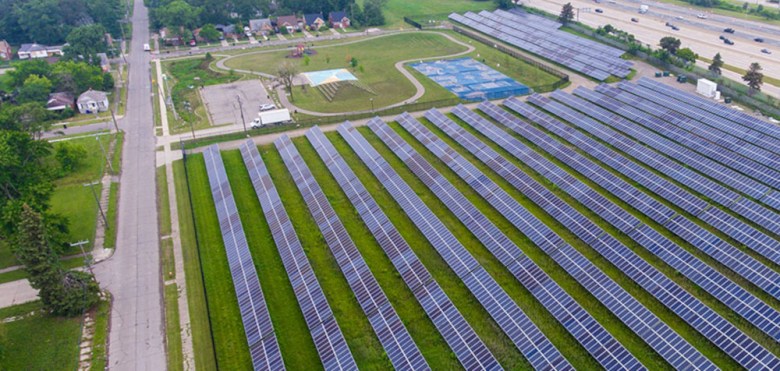
“White flight” and housing segregation have left many U.S. cities with sections of vacant or underinvested property, typically in communities populated by Black and Brown people.
With roughly 60% of the land area of Chicago, Detroit nonetheless has a much larger proportion of vacant land — approximately 19 square miles. In some neighborhoods, multiple blocks may only have a single structure remaining, if any at all.
DTE Energy’s plan to build large-scale solar arrays on some of that land is supported by some residents and municipal officials as a means to reduce illegal dumping and other nuisance crimes while working toward meeting city climate goals — and reducing utility bills for residents.
But there has also been pushback, largely focused on potential detrimental impact on property values in adjacent properties and limitations on future use of the sites themselves.
“Solar panels will disrupt and destroy entire neighborhoods. There will be no future affordable housing being built anywhere around a solar farm,” councilmember Angela Whitfield-Calloway said during a city council meeting in July, as reported by Planet Detroit.
Whitfield-Calloway also questions why municipal buildings or sites outside the city limits had not been considered for the solar arrays.
In Chicago, a battery storage facility constructed as part of the Bronzeville Microgrid project administered by electric utility ComEd generated similar debate during an extended period of community input. ComEd officials said the location of the battery facility, in the middle of a stretch of vacant plots near the South Side Community Art Center, was strategic to the overall microgrid project.
A 40-yard-long mural designed and created by local artists and mounted on the exposed long side of the battery storage facility not only serves to obscure the structure, but also to highlight prominent figures in Black history and culture. While reactions to the mural have been overwhelmingly positive, reception of the battery storage facility itself has been mixed.
“There were thorough talks with the community and the art community in Bronzeville about what they wanted, what [ComEd] planned to do [with] that battery station, because they did not want it to be an eyesore … they did not want it to just be, you know, brick walls around infrastructure,” Jeremi Bryant, a resident of Bronzeville, told the Energy News Network in February 2021.
For Bruce Montgomery, founder of Bronzeville-based Entrepreneur Success Program and a member of the advisory council for the Community of the Future, the location of the battery storage facility precluded potentially more beneficial future development for the site.
“That lot in most communities probably would have ended up being invested in as more quality residential,” Montgomery told the Energy News Network in February 2021. “But now you’ve taken it up with this box car. … You’ve got big things sitting out in the middle of a vacant lot a couple of doors down from one of the most historic locations in Bronzeville.”

For Blacks in Green, what might appear to the casual observer as a vacant lot overtaken by weeds belies its ultimate potential — as an affordable, energy-efficient residential complex, small business owned by a community resident, a much needed basic amenity like a grocery stocking fresh produce — or a native plant garden to attract pollinators.
On June 17, 2023, Blacks in Green collaborated with the Delta Institute to hold a combined Juneteenth celebration and BioBlitz to identify potential sites for green infrastructure. Experts and community residents worked side-by-side to map and measure plant life, insect populations, drainage and other elements during a walking inventory of vacant lots in the area.
In the case of West Woodlawn, installation of geothermal loop fields in its alleys — versus locating them in vacant plots — presents an opportunity to promote climate resiliency through mitigation of persistent urban flooding, by utilizing permeable pavers to replace existing concrete or asphalt, said Madina.
“All of our programs are designed to create multiple benefits,” Madina said.
Projects like the West Woodlawn community geothermal project represent a drive to revive and reinvent Chicago’s Black Wall Street within what once constituted the redline-confined boundaries of the Black population drawn to the city during the Great Migration of the 20th Century.
“In most communities, the vacant lots are really indicative of a declining community. But what we have tried to do is take that negative and turn it into something positive. So if we can take those vacant lots with weeds and debris and turn them into beautiful gardens, that is a very significant improvement in the community,” Madina said.
“So [we] could improve the quality of life, improve the spirit of the people in the community… that vacant lot can provide more than just beauty. It can provide more than just comfort for the residents. It can also provide biodiversity, it can provide pollination, it can provide food for the residents.”
Correction: A 40-yard-long mural was mounted on the side of a ComEd battery storage facility to obscure the structure and highlight prominent figures in Black history and culture. An earlier version of this story misstated its size.
This story was originally published by the Arizona Mirror
When Hualapai Spiritual Leader Frank Mapatis visits Ha’Kamwe’, the tribe’s sacred spring, to conduct any type of ceremony, the area must be completely quiet so that he can hear the water and connect with the land.
Mapatis said that as part of his traditional ways of life, when he is in prayer at Ha’Kamwe’, he hears the water sing, and when it sings, he connects with the creator to conduct ceremonies.
He has provided purification, healing and coming-of-age ceremonies at Ha’Kamwe’ for decades and visits the spring at least twice a month. The spring is also utilized for tribal members’ funeral ceremonies.
Not being able to hear the water, conduct ceremonies or provide traditional teachings to the Hualapai youth who join him during his visits to the spring are among Mapatis’ top concerns for the proposed exploratory drilling lithium project in the Big Sandy River watershed near the tribe’s sacred spring.
“It would stop me from doing ceremony,” he said about the drilling project as he testified in federal court on Sept. 17. He believes drilling in that area will traumatize the earth and water, and he would not want to use that area for ceremonial purposes due to that trauma.
Mapatis said he could continue his ceremonial practices in other places, but they would not have the same impact as doing them at Ha’Kamwe’ because of the water’s healing properties.
“It wouldn’t be as effective in other areas,” he added.
Ha’Kamwe’ is featured in tribal songs and stories about the history of the Hualapai people and their connection to the land. According to the tribe, the historic flow and spring temperature are essential for its traditional uses.
Mapatis was one of several Haluapai tribal members who testified during the Sept. 17 preliminary injunction hearing at the U.S. Federal District Court in Phoenix, where the tribe is fighting to extend the pause on drilling for the Big Sandy Valley Lithium Exploration Project for the duration of the tribe’s lawsuit seeking to block the project entirely.
The project allows a mining company to drill and test more than 100 sites across BLM land surrounding one of the Hualapai Tribe’s cultural properties, among them Ha’Kamwe’, a medicinal spring sacred to the tribe.
Tuesday’s hearing came after a federal judge granted the Hualapai Tribe’s request for a temporary restraining order against the U.S. Bureau of Land Management, temporarily freezing the exploratory drilling project.
The restraining order was granted weeks after the Hualapai Tribe filed a lawsuit against BLM, following years of the tribe actively voicing its concerns about the mining effort.
Ha’Kamwe’ is located within the Hualapai Tribe’s property known as Cholla Canyon Ranch, and the boundaries of the Big Sandy Valley project nearly surround the entire property. Only one portion of the tribe’s land does not border the drilling project.
The spring is recognized as a traditional cultural property and is eligible to be listed on the National Register of Historic Places, and the tribe’s lawsuit claims that the project’s approval violates the National Environmental Protection Act and the National Historic Preservation Act.
The lawsuit asks for full compliance with the National Historic Preservation Act (NHPA) and the National Environmental Policy Act (NEPA), which includes having the BLM take a “hard look” at the exploration activity’s environmental impacts and consider the implications of its actions on historic properties.
The lawsuit claims that BLM approved the mining project without appropriately considering a reasonable range of alternatives or taking a hard look at water resources under the NEPA and moved forward with the project without providing mitigation measures under the NHPA for Ha’Kamwe’ and other resources essential to the tribe, thus violating both acts.
Out of concern for Ha’Kamwe’, the tribe submitted multiple public comments, sent several letters of concern, and participated in tribal consultations with BLM throughout the Big Sandy Valley Lithium Exploration Project planning phase.
Big Sandy, Inc., a subsidiary of Australian mining company Arizona Lithium, leads the project and has sought approval since 2019. Arizona Lithium is not a direct party in the Hualapai Tribe’s lawsuit, but it filed a motion to intervene in the case. Humetewa granted the request in August, allowing the company to defend against the tribe’s efforts to stop the project.
BLM’s approval of the Big Sandy Valley Project allows the mining company to drill and test up to 131 exploration holes across 21 acres of BLM-managed public land to determine whether a full-scale lithium mining operation could be viable.
Throughout the hearing, several Hualapai tribal members and supporters sat in the courtroom listening to the hearing while others sat outside the Sandra Day O’Connor courthouse holding signs backing the tribe.
Hualapai tribal member Ivan Bender, 60, from Peach Springs, showed up to the courthouse in support of his community, carrying a flag that said, “Protect Ka’kamwe’. No lithium mining.”
“That spring has a life of its own,” Bender said. “The water source we’re trying to protect is part of our sacred waters.”
The preliminary injunction hearing lasted more than six hours, during which Judge Diane Humetewa heard witness testimony from all parties involved in the case as she weighed the tribe’s request to keep the drilling on hold.
Testimony surrounded the way the project would directly or indirectly impact the Hualapai Tribe’s ability to carry out their cultural and traditional ways of life at Ha’Kamwe’, and whether the drilling that will take place as part of the project will harm the water that feeds into the hot spring.
Ka-voka Jackson, the director of the Hualapai Department of Cultural Resources, was the first witness, and part of her testimony focused on how the Hualapai Tribe utilizes the area for cultural and traditional purposes — and how drilling can directly affect those practices.
Jackson told the court that tribal members often visit Ha’Kamwe for traditional practices or to gather and harvest culturally significant plants from surrounding public lands.
“That is how we connect to our ancestors,” Jackson said.
The tribe’s lawsuit states that the lithium project will create noise, light, vibrations, and other disturbances that will degrade Ha’Kamwe’s character and harm tribal members’ use of the spring for religious and cultural ceremonies.
Jackson said the project’s impacts could cause irreversible damage, affecting the water supply to the sacred springs and destroying the land.
“(It can) create a lot of negative energy and create a hostile environment,” she said.
As part of its environmental assessment, BLM listed several short- and long-term effects, including the temporary disruption to cultural practices at or near Ha’Kamwe’ and an impact on native wildlife and vegetation of up to 21 acres.
But even with these effects included in the assessment, BLM concluded that Phase 3 of the Big Sandy Valley Lithium Exploration Project would not significantly negatively impact the quality of the area, so an environmental impact statement was not needed.
“Visual, noise, and vibration effects from drilling activities would be temporary,” BLM wrote in its final report. “Coordination with and providing notice to the Hualapai Tribe of drilling activities in the vicinity of the Ha’Kamwe’ may reduce impacts to cultural practices at or near the hot spring.”
To provide the court with perspective on the distance of the drilling locations near Ha’Kamwe’, Ivan Martirosov from Navajo Transitional Energy Company testified on behalf of the defendants.
Martirosov is the project manager for the Big Sandy Valley Lithium Exploration Project with Navajo Transitional Energy Company (NTEC), a mining and energy company owned by the Navajo Nation.
NTEC entered into a mining agreement with Arizona Lithium in March. Under this agreement, the Navajo-owned company is responsible for permitting, exploration drilling, mine design, environmental assessments and development for the Big Sandy Lithium Project. NTEC has worked with Arizona Lithium since December 2022.
Martirosov is in charge of overseeing and executing the Big Sandy Lithium Project. He told the court that he walked all approved drilling sites on foot and described the site’s proximity to the Hualapai’s cultural property.
Of the 131 drill sites approved for the project, Martirosov identified 22 with a line of sight to Ha’Kamwe’, a majority located on the north side.
Martirosov said that he was restricted from accessing Ha’Kamwe, noting that the drill sites that do not have a line of sight of the cultural property were due to distance and terrain.
At the end of the day-long hearing, Humetewa ordered all parties to file briefs outlining their arguments for why the injunction should or shouldn’t be granted. She said she would issue a ruling in the near future.
During the hearing, Humetewa said that she was tasked with determining what process BLM took in connection to NEPA and their Section 106 process.
The Section 106 process seeks to accommodate historic preservation concerns through consultation among an agency official and other parties interested in the undertaking’s effects on historic properties. The consultation aims to identify historic properties potentially affected by projects and seek ways to avoid, minimize, or mitigate any adverse effects.
The process is usually conducted in four steps: initiating it, identifying historical properties within potentially affected areas, assessing any potential adverse effects on any eligible historic property, and seeking to resolve any adverse effects.
Humetewa said in court that she wants to know where in the records she can find BLM’s engagement in those processes so she can fully understand the discussion about either approving or denying the project. That way, she said, she can understand what considerations went into the final environmental assessment and the NEPA assessment.
Earthjustice Senior Attorney Laura Berglan, who is part of the team representing the Hualapai Tribe, said she feels positive because their team presented all the points they wanted.
“I think it went well and we’ll see how it turns out,” she added.
BLM’s attorneys told Humetewa that the impacts this project will have on Ha’Kamwe have been “vastly overblown,” noting how their expert clearly testified that the water and temperature will not change due to the drilling in the project.
The tribe had its own expert testify. Winfield G. Wright, a certified hydrologist and president of Southwest Hydro-Logic, said he produced a report for the tribe about the water sources that feed into Ha’Kamwe’. Wright said his analysis found that the groundwater system that flows into the hot spring is very fragile, and any disturbances around the area can disrupt the water, the chemistry and the temperature.
Wright said a mixture of shallow and deep waterways feed into Ha’Kamwe’, and the BLM’s environmental assessment simplified identifying where the water comes from by saying a confined lower aquifer feeds it.
“It’s not a confined aquifer,” he said, noting that the lower aquifer in the Big Sandy Valley is not the only source of water for the spring. “The whole valley is connected because of the fractures.”
But Peter Burck, a hydrologist with the BLM, testified that the lower fractures of the lower aquifer are a more likely source of water for Ha’Kamwe’.
Burck said that Wright’s claim the water comes from multiple sources is not conclusive. He said he did not see anything in Wright’s report that would lead him to conclude that the spring water source is a mixture of multiple flows.
He said that the likelihood of the drilling from Phase 3 of the Big Sandy Lithium Project encountering water or affecting the temperature of Ha’Kamwe’ is low.
BLM also told the court that any visual and noise disturbances from the drilling does not qualify as irreparable injury and is instead temporary.
But Jackson said her tribe made a good case that the project would cause irreparable harm because they had people testify who had already experienced it.
“This is irreparable; you can’t go back and redo ceremonies,” she said. “There’s no such thing.”
Jackson said she understands that the court wants more clarification on whether or not the BLM took the appropriate steps under the NEPA and NHPA policies before making a final decision.
“We believe that they didn’t take into consideration the effects on Ha’Kamwe’,” Jackson said, adding that it is eligible for registration on the National Historic Register and a traditional cultural property.
Jackson said it deserves a thorough process included in the NHPA and NEPA.
“I am proud of our people for sticking up for what we believe in and asserting our arguments,” she said. “Now, we just wait.”
Hualapai Chairman Duane Clarke echoed Jackson’s sentiments about how their team and tribal members presented a good case in court, and said he prays that the court’s decision goes with the Hualapai people.
Arizona Attorney General Kris Mayes filed an amicus brief before the hearing supporting the Hualapai Tribe’s request for the preliminary injunction.
“The sacred Ha’Kamwe’ spring has sustained the Hualapai people for generations, and its protection is critical for the Tribe,” Mayes said in a written statement. “The failure to properly evaluate the impact of this project on such an important water source is unacceptable.”
The amicus brief urges the court to take action to protect Arizona’s water resources from potentially irreversible damage posed by exploratory drilling near the Hualapai Tribe’s sacred spring.
“The BLM must fulfill its obligations under NEPA and fully evaluate this project’s impact on local water resources,” Mayes said. “I am proud to support the Hualapai Tribe’s efforts to protect their precious cultural and water resources.”
The amicus brief highlights the risk of irreparable harm to Arizona’s water resources if exploratory drilling is allowed to proceed without a comprehensive review. It also requests that the court grant a preliminary injunction to stop drilling activities while the case is being heard to protect Arizona’s water sources from potential compromise.


.svg)
