

 Back
Back
A solar-powered microgrid project backed with funding from the Biden administration aims to reduce energy burdens and provide backup power to a tiny northern Minnesota tribal community.
The Pine Point Resilience Hub would serve an elementary school and community center in Pine Point, an Anishinaabe village of about 330 people on the White Earth Reservation.
In June, the project was selected to receive $1.75 million from the U.S. Department of Energy’s Energy Storage for Social Equity (ES4SE) Program, which helps underserved and frontline communities leverage energy storage to make electricity more affordable and reliable. It’s part of a slew of Biden administration funding related to grid resilience and energy equity that has spurred several tribal microgrid projects across the country.
The developers, locally owned 8th Fire Solar and San Francisco-based 10Power, hope to finish the project next year, and have also secured funding from Minnesota’s Solar for Schools program and foundation grants but said they still need to raise about $1 million. They’re also counting on receiving about $1.5 million in federal tax credits, which face an uncertain future with the incoming Trump administration.
“The idea of the microgrid is to help with infrastructure,” said Gwe Gasco, a member of the White Earth Nation and the program coordinator with 8th Fire Solar, a thermal solar company based on the reservation.
Tribal communities were largely bypassed during the massive, federally funded push under the Rural Electrification Act of 1936 to bring electricity to remote rural areas of the country. As a result, grid infrastructure on many reservations remains insufficient to this day, with an estimated 1 in 7 Native American households on reservations lacking electricity connections, and many more contending with unreliable service.
On top of higher-than-average electric reliability issues, tribal communities also generally pay higher rates for electricity and face higher energy burdens due to poverty and substandard housing.
On the White Earth Reservation, these challenges are most pronounced in Pine Point, where one-third of residents live in poverty. Gasco said the area is among the first to suffer from outages, with eleven occurring over the last five years, according to the Itasca-Mantrap Electric Cooperative that serves the area.
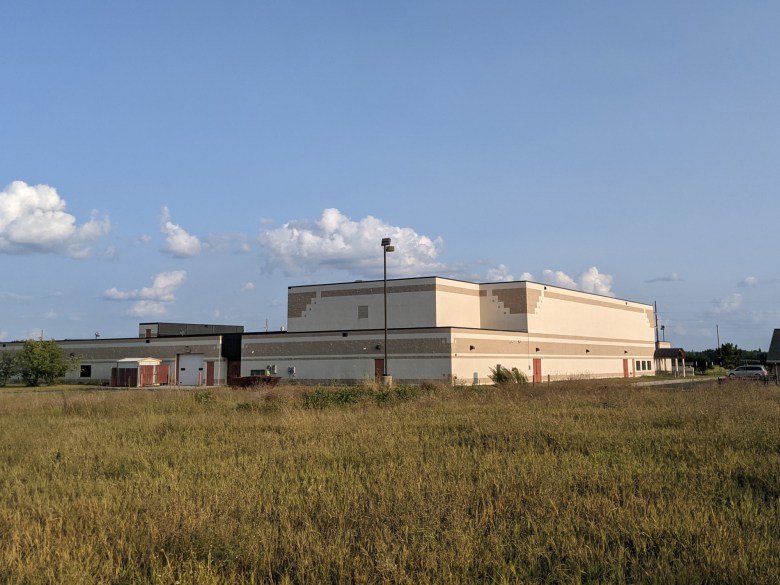
The Pine Point Resilience Hub project will build on an existing 21-kilowatt solar array, adding another 500 kilowatts of solar capacity along with a 2.76 megawatt-hour battery storage system, enough to provide about 12 hours worth of backup power for residents to be able to charge cell phones, power medical equipment, or stay warm in the event of a power outage.
Gasco said the microgrid could be especially important in the winter, given the area’s “brutally cold” weather and reliance on electric heat. They also hope it will reduce utility costs, though they are still negotiating with the local electric co-op on rates for power the system sends and receives from the utility’s grid. Itasca-Mantrap President and CEO Christine Fox said it doesn’t set net metering rates, which are determined by its electricity supplier.
The project developers hope to qualify for additional federal tax credits by using equipment largely produced in the U.S., including Minnesota-built Heliene solar panels, inverters made in Massachusetts, and Ohio-produced solar racks.
The developers have partnered with the Pine Point School District, which plans to incorporate the microgrid into an Ojibwe-language curriculum on renewable energy. A monitoring interface will allow students to see real-time data in the classroom.
“It’s powerful to me that this (project) is at a school where we’re hoping to inspire the next generation of kids,” said Sandra Kwak, CEO and founder of 10Power, a for-profit company that specializes in developing renewable energy projects in tribal communities.
Corey Orehek, senior business developer for Ziegler Energy Solutions, which has been hired to do the installation, said they plan to work with a local community college to train students for solar jobs.
“One of the things that we want to drive in this is workforce development,” Orehek said. “We want to leave something that’s not only a project that’ll last 30 years but provide the training and experience for community members to either start their own energy companies or become contractors in the clean energy workforce.”
The resilience hub is the second such project announced by a Minnesota tribe in just recent months. The Red Lake Nation received $3.15 million from the U.S. Department of Energy’s Local Government Energy Program in late September for a behind-the-meter microgrid project at a secondary school.
The Shakopee Mdewakanton Sioux Community is also working with Minnesota Valley Electric Cooperative to build a $9 million microgrid with U.S. Department of Energy funding. The electric cooperative will install a 4 megawatt-hour energy storage system and add a 1 megawatt solar system at the reservation in suburban Minneapolis.
It’s unclear whether federal funding for such projects will continue in President-elect Trump’s second term, but for now tribal energy advocates see microgrids as a good solution to both lower energy burdens and improve reliability.
“This is a great opportunity to create a success story in terms of leveraging cutting-edge technology, being able to help frontline communities, and for tribes and co-ops to work together,” Kwak said.
OFFSHORE WIND: A coalition of trade unions urges Connecticut, Massachusetts, and Rhode Island to triple their offshore wind procurement targets to help meet climate goals and create jobs. (Inside Climate News)
ALSO: Officials on Nantucket object to the terms of a mitigation agreement proposed by a planned offshore wind farm, saying the offer fails to address the harms the project will cause to the island. (Nantucket Current)
CRYPTO: A New York judge allows a cryptocurrency mining operation to keep running its fossil fuel-fired power plant, saying state regulators failed to justify their decision not to renew the facility’s permit. (WSKG)
HEAT PUMPS: Maine’s decision to incentivize whole home heat pump systems rather than individual rooms has driven a surge in homeowners taking advantage of the rebates. (Portland Press-Herald, subscription)
MICROGRIDS: A renewables-powered community microgrid in the country’s easternmost city is already proving to be a model for other towns along the Maine coast to reduce outages. (Inside Climate News)
SOLAR: Maryland communities attempt to stem the tide of solar development on open land, with Carroll County looking to strengthen its prohibition on solar projects on farmland and Harford County moving to place 1,100 acres of land into agricultural preservation. (Baltimore Sun, subscription)
BATTERIES: A Canadian company plans to open a lithium-ion battery manufacturing facility in New York, creating some 250 jobs. (The Post-Journal)
ELECTRIFICATION: Maine launches a $1 million study to determine the cost and logistics of electrifying four ports to cut diesel emissions from visiting ships. (Portland Press Herald, subscription)
NUCLEAR: New York’s energy authority begins to assess the possibilities for and interest in developing advanced nuclear facilities in the state. (RTO insider, subscription)
INDUSTRY: Decarbonizing the steel industry in states such as Pennsylvania will require enormous amounts of clean energy and deployment of new technologies. (Canary Media)
CLEAN ENERGY: In Vermont, experts and state leaders worry federal funding for clean energy and other environmental priorities could be withdrawn when Donald Trump takes office. (VTDigger)
COMMENTARY:
Correction: The Georgia Environmental Finance Authority recently launched two federally funded energy efficiency programs. An item in Thursday’s digest misstated the organization sponsoring the program.
STORAGE: Kentucky Gov. Andy Beshear announces a subsidiary of Canadian Solar will build a $712 million, 3 GW lithium ion cell battery manufacturing plant — the latest in a wave of battery factories and electric vehicle expansions that together account for more than 16,000 new jobs. (Lexington Herald-Leader)
ELECTRIC VEHICLES: Donald Trump’s plans to repeal a $7,500 electric vehicle tax credit could be a major blow to auto manufacturers who have invested billions in EV and battery factories in Georgia and other Republican-led Southeast states. (Atlanta Journal-Constitution)
OIL & GAS: Entergy proposes a 1,500 MW gas-fired power plant in Louisiana to power a proposed $5 billion-plus data center, as critics question secrecy around the project and its likely effect on rates and carbon emissions. (Floodlight)
WIND: Oklahoma’s wind generation capacity has grown tenfold since 2010 as renewables now generate about 44% of the state’s power, but experts expect the industry’s rapid growth to slow. (Tulsa World)
SOLAR:
UTILITIES:
COAL:
HYDROGEN: West Virginia residents rally against a proposed “blue hydrogen” hub proposed for Appalachia. (Charleston Gazette-Mail)
OVERSIGHT: West Virginia officials anticipate Donald Trump’s selection to lead the U.S. EPA will reverse course on proposed rules to restrict emissions from coal-fired and new gas-fired power plants. (WV News)
CLIMATE:
POLITICS: A Virginia lobbyist wrote the energy chapter of the Heritage Foundation’s Project 2025 playbook, which proposes overhauling the U.S. Department of Energy, repealing clean energy funding sources, boosting oil and gas and streamlining the nuclear approval process. (Virginia Mercury)
WIND: With three coal-fired power plants in Arkansas expected to close by 2030, renewable energy advocates tout the state’s emerging wind industry as a potential replacement. (Arkansas Advocate)
ALSO: Dominion Energy crews begin installing ductwork along Virginia roadways for power lines to the utility’s offshore wind farm. (WVEC)
SOLAR:
OIL & GAS:
STORAGE: Two companies move to assemble a 1 GW virtual power plant in Texas by linking hundreds of thousands of smart thermostats, with plans to eventually add in other customer-owned assets like solar panels, batteries, and electric vehicles. (Canary Media)
ELECTRIC VEHICLES: Austin, Texas’ transit agency shelves 46 electric buses for at least a year because the company that makes them went bankrupt and there aren’t yet enough chargers to keep them running all day. (Austin Monitor)
NUCLEAR:
COAL ASH: U.S. EPA officials say they’re working to address the discovery of nearly 300 tons of coal ash near a North Carolina elementary school. (WCNC)
CARBON CAPTURE: The U.S. Energy Department awards $26 million to a proposed offshore carbon capture and storage facility near Louisiana that’s expected to take emissions from a liquified natural gas export terminal. (The Advocate)
GRID:
POLITICS:
COMMENTARY:
WIND: President-elect Trump’s ambitions to shut down the offshore wind industry would push New York’s climate goals further out of reach, but it remains unclear whether his administration will be able to pull it off. (New York Focus)
ALSO:
CLEAN ENERGY: A Cornell University researcher says New York will need 40 GW of dispatchable power to meet its climate goals, exceeding a NYISO forecast that some groups dismissed as “alarmist.” (Syracuse.com, subscription)
UTILITIES: Facing conditions more familiar to the West Coast, utilities in New Jersey are taking precautions to avoid sparking wildfires amid a persistent drought. (WPVI)
TRANSPORTATION: New York City’s Metropolitan Transportation Authority approves a revamped congestion pricing plan, which still needs federal approval and faces challenges from New Jersey officials. (Bloomberg)
GRID:
TRANSMISSION: A study from Cornell University researchers says making beneficiaries pay for new power lines is consistent with decades of legal precedent. (news release)
HYDROPOWER:
CLIMATE: Portland, Maine’s city council votes to establish a dedicated climate fund for projects to reduce the city’s emissions. (Portland Press Herald)
COMMENTARY: Two scientists say Maryland has an opportunity to become a national leader on reducing emissions during the Trump administration. (Baltimore Sun)
SOLAR: Minnesota officials announce the completion of the first phase of a massive solar project that’s set to replace the retiring Sherco coal plant. (WCCO)
ALSO:
RENEWABLES: Ann Arbor, Michigan, will launch its voter-approved “sustainable energy utility” by assembling an initial 20 MW of demand and financing various renewable energy, storage and efficiency projects. (Canary Media)
PIPELINES: Summit Carbon Solutions reapplies for a carbon pipeline permit in South Dakota with significant reroutes after its initial application was rejected last year. (South Dakota Searchlight)
BATTERIES: A company announces plans for a $547 million battery components plant near St. Louis that would serve energy storage and electric vehicle markets. (FOX 2)
GRID: Ratepayer advocates file a complaint with federal regulators seeking changes to PJM’s capacity market design that they say is causing spiking capacity prices. (Utility Dive)
UTILITIES:
CLIMATE: A firm that helps real estate, insurance and financial companies predict how climate models could result in local impacts develops a tool to measure how resilient and at-risk U.S. cities are to climate change. (Washington Post)
EFFICIENCY: Wisconsin energy efficiency contractors have been promoting an Inflation Reduction Act-funded program that has deployed nearly $75 million to serve the state’s residents. (WUWM)
SOLAR: New Hampshire regulators reject a stakeholder agreement to extend net metering to 2044, a decision that will likely slow solar development in the state and be fatal for larger projects now in the planning stages, advocates say. (Concord Monitor)
ALSO:
CLIMATE: The new version of Maine’s climate plan prioritizes renewable energy, energy efficiency measures, climate adaptation, and environmental justice, but scales back previous goals for electric vehicle adoption. (Portland Press Herald, subscription)
OFFSHORE WIND:
TRANSMISSION:
RENEWABLES: Harvard, MIT, and Massachusetts General Brigham hospital partner to buy up to 1.3 million megawatt-hours of power annually from a Texas solar installation and North Dakota wind facility. (Harvard Magazine)
GEOTHERMAL: A networked geothermal system in Massachusetts is one of a handful of projects nationwide demonstrating the potential of thermal systems to replace traditional gas utility service. (Utility Dive)
FOSSIL FUELS: A former coal plant in Connecticut will soon be demolished as the state moves away from fossil fuel power generation. (Connecticut Public Radio)
COMMENTARY: Energy storage is the “cornerstone of a clean energy grid” and offers important environmental and economic benefits, despite critics’ inflated concerns about upfront costs, say two Northeast clean energy advocates. (CommonWealth Beacon)
HYDROGEN: Federal officials announce the first $22 million for a Midwest hydrogen production hub that could receive up to $1 billion, though it’s unclear whether the incoming Trump administration will support the technology. (E&E News)
NUCLEAR:
ELECTRIC VEHICLES:
DISTRICT ENERGY: Duluth, Minnesota, is studying the potential for a wastewater effluent-powered district energy system to heat downtown buildings. (Smart Cities Dive)
PIPELINES: Federal appeals court judges hear oral arguments in a case brought by a carbon pipeline developer over whether two Iowa counties could set restrictions on the company’s project. (Iowa Capital Dispatch)
CLIMATE: Data centers and AI are threatening U.S. climate goals as more than 200 gas plants are in various stages of development across the country to serve the industry. (Washington Post)
GRID:
SOLAR: Progress continues on a $2.3 million solar installation on the administration building in Iowa’s most populous county. (KCCI)
CLEAN ENERGY: A Michigan Congress member, whose district is the site of a Chinese company’s proposed battery manufacturing plant, cosponsors legislation to prevent Chinese companies from accessing Inflation Reduction Act tax credits. (Solar Power World)
BIOFUELS: A South Dakota board approves $12.6 million in funding support for a $500 million processing plant that’s expected to help meet demand for soy-based biofuels. (South Dakota Searchlight)
Dearborn, Michigan, was at the heart of auto industry innovation during the days of the Model T Ford.
Now clean energy and environmental justice advocates are proposing that the city play a lead role in greening the auto industry, through a transformation of the Dearborn Works steel mill to “green steel” — a steelmaking process powered by hydrogen and renewable energy with drastically lower emissions than a traditional blast furnace.
The blast furnace at Dearborn Works is due for relining in 2027, at an estimated cost of $470 million. Advocates argue that instead of prolonging the blast furnace’s life, its owner, Cleveland Cliffs, should invest another $2 billion dollars and convert the mill to Direct Reduced Iron (DRI) technology powered by green hydrogen (hydrogen produced with renewable energy).
An October report by Dr. Elizabeth Boatman of the firm 5 Lakes Energy examines the economics and logistics of such a conversion, and argues that demand for cleaner steel is likely to grow as auto companies and other global industries seek to lower their greenhouse gas footprints. Starting in 2026, steel importers to the European Union will need to make payments to offset emissions associated with steel production.
Worldwide, the auto industry is the second largest consumer of steel after construction, and “being able to pass on the price of a ‘green steel premium’ to its end consumers, the automotive industry is uniquely positioned to create demand for green steel without having to rely on public subsidies,” the European Union think tank CEPS said in a recent publication.
“This is a great chance for the state to step in now and ensure this conversion happens, instead of waiting another 20 years,” said Boatman. “All the economic indicators suggest clean steel is the steel product of the future, and the best way to future-proof jobs especially in the steel sector and especially for unions.”
Cleveland Cliffs is planning to convert its Middletown, Ohio, steel mill to DRI, tapping a $500 million federal grant for industrial decarbonization under the Bipartisan Infrastructure Law and Inflation Reduction Act.
A DRI furnace does not need to use coke or heat iron ore to 3,000 degrees Fahrenheit to produce pure “pig iron”; the same result is achieved with a different chemical process at much lower temperatures. DRI furnaces can be powered by natural gas or clean hydrogen. Initially, Cleveland Cliffs says, its Middletown mill will run on natural gas, releasing about half the carbon emissions of its current blast furnace. Eventually, the company announced, it could switch to hydrogen.
Along with slashing greenhouse gas emissions, a similar green steel conversion at Dearborn Works would greatly reduce the local air pollution burden facing local residents in the heavily industrial area, which is also home to a Marathon oil refinery, a major rail yard and other polluters.
But it wouldn’t be cheap. Boatman’s report estimated the cost of converting a blast furnace to a DRI furnace and associated electric arc furnaces at $1.57 billion, plus $2.6 billion to build a green hydrogen plant. Utility DTE Energy would need to work with grid operator MISO to add about 2 GW of solar and 2 GW of wind power, plus battery storage, to the grid to power the green hydrogen production.
The conversion would mean closure of the EES Coke plant, which turns coal into coke for the steel mill, on heavily polluted Zug Island in the River Rouge just outside Detroit, five miles from Dearborn. In 2022, the EPA sued the coke plant, a subsidiary of DTE Energy, over Clean Air Act violations.
A recent study by the nonprofit Industrious Labs found that the EES Coke plant could be responsible for up to 57 premature deaths and more than 15,000 asthma attacks. The report also found that more than half the people living within a three-mile radius of both the steel mill and coke plant are low-income, and three-quarters of those living around the coke plant are people of color, as are half those living around the steel mill.
“The total health costs are quite significant,” said Nick Leonard, executive director of the Great Lakes Environmental Law Center, which is representing local residents as intervenors in the EPA lawsuit against the coke plant. “We allow companies to externalize those costs and not account for them. If they were required by some sort of change in policy or regulation to be responsible for those costs, it would certainly make the case they could make this expensive switch” to green steel.
The law center also represented residents in legal proceedings around Dearborn Works’ Clean Air Act violations, including a 2015 consent decree and a 2023 mandate to install a new electrostatic precipitator at a cost of $100 million.
Leonard said local residents “know Cleveland Cliffs poses a risk to their health, and they want solutions. They know there’s a problem, they are frustrated by the lack of will or attention from state and local government.”
Cleveland Cliffs did not respond to a request for comment.
The country’s active steel mills are concentrated in Pennsylvania, Indiana, Ohio and Michigan. Advocates and residents are asking Nippon Steel to consider a green steel conversion at the Gary Works mill in Northwest Indiana, if the global corporation succeeds in acquiring Gary Works owner U.S. Steel. Advocates have also proposed green steel conversions for Pennsylvania mills.
There are factors that make a green steel conversion both more promising and more challenging at Dearborn Works, compared to other locations, Boatman explained.
Dearborn Works has only one blast furnace in operation, meaning a potentially smaller investment than at mills with more furnaces. Michigan has also set aggressive renewable energy goals, which could be furthered by the ambitious renewable energy buildout that would be required to produce enough green hydrogen for the steel mill.
“That’s why we’re asking the state of Michigan and the governor to get all the interested parties to the table to actually talk about this, hopefully commit to it, and do the detailed planning that needs to be done to figure out how much wind, how much solar, how much battery storage does there need to be to get this off the ground,” said Boatman.
Michigan has legal limits on behind-the-meter generation that could make it more difficult to build renewables specifically to power green hydrogen production for a steel mill. Utilities would instead need to produce or procure the renewable energy, and sell it to the steel mill, Boatman explained.
A green steel conversion at Dearborn Works could create a total of about 500 new jobs, Boatman estimates, considering that about 500 jobs would be lost at the closing coke plant but 410 jobs would be created at the hydrogen plant, 550 in new renewables and 170 at the mill itself. The DRI conversion at the Middletown steel mill is expected to create 170 new permanent jobs and 1,200 construction jobs, according to Cleveland Cliffs.
A 2023 analysis by the Ohio River Valley Institute found that at the Mon Valley Works steel mill in Pennsylvania, a DRI conversion would likely preserve more iron- and steel-making jobs than “business as usual,” with 87% of the current jobs expected to exist in 2031, compared to 69% without a change — as U.S. steel production continues to shrink and automate.
“We are seeing a general trend for both iron and [secondary] steel production to move toward the South, to states that aren’t friendly to unions and can produce products at cheaper prices by bypassing unions,” said Boatman. “Michigan obviously has a proud history of being a strong union state, it matters to keep those good union jobs there.”
Labor unions have largely been silent on the concept of green steel conversion. The United Auto Workers union — which represents Dearborn Works employees — and the United Steelworkers did not respond to requests for comment.
The U.S. Department of Energy plans to spend $8 billion on hydrogen hubs, and a potentially lucrative tax credit known as 45V is being finalized for clean hydrogen. Experts and advocates agree that energy-intensive, hard-to-decarbonize industries like steel are where hydrogen could have the most impact. But large-scale production of pure hydrogen for industrial use is still in nascent stages, and little infrastructure has been built or tested for transporting and storing hydrogen.
That is among the reasons, Boatman said, that there’s been reluctance among residents and union leaders to embrace the concept of green steel. Boatman’s report emphasizes that community benefits agreements and community engagement processes are crucial to make sure residents are informed about, benefit from, and have a meaningful voice in any green steel plans.
“Union workers and fence-line community members all want better air quality, lower emissions, who wouldn’t want to go to work knowing you’re safer being there?” she said. “There’s a lot of interest in cleaning up the air. It’s more a question over how that happens. When hydrogen becomes part of the equation, there’s always some concern.”
She noted that hydrogen could potentially be stored in salt caverns in the Detroit area, though extensive study on the feasibility and environmental impacts would be needed. In Mississippi, a startup company Hy Stor Energy is planning to store green hydrogen in salt caverns, ready to generate electricity during times of high demand.
Tax incentives for clean hydrogen could provide major incentives for steel mills. But clean hydrogen proposed projects have been in flux nationwide as the rules for qualifying for 45V tax credits are being hashed out in a lengthy, controversial process; and the change in presidential administration adds even more uncertainty.
“These industries have to be incentivized,” said Roxana Bekemohammadi, founder and executive director of the U.S. Hydrogen Alliance, which advocates for pro-hydrogen policies on the state level. “Europe is creating a mandate — that’s one incentive. We’d love to support any incentives that would allow hydrogen to be leveraged in the steel industry. With state legislation we certainly can incentivize it. It’s a question of how competitive we want to be.”
This article was originally published by the Idaho Capital Sun.
The Boise Airport became powered by 100% renewable energy this fall after Boise opted to be the first city to sign on to an optional new renewable energy program through Idaho Power.
The city of Boise is purchasing enough solar energy to power both the Boise Airport and the Lander Street wastewater treatment facility through 100% renewable energy, Steve Hubble, climate action manager for the city of Boise, said in an interview Thursday.
The Boise Airport is likely the first municipally-owned major airport in Idaho to become 100% solar energy powered. Hubble said he isn’t familiar enough with municipalities in North Idaho or eastern Idaho, which work with different utility companies, to know what their energy mix is.
“We’re the first municipality in Idaho to enter one of these Clean Energy Your Way contracts, so that’s pretty exciting in and of itself,” Hubble said. “And then from a quantitative perspective, I’m always going to link that back to what the city’s goals are.”
The move to powering its facilities by renewable energy represents Boise moving forward on climate policies at a time when the Idaho Legislature is actively pushing back against environmental and climate programs. While the Idaho Legislature has not established formal climate goals, the city of Boise has specific goals it bases climate policies around.
Making the Boise Airport and Lander Street wastewater treatment plant 100% renewable-powered brings the city to 25% of its 2030 renewable energy goal for city government.

“So in other words, if you look at all the city’s electricity usage right now, about a quarter of it is being powered by renewable electricity, because the airport and Lander Street are two of our three biggest electricity-using facilities,” Hubble said.
Boise had been powering the airport and Lander Street facility with the standard energy it received from Idaho Power, which includes an energy portfolio of renewable energy like hydro as well as nonrenewable energy sources, like coal. To go 100% renewable, the city bought enough renewable solar energy to cover 100% of the energy those two facilities use.
The project is part of Idaho Power’s Clean Energy Your Way program, which is optional and does not change the energy mix that regular Idaho Power customers receive or the rates they pay, Idaho Power Director of Economic Development and Innovation Megan Ronk said in an interview.
Idaho Power’s largest source of energy today is renewable hydro power, Ronk said. For 2022, 24% of Idaho Powers energy generation capacity was coal, Idaho Power reported. Idaho Power has a goal to have 100% clean energy by 2045.
For customers who want to go renewable sooner, Idaho Power created Clean Energy Your Way, Ronk said.
“Clean Energy Your Way is really intended to provide a menu of options to meet customers where they are at in meeting their respective renewable and clean energy goals,” Ronk said in a phone interview.
The Boise City Council approved participating in the Clean Energy Your Way program in October 2023.
“This is possible because Boiseans have been so clear that they expect our city to lead in protecting our environment for the future,” Boise Mayor Lauren McLean said in a written statement after the Boise City Council vote. “It is important that we are resilient and because we want our kids, and their kids, to be healthy and to have a place where they can live and thrive into the future.”
After the Boise City Council approved participating in the program, Idaho Power and the city applied for approval from the Idaho Public Utilities Commission, which regulates utility companies in Idaho.
Under the application for the project, Boise sought approval to buy up to 10 megawatts of power from Black Mesa Energy solar project in Elmore County. In addition to the normal Schedule 19 rate Boise pays for energy not from the solar project, Boise will pay a fixed cost charge for each kilowatt hour of energy received from the Black Mesa Energy solar project. Excess energy generated but not used will be credited to the city.
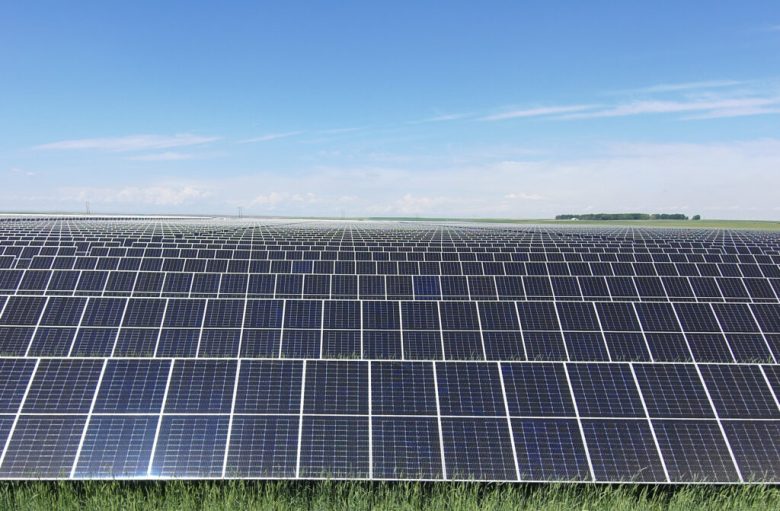
The Idaho Public Utilities Commission approved the application in August, which allowed the city to begin purchasing the solar energy Sept. 1.
The city’s contract is for 20 years. Hubble told the Sun he expects the city to pay slightly more for energy during the first 18 months of the project. Then, for the duration of the first 10 years, Hubble expects the city to either realize a savings or be paying no more than it would have regularly, without going renewable.
“We’re pretty excited about that savings opportunity, because basically this contract allows us to kind of lock in the rate for a portion of our power cost, and power costs do change, so that’s something we’re really excited about,” Hubble said. “It’s kind of cool, not only the renewable attribute of this, but that economic attribute of this is pretty exciting.”
Boise has a 25% share of the solar energy from the Black Mesa Energy project, while the remaining 75% is being used by Micron for renewable energy projects, Hubble said.
Idaho Power offers different types of Clean Energy Your Way programs for residential customers, businesses and large municipal customers like the city of Boise. The largest energy-using customers, like the city of Boise, are able to participate in the Clean Energy Your Way Construction agreement that powered the Boise Airport and Lander Street facility. Hubble thinks Boise’s project could set an example for other large Idaho Power municipal or industrial customers who want to go with renewable energy.
But there are other options for other types of Idaho Power customers too. Residential customers can cover all or part of their energy use with renewable wind and solar energy at a cost of 1 additional cent per kilowatt hour, with the ability to cancel any time. Business customers can purchase renewable energy certificates, with options to buy on a month-to-month basis or for a three-year commitment.


.svg)
