

 Back
Back
The startup is turning on a 200-battery project in South Dakota — and pioneering an electric utility rate that could help boost thermal energy storage more widely.
A giant energy-storage project in South Dakota will soon turn cheap wind energy into clean industrial steam for a neighboring biofuels facility.
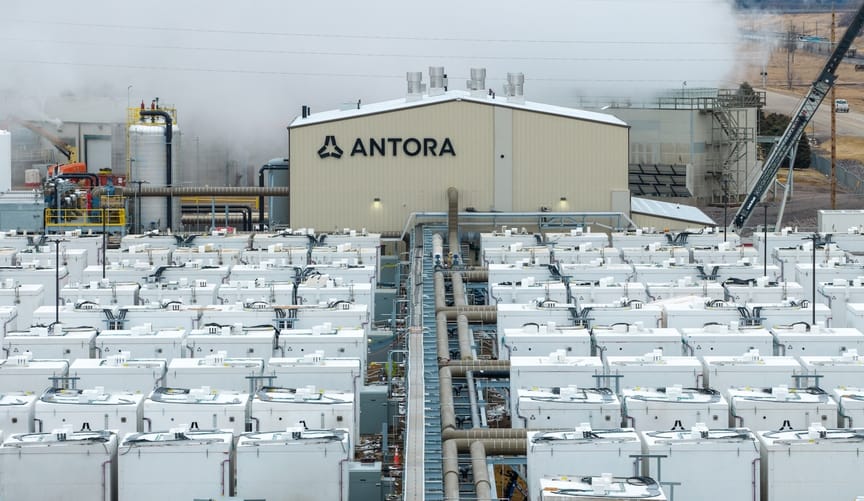
The startup Antora Energy said it recently began booting up a 5-gigawatt-hour thermal energy storage system at Poet’s ethanol-production plant near Big Stone City, close to the Minnesota border. With a fleet of more than 200 batteries, Antora’s project is expected to become the largest of its kind worldwide when it’s fully operating later this year.
San Jose, California–based Antora has likened its setup to an enormous toaster. Clean electricity runs through a large resistance heater to warm big blocks of solid carbon to extremely high temperatures for days on end. That heat can then be used to generate steam for industrial processes — which typically rely on fossil fuels — or to produce electricity on demand, including for power-hungry data centers.
Yet Antora’s project is notable for more than just its technology. The startup is also pioneering an electricity tariff, developed with the utility Otter Tail Power, that is designed to improve the bottom line of thermal energy systems and to ensure they benefit everyone on the grid. Experts say the new energy rate could be a model for the fledgling sector.
The installation itself “adds another proof point to the technology being used to help decarbonize industry,” said Melissa Hulting, director for industrial decarbonization at the Center for Climate and Energy Solutions (C2ES). “But the distinguishing factor is the tariff.”
Antora is one of dozens of thermal energy startups that are using a variety of materials — such as crushed rocks, firebricks, and molten salt — to store renewable electricity and deliver low-carbon heat to factories that make fuels, chemicals, construction materials, and even beer. In the United States, industrial heat use accounts for roughly 12% of the country’s greenhouse gas emissions.
Thermal batteries by firms like Antora, Brenmiller Energy, Electrified Thermal Solutions, and Rondo Energy can already support temperatures at or above 750 degrees Celsius (1,380 degrees Fahrenheit) — hot enough to meet nearly 75% of all industrial heat demand in the United States, according to a 2023 report by The Brattle Group for C2ES and the Renewable Thermal Collaborative. Antora, for its part, says it can store heat up to around 2,400℃.
But many projects are still in the pilot and demonstration stages. Of the few large-scale commercial systems operating today, most are in Europe, where companies can more easily access wholesale electricity markets that “can help projects pencil out,” Hulting said.
In the U.S., by contrast, utility rates for large industrial customers are among the biggest barriers to reaching widespread deployment of thermal batteries. Antora’s flagship project offers a real-world solution that other utilities and companies could replicate across the country.
“There’s a really big potential here if we can get those rate structures right in the U.S.,” Hulting added.
Antora’s Big Stone City project will be roughly 1,000 times larger than its 5-megawatt-hour pilot system near Fresno, California.
It launched the smaller project in late 2023 at a Wellhead Electric facility. Months later, Antora raised $150 million from corporate and venture investors to ramp up thermal-battery production at its San Jose factory, which the company just expanded into a three-building manufacturing campus.
Justin Briggs, Antora’s chief operating officer and co-founder, said the sprawling South Dakota system took less than a year to build on an empty lot beside Poet’s facility. He declined to discuss costs for the 5-GWh system, but he noted that the Australian investment fund Grok Ventures provided the financing needed to bring the installation to life.
“We really wanted to show how fast this technology could be deployed at scale,” Briggs said.
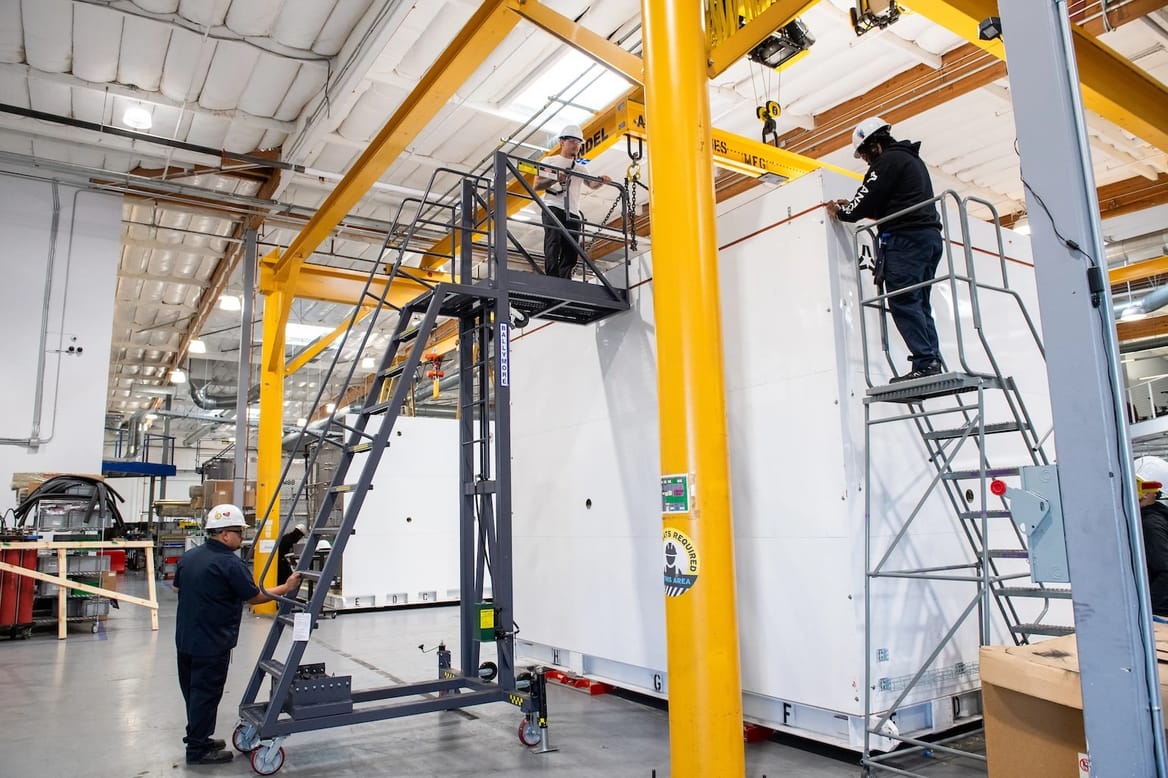
Antora and Grok Ventures jointly own the system and will sell heat to Poet under a long-term offtake agreement. The batteries will pipe steam over the fence to the bioprocessing plant, which uses copious amounts of low-temperature heat to turn corn into ethanol. Right now, at least some of that steam comes from boilers inside the 475-MW coal power plant that Otter Tail operates next door.
The novel electricity rate is key to allowing Antora to deliver competitively priced clean heat.
Noah Long, Antora’s director of state and regulatory affairs, said the problem with traditional retail utility rates is that they’re like peanut butter: They spread the average costs of generating and distributing power across all customers, regardless of whether they use power during the busiest, costliest times of day or during off-peak hours.
But thermal energy systems are designed to be highly flexible. If a wind or solar farm is producing more electricity than the grid needs, the batteries can absorb electrons that might otherwise go to waste. In that way, they curb their reliance on the grid when electricity supplies are limited, which in turn limits strain on the system and avoids the need for expensive grid upgrades.
Existing rate structures don’t always reflect such nuances, so project developers don’t see savings from using cheap, clean power and can’t capitalize on their ability to help balance the grid. That can make it harder for the technology to compete with inexpensive steam from boilers fired by natural gas or coal.
To solve this, Antora and Otter Tail developed a voluntary “thermal market energy pricing rider,” which pairs the timing and volume of Antora’s electricity draw with periods of surplus local renewables production. Technically, the batteries are plugged into the regional energy system and can use grid power at any time. But the tariff disincentives this approach, including by applying penalties if customers go beyond their agreed-on service baseline, and by charging regular market pricing for any power drawn above and beyond that baseline, said Francesco Aimone, an industrial electrification senior fellow at C2ES.
Utility regulators have approved the tariff in the three states where Otter Tail operates: Minnesota, North Dakota, and South Dakota. Farther west, in California, policymakers are considering a Senate bill that would likewise update electricity rates to help manufacturers switch to using electricity for industrial heat.
“This is a win-win, because the customer can save money, and the electricity that might otherwise have gone unused is now being used,” Stephanie Hoff, Otter Tail’s director of communications, said of the utility’s tariff. “It also enables a new technology that reduces the carbon-intensity of industrial processes that rely on steam or heat.”
Under the new arrangement, the two companies will actively exchange data about how much electricity Antora needs to recharge its batteries for the following day as well as Otter Tail’s estimated pricing, similar to how day-ahead trading works in wholesale electricity markets.
“It’s a kind of dance that they’re going to continue to do day in and day out to try to get a good outcome for everyone,” Aimone said. Antora is “taking the risk on market pricing to make sure that they can deliver heat to their customer at a certain rate.”
Hoff noted that if Otter Tail does need to upgrade its electric system to serve a large-load customer, the tariff requires that customer to pay those costs directly in order to avoid raising rates for other grid users. Antora, for example, said it worked with the utility to build a 34.5-kilovolt transmission line to connect the thermal storage system to the grid.
Aimone said the tariff’s emphasis on using existing grid assets and intermittent energy sources is particularly important. As the country moves (ever so slightly) toward electrifying industrial heat and other manufacturing processes, it’s crucial that the shift avoids overburdening the grid or making electricity even more expensive for everyone else.
“One thing we want to make sure as we’re talking about industrial electrification or load growth … is, What does it mean for affordability?” Aimone said. “Flexible loads are really important for making that happen.”


.svg)
