

 Back
Back
As the White House and viral influencers push misleading info about solar, New York says the facts show the clean energy source and agriculture can thrive together.
In rural areas across the U.S., solar power opponents keep leaning on the argument that utility-scale arrays are gobbling up valuable farmland. But plenty of evidence proves that’s just not true, and now, New York is tackling the misinformation head-on.
After the Trump administration accused the state of fast-tracking solar farms on prime farmland, New York leaders fired back last week, saying that renewables “empower our farmers to keep their land in use and in their family, while avoiding the threat of permanent conversion or abandonment.” That’s because farmers can lease a plot to solar developers and return it to agricultural use at the end of the array’s life, as the state officials explained in their 11-page letter.
“A recent study by Cornell found that the overwhelming majority of farmers who received solar lease payments used that income to continue or even expand farming on their land, not to exit farming or scale back operations,” the leaders wrote. “Discouraging or inhibiting property owners’ ability to independently make choices about what they can and cannot do with their land can cause financial harm and undermine fundamental property rights.”
The New York State Energy Research and Development Authority has more proof that solar and farming can work hand in hand, and outlined all that in a major guidebook it released last year. Sheep and cattle are munching below panels on several New York farms, the guidebook notes, and the state has zoning rules and protections in place to preserve undeveloped land.
New York’s pushback squares with the findings of a recent report from the Solar Energy Industries Association. That study shows solar farms currently take up a mere 0.13% of New York’s roughly 13,000 square miles of federally designated prime farmland, a stat that resonates across the country. Solar covers just 0.07% of all U.S. farmland, according to SEIA. That’s three times less than golf courses and six times less than suburban development.
And yet solar panels, not cul-de-sacs, are the focus of a particularly potent campaign from upstate New York influencer Alexandra Fasulo. Fasulo has amassed more than a million followers across TikTok and other social platforms, where she’s constantly posting videos that inflate solar’s threats to agricultural and undeveloped land. Similar sentiments are being spread on social media by John Rich. He’s one half of the “Save a Horse, Ride a Cowboy” guys, and was recently hired by the White House to advocate for landowners on a national scale.
These and other anti-solar advocates often ignore the good that the clean energy source can do for farmers nationwide. In California’s Central Valley, for example, years of drought have led hundreds of thousands of acres of agricultural land to go fallow. Economics and water availability have driven farmers to stop growing there, but they can still make money and hold on to their land by leasing their plots to solar developers.
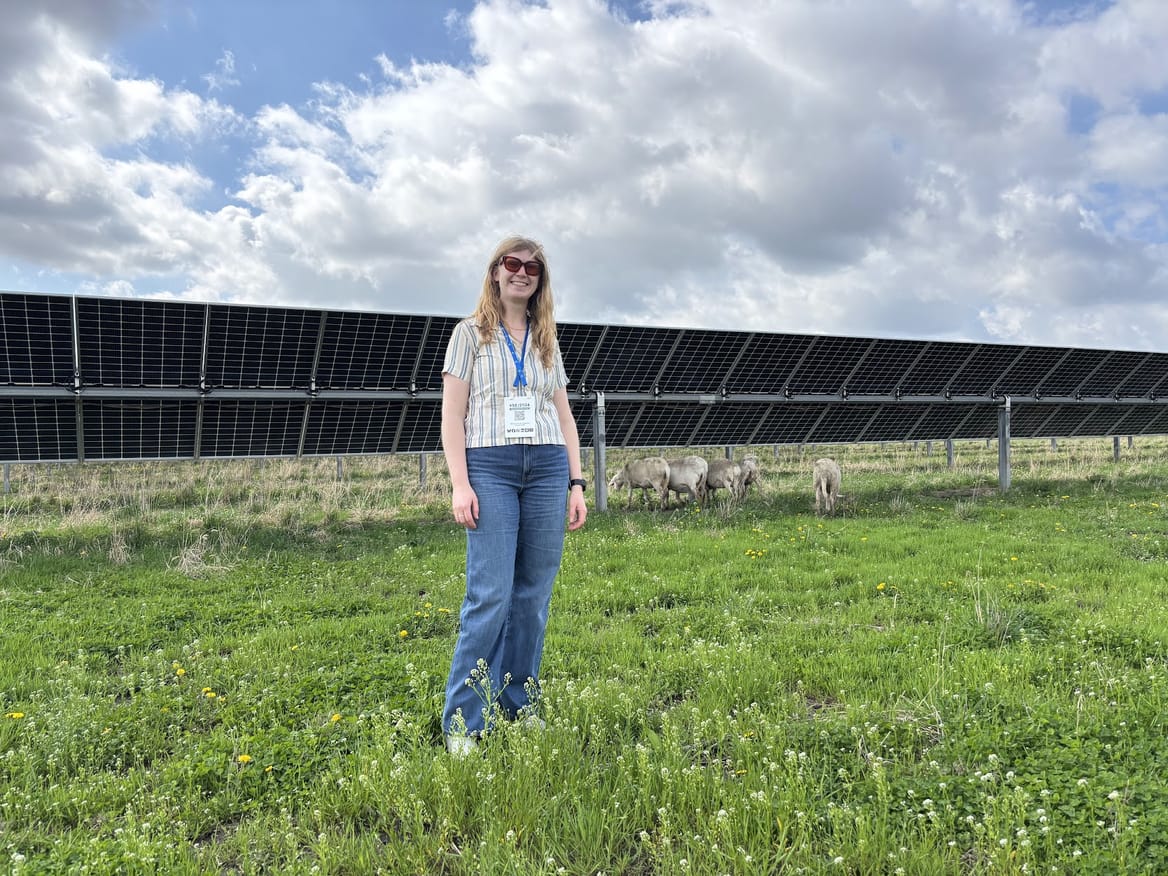
Plus, as New York’s guidebook points out, farming is still happening alongside solar installations. I recently visited an Illinois solar farm where sheep were grazing underneath and around panels — an arrangement that the sheep’s owners love because they don’t have to maintain expansive pastures back at home. Meanwhile, researchers have found that tomatoes, saffron, and other crops can thrive below panels, and so can native plants.
That’s not to mention the climate benefits of ditching planet-warming fossil fuels, which are driving droughts, floods, and other weather disasters that are legitimately threatening farms in the U.S. and beyond.
Trump’s coal crusade has real-world consequences
The Trump administration keeps checking items off the coal industry’s wish list — with dire consequences for Americans’ health and wallets.
Over the past year and a half, the federal government has used its emergency powers to keep coal plants from shutting down and pledged $850 million to prop up existing coal facilities or build new ones, Jeff St. John reports. It’s also weakened regulations meant to protect air and water quality, and paved the way for more coal mining in the U.S.
Americans are already suffering the fallout, as Kari Lydersen reports from Indiana. The Department of Energy has forced two aging coal plants there to stay open — a move that is costing plant owners millions of dollars that could soon be passed on to utility customers. Meanwhile, the rollback of federal regulations around coal ash means the toxic byproduct of coal burning will continue to threaten water supplies in the state and beyond.
More data highlights gas stoves’ dangers
Federal funding clawbacks stopped a group of scientists from fully studying gas stoves’ impacts on people with asthma, but they still produced some pretty profound results.
Back in late 2024, researchers from Case Western Reserve University received $18 million from the U.S. EPA to replace gas stoves with electric models in 1,200 Ohio homes whose residents have asthma. Although the grant was canceled a few months into the Trump administration, some people still got their electric stoves — and their asthma symptoms significantly improved.
Gas stoves are risky even for those without asthma. Mixed in with the methane the stoves burn is the cancer-causing carcinogen benzene, along with other toxic pollutants. Those dangers even prompted Colorado to require that gas stoves come with a health warning label — until a federal judge blocked enforcement of the rule shortly after it was implemented.
Big money for fusion: Commonwealth Fusion Systems raises another $1 billion from investors, bringing its total funds raised to $4 billion as it seeks to commercialize nuclear fusion technology. (Canary Media)
Courtroom confessions: The Trump administration admits in court documents that it canceled $7.6 billion in clean energy for 16 states solely because those states voted for Democrat Kamala Harris in the 2024 presidential election. (Associated Press)
A road map for cleaner factories: It can be hard for factories to justify swapping fossil fuels for more expensive electric power, but a new report suggests that colocating renewable energy generation and reforming electricity rates can help make the case. (Canary Media)
EVs come back around: Global EV sales remained slow in the first three months of the year but rose 35% in the second quarter even amid lackluster growth in China and the U.S., the world’s two biggest EV markets. (International Energy Agency)
Inverters diverted: The Trump administration’s ban on new models of foreign-made inverters, which are critical for connecting renewable power to the grid, won’t impact projects now, but could delay development in the future. (Canary Media)
Electric or bust: California will soon offer hefty rebates to first-time EV buyers, betting on the fact that most drivers who make the switch from gasoline cars don’t turn back. (Canary Media)
Batteries have your back: Small, portable plug-in batteries can help people power critical appliances and devices during outages — and they’re cheaper and more flexible than whole-home systems. (Canary Media)
Restart reservations: A wave of setbacks continues to delay the reopening of Michigan’s Palisades nuclear plant, and suggests similar challenges may befall companies looking to restart other dormant facilities. (New York Times)


.svg)
